NETWORKING MAKING CHILDREN FIRST: FROM MUHAMMAD ALI TO KEVIN HART!

NETWORKING—-this is what the key should be to success in our community, but somewhere along the way we lost our way! I thought about the e-mail I received from my dear friend Rodney Coleman titled “Money problems and no-name acts—Howard Theater struggling again!” DC’s last jazz club the Bohemian Caverns closed for good and has anyone seen our old friend, Walter Fauntroy?

I watched as superstar comedian/actor Kevin Hart’s recent visit to Ben’s Chili Bowl. A group of 40+ young people from Kentucky was scheduled to have lunch at the in the World famous Chili Bowl but they had to be moved to Ben’s Next Door because of the visit by Kevin Hart.

The diverse group of Black, White and Hispanic kids hailed from a Community Center in Kentucky. You could easily see they came from backgrounds similar to our very own.

Kevin Hart and the youth from Kentucky entered Ben’s Chili Bowl and Ben’s Next Door at about the same time. The cameras lined-up on the sidewalk alerted the kids that someone important was in the Chili Bowl. In fact, one could have easily assumed that it was President Obama and Michelle, because of the number of SUV’s parked in front and Kevin’s entourage was nothing to sneeze at.

While I am trying to get the Kentucky youth into Ben’s Next Door away from the cameras their curiosity got the best of them. Someone leaked that Kevin Hart was the visiting celebrity (I didn’t have clue), I was just as surprised as they were.

I finally get them all into Ben’s Next Door but as they are taking their seats another group is crowded at a door that leads to the Chili Bowl but the door is locked. The door has a see through window and Kevin Hart is seated on the other side of the door in plain sight.
It took me several minutes to get the group looking at Kevin to take their seats. It was then the pleas from the kids and the chaperons started. They begin asking me if I could get Kevin to come over and say “Hello.” I explained to them I was nothing but a ‘Worker’ for the restaurant and had no say so.

The matriarch and founder Ms. Virginia Ali stops by to see if everything is okay next door. This provides one the chaperons an opportunity to introduce herself and ask Ms. Virginia if it would be possible if she could get Kevin to stop by and say “Hello” to the kids. The matriarch uses all her charm and diplomacy and explains that Kevin is on a tight schedule and it would be almost impossible. I breathe a sigh of relief at least I got that responsibility off of me.

To watch the look of disappointment on the faces of those young children as Carmalo (chaperon) broke the bad news to them. I also felt and understood their pain.

I had already explained to Ms. Ali, that these are the young folks who are going to pay to see his movies (It would have been a great PR move for him).

When I had excess to the superstars to include, Ali, Jim Brown, Red Auerbach, Sugar Ray Leonard, Doug Williams, Don King, etc. it was a must that they meet and talk with my young people and they never said “No!”

Who would have thought that when these young people left Kentucky headed for DC they would be sitting in a restaurant with superstar comedian/actor Kevin Hart two feet away next door?

I met Kevin long before he became a superstar. On a visit to DC He was a guest at one of my Kids In Trouble Celebrity Fashion Shows.

My wife Hattie had already gotten his attention when he entered the restaurant. She told him I was next door (he winked). As I checked the arrangements for the kids next door I had to pass through where he was holding court in the other restaurant our eyes met and he winked (recognition). I kept moving, I have been a lot of things in my life, but never star-struck.

In the meantime, I had to make sure that the kids from Kentucky had my undivided attention.

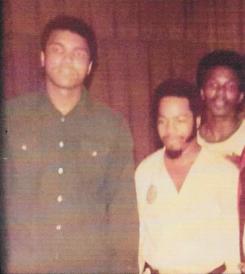
When you have sat on a Mountain Top with Muhammad Ali, it does not get any better than that. Still I am thinking, how can I get Kevin to stop by and say a few words to these kids? I know I would not want to be a kid and have to ride all the back to Kentucky, thinking Kevin Hart was right next door and he didn’t have time to stop by to say hello!

My break came when one of the security detail came through the kitchen. I told him that Kevin and I went back and I needed for him to stop on the way out and say hello to the kids. He in turn sent another member of the team out to meet with me and he said okay.

There was another video shoot to execute out in front of the restaurant. A team member came back and told me that Kevin would make his exit through the kitchen and to keep my eyes on the front.

I all most missed him trying to get the kids back into their seats, by the time I got back to the kitchen Kevin was headed up the steps to the exit. I called out “Kevin where are you going, come back here and holler at the kids?” He put his hand up to his mouth and said, ‘I am hollering at the kids Harold!’

I said, “No way Kevin, come on man and say hello to the children.” He said ‘okay’ and he came back down and went into Ben’s Next Door and waved to the children.

During these difficult times we should always make children first, whether they are ours or someone else’s child.

Ali was a different kind of fellow if a child or baby was in his space the child had his undivided attention.

Many times it is not the celebrity at fault it is “The Yes Men” who are suppose to have his best interest at heart. Kevin probably has changed and success does that to some. Some folks handle success and other let success handle them. I am thinking in the end Kevin is going to handle success because his heart is in the right place. He could have blown me and the kids off but he didn’t.

After Kevin and his entourage had cleared the restaurant, the kids from Kentucky were still waiting outside to get into see the original Chili Bowl where Kevin Hart had just eaten. I took them on a walk through and they seem to have left happy.

When I took Sugar Ray Leonard under my wing as his mentor Robert Hooks was there and a host of others that I brought into help me support this kid in trouble. Ray did not have a bucket to piss-in or a window to throw it out. But when the dust had cleared, he had become the first pro boxer to earn over 100 million dollars (not Muhammad Ali)!

Folks often wonder how I came up with the phrase that I closed my sports talk show INSIDE SPORTS, use to close with, “Every black face you see is not your brother and every white face you see is not your enemy?”

The phrase was inspired by the likes of Sugar Ray, John Thompson, Don King, Adrian Dantley, Adrian Branch, Tony Paige, James Brown, Cathy Hughes, and the list goes on and on, but on the flip side of the coin there were the white faces that inspired me to be all that I could be, to include, Richard Nixon, Red Auerbach, Bert Sugar, Angelo Dundee, Hymie Perlo, etc.

April 4, 2016 marked 48 years to the day when our Prince of Peace Dr. Martin Luther gave his life trying to help the poor and down trodden in Memphis, Tennessee.

On Tuesday April 5th a group of young white middle school kids from Montana came in to the Chili Bowl and blew the top off the place. They had all competed in an essay contest on Black History and their reward was a trip to Washington, DC during spring break.

One the young ladies who won the contest closed out the evening by standing next to the matriarch and founder, Ms. Virginia Ali. She recited the winning essay, it was Dr. King’s speech the night before he was killed in Memphis. It was breath taking. She and fellow students are another reason why we should make all kids first.

On April 4, 1968 when Dr. King was shot and killed in Memphis,Tennessee, I know exactly where I was.

I was with my co-worker Willie Wood (Green Bay Packer NFL Hall of Fame) and we were standing on the corner of 9th and U Street NW DC. We were both working for the DC Rec Department’s Roving Leader Program (Youth Gang Task Force). We had just left Chez Maurice Restaurant’s Happy Hour, a popular hangout for the so-called black in-crowd in DC.

It was a beautiful spring day and we were enjoying the sunshine when someone rode by in a car and shouted, “Hey Harold, they just shot and killed Dr. Martin Luther King in Memphis, Tennessee.”

Now here we are almost 50 years later and the theme song in the Black community is still “We Shall Over Come?” The newly renovated Howard Theater is struggling with a bunch of no-names on the marquee and the historic Bohemian Caverns has shut its door for good. And we are still trying to figure out what went wrong, the answer is in your closest mirrow.

In 2016 a racist billionaire is leading the polls to become the President of the United States and his counter-parts have come out of their holes to support him (keeping hope alive). Donald Trump is exactly what the Republicans wanted, but they had not planned on a member of their own 1% club whom they could not control! Now they are crying “Foul.” You reap what you sow.

President Barack Obama and the First Lady Michelle are getting the last laugh. I would love to be a fly on the wall while they are lying in bed laughing their asses off at this charade while the 2016 Presidential Campaign being spoofed on Saturday Night Live!

Our children’s blood flows in our streets while we pretend there has been progress has been made in human and civil rights in America.

To understand our problem we have to look no further then the black politicians, pimping ministers and black judges sitting on the bench seeing no evil, hearing no evil and sentencing no evil.

In the meantime, cops have become paid assassins in the black community. Their guns have taken the place of a rope. The real problem lies at the top of the law-enforcement community. The problem is the message of “Us against them” mentality.

This message was placed in the minds of racist cops decades ago by the KKK who infiltrated police departments around this country. They were hoping that the message would protect them and it has.

The Code of Silence and The Thin Blue Line were designed to protect white police officers against charges of murder and brutality in the black community. Black police officers unknowing would join forces and become card carrying members of the KKK by being members of the Fraternity Order of Police.

The keepers of this code are the Presidents of the Fraternity Order of Police Departments around America. This behavior is controlled by the 1% and condone by 90% of Police Administrators (to include Police Chiefs). The Godfather of Police Community Relations was the late New York City Police Chief Patrick Murphy. Mr. Murphy was hired by the late Mayor Walter Washington in the late 60s as the Director of the DC Police and Fire Departments. He tried his best to implement a Police/Community Relations Program in the Nation’s Capitol. He met with the staff of the Roving Leader Program once a month at police headquarters to get our input. The police union tried to stand in his path but he refused to give-in and there was progress made, but has since disappeared.

When was the last time you heard one of the Presidents of the Fraternity Order of Police where there was an unarmed black man or woman shot down in our community and a he said, “That was a bad shooting.” Never in the history of law-enforcement has one Fraternity own up to a bad shooting–similar to the KKK owning up to a bad lynching. All fatal shootings in the black community are considered “Good Shootings.”

You will not read or hear of this issue being discussed in Courtland Milloy, Coby King, Eugene Robinson’s columns in the Washington Post, or read about the issue in the Wall Street Journal, USA Today, NY or LA Times. Talking heads like radio talk show host Kojo Knnamdi, Sam Ford or Bruce Johnson on WUSA TV 9 or Maureen Bunyan on TV 7 would dare not broach the topic. The reason, they don’t have a clue?

2015 marked 50 years I have spent working in the streets of the inner-city taking me from the courthouses, playgrounds and schools in our community. I have seen the Good, Bad and Ugly when it comes to Justice & Just-Us, by no means am I anti-cop, my two brothers were in law-enforcement.

My older brother Bobby was a U. S. Marshall for 25 years, my young brother Earl was a DC cop for 14 years (both deceased). I was responsible for both entering the field of law-enforcement (thanks to an assist from former U. S. Marshall-in-charge, Luke C. Moore and columnist Bill Raspberry). My brothers both faced the Thin Blue Line and the Code of Silence trying to stand-up and be good and honest cop serving the people of our community. But Bad Cops like Chief Issac Fullwood proved that white folks didn’t have a patent on racism. His kind still exist in police departments all over this country.

My mentors were the late DC Superior Court Judge, Luke C. Moore and the late Assistant DC Police Chief Timon O’Brant (he was a cop’s cop) both were stand- up Black Men.

My best friend is Andy Johnson (Top DC Homicide Detective). He retired as a DEA Supervisor. And last but by no means least, FBI undercover agent and later the FBI Director of the Detroit Field Office, Wayne Davis. I met Wayne during the 1968 riots after Assistant Chief O’ Brant issue me a DC Police Department badge to get me through the police and military barricades. Wayne would later tip me off to warn our “Mayor for Life” Marion Barry there was a FBI sting in the works to sit him up. Marion did not heed my warning and “The Bitch Set Him Up!’

There are not just bad cops, but there are bad judges and politicians who are perpetrating a fraud in our black communities. Hats off to the black female Mayor and Prosecutor in Baltimore, please keep them in your prayers.

I recently went back into my archives and found one of my Inside Sports talk shows with DC Police Department Commander Jimmy Wilson and Prince George’s County State’s Attorney Alex Williams (a regular) discussing Police Brutality in our community. There is the e-mail from one of the leading Prince Georges County ministers discussing his hidden agenda when it comes to police brutality and how he is locked into the Chief and State’s Attorney? And then there is the homeboy Congressman who I volunteered my resources (media and community), when I first met him at last year’s 2015 Congressional Black Caucus Weekend in DC, he said, after I introduced myself “Man you just f–ked my day up!” He later invited me, my wife and several Kids In Trouble advocates to his office trying to clear up his blunder. It was there he told me, “Man I have never had folks come into my office without asking me for something!” He even called his mother and introduced us by speaker phone. But he turned out to be a ‘Cutie on Duty.’ Stay tune.

When it comes to politicians, The Congressional Black Caucus has been a waste of time for the past several decades.

Trump is not the only loser running for office, my Voter Alert includes, Prince Georges County, Donna Edwards, Glenn Ivy and Anthony Brown. Vote for their opponents whom ever they may be. In DC in Ward 7 Vote for the lesser of the two evils, there is little or no choice between Yvette Alexander and Vincent Reed. My best advice, vote for the unknown because the known is scary. Best bets: Chris Van Hollen and David Trone.
BLACK HISTORY: BLACK WOMEN MAKING BLACK MEN PROUD!

SIMBA GRANDMASTERS 10006MOMMYT&HATTIETGRANDMA BELL1

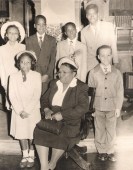
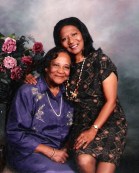
My heroes were not black athletes growing up as a kid in NE Washington, DC.  My heroes could not shoot a jump shot, throw a football 75 yards in the air or hit a baseball out of the park.  My heroes were black women with names like, Grandma Bell and Mommy B. They were my grandmother and mother.


THE KARATE KID: GRANDMASTER FURMAN MARSHALL!

FURMAN
Furman Marshall is the founder of the oldest martial arts organization in the world and the founder of the oldest minority ski organization in the world–Black Ski.

He was born in Washington, D.C. and grew up in Northeast, N.E.  He was educated in the DC public school system and was in the first graduating class of Spingarn High School in 1954. Spingarn is the home of NBA Hall of Fame basketball players Elgin Baylor and Dave Bing.  The only public school in America with two NBA Hall of Fame players.

As the history of the martial arts over the last half century is recorded and documented, the name of Furman Marshall has attained iconic status.  A former Marine and Action Hall of Famer, Supreme Grand Master Furman Marshall is a 10th degree black belt, who along with Fulbright Scholar Phil Cunningham, founded Simba DoJang in 1963.  A student of legendary Ki Whang Kim and Soo Wong Lee, Furman has either personally promoted or sanctioned over 1,000 black belts in 20 Simba affiliated schools.

Prior to his retirement from the ring at the youthful age of 65, he was a fierce competitor with the likes of Joe Lewis, television action actor Chuck Norris and Joe Hayes.   Furman stood only 5 feet 6 inches tall and weighed 168 pounds, he won hundreds of trophies and his mentees have amassed thousand of tournament wins.  In 1977, Black Belt Magazine published an article proclaiming “Simba DoJang of Washington, DC is the winningest Karate Studio in the World.” His students have competed in Afghanistan, Canada, Russia and Spain.

It is hard to believe that Simba began in the basement in an area riddled with crime, you name the crime and it was found in this community in  Southeast( S.E.), D.C..  Furman is credited with not only saving countless youth from drugs, violence, death and jail, but he transformed entire communities.  He empowered neighborhoods.  Prior to 1980 over 5,000 students had trained in Simba along with 30 black belts.

Furman’s business model was unique.  It was “not for profit” meaning it was free to all.  Kids who wished to participate in tournaments were sponsored by the group, who pooled their resources.  Tournament winnings were reinvested so others could participate in future events.  He made sure that Simba’s primary mission was to serve underprivileged students in the inner-city.

Furman, recalled in a story written in Black Belt Magazine, “I teach in the ghetto where I prefer to stay because of the need to help young boys and girls stay out of trouble.”  For the next 45 years under Furman’s leadership, Simba‘s schools would start in no-less than 10 inner-city recreation centers.  The centers were located in the most crime ridden areas of the Nation’s Capital.  The crimes of rape, murder, muggings and robbery were a part of the landscape.  Simba was not left unscathed, on several occasions Simba was challenged by the hoodlums and thugs of The Hood to co-exist in the same space.  Intimidation and attempts at disrupting classes occurred.  Furman bravely alone ‘invited the intruders to meet with him ‘Outside.’  What occurred afterwards is the substance of ‘Urban Legends.’  It is safe to say, no one interfered with Furman’s mission to teach the under-served again.

As Furman Marshall fought his way around the world to become a legendary martial arts icon, he gained that iconic status by meeting and beating other Black Belts along the highways and byways of the World.  On one occasion he would encounter movie and television action actor, Chuck Norris.  The two would meet in the finals of one tournament with Furman coming away as the victor.

Chuck Norris in action , appearing with the legendary Bruce Lee in the movie “Way of the Dragon”as a Black Belt karate instructor in the movie ‘Enter the Dragon’ and as a Texas Ranger in the long running television series of the same name.  

I met Furman on a northeast (N.E.) D.C. playground where he was already a “Playground Legend.”  On the weekends, I would leave my housing project in N.E. and walk several miles to historical Kelley Miller playground.  This is the playground where future NBA Hall of Fame players, Elgin Baylor and Wilt Chamberlain, met in a showdown, when they were student/athletes at Idaho and Kansas respectively.  On any given weekend, you could shoot hoops with some of the best players in the city and Furman and legendary martial arts’ icon, John Womble, were among them.


JOHNWOMBLE

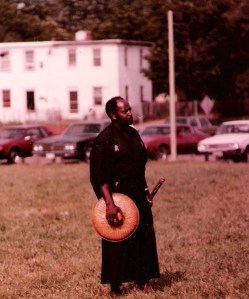
My hero and legendary black belt martial arts warrior and a brother in the struggle, John Womble.  Kelly Miller alumni and black belts Furman Marshall, and Bobby Lee, all followed in his footsteps.

Furman and I would join forces as adults, when we became youth advocates through the D.C. Parks and Recreation Department.  We returned to our roots, the D.C. playgrounds, which were used as our vehicles to enhance the growth of inner-city children through the martial arts and the games of sports—I followed his lead.

There were bumps in the road and the challenges were many.  We met our share of bullies and thugs along the way who threatened our very existence.

Furman not only defended Simba‘s right to exist in the inner-city, but through this determination, he set an example as a role model for his students and the entire community.  He led by example; he neither smoked nor drank, nor used vulgar language (I, myself,  got two of the three right); not a disrespectful word was heard by coaches or players on any given Sunday in the NFL, NBA and in Major League Baseball arenas around the country, when Furman Marshal was there.  Any lack of courtesy or disrespect in his class was off-limits.  Low hanging, beltless jeans were never allowed.   The brothers who were not in his class and chose the corner to hangout, didn’t get a free pass either, when he met them on their turf (street corners).  He would let them know their pants were hanging a little too low, and, that to gain the respect of others, you had to show outwardly, that you have respect for yourself.  Furman believed that “Respect begins first with the individual and then, continued in their presence to others!”  

 
FURMAN ScanSIMBA GRANDMASTERS 10006

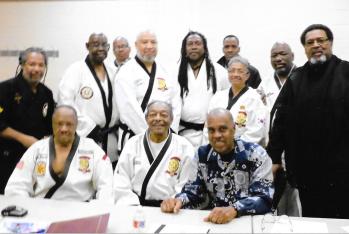
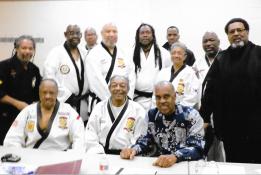
In November of 2015, the Simba DoJang Martial Arts World Federation,LLC,  the registered oversight organization for Simba Do Jang, honored Harold Bell by naming him to its Executive Advisory Board, making him the first non-black belt civilian so honored. 

People have often asked Furman how he came up with the name Simba for his martial arts school?  Furman’s response, simba” means “a lion“.  A lion represents strength and staying power.”  Simba DJ also challenges minority kids to think outside of the box by trying non-traditional sports.  Character building, discipline, and hard work have always been the linchpins of Simba.  Fundamental to Simba is respect for all human beings, regardless of differences.  It is little wonder that Simba schools are diverse, welcoming all races and creeds.  Schools have opened in DC, Maryland, Virginia, New York, Kansas, Hawaii, Oklahoma, Nevada, Alaska and Afghanistan.

Never to rest on his laurels, Furman saw challenges as an opportunity to excel.  He was a champion skier and one of the founders of Black Ski, the first black ski club in America; he was a champion drag car driver and motorcycle racer.  He was also the founder of the Renegade Racing team, a champion skydiver, a champion tennis player, scuba diver, hand glider, water skier, horse back rider, and all around athlete in football, basketball and baseball.

It was not enough for Furman to expand his own sports horizons, but he wished to widened opportunities for black youth.  He does not believe in the word “can’t.”  In a 1993 article written in the Washington Post, he said, “I just want to be a living example to minority youngsters to show that they can do anything they want to do; they just have to learn to control their fears.  That’s all that prevents them from being karate champions, Olympic skiers, sky divers and anything else they can dream.  I have a moral obligation to see that they can be all that they can be.”  Truly, Furman is a visionary leader ahead of his time.

To expand minority youth geographic horizons, he organized trips for the kids to go horseback riding, skiing, roller skating, and cycling– far and beyond the streets of the inner-city.  In only a year, Black Ski was the largest club of its kind in America with over 700 members.  The club sponsored trips to Canada, Vermont, and Colorado, members even skied on the Olympic tracks.  For those students who could not afford the trips, Furman would raise funds from numerous doctors and lawyers who had also joined Black Ski.

In 2012, he was honored as “The Ambassador of the Martial Arts.”

When asked what motivated him, his response was, “Just changing the lives of young people to become positive citizens.” Over a 45 year time period, many of these young people have not only become some of the nation’s most respected martial artists, but leading politicians, lawyers, doctors, educators, law enforcement officers, and government officials.

I remember one incident, when I had to turn to my friend Furman and ask for help.  I encountered an out-of-town bully from Philadelphia, who refused to pay me the remaining $5,000 for a boxing promotion at the Lincoln Theater several years before.  It was all done on a handshake and a security deposit of $1,000.

Evidently, the bully felt, that he didn’t have to pay the remainder $4,000, after I helped him sell out the show. The bully and I rode around D.C. all week-long,  leading up to the fight– in his all white stretch limo, shaking hands, and meeting the press.  Kamal Ali, the now CEO of Ben’s Chili Bowl, allowed us to use the restaurant’s upstairs office as our meeting and contact point.  I hired Furman and Simba as my security.  The crowd control provided by Simba was done quietly and efficiently.  After the fight that night, the Bully and my friend and college roommate, then D.C. Boxing Commissioner Dr. Arnold McKnight, called me up into the ring.  They introduced and thanked me for helping to make the show a success.

The next morning, I was to meet the Bully at Ben’s to close-out our ‘agreement’—my bad.  He was a no-show.  He had left town without a trace or a word.

The bully refused to answer my cell phone calls and I eventually tracked him down by his home telephone number in Philadelphia.  My friend and NFL legend, Johnny Sample, who had referred him to me, provided the number.  I made the call to his home around 6:00 a.m. on a Saturday morning.  He was surprised and angry to hear my voice on the other end of the line.  When I asked him for my money, he went into a rage and called me everything but a child of God and then threatened to kill me.  I calmly ask him–” where and went? ” He answered, “I will make it easy on you, I will be in D.C. for a boxing show at the National Guard Armory on Saturday.”  My response, “I will see you there.”

My next call was to Furman, and after I explained what had happened, he said, “I got it and you be cool; we will be there.”

We knew his entourage might be packing guns from an encounter with Simba earlier, during a security check at the Lincoln Theater.  Simba security had made them produce the licenses for their hardware, before they were allowed into the theater and they were pissed-off about it.

The following Saturday, we arrived at the Armory, to find the bully from Philly had parked his limo on the sidewalk in front of the Armory.  I wanted to arm myself, but Furman warned against it and said “My security team is licensed to carry.”

I was really angry, because this was a sign of disrespect and intimidation.  But, Furman was cool and said again, “Harold Bell be cool; we got it!”

We got to the entrance to the Armory and guess who was standing front and center, the bully and his entourage, laughing and joking with some fans they had met at the Lincoln Theater outing, I guess.  Furman and six Simba security followed me in, with Furman whispering to me, “Be cool; let them make the first move!”  It was like Moses and the parting of the Red Sea, the bully and his entourage moved to one side and made a path for our entry.

It seemed like I tried my best to die that evening.  I had fliers printed up with the Bully’s and Don King’s photos side by side, calling them both boxing pimps and thieves.  The Bully and his entourage had ring side seats; and,  without telling Furman, I started passing out the fliers, handing the Bully his personal copy.  After the fight was over, we walked back out of the Armory without incident– right by the Bully and his entourage standing by his limo.

I never got the rest of my money, but staring that bully down— was PRICELESS!

Evidently, my friend Johnny Sample got on his case in no uncertain terms.   The Bully called Boxing Commissioner Arnold McKnight, who was scared to death as to what might happen to me.  The message he gave Dr. McKnight was, “Tell Harold Bell, I am not looking for any trouble.”

The next time I would see the Bully and his entourage was the following year; they were in attendance at a Liala Ali Championship fight in Bowie, Maryland.  The fight took place at the Bowie Baysox Baseball stadium. I was walking around ringside, killing time alone, when I spotted him and his entourage in the crowd, but this time, they were sitting back in the crowd and not at ringside. This was strange for a guy who loved being seen in crowded places shaking hands and playing “Mr. Big Shot!”  I left the stadium that night looking over my shoulder, but feeling like ‘Mission Accomplished.’

ALI & FURMANFurman&LilaAliscan0032

The Grand Master Furman Marshall and Muhammad Ali and the undefeated champion Liala Ali—proving an acorn does not fall too far from the tree.

It is easy to see why Jhoon Ree, the God Father of Tae Kwon Do in America refers to Furman Marshall, ‘as a humble and kind man’ I concur.
NOBODY BOTHERS ME“Nobody bothers me” Jhoon Ree visits the studios of Inside Sports
Note Worthy: This story was copied from the 2014 edition of The Martial Arts Action Magazine. (author Bob Maloney, J. D.) 

Today, the Simba Do Jang legacy, now trademarked registered, is held sacred as an affiliate with the oversight of the larger, trademark registered organization, The Simba Do Jang Taekwondo World Federation, LLC., Grand Masters Marshall & Cunningham with chosen CEO, Master Wesley D. Spires, a Simba Do Jang Master Instructor.<img

GONE TOO SOON: GIGI RANSOM A WARRIOR IN THE GAME CALLED LIFE!

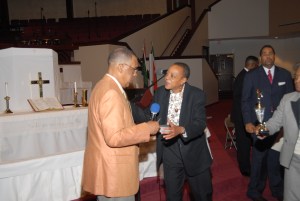
SETH3 087SETH3 086ISETH3 088GiGi receiving the Kids In Trouble 2008 Life Time Achievement Award at Ebeneezer AM & E Church in Ft. Washington, Md.
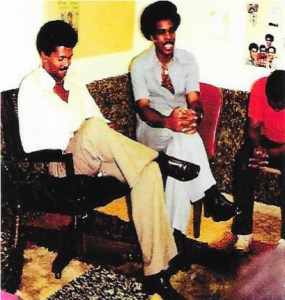
I don’t have a clue to where I met GiGi but you can bet it was somewhere in the war zones of the inner-city of Washington, DC. She was truly a sister in the struggle and for the past two decades she was a friend of Kids In Trouble and Inside Sports. When I heard of her passing I was stunned.

She was always a vibrant and energetic lady always trying to figure out a way to support almost any community endeavor when it came to her people. She was the ANC Commissioner in Ward 6 for several terms and served her constituents well. I remember when I helped to rescue a 15 year old autistic young girl off of the subway tracks at the Potomac Ave. subway station. The young girl had fallen or was pushed on to the tracks as I was exiting the subway train.

I saw people pointing down at her, but no one was attempting to rescue her. My first instincts were to jump down on the tracks, but a metro employee stopped and warned me I could be executed. We both laid flat on our stomachs and reached out toward the child asking her to give us her hand, but she just stared at us. Several more request were made, but still no response and I then notice the lights beneath me were blinking. This meant a train was heading into the station. I yelled “Honey please give me your hand” finally she reached up and I pulled her up with an assist from the other brother from metro. As we pulled her up to the platform, the trained rolled into the station and I broke out into a cold sweat.

There was hardly anyone on the platform and I could see metro was trying to cover the incident up. I left the scene without anyone asking me what had happen? Once I arrived home there was a message from GiGi asking me to give her a call. The first question, she asked was, ‘How was your day?’ When I got through explaining my day, GiGi said, ‘WOW.’ Right away she said, ‘Cover Up, but not on my watch!’ She ask me to stay by the phone and she would call me right back, but instead I received a call from a NBC WRC TV 4 reporter.

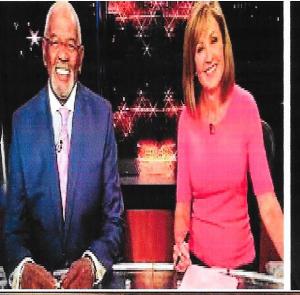
He wanted to meet me back at the subway station in the morning to be interviewed about the incident. Thanks to GiGi the interview was seen on the 6:00 news with anchors Jim Vance and Doreen Ginsler reporting. Doreen was jumping up and down in her anchor chair saying, ‘Now that is a hero’ but Jim sit there like he didn’t know me. My wife Hattie didn’t get Jim’s non-chalant attitude knowing how close we were once upon a time.

JIM VANCE & DOREEN0010

I never told her he had not spoken to me in over a decade.  All because I tried to save his life after a notorious drug dealer gave me a check he had written for drugs. The drug dealer was trying to save his life too, but it was still a business to him and he refused to cut off his nose despite his face. So since Jim and I were friends, he thought it best I tell him to step back. Mission Impossible–I failed to convince Jim and he kicked me to the curve.

JIM VANCE INSIDE0005JIM VANCE TENNIS0002

My heroic actions was another slow news day to him. I owe to GiGi Ransom for making me a hero and chump all on the same newscast.  In 2008 Hattie and I celebrated our 40th wedding anniversary at Ebeneezer AM&E Church in Ft. Washington, Md. In attendance to help us celebrate were Doug Williams, Dave Bing, Chris Thomas, Butch McAdams, all the ‘Usual Suspects’ GiGi was the recipient of the Kids In Trouble Life Time Achievement Award.  On Saturday February 27th 2016 Kids In Trouble will celebrate Black History Month with a Tribute/Luncheon honoring Black Women with GiGi Ransom in mind—RIP my sister. 


A BLACK HISTORY MONTH MOMENT JOHNNY SAMPLE A LEGEND OF INSIDE SPORTS: A MAN’S MAN!

JOHNNY SAMPLEREDS2

In April 2006 remember receiving a call from Johnny Sample’s friend, basketball legend and youth advocate Sonny Hill.  There was bad news as it related to the death of my friend Johnny Sample.  It reminded me of a recent conversation I had with Coach Clarence Bighouse Gaines’ wife Clara.  She said, “Harold I never thought Gaines would die.”  It was eerie because I had that same feeling about Johnny Sample, even though I knew better.

He was known to his friends as Happy, Blade, Reds, and Redball.  He died suddenly in his hometown of Philadelphia, he was 69 years old.

I had just spoken with Johnny before heading south to the memorial service for “Bighouse.”  He said he was going to try to make it, but I didn’t look for him.  Johnny was notorious for not showing up.  I have heard all the stories but I don’t ever remember him giving me his word and not keeping it.

He was always there for all of my celebrity tennis tournaments, media panel discussions, award programs, radio and television talk shows, etc.  Compared to today’s pro athlete, he was a Saint.

I first saw Johnny Sample in Washington, DC in 1954.  He was a member of the Maryland State football team and they were in town to play Howard University at the Cardozo High School football stadium.

I was amazed that he didn’t wear thigh and knee pads; he worn his pants, skin tight.  The shoulder pads were so small it didn’t look like he had any on.  His level of play that day was like a Man among boys.

Howard University was no match for Johnny Sample and his teammates.  It was here that I came away with the impression that Johnny Sample was indestructible.  It would be years later before I would meet Johnny face to face.  It was at a Baltimore Bullets’ (Wizards) basketball game at the Baltimore Civic Center.

He was a member of the Baltimore Colts football team.  He was standing around outside of the bar during halftime laughing and talking with anyone and everyone.  I decided to go up and introduce myself, and we have been great friends ever since.

It was easy to like Johnny Sample; he had an outgoing personality and he made you feel like he had known you all of his life.  There was nothing phony or pretentious about him.  If you didn’t want to hear the truth, you didn’t want to be around Johnny Sample.

Michael Cooper is one the greatest running backs to ever come out of the Philadelphia public school system. He was one of Johnny’s closest friends.  He played at North East high school and Michigan State.

Michael remembers when he was invited to the Washington Redskin camp in 1964 for a try out by then Coach Bill McPeak.

It looked as though Michael was a sure bet to make the team until one day Coach McPeak decided it best he go on the Redskin taxi squad.

Johnny disagreed with the coach’s decision and let him know in no uncertain terms.  He would run through a brick wall if you were his friend.  Michael recalls his many acts of kindness for his friends.  He says, “Johnny Sample was not a fly by night friend, if you needed him, he was there.”

When his friend and teammate the legendary ‘Big Daddy’ Lipscomb was mysteriously found dead in Baltimore, the NFL claimed he died of an overdose of drugs.  Johnny knew for a fact ‘Big Daddy’ didn’t do drugs.  He said, ‘Big Daddy was scared to death of needles.’

He sued the NFL for $100,000 to clear his friend’s name and won the battle.  Johnny would lose the war NFL Commissioner Pete Rozelle declared on him.

Coming out of Maryland State College, he was one the greatest running backs in the nation.  In 1955, he was voted unanimously by The Pigskin Club of Washington, DC as its “Player of the Year” for the Central Inter-collegian Athletic Association (CIAA).

His NFL career would be controversial, but his athletic skills were never questioned.  His mouth often got him into trouble, but his play on the field would often be his ticket out of the NFL doghouse.

During his 11-year NFL tenure he was one of the most feared defensive backs in pro football.  Roy Jefferson a former teammate and All-Pro wide receiver says, “If you caught the football in his territory you were going to pay the price.”

Hall of Fame All-Pro wide receiver Frank Gifford of the New York Giants was so fearful that he once saw Johnny on a New York street corner and ran to the other side against a red light to get away from him.

Johnny made “The Bump and Run” against NFL wide receivers a art form.   He would hold some All-Pro receivers to no catches for an entire game.

The Baltimore Colts, Pittsburgh Steelers, Washington Redskins and the New York Jets were all NFL homes for Johnny Sample.  He earned two championship rings and one Super Bowl ring.

In 1969 Johnny walked away from the game that he loved.  He was much more than a great athlete he was a student of the game.  Johnny could disrupt the flow of a game by calling out the offensive play as the opposing team came out to line up.

The QB would immediately call a timeout and cuss Johnny out as he made his way to the sideline.  There were many who thought he would have been a great NFL coach, but he had burned too many NFL bridges.

Immediately after retirement he went to work on his first novel, “Confessions of a Dirty Football Player.”  This book outlined the mercenary world of professional football.  In an interview on my television sports talk show Round Table “Legends of Inside Sports” Jim Brown asked the question, ‘Johnny were you a dirty football player or just a hard clean player?’

His response, ‘I was never dirty, except when I played against you.’  The NFL Roundtable panel included, Roy Jefferson (Washington Redskins), Willie Wood (Green Bay Packers), and JB Brown (Miami Dolphins) all they could do was laugh along with Jim.

MY GUYSRED BALL

Johnny was not one to just sit around after his NFL career.  He became an entrepreneur and owned a ticket agency and sporting goods store called, Sample’s End Zone.  He later taught himself the game of tennis and quickly excelled.

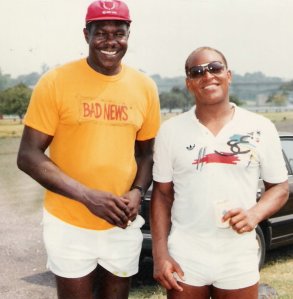
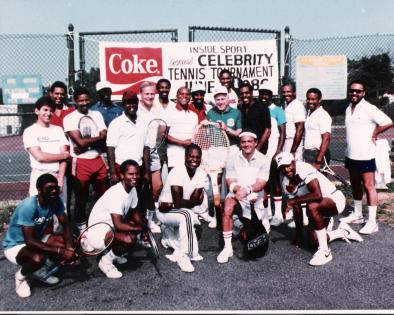
BAD NEWS AND JOHNNYscan0016 Jim Bad News Barnes (NBA) and Johnny pose for the camera at my Inside Sports Celebrity Tennis Tournament in Anacostia Park in SE DC and shares a Big racket with NBA legend Red Auerbach and me at another Celebrity tournament at Bannecker Rec Center in NW DC. JOHNNJNFL ROUNDTABLE HOST JB REDBALL RODNEY & PHILA JAKE Johnny Sample is seen at the Grand Hyatt in NW DC participating in a NFL Round table with RB Jim Brown, WR Roy Jefferson, DB Willie Wood, DB JB Brown and Sonny Hill.  
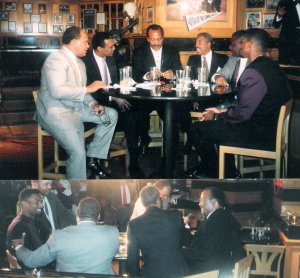
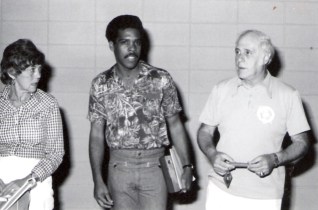
He was the No. 1 player in the country in the United States Tennis (USTA), 45 and over category for several years running.  He would later serve as a tennis official for the USTA, Wimbledon, US, French and Australian Opens and chair umpire, linesman and referee for the USTA.

His inner-city youth tennis program was one of the largest and best run in the country. Tennis to him was all about, love, love and more love.

In February of 2004, he was inducted into the CIAA Hall of Fame in Raleigh, NC.  This was almost 50 years after he had graduated from college.  The first question he asked when he took the microphone, “CIAA what took you so long?” 

Johnny and I had often talked about being “Blackballed” by the system is one thing, but to be “Blackballed” by your own people is a tough pill to swallow.

Johnny Sample’s induction into the Hall of Fame could not have come at a better time.  In this case better late than never.  This was definitely a highlight in his long distinguishing odyssey into the world of politics and sports.

During his induction speech he asked me to stand up and be recognized as the pioneer in sports talk radio.  He was always reaching and giving something back.  Johnny also excelled as a sports talk show host on W-H-A-T Radio in Philadelphia from 1988 to 2004.  Johnny used his sports talk show as a vehicle to improve the growth of his community.  He never forgot I suggested he should have his own sports talk show in Philly.

As a community advocate, he was instrumental in several projects.

The crown jewel was the Million Man March in 1986 when he organized seventy-three buses from Philadelphia and parts of New Jersey to Washington, DC.  In my world he was a special man.

John B. Sample Jr. was born and raised in Portsmouth, VA where he was an  all around high school athlete. He played his college football at Maryland-Eastern Shore.  He was an All-American running back and was the first black athlete from a HBC to be named to the College All-Star football team.  The annual game was played in Chicago against the NFL Champions.

Johnny Sample was a student of the game when it came to football. He would have been a great coach on any level.

He played for the Colts in the 1958 NFL championship game against the New York Giants that is still often described as “The Greatest Game Ever Played.” The Colts won 23-17, the first game to go to overtime.

In 1969 he was all over the field in that historical game against his former team, the Baltimore Colts. It was like he was in the huddle when the plays were being called.  He had an interception in that 16-7 upset it was the third Super Bowl. That was the game Jets’ QB Joe Namath, “guaranteed” victory.  The game established the old AFL on a par with the NFL after the two leagues had merged. He was also a co-captain along with Namath.

“He will always have a special place in Jets’ history as a member of the Super Bowl championship team,” Jets coach Herman Edwards said. “The Jets and the NFL community have lost a friend in Johnny Sample.”

In all, Sample played 11 seasons for the Colts, Pittsburgh Steelers, Washington Redskins and the Jets. It is rather ironic, the 1958 title game he was a rookie and the 1969 title game was his last—both were championship years.  He came into the league as a winner and he went out a winner.

“His participation in two of the most significant games in NFL history, the 1958 championship game and Super Bowl III, symbolized the champion John was,” Colts owner Jimmy Irsay said.

Known as a fierce hitter from his cornerback position, he had 41 interceptions during his career, returning four for touchdowns, and also returned one punt and one kickoff for a TD. In his final year with the Jets, he had seven interceptions.

Sonny Hill, a longtime friend of Sample’s who runs a basketball league in Philadelphia, said he thinks Sample belongs in the Hall of Fame.

But what was more important to his friend, Hill said, was standing up to injustices such as racism.

“Some tolerated it and went along with whatever, but Johnny would not tolerate it,” Hill said. “He was a man’s man.”

I was pleased to see my name in the program as an Honorary Pallbearer for the great Johnny Sample.  “Redball” it was my honor.  Johnny Sample is gone, but he is not forgotten.


A LITTLE KNOWN BLACK HISTORY FACT IN 2016!

DOTIE&amp;RED       HB, RED &amp; EARLNBA Godfather the late Red Auerbach and wife Dotie/Red and Earl Lloyd celebrate Black History
The 2016 NBA All-Star Game and an email from Round Ball Report TV host Andrew Dyer in 2011 brought back this reminder for a little known black history fact, before their 15 minutes of fame, guess who came through Kids In Trouble, Inside Sports aka Harold Bell?

The roster reads as follows; Dave Aldridge (TNT), James Brown (CBS), Dave Bing (NBA), Tim Baylor (NFL), Kevin Blackistone (ESPN), Jamie Brown (Sister 2 Sister Magazine), Adrian Branch (NBA/ESPN), Adrian Dantley (NBA), Larry Fitzgerald (Media), Bobby Gardner (NFL), Glen Harris (TV 8), Grant Hill (NBA), Darryl Hill (Naval Academy/ACC), Jo Jo Hunter (NBA), Cathy Huges (Radio/TV One), Dave Jacobs (Boxing), Jair Lynch (Olympian), Sugar Ray Leonard (Boxing), Tony Paige (NFL), Butch McAdams (Radio One), Oden Polyniece (NBA), Aaron Pryor (Boxing), Bill Rhoden (NY Times), Chris Thomas (BET), John Thompson (GT), Cecil Turner (NFL), Omar Tyree (author), and Michael Wilbon (ESPN).

Benefactors after the fact; Willie Wood (NFL) Jim Brown (NFL), Earl Lloyd (NBA), Doug Williams (NFL) and Don King (Boxing) 

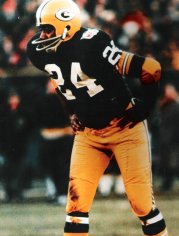
willie woodDSC_0162No. 24 Willie Wood / NFL Hall of Fame LB Sam Huff pays tribute to Willie in 2007
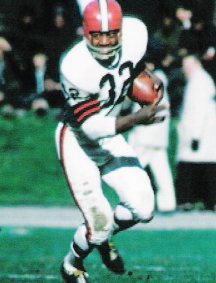
JIM BROWNJIM BROWN &amp; MENo. 32 Jim Brown

scan0005EARL LIOYDNo. 11 Earl Lloyd and wife Charley visit hometown of Alexandria, Virginia
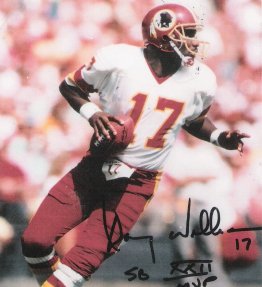
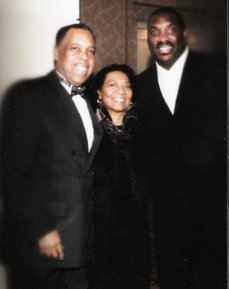
QB DOUGHB DOUG HBNo. 17 Doug Williams first black QB and MVP to win a Super Bowl (1988)
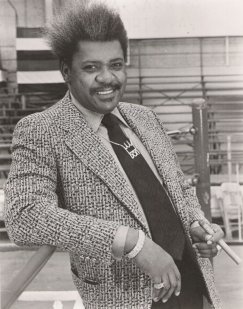
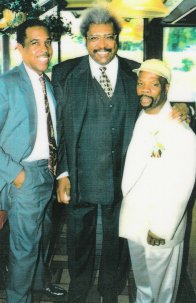
KING I AM  HB DK CALVINDon King meets the late legendary Community Advocate Calvin Woodland
In closing, all the glory goes to God, but I thought I would remind you anyway.  Have a great and God blessed day.

As Always,

HBell

Note Worthy:

I ran a successful campaign to get Willie Wood inducted into the NFL Hall of Fame and Earl Lloyd inducted into the NBA Hall of Fame after they were overlooked by the NFL and NBA.

My high school coach and savior Dave Brown heard me on my Inside Sports radio talk show apologizing for tooting my own horn.  His advice after the fact, I never forgot, he said, “Son you don’t ever have to apologize for tooting your own horn, because first, you have to have a horn to toot.”  Coach Brown was a wise man.

DAVEBROWN      COACHBROWNMy hero, Coach Dave Brown and his wife and daughter as I pay tribute and thank him for saving my life.


The 2011 e mail that inspired this blog

From: hkbell@comcast.net
To: “Andrew Dyer” <dyer21@verizon.net>
Sent: Thursday, January 20, 2011 7:51:14 AM
Subject: Re: NBA All-Star 2011 Credential Request: Round Ball Report / THE STRUGGLE CONTINUES!

Andrew,

It is hard to believe that 35 years after I made my bold move to sit in the middle of the white media at the Capitol Center (Washington Bullets), that legit and qualified blacks in sports media are still being denied their seats at sports media press tables!

Media and pro sports are still the last plantations because the brothers and sisters who have benefited from others who have blazed the trails are now the roadblocks.  They are still not reaching back and pulling others along with them.  It is amazing how “Two dollars and your name in lights” can make one forget!

I just received an e-mail from another black female sports reporter in Kansas.  She ask me to contact the promoters at the Muhammad Ali Celebrity Fight Night in Phoenix, Az to request credentials for her.  She received the same type of response from the PR people you received.  She has been legit for over 30 years.

We in many ways have to blame ourselves for most of these racist acts by the present folks in charge.  The likes of Don King, Rock Newman, etc treated blacks in sports media with little or no respect.  They hired PR people from another planet!

We keep talking about progress and the opportunities for blacks in America—did you check out that BS on ESPN this week about blacks in sports?

I was more than proud to see Michael Wilbon take a stand and call folks and organizations out for their lack of compassion for others.

The program did point out the number of major newspapers (in the 90s) with black sports editors on staff are in single digits. The same can be said of the number of black PR Directors in the NBA, NFL, MLB, Tennis, Golf tournaments and hockey is out of the question.  Put all the sports TOGETHER and you can count the black PR people on one hand.  Rev. King must be turning over in his grave.

I am still trying to figure out what black America is celebrating during Dr. King’s birthday and during Black History Month!  My program on Dr. King’s birthday read “Remembering Dr. King & Bringing the Civil Rights Movement into Focus.” 

This e-mail takes me back to my first NBA All-Star Game in Houston, Texas.  I encountered the exact same ROADBLOCK, unlike you I had the real NBA GODFATHER in my corner—Red Auerbach.

I will drop a note to my NBA contact (he was the one who denied me) and ask him to double check for press credentials for your two reporters.

I can’t promise anything but what the hell!

Remember, the problem usually starts at the top and he is at the top. The worst thing he can say is “No.”

And by the way, that GODFATHER tag you guys have given me is very flattering but the truth be told I am just another brother in this on-going struggle to be free. God bless and keep me and Hattie in prayer.

HB


—– Original Message —–
From: dyer21@verizon.net
To: hkbell@comcast.net
Sent: Wednesday, January 19, 2011 11:10:32 PM
Subject: Fw: NBA All-Star 2011 Credential Request: Roundball Report


Harold. It’s time for you to pull their coat as the Godfather with your personal contact if he’s still in place because they gave us the standard thanks but no thanks response.


Andrew


Sent on the Sprint® Now Network from my BlackBerry®

From: Rebecca Colling <RColling@nba.com>

Date: Wed, 19 Jan 2011 16:14:01 -0500

To: <dyer21@verizon.net>

Subject: NBA All-Star 2011 Credential Request: Roundball Report

Thank you for your interest in covering NBA All-Star 2011.

Unfortunately, space limitations preclude us from issuing credentials for this year’s All-Star events for Roundball Report.

I’m sorry we are not able to honor your request.  However, should anything open up, we’ve kept your request on file and will notify you.

Tim Frank

Senior Vice President
NBA Basketball Communications


GRANDMA’S HANDS

Played the organ in church on Sunday mornings
Grandma’s hands
Played the organ so well
She use to issue out a warning
Harold don’t you run so fast
You might fall on a piece of glass
Might be snakes there in that grass

She soothed my unwed mother
Grandma’s hands
They use to ache sometimes and swell
Grandma’s hands
She use to lift my mother’s face and tell her
Mattie, grandma understands
That you really love that no good man
Put yourself in Jesus’ hands
Grandma’s hands
Used to hand me piece of candy
Picked me up each time I fell

Grandma’s hands
Boy, they really came in handy
She’d say, Mattie don’ you whip that boy
What you want to spank him for?
He didn’ drop no apple core
I don’t have grandma anymore

If I get to heaven I’ll look for
Grandma’s hands. by Bill Withers

QB MARLIN BRISCOE THE NFL AND AFL’S FIRST STARTING BLACK QB!

BLACK QB WILLIE THROWER0003BLACK QB WILLIE THROWER0001BLACK QB WILLIE THROWER0008Marlin Briscoe was 1st to start at QB for the Denver Broncos and Willie Thrower was the first to play in a game for the Chicago Bears
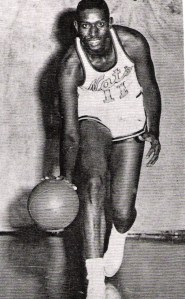
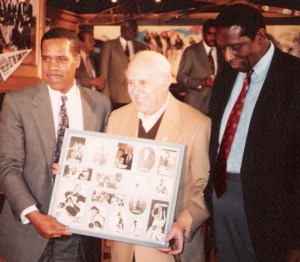
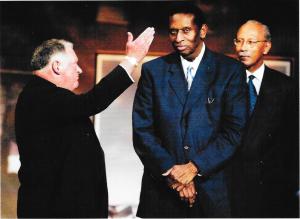
 

A little known black history fact, how Marlin Briscoe was the first black QB to start in a NFL or AFL game.  Super Bowl first winning QB Doug Williams, Russell Wilson, Colin Kaepenick and Cam Newton all ride on the wave he created. He went from CB to QB to WR.  Briscoe was called the Magician before racism, drugs and pro football owners made him disappear for real.

This story was written by someone by name of Ken Crippen, it is long but it is worth the read if you like sports history.

Marlin Briscoe was on top of the world. He had set rookie records as the first black quarterback to start in the NFL and won two Super Bowl Rings as a wide receiver with the Miami Dolphins. However, drug addiction almost ruined his life.

Briscoe was a fourteenth-round draft choice out of the University of Nebraska – Omaha. He said,  “I came into the league as Denver’s starting cornerback.” However, after an injury to the Broncos’ starting quarterback Steve Tensi, Briscoe received his opportunity. He had played quarterback from Pop Warner through college, so the position was familiar to him. However, there was a stigma that African-Americans could not play quarterback. According to the critics, African-Americans did not have the “mental capabilities” that were required of the position. Briscoe proved them wrong.

That rookie campaign saw Briscoe throw for 1,589 yards and 14 touchdowns in only a partial season. While those numbers do not look gaudy by today’s standards, let’s put them into perspective. Briscoe still holds the following Denver Broncos records:

  • 1st in total offense by a rookie (1,897)
    • 1st in touchdown passes by a rookie (14)
    • 1st (tied) in most touchdown passes in a game by a rookie (4). (He also holds positions two and three with two games with three touchdown passes.)

He also ranks (Broncos all-time records):
• 3rd in most passing yards by a rookie in a season (1,589)
• 3rd in most completions by a rookie in a season (93)
• 4th in highest average gain-per-attempt by a rookie (7.09 yards)

Even with a record-setting performance his rookie year – records that still stand 45 years later – head coach Lou Saban did not want Briscoe to return as the starting quarterback. Briscoe recalled, “It was obvious that they did not have me in their plans.” He continued, “I had gone back to Omaha to finish up six hours that I needed to graduate. At that time, they had acquired Pete Liske from Canada. I heard it through the grapevine that they were having quarterback meetings and I was not even invited, even though I was the starting quarterback at the end of the season. That meant that they did not even have plans for me to compete. That was all I wanted was to be able to compete. I had no misgivings about feeling that I was not going to be the starting quarterback. Steve Tensi was the quarterback, but he got hurt the previous year. All I wanted to do was to be able to compete, but they had no plans for me.

The coaches didn’t even invite me to the meetings.  To me that was the first sign of disrespect. It was totally highly unfair. As a matter of fact, when I found out about the meetings, I flew back to Denver and stood outside of the office where they were having the meetings. When Saban came out, he could not even look me in the eyes. He did not know I was coming.”

The situation did not improve at training camp. “When I got to camp, it was apparent that they had no plans to even let me into the fray. I asked for my release, because I thought that with the success that I had, it would give me an opportunity to play for another team. However, that was not the case. I heard through the grapevine that I was blackballed. [Saban] wouldn’t release me right away. He said, ‘Wait four days.’ I was trying to figure out why he wanted me to wait four days. By the end of those four days, my name was tainted. It was spread around the league that I was a malcontent. I wouldn’t play another position. That is what they wanted me to do. I had no offers. Not even a sniff at quarterback.”

However, with Briscoe’s success as a starting quarterback, attitudes started to change around the rest of the league. “They drafted James Harris in 1969 as a quarterback. I don’t think that it would have happened if I had failed to show that a black man could lead on that level. There were a lot of naysayers out there that thought that a black man couldn’t throw and that they didn’t have the mental capabilities of leading on that level. They thought that there would be fan backlash and that fans would not come to the game. Also, they didn’t think that white players, particularly, would follow a black quarterback. Now, look at my line in Denver. They were all white and three-quarters of them played on teams from the south. The teams they played on didn’t have a black quarterback. They didn’t have black players at all. A lot of the guys, I still see them today, say that, ‘We could have won with you.’ Not only did you have to have respect of the white players, but you had to gain the respect of black players. You had to gain the respect of all of your teammates that you could play the position. I was in a situation where I had a heavy burden to prove that I could play that position and be a leader. Luckily where I went to college, it was a majority white school, but I was able to quarterback a multicultural team. I never thought of myself as a black quarterback. I think that is what saved me. Ethnicity never entered my mind. I was the quarterback. I was the leader of the team. So, when I got the opportunity, the pressure of being a black quarterback really didn’t enter into the picture. Fortunately, I had already been through the scenario of leading players, whether they be black or white or whatever. “

Marlin Briscoe was the first black quarterback to start in the NFL or AFL. However, he was not the first black quarterback since reintegration of the league. That distinction goes to Willie Thrower of the Chicago Bears. Thrower played sparingly for the 1953 Bears team, only throwing eight passes. But he blazed a trail for all African-American quarterbacks.

Briscoe recalled, “You won’t believe this. Right after my rookie season, one of my receivers was named Jimmy Jones. He used to play for the [Chicago] Bears. I went to Chicago to see my girlfriend. I contacted Jimmy and he took me to this bar called The Presidents. So, Jimmy is introducing me to the bartender, ‘This is Marlin Briscoe. He is the first black quarterback in the NFL.’ This guy was sitting next to me. He said, ‘You weren’t the first black quarterback.’ I said, ‘I was.’ He said, ‘No, you weren’t.’ I said, ‘Well, who was?’ He said, ‘I was. My name is Willie Thrower.’ It couldn’t happen in a million years. I knew that he existed, and he was sitting right next to me. We sat there and we talked for a couple of hours. I met him by happenstance going to this lounge with my receiver. I knew who he was, and for him to be sitting right next to me. It was kind of crazy, but I am glad that I got a chance to meet him. That was one of the highlights of my life.”

But, Briscoe was out of a job. He contemplated going to the Canadian Football League (CFL) to play quarterback. Did he think that he would have a shot to play in the CFL as a quarterback? “Yes. I went up to practice one day. I practiced at quarterback and some at defensive back. After that day’s practice, I went back to the hotel and got to assessing things. I decided that the CFL wasn’t for me. No disrespect to Canadian football, it’s just that with the success that I had in the NFL, I felt that I belonged there.”

He never gave up on trying to get back into the league. “I called around to the teams that I had success against my rookie year to see what was out there,” recalled Briscoe. “I almost beat the Oakland Raiders. I beat the Buffalo Bills twice. John Rausch, who was the coach of the Oakland Raiders, moved on to Buffalo. So I called him. He indicated that he had no need for a quarterback. He drafted James Harris, and he had Tom Flores and Jack Kemp. He said that he needed help at wide receiver. I told him that I never played wide receiver before, but that I would try it. They put me on a flight to Buffalo and the rest was history.”

Briscoe played wide receiver for the Buffalo Bills from 1969 through 1971. In that time, he racked up 2,171 yards on 133 receptions and was named to the Pro Bowl. Not bad for someone who never played the position.

After three years in Buffalo, his time was up. At the conclusion of the 1971 season, Buffalo traded Briscoe to the Miami Dolphins. “I felt like I hit the lottery,” recalled Briscoe. “It was kind of amazing, because Lou Saban was my coach at Denver. He denied me the opportunity to compete. He blackballed me from the league, I believe. There is no way in the world that you can be in the running for Rookie of the Year and to do all of the things that I did that year, and not get an opportunity to compete. That is all I wanted. So, after I was released and I go to Buffalo, I ended up being the Most Valuable Player over O.J. Simpson, at a position I never played before. A year later, I lead the league in receptions and made All-Pro. I also got entrenched in the community doing community work. Now, I am pretty much a fixture in the Buffalo community, but I was playing out my option and negotiating a new contract. Now, who do they hire to be head coach, but Lou Saban. So now, he is coming in and he has to deal with me on another level. He can’t just deal with a fourteenth-round draft choice that he could just mouse around. I was arguably one of the top receivers in the league.” In the 1970 season, Briscoe was ranked second in the league in receptions, second in receiving yards and seventh in receiving touchdowns. In 1971, he was the team’s leading receiver based on receptions, receiving yards and receiving touchdowns. Briscoe continued, “At the end of the year, the [Miami] Dolphins were playing [the] Dallas [Cowboys] in the Super Bowl and I went to the game. I ran into Don Shula, and the only game we won was against the Dolphins.” The Bills went 1-13 in 1971. Briscoe continued, “I always had great games against the Dolphins, win or lose, in Buffalo. Even as a quarterback, I always had great games against the Dolphins. [The Dolphins] felt that they needed somebody to take the pressure off of Paul [Warfield] and I was playing out my option and I was available. [Shula] contacted Saban and said, ‘Saban, hurry up.’ [Saban] traded me to Miami and the rest is history.”

Briscoe immediately noticed a difference in attitude with the Dolphins. When asked about the differences, Briscoe commented, “Preparation. I led the league in receptions, but I didn’t know anything about playing wide receiver until I talked to Paul Warfield and got tutelage from him. I was just playing on natural ability. That is the only reason why I was able to make the transition from quarterback to receiver. I realized, in four years between Denver and Buffalo, that I knew nothing about football. I was just playing on talent and innate ability. When I got to Miami, everything was detailed. Conditioning was superior. When I got down there, I learned about professional football. I learned that everything that you do, you do for a reason. When I was in Buffalo, I used to make all of these circus catches. When I got to Miami, I heard Paul Warfield, ‘1…2…3…4…5…’ He was counting his steps. It was always a precise distance. I took heed of that. I learned to block better. I learned the philosophies of the game. Time management. We didn’t have that [in Denver or Buffalo].”

It was all business on the Dolphins. According to Briscoe, “We didn’t hang out a lot together. There were certain cliques. We didn’t go out and have a beer together. It wasn’t like that. But, when we got on the field for practice, it was like we were all one. Off the field, we had guys go different ways. Everybody had their own clique of one or two guys. When we went to the practice field, it was all business. How that happened is that Shula was such an organizer, we didn’t have time to think about other things other than doing our assignments and getting prepared, both mentally and physically, for the game.”

However, it was that attitude that formed the team that went undefeated in 1972. “It was one game at a time,” recalled Briscoe. “There were certainly a couple of games that could have broken our back, like the game at Pittsburgh in the playoffs or the game against the Minnesota Vikings during the regular season the we could have easily lost, but we pulled it out. We were a team that was well-prepared in every area that you need to be prepared: physically and mentally. If guys got hurt, we had people who could step up. When Bob Griese got hurt, Earl Morrall, at 37 years old, he is the one that took us through the season.”

Briscoe added, “We were always in better condition. When we played in the Orange Bowl, the heat and humidity was unbearable. A lot of teams that came through there would wilt. By the second quarter, they were out of it. When I first got there, we had four-a-days. I had never been in better shape in my life, and I worked out religiously. I think the fact that we took it one game at a time. Attention to detail. Everybody had a specific role. I led the team in receptions in Buffalo. Now, I have Paul Warfield on the other side. How many passes would I get, when we only threw 13 times a game? I had to realize that it wasn’t about me. When you only threw 13 times a game and you had the greatest receiver in the history of the game in Paul Warfield on the other side, I had to make whatever contributions I could make receiving-wise. I had to learn how to block. You had to be a total ball-player. You couldn’t just go out there and catch balls. You had to humble yourself in terms of your ego for the good of the team. I got hurt and Howard Twilley came in and we were still undefeated. When I got better, Shula kept Twilley in. Twilley would play the first half and I would play the second half. If I would have complained, it would have disrupted the balance of the team. We were undefeated. Howard and I were highly competitive. If I would have made waves about playing. They traded a number one draft choice for me. I was playing well until I pulled my hamstring. In the three years I was there, we only lost five games. That tells you what kind of team we had.”

I would be remiss as a historian if I did not mention that the 1972 Miami Dolphins were not the first undefeated team. They were the first team to go undefeated in the Super Bowl era. The 1948 Cleveland Browns were the first undefeated team. In fact, the Browns went 29 straight games without a defeat. It started in the 1947 season, where the Browns won the last eight games of the season, then won the championship. It went through the entire 1948 season, including another championship. It then extended into the sixth game of the 1949 season, when the San Francisco 49ers beat them 56-28. From the start of the 1947 season through the end of the 1949 season, the Browns only lost two games. Again, putting things into perspective, the Browns won more championships in that three-year span than they lost games.

The winning attitude continued for the Dolphins for the 1973 season. Briscoe recalled, “For the 1973 season, we actually had better athletes. We had Ron Sellers and a couple of other guys. Depth-wise that made us a better team on paper. We had the core of guys that we had the previous year. We didn’t lose anybody. We were confident that we could repeat. We still had that winning edge attitude.” While they did not go undefeated, they still won the Super Bowl in 1973.

When asked if he thought he would ever play the quarterback position again, Briscoe responded, “No. I knew that my days were numbered. Although, when [Bob] Griese got hurt, [Don] Shula did put me as an emergency quarterback. He had installed some pass plays for me as a receiver. Reverse pass and those kinds of things. When Griese got hurt, he had me practice at quarterback. He at least had me prepare to play the position and I guess that he had the respect to not only throw it from the receiver position, but as the emergency quarterback. He knew that I could play the position.”

Briscoe played for the Dolphins in 1974, before going to San Diego and Detroit in 1975, and finishing his career in New England in 1976. It was there he met fellow receiver Darryl Stingley. Briscoe recalled, “He was my roommate on the road.”

On August 12, 1978, the New England Patriots were playing the Oakland Raiders in a preseason game. Briscoe recalled, “I saw Darryl the week before it happened. They were playing down at the [Los Angeles] Coliseum, and I went down there and talked to him.”

According to an August 12, 2003 article in the Boston Globe, Stingley’s agent Jack Sands said, “I remember it as clear as if it was yesterday. We had just negotiated a new contract extension for Darryl that would have made him one of the highest-paid receivers in the league but it hadn’t been announced. They were planning to announce it when the team got back from the West Coast. Just before they left, I remember telling him, `Now, Darryl, don’t go sprain your ankle.’” The contract was never signed.

During the game, New England quarterback Steve Grogan threw a pass over the head of Stingley. Darryl attempted to leap for the ball, but to no avail. Briscoe commented, “I would always tell him that if you can’t get to the ball, don’t go for it, because you put yourself out there. If you can get it, it is your duty and obligation to try and get the ball. But, if you put yourself in a position where the ball is sailing on you, especially in the middle of the field, let it go.” On his way down after leaping for the ball, Stingley was hit in the head and neck area by Oakland Raiders safety Jack Tatum. The hit broke two vertebrae and compressed his spinal cord. Stingley was a quadriplegic. Briscoe commented, “Darryl, he went for a ball that he couldn’t catch. Wilt Chamberlain couldn’t have caught that ball. Jack’s been taught, just like we all have been taught, that you hit. I ran into Jack at a golf tournament in Oakland. He wasn’t doing well. Paul Warfield and I used to attack Jack. We wanted to let him know that receivers could hit, too. We used to double-team him to let him know that he couldn’t just come in to try and hurt us. Darryl was a great kid. We used to sit up and talk a lot. He used to always come over and ask me how to do certain things and we would work on certain things. It really hurt me when he was paralyzed, because he was such a nice guy. It was unbelievable. I talked to Jack. Jack is Jack. When you play football, the game is violent. You can get killed at any time. You can get paralyzed at any time. It is not a game for the faint of heart. Unlike the guys today, we were doing it for no money. We couldn’t even make a down payment on a cheeseburger with what we were making. I can’t even play golf on the pension I get. We loved the game, and the fact that we knew the basics, that helped us not suffer as many injuries as we could have suffered.”

As Briscoe’s career wound down, he faced personal struggles. “I came out to L.A. and I bought a house. I was single and I was still playing with the Patriots. Chuck Fairbanks let me go on the last cut. I always had a job in the off-season and went to school. I always felt that ten years was going to be enough for me and this was my ninth year. I got cut on what would have been my tenth year. That was my game plan. I went out to L.A., settled in and got to partying. I got a job as a broker in Century City in Los Angeles. That was the financial district in L.A. So, I was doing pretty well. I got to partying and hanging out with the wrong crowd. I started to dabble in cocaine, both at the job – a lot of brokers were doing cocaine – and when I came home I would do cocaine. Then, it escalated into a habit. Then, I got married and had a daughter. But, by then, I was spiraling out of control. It got to the point where I was dependent on cocaine. I ended up losing my family and my house and everything that I had worked for. I virtually ended up in the street. For ten years, back and forth, from homelessness to despair, or whatever. A ten year battle, where I lost everything. I had a nice house. A swimming pool. A great job. I got tackled by a linebacker that I couldn’t outrun.”

Briscoe continued, “I tried a couple of different venues. I moved back to my hometown of Omaha. It got worse there. I was a hometown hero and an accomplished student. Everybody saw me at my lowest point. That was a rude awakening. But, I was still an addict. Then, I moved to San Diego.” Briscoe played for the San Diego Chargers for three games in 1975. “I thought that if I could get away again, I could improve my lot in life. I went down there and same thing. I got put in jail twice. After the second time I got put in jail, I said, ‘This is it!’ When I got out, Lance Alworth loaned me $500. I called a friend of mine, Julius, to come and take me back to L.A. I had a chance to think about all of the things I had accomplished. I had to walk to a park where Julius would pick me up. As I was walking from the jail in San Diego, I had to walk through the same dope dealers that I used to buy from the two years I was there. I just kept going. If I had stopped, you wouldn’t be talking to me right now. So, I kept going to the park. Julius came and got me and I went back to L.A. I started teaching school and got my life back little by little.”

Briscoe lost everything in his battle with addiction, including his Super Bowl rings. However, he wanted to set the record straight. “Contrary to opinion, I did not sell my rings to a dope dealer. The rings were sold by a bank in my hometown that I put up for collateral for a loan. A lot of people think that I sold my rings to a dope dealer. That didn’t happen.” Briscoe was able to recover his 1973 ring, but does not have his ring from the 1972 season.

Briscoe kept himself busy. He was a volunteer coach at a local high school. According to Briscoe, “the last three quarterbacks I coached made all-league. I feel that is quite an accomplishment.” He is currently retired from coaching.

Briscoe added, “I also had an annual football camp here in Long Beach at the school that I coached at. It’s free for kids and I have about 400 kids. I bring in a bunch of old-school players. I have John Carlos, Kermit Alexander. Even Mark Sanchez of the Jets coaches my tiny tots. I started coaching at Wilson in 2008. When I got there, I saw all of the undisciplined route running, attitudes and all that stuff. So, I decided to have this camp and have all these guys in like Sam Cunningham that I knew from the NFL. They all volunteered their time. They are all old-school guys that learned the basics of football, and it turned out well. I have a nice sponsorship from Outback. It is always on July 4th weekend.” The camps have not been held for the last few years, but he is actively looking to restart them.

Currently, there is a movie in production about Briscoe’s life. Tentatively titled, “The Magician,” the film is being written by Greg Howard, who also wrote “Remember the Titans” and “Ali.” According to Briscoe, “It is not totally a football movie, but it is a life movie. Hopefully it is inspirational. It is about overcoming obstacles and never giving up. I think that it is a story should be told, even if it wasn’t about me. Talking to Greg, he thinks that this is his best work.” Currently, Briscoe is waiting on NFL approval of the script, which he hopes will happen shortly.

He is also retired from the Boys and Girls Club. ”I worked for them for twelve years,” said Briscoe. “I started as a volunteer, but became assistant project manager when I was in L.A. and directed a $7.5 million building project. The previous director was sick. Since I studied engineering in school, he had me go to all of the meetings with the construction companies and architects. He subsequently died, so I stayed there for three years to see his vision through. Then I became a director and program manager. I decided to retire and pay attention to the projects that I am working on. The Boys and Girls Club was my passion.”

Briscoe is an inspiration to black quarterbacks and has worked with other black quarterbacks to mentor young athletes. According to Briscoe, “Me and Doug Williams and James Harris and Warren Moon. We have a black quarterback foundation called the Field Generals. We went down, several years ago, for a memorial for Joe Gilliam.” Gilliam became the first black quarterback to start a season when he took the field for the 1974 Pittsburgh Steelers. He passed away in 2000. Briscoe continued, “All of the black quarterbacks who had played, past or present, were all there. To a man, they came up and thanked me for setting the tone and giving them an opportunity to play. I didn’t think that they knew who I was, but they did.”

Looking back on his career, Briscoe recalled his most memorable accomplishment, “Playing quarterback for the Denver Broncos and proving that a black man could lead. We also won games, and some big games. Proving the naysayers wrong about a black man at that position. All my life, I heard that blacks can’t play the quarterback position. At every level, I basically played in a white environment. I was always a black quarterback in their eyes. But to me, I was never a black quarterback. It was just the position that I wanted to play. At every level, I heard that a black man didn’t have the capabilities of playing that position. On every level, I proved them wrong. All the way to the pros.”

Even though he only played one year as a quarterback in the pros, did he still see himself as a quarterback first and wide receiver second? “Absolutely,” said Briscoe.


“I am thankful to God for allowing me to turn my life around, because a lot of people do not get those same chances.”

Briscoe is currently remarried and living in California.

Teams:

  • Denver Broncos (1968)
  • Buffalo Bills (1969-71)
  • Miami Dolphins (1972-74)
  • San Diego Chargers (1975)
  • Detroit Lions (1975)
  • New England Patriots (1976)

Awards:

  • Pro Bowl (1970)
  • Super Bowl Champion (VII, VIII)
  • Member of the 1972 Miami Dolphins Undefeated Season

Ken Crippen is the former executive director of the Professional Football Researchers Association. He has researched and written about pro football history for over two decades. He won the Pro Football Writers of America’s Dick Connor Writing Award for Feature Writing and was named the Ralph Hay Award winner by the Professional Football Researchers Association for lifetime achievement on pro football history.

Follow Ken on Twitter @KenCrippen


EARL LLOYD NBA HALL OF FAME IN BLACK, WHITE AND RED AUERBACH!


scan0005

HB, RED & EARLEARL & DAVE Scan0003

Top Photo: Earl Lloyd–HB, Red Auerbach and Earl–Induction into the NBA Hall of Fame in 2003 with DC legend Dave Bing standing by his side.

Earl Lloyd and teammate Bubba Ellis use to travel across the 14th Street Bridge to play pick-up basket on the playgrounds in NW Washington, DC.  Earl and Bubba were both born and raised in Alexandria, Virginia.  They were teammates and all-around athletes at all black Parker-Gray high school.

The best basketball was then played on the playgrounds in DC in the late 40s and 50s and Lloyd and his traveling buddy Ellis were both outstanding athletes in the segregated school system in the common wealth of Virginia.  The trip across the bridge brought them into another segregated school system in DC, but it was system they were both familiar with.

In the 40s and 50s the segregated high schools in DC were Cardozo, Dunbar, Phelps and Armstrong (Spingarn did not open until 1953).  The coaches in both systems developed a bond and brotherhood of survival and had no problem crossing the bridge to play each other.  DC black high schools traveled as far as Richmond, Virginia and North Carolina to play each other.

Earl Lloyd and Bubba Ellis were the best of the best athletes to come out of Parker Gray High School.  Ellis would make his name as one of the greatest running backs to play in MDV bar none. He attended Howard University before transferring and following Lloyd to West Virginia State where he terrorized the CIAA and Howard University at the annual Capitol Classic football game.  The game was played in old Griffin Stadium before sellout crowds.

JB&Samscan0017

Black History Month tribute at Bolling AFB in SE DC. L-R Sam Jones (NBA), James Brown (CBS Sports), HB and Earl Lloyd

Earl Lloyd would go on to make his name in basketball at West Virginia State where he would become an All-American. He learned his craft on the playgrounds of DC against some of best playground basketball players to ever come out of the segregated school system.  They had names like Tarzan Cooper, Daddy Grace, Elgin Baylor, Dehart Morgan, WW, Lorenzo Hooks, Charlie Jenkins, Reggie Lee, Willie Wood, Willie Jones and many others whose names fail to register with me at this time.

Ellis and Lloyd were both named to the All-South Atlantic Conference and the All-State Virginia Interscholastic Conference all-star teams.

In college at West Virginia State Earl averaged 14 points and 8 rebounds a game. He was nicknamed “Moon Fixer and Big Cat” because of his size.  In the 1947-48 season West Virginia was the only undefeated team in the country.  As a senior he led West Virginia State to a second place finish in the CIAA Conference Tournament Championship game. He was drafted in the 9th round by the NBA Washington Nationals in 1950, they would eventually become the Syracuse Nationals.RED AND DOTIE NBA Godfather Red Auerbach and wife Dotie visit Inside Sports


Lloyd was one of three black players to enter the NBA at the same time. Lloyd was discharged from the Army one day ahead of Chuck Cooper of the Boston Celtics and Nat ‘Sweetwater’ Clifton, joined the New York Knicks four days later.

On Halloween night October 31, 1950 Earl Lloyd made his NBA debut and scored six points.

He would become a defensive specialist in the NBA and was the team’s ‘Hatchet Man.’ He often led the league and his team in fouls.  Earl played in over 560 games in nine seasons. He was only a 6-foot-5, 225-pound forward who averaged 8.4 points and 6.4 rebounds per game.  He played in over 560 games in nine seasons, the 6-foot-5, 225-pound forward averaged 8.4 points and 6.4 rebounds per game.

In 1953-54 he led the NBA in both personal fouls and disqualifications His best year was 1955, when he averaged 10.2 points and 7.7 rebounds for Syracuse.  They beat the Fort Wayne Pistons 4-3 for the NBA title. Lloyd and teammate Jim Tucker were the first African-Americans to play on an NBA championship team.

Racism in the NBA was a way of life back there then.  He once told me about his mother’s first experience attending one of his game’s in Washington, DC.  He tried to warn his family the type of racism they might encounter at the game. His father decided it was best he stay home because he was not going to tolerate that kind of ignorance.  But his mother and brother decided to go anyway.

Sure enough sitting a couple rows behind her was a heckler, who kept this barrage of racial insults aimed Earl when he was on the floor.  There were words like Coon, and the use of the N word was common.  For the sake of clarification in case ESPN’s Michael Wilbon reads this blog, the N word was not being use among family and friends.  One time, the heckler said “Get that N out of here he stinks.”  This was used so often it made his mom uncomfortable and in the meantime, it pissed her off.

In one series of plays, Earl blocked the opponent’s shot and on the fast break he dunked the ball. There was silence in Uline Arena for a few seconds, where the game was being played in NE DC.

Mrs. Lloyd looked back at the heckler and yelled, “How does he smell now?”  You would have actually had a difficult time hearing a mouse piss on cotton if there was one in the arena.  The heckler was silent for the rest of the game. Earl’s brother begged his mother not to look back there again.  He said, “I was too scared to look back to see whether he had left the arena or what.”

There were several white fans whom came forward after the game to congratulate his mom and thanked her for standing up to the bully.  Earl also recalled being refused service multiple times in cities around the league and was even spit on by a fan in Indiana. He said, “I persevered and it only pushed me, these incidents only made me play harder.”

Earl retired in 1961 ranked 43rd in career scoring with 4,682 points.

“In 1950, basketball was like a babe in the woods; it didn’t enjoy the notoriety that baseball enjoyed.  Don’t compare me to Jackie Robinson he was in a class by himself.  I could not have taken the grief he took that long, and in end have your own people turned against you, he is my hero” he said.

There were many trials and tribulations in his life after his NBA playing career ended. In 1965 Detroit Pistons General Manager Don Wattrick wanted to hire Lloyd as the team’s head coach. It would have made him the first African-American head coach in American pro sports, but he was passed over for Dave DeBusschere who  was named Pistons player–coach.  Lloyd was the first African-American assistant coach (1968–70) and second African-American head coach (1971–72) with nine games into the 1972-73 season, he was then run out of the job by several of his players (stay tune).

He was treated like a step-child by the CIAA Conference where he was a college All-American and where he led his West Virginia team to an undefeated season.  I had to go toe to toe with my college coach the legendary Clarence ‘Bighouse’ Gaines, when I asked to him explain to me, why Earl was not in the CIAA Hall of Fame?  This conversation took place at his annual Sunday morning breakfast after Homecoming at his home in 1997.

The debate started when one his former athletes question why he was enshrined into the scared hall.  The debate took a turn for the worst when I brought up the name of my friend Earl Lloyd and why he was being overlooked!  Bighouse’s response was not adequate when he said, “The selection committee says, he is no longer a CIAA athlete and when West Virginia State left the conference, he became ineligible to be honored in the hall.”  

When I told him that was a ridiculous excuse and it sounded like play-hating to me, he gave that funny looking he would give me when I was right, but he would not admit it.

The witnesses at the breakfast table that morning were my roommate Barney Hood, basketball legends Jack Defares, Carl Greene, Earl Monroe and his partner Smitty and several others whose names escapes me. The following year Earl Lloyd was inducted into the CIAA Basketball Hall of Fame in 1998.

It is a funny but not laughable thing when it comes to giving each other their just-do (recognition) in our Community; it is more like being caught at the bottom of the ocean floor without oxygen trying to get to the surface for air. Earl experienced the same thing in the NBA, he thought that he was being overlooked and not appreciated for his contributions to the game.

Earl Lloyd felt the NBA was giving him cheap handouts by including him at the camps for the rookies coming into the NBA and other speaking engagements and VIP tickets to NBA functions around the country.  He sincerely, thought he belonged in the NBA Hall of Fame at least for his pioneering efforts, and as a member of an NBA Championship team. He didn’t think that Chuck Cooper and Nat Sweetwater Clifton’s efforts and contributions should be overlooked, but he did play in a game first and won a NBA Championship.  He also said, “I am not a Spencer Haywood, what they are doing to him is a travesty.”  He was right, Spencer Haywood had serious game.  

I took his case to my friend and mentor, NBA legend Red Auerbach.  He was inducted into the NBA Hall of Fame in 2003 as a contributor.


WILLIE WOOD: A INSIDE SPORTS BLACK HISTORY MONTH MOMENT: WILLIE WOOD PLAYED IN THE FIRST SUPER BOWL!

willie woodWILLIEWOOD24

Sunday February 6, 2016 the 50th Annual Super Bowl will be played in Santa Clara, California.  The two teams playing for the NFL Championship will be the Denver Broncos, led by future first ballot NFL Hall of Fame player, white QB Peyton Manning.  The opposing team will be led by a first time visitor to the big game, a young brash black QB by the name of Cam Newton.  This could be the future hall of fame player’s “Last Rodeo” win or lose.  The young QB’s claim to glory and his future depends on whether his team wins the Super Bowl.

In Washington, DC Willie Wood was once a legendary playground, high school, college and pro athlete.  He will be watching, but the question will be can he comprehend the importance of the game.  Willie now resides in a nursing home in NW DC with dementia. The dreaded disease has crippled and claimed the lives of some of the NFL’s biggest stars.

Willie Wood was known as one of the league’s biggest hitters.  He tipped the scales at 175 pounds soak and wet!

Willie and Cam have a whole lot in common; Willie was the first black QB in modern day history for the University of Southern California.  He was not drafted and became a walk-on free agent for the Green Bay Packers and the rest is NFL history.  As Cam prepares for the big game he probably does not have a clue to who Willie Wood is and his place in NFL history.

Willie Wood played in the first Super Bowl in 1968 as a member of the Green Bay Packers and their legendary coach, Vince Lombardi.  On the other side of the ball were the Kansas City Chiefs and their equally legendary coach, Hank Stram.  This game matched the old school established National Football League Champs, Green Bay Packers against the New Kids on the block, the American Football League Champs, Kansas City Chiefs.

Movie actor Fred Williams was a corner back for the Chiefs and was known as “The Hammer” for his aggressive style of play. In the second half of the game, Williams was carried off the field on a stretcher.  There was a sound bite where someone yelled, “It looks like The Hammer just got nailed,” it was the voice of Willie Wood. The Packers won 35-10.

Willie was one of the greatest defensive backs to ever play in the NFL.  Green Bay Packer Coach Vince Lombardi often called the greatest coach ever in the NFL and he called Willie “My coach and Captain” on the field.

Willie Wood was more than just a football player he fought for a better way of life for our children.  Making “Children First” was more than just a political sound bite to him.

He led on and off the field on any given Sunday for the Green Bay Packers, but he was also a leader in his DC and Green Bay Packer communities.

Willie played 12 years in the NFL and was named to the NFL All-Pro team 6 of his 12 years in the league.  The Packers won 5 NFL Championships and two Super Bowls during his outstanding NFL career. He was named to the NFL Hall of Fame in 1989.

He came home during the off season to work in the community as a substitute school teacher and a gang busting “Roving Leader” for the DC Department of Recreation.  He used his leverage as a star and high profile NFL player to visit schools and playgrounds to discuss the Game Called Life with at-risk children.

He was the first NFL player to make returning to his community a priority during the off-season.

During the 1968 riots he and I walked in the Cardozo/Shaw 14th Street corridor (Black Broadway) arm and arm with the late DC Superior Court Judge Luke Moore who was the  U. S. Marshall in charge at the time.

DC landmarks like Industrial Bank of Washington, Florida Avenue Grill, Bens Chili Bowl and Lee’s Flower Shop are still standing because Willie Wood cared.  He was the first NFL player to join me in the community to help improve the growth of inner-city children.  Redskin players, Larry Brown, Harold McLinton, Roy Jefferson, and Ted Vactor would follow his lead.

JIM VANCE &amp; CREW0009MY GUYS Celebrities who reach back; Willie Wood back row on far right / Willie standing second on left.
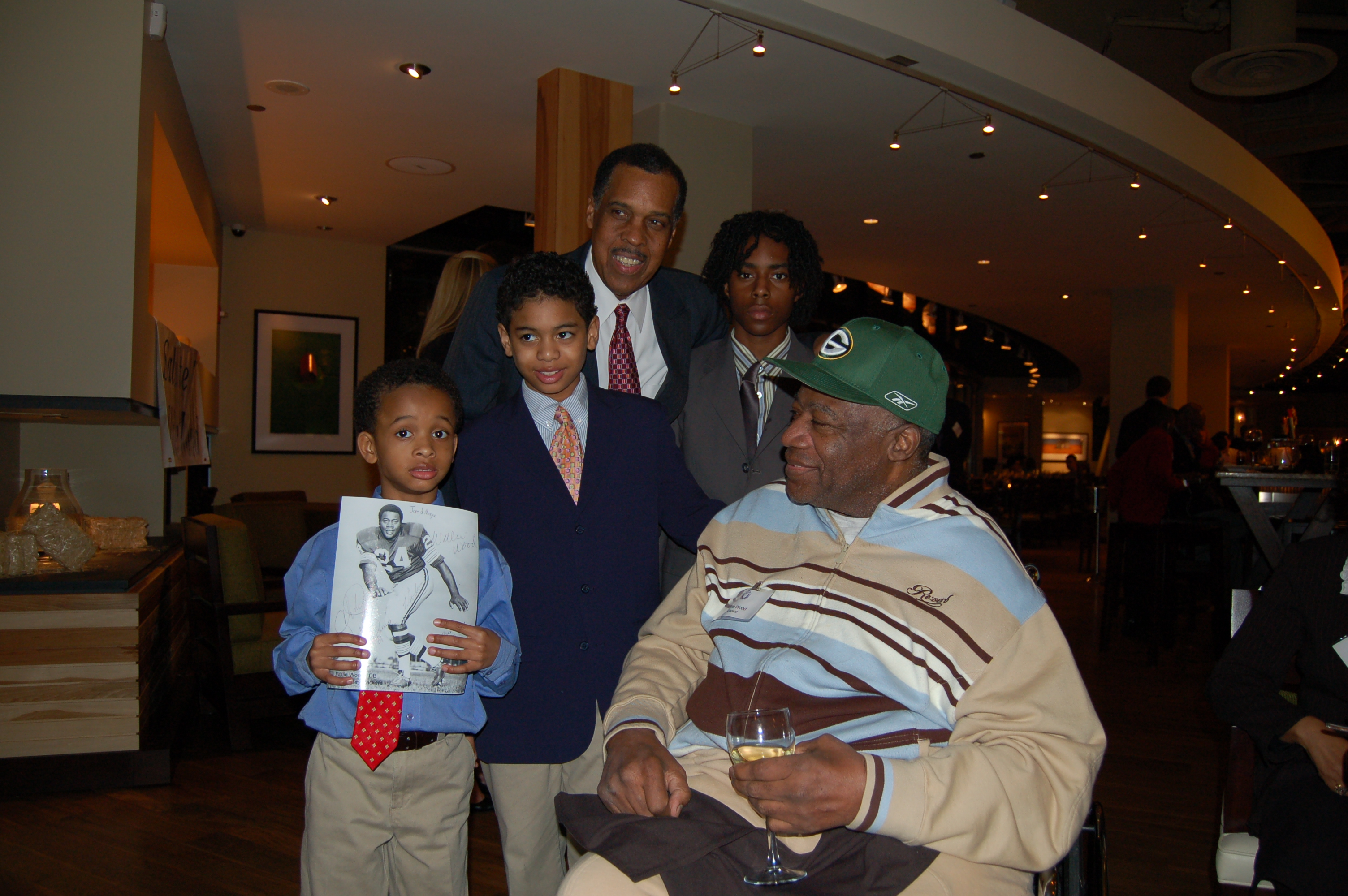
In December 1968 after the riots he shipped a box of toys home to DC from Green Bay.  The toys were from him and his teammates for my first ever Kids In Trouble Christmas toy party.  The toys were for needy children who were victims of the riots.

DSC_0163DickHellerscan0022

Willie saying hello to young admirers and presenting KIT Life Time Achievement Award to the late sports columnist, Dick Heller.


In 2013 Kids In Trouble hosted its last toy party for needy children making it the longest on-going community based toy party in DC.  I thank the generosity of Willie Wood for the success of the parties.  He never forgot who he was and where he came from.

The DC City Council on Tuesday December 13, 2011 named the street in NW DC where he was raised in his honor, Willie Wood Way.  He really deserves much more than a street named after him, he deserves a Charter School or a recreation center named in his honor.  Willie Wood’s accomplishments in the community and athletics are second to no one.