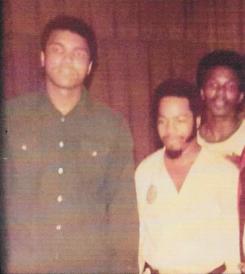
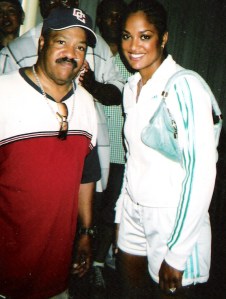
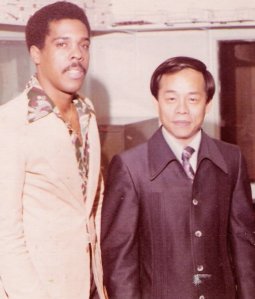
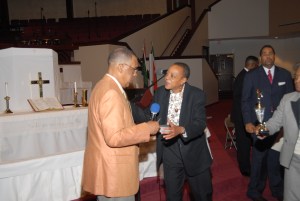
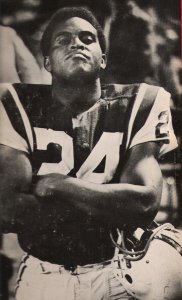
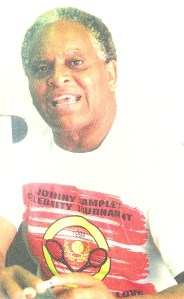
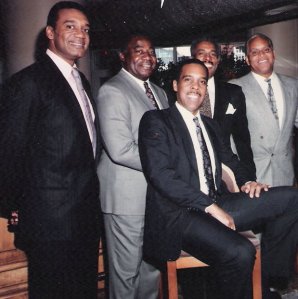
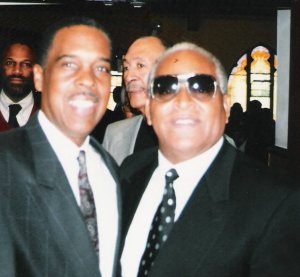
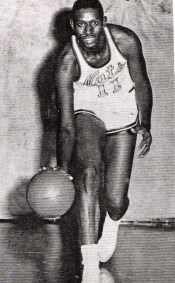
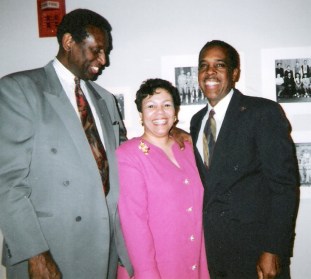
A BLACK HISTORY MONTH MOMENT JOHNNY SAMPLE A LEGEND OF INSIDE SPORTS: A MAN’S MAN!

JOHNNY SAMPLEREDS2

In April 2006 remember receiving a call from Johnny Sample’s friend, basketball legend and youth advocate Sonny Hill.  There was bad news as it related to the death of my friend Johnny Sample.  It reminded me of a recent conversation I had with Coach Clarence Bighouse Gaines’ wife Clara.  She said, “Harold I never thought Gaines would die.”  It was eerie because I had that same feeling about Johnny Sample, even though I knew better.

He was known to his friends as Happy, Blade, Reds, and Redball.  He died suddenly in his hometown of Philadelphia, he was 69 years old.

I had just spoken with Johnny before heading south to the memorial service for “Bighouse.”  He said he was going to try to make it, but I didn’t look for him.  Johnny was notorious for not showing up.  I have heard all the stories but I don’t ever remember him giving me his word and not keeping it.

He was always there for all of my celebrity tennis tournaments, media panel discussions, award programs, radio and television talk shows, etc.  Compared to today’s pro athlete, he was a Saint.

I first saw Johnny Sample in Washington, DC in 1954.  He was a member of the Maryland State football team and they were in town to play Howard University at the Cardozo High School football stadium.

I was amazed that he didn’t wear thigh and knee pads; he worn his pants, skin tight.  The shoulder pads were so small it didn’t look like he had any on.  His level of play that day was like a Man among boys.

Howard University was no match for Johnny Sample and his teammates.  It was here that I came away with the impression that Johnny Sample was indestructible.  It would be years later before I would meet Johnny face to face.  It was at a Baltimore Bullets’ (Wizards) basketball game at the Baltimore Civic Center.

He was a member of the Baltimore Colts football team.  He was standing around outside of the bar during halftime laughing and talking with anyone and everyone.  I decided to go up and introduce myself, and we have been great friends ever since.

It was easy to like Johnny Sample; he had an outgoing personality and he made you feel like he had known you all of his life.  There was nothing phony or pretentious about him.  If you didn’t want to hear the truth, you didn’t want to be around Johnny Sample.

Michael Cooper is one the greatest running backs to ever come out of the Philadelphia public school system. He was one of Johnny’s closest friends.  He played at North East high school and Michigan State.

Michael remembers when he was invited to the Washington Redskin camp in 1964 for a try out by then Coach Bill McPeak.

It looked as though Michael was a sure bet to make the team until one day Coach McPeak decided it best he go on the Redskin taxi squad.

Johnny disagreed with the coach’s decision and let him know in no uncertain terms.  He would run through a brick wall if you were his friend.  Michael recalls his many acts of kindness for his friends.  He says, “Johnny Sample was not a fly by night friend, if you needed him, he was there.”

When his friend and teammate the legendary ‘Big Daddy’ Lipscomb was mysteriously found dead in Baltimore, the NFL claimed he died of an overdose of drugs.  Johnny knew for a fact ‘Big Daddy’ didn’t do drugs.  He said, ‘Big Daddy was scared to death of needles.’

He sued the NFL for $100,000 to clear his friend’s name and won the battle.  Johnny would lose the war NFL Commissioner Pete Rozelle declared on him.

Coming out of Maryland State College, he was one the greatest running backs in the nation.  In 1955, he was voted unanimously by The Pigskin Club of Washington, DC as its “Player of the Year” for the Central Inter-collegian Athletic Association (CIAA).

His NFL career would be controversial, but his athletic skills were never questioned.  His mouth often got him into trouble, but his play on the field would often be his ticket out of the NFL doghouse.

During his 11-year NFL tenure he was one of the most feared defensive backs in pro football.  Roy Jefferson a former teammate and All-Pro wide receiver says, “If you caught the football in his territory you were going to pay the price.”

Hall of Fame All-Pro wide receiver Frank Gifford of the New York Giants was so fearful that he once saw Johnny on a New York street corner and ran to the other side against a red light to get away from him.

Johnny made “The Bump and Run” against NFL wide receivers a art form.   He would hold some All-Pro receivers to no catches for an entire game.

The Baltimore Colts, Pittsburgh Steelers, Washington Redskins and the New York Jets were all NFL homes for Johnny Sample.  He earned two championship rings and one Super Bowl ring.

In 1969 Johnny walked away from the game that he loved.  He was much more than a great athlete he was a student of the game.  Johnny could disrupt the flow of a game by calling out the offensive play as the opposing team came out to line up.

The QB would immediately call a timeout and cuss Johnny out as he made his way to the sideline.  There were many who thought he would have been a great NFL coach, but he had burned too many NFL bridges.

Immediately after retirement he went to work on his first novel, “Confessions of a Dirty Football Player.”  This book outlined the mercenary world of professional football.  In an interview on my television sports talk show Round Table “Legends of Inside Sports” Jim Brown asked the question, ‘Johnny were you a dirty football player or just a hard clean player?’

His response, ‘I was never dirty, except when I played against you.’  The NFL Roundtable panel included, Roy Jefferson (Washington Redskins), Willie Wood (Green Bay Packers), and JB Brown (Miami Dolphins) all they could do was laugh along with Jim.

MY GUYSRED BALL

Johnny was not one to just sit around after his NFL career.  He became an entrepreneur and owned a ticket agency and sporting goods store called, Sample’s End Zone.  He later taught himself the game of tennis and quickly excelled.

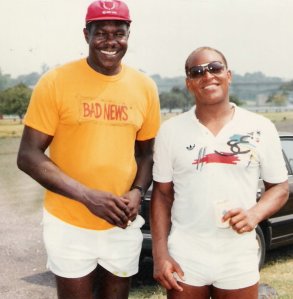
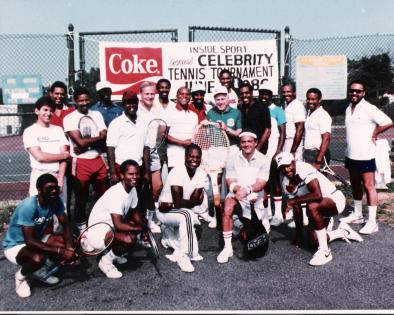
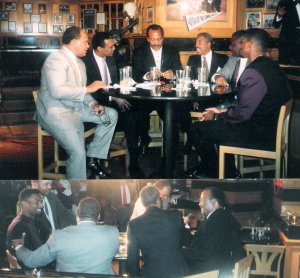
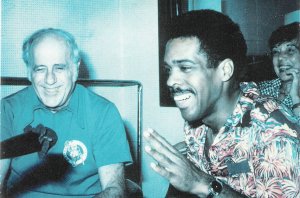
BAD NEWS AND JOHNNYscan0016 Jim Bad News Barnes (NBA) and Johnny pose for the camera at my Inside Sports Celebrity Tennis Tournament in Anacostia Park in SE DC and shares a Big racket with NBA legend Red Auerbach and me at another Celebrity tournament at Bannecker Rec Center in NW DC. JOHNNJNFL ROUNDTABLE HOST JB REDBALL RODNEY & PHILA JAKE Johnny Sample is seen at the Grand Hyatt in NW DC participating in a NFL Round table with RB Jim Brown, WR Roy Jefferson, DB Willie Wood, DB JB Brown and Sonny Hill.  

He was the No. 1 player in the country in the United States Tennis (USTA), 45 and over category for several years running.  He would later serve as a tennis official for the USTA, Wimbledon, US, French and Australian Opens and chair umpire, linesman and referee for the USTA.

His inner-city youth tennis program was one of the largest and best run in the country. Tennis to him was all about, love, love and more love.

In February of 2004, he was inducted into the CIAA Hall of Fame in Raleigh, NC.  This was almost 50 years after he had graduated from college.  The first question he asked when he took the microphone, “CIAA what took you so long?” 

Johnny and I had often talked about being “Blackballed” by the system is one thing, but to be “Blackballed” by your own people is a tough pill to swallow.

Johnny Sample’s induction into the Hall of Fame could not have come at a better time.  In this case better late than never.  This was definitely a highlight in his long distinguishing odyssey into the world of politics and sports.

During his induction speech he asked me to stand up and be recognized as the pioneer in sports talk radio.  He was always reaching and giving something back.  Johnny also excelled as a sports talk show host on W-H-A-T Radio in Philadelphia from 1988 to 2004.  Johnny used his sports talk show as a vehicle to improve the growth of his community.  He never forgot I suggested he should have his own sports talk show in Philly.

As a community advocate, he was instrumental in several projects.

The crown jewel was the Million Man March in 1986 when he organized seventy-three buses from Philadelphia and parts of New Jersey to Washington, DC.  In my world he was a special man.

John B. Sample Jr. was born and raised in Portsmouth, VA where he was an  all around high school athlete. He played his college football at Maryland-Eastern Shore.  He was an All-American running back and was the first black athlete from a HBC to be named to the College All-Star football team.  The annual game was played in Chicago against the NFL Champions.

Johnny Sample was a student of the game when it came to football. He would have been a great coach on any level.

He played for the Colts in the 1958 NFL championship game against the New York Giants that is still often described as “The Greatest Game Ever Played.” The Colts won 23-17, the first game to go to overtime.

In 1969 he was all over the field in that historical game against his former team, the Baltimore Colts. It was like he was in the huddle when the plays were being called.  He had an interception in that 16-7 upset it was the third Super Bowl. That was the game Jets’ QB Joe Namath, “guaranteed” victory.  The game established the old AFL on a par with the NFL after the two leagues had merged. He was also a co-captain along with Namath.

“He will always have a special place in Jets’ history as a member of the Super Bowl championship team,” Jets coach Herman Edwards said. “The Jets and the NFL community have lost a friend in Johnny Sample.”

In all, Sample played 11 seasons for the Colts, Pittsburgh Steelers, Washington Redskins and the Jets. It is rather ironic, the 1958 title game he was a rookie and the 1969 title game was his last—both were championship years.  He came into the league as a winner and he went out a winner.

“His participation in two of the most significant games in NFL history, the 1958 championship game and Super Bowl III, symbolized the champion John was,” Colts owner Jimmy Irsay said.

Known as a fierce hitter from his cornerback position, he had 41 interceptions during his career, returning four for touchdowns, and also returned one punt and one kickoff for a TD. In his final year with the Jets, he had seven interceptions.

Sonny Hill, a longtime friend of Sample’s who runs a basketball league in Philadelphia, said he thinks Sample belongs in the Hall of Fame.

But what was more important to his friend, Hill said, was standing up to injustices such as racism.

“Some tolerated it and went along with whatever, but Johnny would not tolerate it,” Hill said. “He was a man’s man.”

I was pleased to see my name in the program as an Honorary Pallbearer for the great Johnny Sample.  “Redball” it was my honor.  Johnny Sample is gone, but he is not forgotten.


A LITTLE KNOWN BLACK HISTORY FACT IN 2016!

DOTIE&RED       HB, RED & EARLNBA Godfather the late Red Auerbach and wife Dotie/Red and Earl Lloyd celebrate Black History

The 2016 NBA All-Star Game and an email from Round Ball Report TV host Andrew Dyer in 2011 brought back this reminder for a little known black history fact, before their 15 minutes of fame, guess who came through Kids In Trouble, Inside Sports aka Harold Bell?

The roster reads as follows; Dave Aldridge (TNT), James Brown (CBS), Dave Bing (NBA), Tim Baylor (NFL), Kevin Blackistone (ESPN), Jamie Brown (Sister 2 Sister Magazine), Adrian Branch (NBA/ESPN), Adrian Dantley (NBA), Larry Fitzgerald (Media), Bobby Gardner (NFL), Glen Harris (TV 8), Grant Hill (NBA), Darryl Hill (Naval Academy/ACC), Jo Jo Hunter (NBA), Cathy Huges (Radio/TV One), Dave Jacobs (Boxing), Jair Lynch (Olympian), Sugar Ray Leonard (Boxing), Tony Paige (NFL), Butch McAdams (Radio One), Oden Polyniece (NBA), Aaron Pryor (Boxing), Bill Rhoden (NY Times), Chris Thomas (BET), John Thompson (GT), Cecil Turner (NFL), Omar Tyree (author), and Michael Wilbon (ESPN).

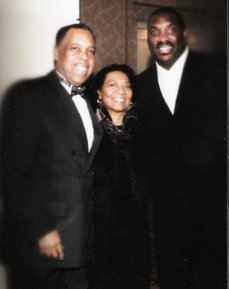
Benefactors after the fact; Willie Wood (NFL) Jim Brown (NFL), Earl Lloyd (NBA), Doug Williams (NFL) and Don King (Boxing) 

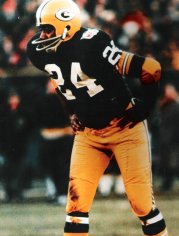
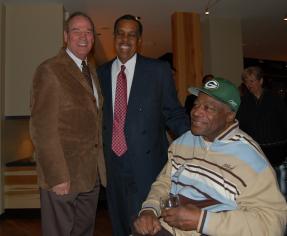
willie woodDSC_0162No. 24 Willie Wood / NFL Hall of Fame LB Sam Huff pays tribute to Willie in 2007

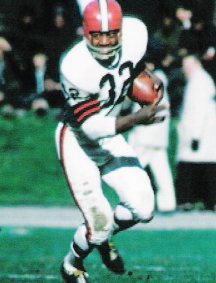
JIM BROWNJIM BROWN & MENo. 32 Jim Brown

scan0005EARL LIOYDNo. 11 Earl Lloyd and wife Charley visit hometown of Alexandria, Virginia

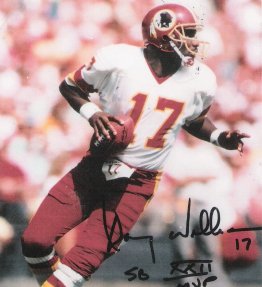
QB DOUGHB DOUG HBNo. 17 Doug Williams first black QB and MVP to win a Super Bowl (1988)

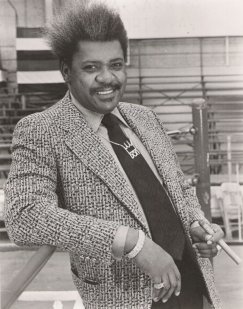
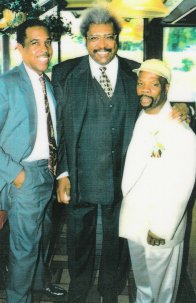
KING I AM  HB DK CALVINDon King meets the late legendary Community Advocate Calvin Woodland

In closing, all the glory goes to God, but I thought I would remind you anyway.  Have a great and God blessed day.

As Always,

HBell

Note Worthy:

I ran a successful campaign to get Willie Wood inducted into the NFL Hall of Fame and Earl Lloyd inducted into the NBA Hall of Fame after they were overlooked by the NFL and NBA.

My high school coach and savior Dave Brown heard me on my Inside Sports radio talk show apologizing for tooting my own horn.  His advice after the fact, I never forgot, he said, “Son you don’t ever have to apologize for tooting your own horn, because first, you have to have a horn to toot.”  Coach Brown was a wise man.

DAVEBROWN      COACHBROWNMy hero, Coach Dave Brown and his wife and daughter as I pay tribute and thank him for saving my life.


The 2011 e mail that inspired this blog

From: hkbell@comcast.net
To: “Andrew Dyer” <dyer21@verizon.net>
Sent: Thursday, January 20, 2011 7:51:14 AM
Subject: Re: NBA All-Star 2011 Credential Request: Round Ball Report / THE STRUGGLE CONTINUES!

Andrew,

It is hard to believe that 35 years after I made my bold move to sit in the middle of the white media at the Capitol Center (Washington Bullets), that legit and qualified blacks in sports media are still being denied their seats at sports media press tables!

Media and pro sports are still the last plantations because the brothers and sisters who have benefited from others who have blazed the trails are now the roadblocks.  They are still not reaching back and pulling others along with them.  It is amazing how “Two dollars and your name in lights” can make one forget!

I just received an e-mail from another black female sports reporter in Kansas.  She ask me to contact the promoters at the Muhammad Ali Celebrity Fight Night in Phoenix, Az to request credentials for her.  She received the same type of response from the PR people you received.  She has been legit for over 30 years.

We in many ways have to blame ourselves for most of these racist acts by the present folks in charge.  The likes of Don King, Rock Newman, etc treated blacks in sports media with little or no respect.  They hired PR people from another planet!

We keep talking about progress and the opportunities for blacks in America—did you check out that BS on ESPN this week about blacks in sports?

I was more than proud to see Michael Wilbon take a stand and call folks and organizations out for their lack of compassion for others.

The program did point out the number of major newspapers (in the 90s) with black sports editors on staff are in single digits. The same can be said of the number of black PR Directors in the NBA, NFL, MLB, Tennis, Golf tournaments and hockey is out of the question.  Put all the sports TOGETHER and you can count the black PR people on one hand.  Rev. King must be turning over in his grave.

I am still trying to figure out what black America is celebrating during Dr. King’s birthday and during Black History Month!  My program on Dr. King’s birthday read “Remembering Dr. King & Bringing the Civil Rights Movement into Focus.” 

This e-mail takes me back to my first NBA All-Star Game in Houston, Texas.  I encountered the exact same ROADBLOCK, unlike you I had the real NBA GODFATHER in my corner—Red Auerbach.

I will drop a note to my NBA contact (he was the one who denied me) and ask him to double check for press credentials for your two reporters.

I can’t promise anything but what the hell!

Remember, the problem usually starts at the top and he is at the top. The worst thing he can say is “No.”

And by the way, that GODFATHER tag you guys have given me is very flattering but the truth be told I am just another brother in this on-going struggle to be free. God bless and keep me and Hattie in prayer.

HB


—– Original Message —–
From: dyer21@verizon.net
To: hkbell@comcast.net
Sent: Wednesday, January 19, 2011 11:10:32 PM
Subject: Fw: NBA All-Star 2011 Credential Request: Roundball Report


Harold. It’s time for you to pull their coat as the Godfather with your personal contact if he’s still in place because they gave us the standard thanks but no thanks response.


Andrew


Sent on the Sprint® Now Network from my BlackBerry®

From: Rebecca Colling <RColling@nba.com>

Date: Wed, 19 Jan 2011 16:14:01 -0500

To: <dyer21@verizon.net>

Subject: NBA All-Star 2011 Credential Request: Roundball Report

Thank you for your interest in covering NBA All-Star 2011.

Unfortunately, space limitations preclude us from issuing credentials for this year’s All-Star events for Roundball Report.

I’m sorry we are not able to honor your request.  However, should anything open up, we’ve kept your request on file and will notify you.

Tim Frank

Senior Vice President
NBA Basketball Communications


GRANDMA’S HANDS

Played the organ in church on Sunday mornings
Grandma’s hands
Played the organ so well
She use to issue out a warning
Harold don’t you run so fast
You might fall on a piece of glass
Might be snakes there in that grass

She soothed my unwed mother
Grandma’s hands
They use to ache sometimes and swell
Grandma’s hands
She use to lift my mother’s face and tell her
Mattie, grandma understands
That you really love that no good man
Put yourself in Jesus’ hands
Grandma’s hands
Used to hand me piece of candy
Picked me up each time I fell

Grandma’s hands
Boy, they really came in handy
She’d say, Mattie don’ you whip that boy
What you want to spank him for?
He didn’ drop no apple core
I don’t have grandma anymore

If I get to heaven I’ll look for
Grandma’s hands. by Bill Withers

QB MARLIN BRISCOE THE NFL AND AFL’S FIRST STARTING BLACK QB!

BLACK QB WILLIE THROWER0003BLACK QB WILLIE THROWER0001BLACK QB WILLIE THROWER0008Marlin Briscoe was 1st to start at QB for the Denver Broncos and Willie Thrower was the first to play in a game for the Chicago Bears


A little known black history fact, how Marlin Briscoe was the first black QB to start in a NFL or AFL game.  Super Bowl first winning QB Doug Williams, Russell Wilson, Colin Kaepenick and Cam Newton all ride on the wave he created. He went from CB to QB to WR.  Briscoe was called the Magician before racism, drugs and pro football owners made him disappear for real.

This story was written by someone by name of Ken Crippen, it is long but it is worth the read if you like sports history.

Marlin Briscoe was on top of the world. He had set rookie records as the first black quarterback to start in the NFL and won two Super Bowl Rings as a wide receiver with the Miami Dolphins. However, drug addiction almost ruined his life.

Briscoe was a fourteenth-round draft choice out of the University of Nebraska – Omaha. He said,  “I came into the league as Denver’s starting cornerback.” However, after an injury to the Broncos’ starting quarterback Steve Tensi, Briscoe received his opportunity. He had played quarterback from Pop Warner through college, so the position was familiar to him. However, there was a stigma that African-Americans could not play quarterback. According to the critics, African-Americans did not have the “mental capabilities” that were required of the position. Briscoe proved them wrong.

That rookie campaign saw Briscoe throw for 1,589 yards and 14 touchdowns in only a partial season. While those numbers do not look gaudy by today’s standards, let’s put them into perspective. Briscoe still holds the following Denver Broncos records:

  • 1st in total offense by a rookie (1,897)
    • 1st in touchdown passes by a rookie (14)
    • 1st (tied) in most touchdown passes in a game by a rookie (4). (He also holds positions two and three with two games with three touchdown passes.)

He also ranks (Broncos all-time records):
• 3rd in most passing yards by a rookie in a season (1,589)
• 3rd in most completions by a rookie in a season (93)
• 4th in highest average gain-per-attempt by a rookie (7.09 yards)

Even with a record-setting performance his rookie year – records that still stand 45 years later – head coach Lou Saban did not want Briscoe to return as the starting quarterback. Briscoe recalled, “It was obvious that they did not have me in their plans.” He continued, “I had gone back to Omaha to finish up six hours that I needed to graduate. At that time, they had acquired Pete Liske from Canada. I heard it through the grapevine that they were having quarterback meetings and I was not even invited, even though I was the starting quarterback at the end of the season. That meant that they did not even have plans for me to compete. That was all I wanted was to be able to compete. I had no misgivings about feeling that I was not going to be the starting quarterback. Steve Tensi was the quarterback, but he got hurt the previous year. All I wanted to do was to be able to compete, but they had no plans for me.

The coaches didn’t even invite me to the meetings.  To me that was the first sign of disrespect. It was totally highly unfair. As a matter of fact, when I found out about the meetings, I flew back to Denver and stood outside of the office where they were having the meetings. When Saban came out, he could not even look me in the eyes. He did not know I was coming.”

The situation did not improve at training camp. “When I got to camp, it was apparent that they had no plans to even let me into the fray. I asked for my release, because I thought that with the success that I had, it would give me an opportunity to play for another team. However, that was not the case. I heard through the grapevine that I was blackballed. [Saban] wouldn’t release me right away. He said, ‘Wait four days.’ I was trying to figure out why he wanted me to wait four days. By the end of those four days, my name was tainted. It was spread around the league that I was a malcontent. I wouldn’t play another position. That is what they wanted me to do. I had no offers. Not even a sniff at quarterback.”

However, with Briscoe’s success as a starting quarterback, attitudes started to change around the rest of the league. “They drafted James Harris in 1969 as a quarterback. I don’t think that it would have happened if I had failed to show that a black man could lead on that level. There were a lot of naysayers out there that thought that a black man couldn’t throw and that they didn’t have the mental capabilities of leading on that level. They thought that there would be fan backlash and that fans would not come to the game. Also, they didn’t think that white players, particularly, would follow a black quarterback. Now, look at my line in Denver. They were all white and three-quarters of them played on teams from the south. The teams they played on didn’t have a black quarterback. They didn’t have black players at all. A lot of the guys, I still see them today, say that, ‘We could have won with you.’ Not only did you have to have respect of the white players, but you had to gain the respect of black players. You had to gain the respect of all of your teammates that you could play the position. I was in a situation where I had a heavy burden to prove that I could play that position and be a leader. Luckily where I went to college, it was a majority white school, but I was able to quarterback a multicultural team. I never thought of myself as a black quarterback. I think that is what saved me. Ethnicity never entered my mind. I was the quarterback. I was the leader of the team. So, when I got the opportunity, the pressure of being a black quarterback really didn’t enter into the picture. Fortunately, I had already been through the scenario of leading players, whether they be black or white or whatever. “

Marlin Briscoe was the first black quarterback to start in the NFL or AFL. However, he was not the first black quarterback since reintegration of the league. That distinction goes to Willie Thrower of the Chicago Bears. Thrower played sparingly for the 1953 Bears team, only throwing eight passes. But he blazed a trail for all African-American quarterbacks.

Briscoe recalled, “You won’t believe this. Right after my rookie season, one of my receivers was named Jimmy Jones. He used to play for the [Chicago] Bears. I went to Chicago to see my girlfriend. I contacted Jimmy and he took me to this bar called The Presidents. So, Jimmy is introducing me to the bartender, ‘This is Marlin Briscoe. He is the first black quarterback in the NFL.’ This guy was sitting next to me. He said, ‘You weren’t the first black quarterback.’ I said, ‘I was.’ He said, ‘No, you weren’t.’ I said, ‘Well, who was?’ He said, ‘I was. My name is Willie Thrower.’ It couldn’t happen in a million years. I knew that he existed, and he was sitting right next to me. We sat there and we talked for a couple of hours. I met him by happenstance going to this lounge with my receiver. I knew who he was, and for him to be sitting right next to me. It was kind of crazy, but I am glad that I got a chance to meet him. That was one of the highlights of my life.”

But, Briscoe was out of a job. He contemplated going to the Canadian Football League (CFL) to play quarterback. Did he think that he would have a shot to play in the CFL as a quarterback? “Yes. I went up to practice one day. I practiced at quarterback and some at defensive back. After that day’s practice, I went back to the hotel and got to assessing things. I decided that the CFL wasn’t for me. No disrespect to Canadian football, it’s just that with the success that I had in the NFL, I felt that I belonged there.”

He never gave up on trying to get back into the league. “I called around to the teams that I had success against my rookie year to see what was out there,” recalled Briscoe. “I almost beat the Oakland Raiders. I beat the Buffalo Bills twice. John Rausch, who was the coach of the Oakland Raiders, moved on to Buffalo. So I called him. He indicated that he had no need for a quarterback. He drafted James Harris, and he had Tom Flores and Jack Kemp. He said that he needed help at wide receiver. I told him that I never played wide receiver before, but that I would try it. They put me on a flight to Buffalo and the rest was history.”

Briscoe played wide receiver for the Buffalo Bills from 1969 through 1971. In that time, he racked up 2,171 yards on 133 receptions and was named to the Pro Bowl. Not bad for someone who never played the position.

After three years in Buffalo, his time was up. At the conclusion of the 1971 season, Buffalo traded Briscoe to the Miami Dolphins. “I felt like I hit the lottery,” recalled Briscoe. “It was kind of amazing, because Lou Saban was my coach at Denver. He denied me the opportunity to compete. He blackballed me from the league, I believe. There is no way in the world that you can be in the running for Rookie of the Year and to do all of the things that I did that year, and not get an opportunity to compete. That is all I wanted. So, after I was released and I go to Buffalo, I ended up being the Most Valuable Player over O.J. Simpson, at a position I never played before. A year later, I lead the league in receptions and made All-Pro. I also got entrenched in the community doing community work. Now, I am pretty much a fixture in the Buffalo community, but I was playing out my option and negotiating a new contract. Now, who do they hire to be head coach, but Lou Saban. So now, he is coming in and he has to deal with me on another level. He can’t just deal with a fourteenth-round draft choice that he could just mouse around. I was arguably one of the top receivers in the league.” In the 1970 season, Briscoe was ranked second in the league in receptions, second in receiving yards and seventh in receiving touchdowns. In 1971, he was the team’s leading receiver based on receptions, receiving yards and receiving touchdowns. Briscoe continued, “At the end of the year, the [Miami] Dolphins were playing [the] Dallas [Cowboys] in the Super Bowl and I went to the game. I ran into Don Shula, and the only game we won was against the Dolphins.” The Bills went 1-13 in 1971. Briscoe continued, “I always had great games against the Dolphins, win or lose, in Buffalo. Even as a quarterback, I always had great games against the Dolphins. [The Dolphins] felt that they needed somebody to take the pressure off of Paul [Warfield] and I was playing out my option and I was available. [Shula] contacted Saban and said, ‘Saban, hurry up.’ [Saban] traded me to Miami and the rest is history.”

Briscoe immediately noticed a difference in attitude with the Dolphins. When asked about the differences, Briscoe commented, “Preparation. I led the league in receptions, but I didn’t know anything about playing wide receiver until I talked to Paul Warfield and got tutelage from him. I was just playing on natural ability. That is the only reason why I was able to make the transition from quarterback to receiver. I realized, in four years between Denver and Buffalo, that I knew nothing about football. I was just playing on talent and innate ability. When I got to Miami, everything was detailed. Conditioning was superior. When I got down there, I learned about professional football. I learned that everything that you do, you do for a reason. When I was in Buffalo, I used to make all of these circus catches. When I got to Miami, I heard Paul Warfield, ‘1…2…3…4…5…’ He was counting his steps. It was always a precise distance. I took heed of that. I learned to block better. I learned the philosophies of the game. Time management. We didn’t have that [in Denver or Buffalo].”

It was all business on the Dolphins. According to Briscoe, “We didn’t hang out a lot together. There were certain cliques. We didn’t go out and have a beer together. It wasn’t like that. But, when we got on the field for practice, it was like we were all one. Off the field, we had guys go different ways. Everybody had their own clique of one or two guys. When we went to the practice field, it was all business. How that happened is that Shula was such an organizer, we didn’t have time to think about other things other than doing our assignments and getting prepared, both mentally and physically, for the game.”

However, it was that attitude that formed the team that went undefeated in 1972. “It was one game at a time,” recalled Briscoe. “There were certainly a couple of games that could have broken our back, like the game at Pittsburgh in the playoffs or the game against the Minnesota Vikings during the regular season the we could have easily lost, but we pulled it out. We were a team that was well-prepared in every area that you need to be prepared: physically and mentally. If guys got hurt, we had people who could step up. When Bob Griese got hurt, Earl Morrall, at 37 years old, he is the one that took us through the season.”

Briscoe added, “We were always in better condition. When we played in the Orange Bowl, the heat and humidity was unbearable. A lot of teams that came through there would wilt. By the second quarter, they were out of it. When I first got there, we had four-a-days. I had never been in better shape in my life, and I worked out religiously. I think the fact that we took it one game at a time. Attention to detail. Everybody had a specific role. I led the team in receptions in Buffalo. Now, I have Paul Warfield on the other side. How many passes would I get, when we only threw 13 times a game? I had to realize that it wasn’t about me. When you only threw 13 times a game and you had the greatest receiver in the history of the game in Paul Warfield on the other side, I had to make whatever contributions I could make receiving-wise. I had to learn how to block. You had to be a total ball-player. You couldn’t just go out there and catch balls. You had to humble yourself in terms of your ego for the good of the team. I got hurt and Howard Twilley came in and we were still undefeated. When I got better, Shula kept Twilley in. Twilley would play the first half and I would play the second half. If I would have complained, it would have disrupted the balance of the team. We were undefeated. Howard and I were highly competitive. If I would have made waves about playing. They traded a number one draft choice for me. I was playing well until I pulled my hamstring. In the three years I was there, we only lost five games. That tells you what kind of team we had.”

I would be remiss as a historian if I did not mention that the 1972 Miami Dolphins were not the first undefeated team. They were the first team to go undefeated in the Super Bowl era. The 1948 Cleveland Browns were the first undefeated team. In fact, the Browns went 29 straight games without a defeat. It started in the 1947 season, where the Browns won the last eight games of the season, then won the championship. It went through the entire 1948 season, including another championship. It then extended into the sixth game of the 1949 season, when the San Francisco 49ers beat them 56-28. From the start of the 1947 season through the end of the 1949 season, the Browns only lost two games. Again, putting things into perspective, the Browns won more championships in that three-year span than they lost games.

The winning attitude continued for the Dolphins for the 1973 season. Briscoe recalled, “For the 1973 season, we actually had better athletes. We had Ron Sellers and a couple of other guys. Depth-wise that made us a better team on paper. We had the core of guys that we had the previous year. We didn’t lose anybody. We were confident that we could repeat. We still had that winning edge attitude.” While they did not go undefeated, they still won the Super Bowl in 1973.

When asked if he thought he would ever play the quarterback position again, Briscoe responded, “No. I knew that my days were numbered. Although, when [Bob] Griese got hurt, [Don] Shula did put me as an emergency quarterback. He had installed some pass plays for me as a receiver. Reverse pass and those kinds of things. When Griese got hurt, he had me practice at quarterback. He at least had me prepare to play the position and I guess that he had the respect to not only throw it from the receiver position, but as the emergency quarterback. He knew that I could play the position.”

Briscoe played for the Dolphins in 1974, before going to San Diego and Detroit in 1975, and finishing his career in New England in 1976. It was there he met fellow receiver Darryl Stingley. Briscoe recalled, “He was my roommate on the road.”

On August 12, 1978, the New England Patriots were playing the Oakland Raiders in a preseason game. Briscoe recalled, “I saw Darryl the week before it happened. They were playing down at the [Los Angeles] Coliseum, and I went down there and talked to him.”

According to an August 12, 2003 article in the Boston Globe, Stingley’s agent Jack Sands said, “I remember it as clear as if it was yesterday. We had just negotiated a new contract extension for Darryl that would have made him one of the highest-paid receivers in the league but it hadn’t been announced. They were planning to announce it when the team got back from the West Coast. Just before they left, I remember telling him, `Now, Darryl, don’t go sprain your ankle.’” The contract was never signed.

During the game, New England quarterback Steve Grogan threw a pass over the head of Stingley. Darryl attempted to leap for the ball, but to no avail. Briscoe commented, “I would always tell him that if you can’t get to the ball, don’t go for it, because you put yourself out there. If you can get it, it is your duty and obligation to try and get the ball. But, if you put yourself in a position where the ball is sailing on you, especially in the middle of the field, let it go.” On his way down after leaping for the ball, Stingley was hit in the head and neck area by Oakland Raiders safety Jack Tatum. The hit broke two vertebrae and compressed his spinal cord. Stingley was a quadriplegic. Briscoe commented, “Darryl, he went for a ball that he couldn’t catch. Wilt Chamberlain couldn’t have caught that ball. Jack’s been taught, just like we all have been taught, that you hit. I ran into Jack at a golf tournament in Oakland. He wasn’t doing well. Paul Warfield and I used to attack Jack. We wanted to let him know that receivers could hit, too. We used to double-team him to let him know that he couldn’t just come in to try and hurt us. Darryl was a great kid. We used to sit up and talk a lot. He used to always come over and ask me how to do certain things and we would work on certain things. It really hurt me when he was paralyzed, because he was such a nice guy. It was unbelievable. I talked to Jack. Jack is Jack. When you play football, the game is violent. You can get killed at any time. You can get paralyzed at any time. It is not a game for the faint of heart. Unlike the guys today, we were doing it for no money. We couldn’t even make a down payment on a cheeseburger with what we were making. I can’t even play golf on the pension I get. We loved the game, and the fact that we knew the basics, that helped us not suffer as many injuries as we could have suffered.”

As Briscoe’s career wound down, he faced personal struggles. “I came out to L.A. and I bought a house. I was single and I was still playing with the Patriots. Chuck Fairbanks let me go on the last cut. I always had a job in the off-season and went to school. I always felt that ten years was going to be enough for me and this was my ninth year. I got cut on what would have been my tenth year. That was my game plan. I went out to L.A., settled in and got to partying. I got a job as a broker in Century City in Los Angeles. That was the financial district in L.A. So, I was doing pretty well. I got to partying and hanging out with the wrong crowd. I started to dabble in cocaine, both at the job – a lot of brokers were doing cocaine – and when I came home I would do cocaine. Then, it escalated into a habit. Then, I got married and had a daughter. But, by then, I was spiraling out of control. It got to the point where I was dependent on cocaine. I ended up losing my family and my house and everything that I had worked for. I virtually ended up in the street. For ten years, back and forth, from homelessness to despair, or whatever. A ten year battle, where I lost everything. I had a nice house. A swimming pool. A great job. I got tackled by a linebacker that I couldn’t outrun.”

Briscoe continued, “I tried a couple of different venues. I moved back to my hometown of Omaha. It got worse there. I was a hometown hero and an accomplished student. Everybody saw me at my lowest point. That was a rude awakening. But, I was still an addict. Then, I moved to San Diego.” Briscoe played for the San Diego Chargers for three games in 1975. “I thought that if I could get away again, I could improve my lot in life. I went down there and same thing. I got put in jail twice. After the second time I got put in jail, I said, ‘This is it!’ When I got out, Lance Alworth loaned me $500. I called a friend of mine, Julius, to come and take me back to L.A. I had a chance to think about all of the things I had accomplished. I had to walk to a park where Julius would pick me up. As I was walking from the jail in San Diego, I had to walk through the same dope dealers that I used to buy from the two years I was there. I just kept going. If I had stopped, you wouldn’t be talking to me right now. So, I kept going to the park. Julius came and got me and I went back to L.A. I started teaching school and got my life back little by little.”

Briscoe lost everything in his battle with addiction, including his Super Bowl rings. However, he wanted to set the record straight. “Contrary to opinion, I did not sell my rings to a dope dealer. The rings were sold by a bank in my hometown that I put up for collateral for a loan. A lot of people think that I sold my rings to a dope dealer. That didn’t happen.” Briscoe was able to recover his 1973 ring, but does not have his ring from the 1972 season.

Briscoe kept himself busy. He was a volunteer coach at a local high school. According to Briscoe, “the last three quarterbacks I coached made all-league. I feel that is quite an accomplishment.” He is currently retired from coaching.

Briscoe added, “I also had an annual football camp here in Long Beach at the school that I coached at. It’s free for kids and I have about 400 kids. I bring in a bunch of old-school players. I have John Carlos, Kermit Alexander. Even Mark Sanchez of the Jets coaches my tiny tots. I started coaching at Wilson in 2008. When I got there, I saw all of the undisciplined route running, attitudes and all that stuff. So, I decided to have this camp and have all these guys in like Sam Cunningham that I knew from the NFL. They all volunteered their time. They are all old-school guys that learned the basics of football, and it turned out well. I have a nice sponsorship from Outback. It is always on July 4th weekend.” The camps have not been held for the last few years, but he is actively looking to restart them.

Currently, there is a movie in production about Briscoe’s life. Tentatively titled, “The Magician,” the film is being written by Greg Howard, who also wrote “Remember the Titans” and “Ali.” According to Briscoe, “It is not totally a football movie, but it is a life movie. Hopefully it is inspirational. It is about overcoming obstacles and never giving up. I think that it is a story should be told, even if it wasn’t about me. Talking to Greg, he thinks that this is his best work.” Currently, Briscoe is waiting on NFL approval of the script, which he hopes will happen shortly.

He is also retired from the Boys and Girls Club. ”I worked for them for twelve years,” said Briscoe. “I started as a volunteer, but became assistant project manager when I was in L.A. and directed a $7.5 million building project. The previous director was sick. Since I studied engineering in school, he had me go to all of the meetings with the construction companies and architects. He subsequently died, so I stayed there for three years to see his vision through. Then I became a director and program manager. I decided to retire and pay attention to the projects that I am working on. The Boys and Girls Club was my passion.”

Briscoe is an inspiration to black quarterbacks and has worked with other black quarterbacks to mentor young athletes. According to Briscoe, “Me and Doug Williams and James Harris and Warren Moon. We have a black quarterback foundation called the Field Generals. We went down, several years ago, for a memorial for Joe Gilliam.” Gilliam became the first black quarterback to start a season when he took the field for the 1974 Pittsburgh Steelers. He passed away in 2000. Briscoe continued, “All of the black quarterbacks who had played, past or present, were all there. To a man, they came up and thanked me for setting the tone and giving them an opportunity to play. I didn’t think that they knew who I was, but they did.”

Looking back on his career, Briscoe recalled his most memorable accomplishment, “Playing quarterback for the Denver Broncos and proving that a black man could lead. We also won games, and some big games. Proving the naysayers wrong about a black man at that position. All my life, I heard that blacks can’t play the quarterback position. At every level, I basically played in a white environment. I was always a black quarterback in their eyes. But to me, I was never a black quarterback. It was just the position that I wanted to play. At every level, I heard that a black man didn’t have the capabilities of playing that position. On every level, I proved them wrong. All the way to the pros.”

Even though he only played one year as a quarterback in the pros, did he still see himself as a quarterback first and wide receiver second? “Absolutely,” said Briscoe.


“I am thankful to God for allowing me to turn my life around, because a lot of people do not get those same chances.”

Briscoe is currently remarried and living in California.

Teams:

  • Denver Broncos (1968)
  • Buffalo Bills (1969-71)
  • Miami Dolphins (1972-74)
  • San Diego Chargers (1975)
  • Detroit Lions (1975)
  • New England Patriots (1976)

Awards:

  • Pro Bowl (1970)
  • Super Bowl Champion (VII, VIII)
  • Member of the 1972 Miami Dolphins Undefeated Season

Ken Crippen is the former executive director of the Professional Football Researchers Association. He has researched and written about pro football history for over two decades. He won the Pro Football Writers of America’s Dick Connor Writing Award for Feature Writing and was named the Ralph Hay Award winner by the Professional Football Researchers Association for lifetime achievement on pro football history.

Follow Ken on Twitter @KenCrippen


EARL LLOYD NBA HALL OF FAME IN BLACK, WHITE AND RED AUERBACH!


scan0005

HB, RED & EARLEARL & DAVE Scan0003

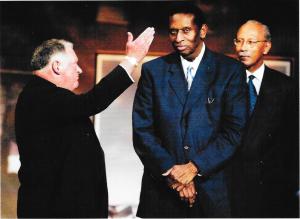
Top Photo: Earl Lloyd–HB, Red Auerbach and Earl–Induction into the NBA Hall of Fame in 2003 with DC legend Dave Bing standing by his side.

Earl Lloyd and teammate Bubba Ellis use to travel across the 14th Street Bridge to play pick-up basket on the playgrounds in NW Washington, DC.  Earl and Bubba were both born and raised in Alexandria, Virginia.  They were teammates and all-around athletes at all black Parker-Gray high school.

The best basketball was then played on the playgrounds in DC in the late 40s and 50s and Lloyd and his traveling buddy Ellis were both outstanding athletes in the segregated school system in the common wealth of Virginia.  The trip across the bridge brought them into another segregated school system in DC, but it was system they were both familiar with.

In the 40s and 50s the segregated high schools in DC were Cardozo, Dunbar, Phelps and Armstrong (Spingarn did not open until 1953).  The coaches in both systems developed a bond and brotherhood of survival and had no problem crossing the bridge to play each other.  DC black high schools traveled as far as Richmond, Virginia and North Carolina to play each other.

Earl Lloyd and Bubba Ellis were the best of the best athletes to come out of Parker Gray High School.  Ellis would make his name as one of the greatest running backs to play in MDV bar none. He attended Howard University before transferring and following Lloyd to West Virginia State where he terrorized the CIAA and Howard University at the annual Capitol Classic football game.  The game was played in old Griffin Stadium before sellout crowds.

JB&Samscan0017

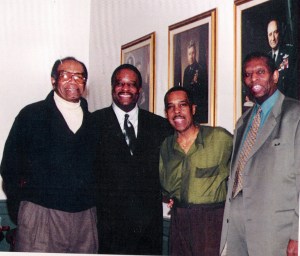
Black History Month tribute at Bolling AFB in SE DC. L-R Sam Jones (NBA), James Brown (CBS Sports), HB and Earl Lloyd

Earl Lloyd would go on to make his name in basketball at West Virginia State where he would become an All-American. He learned his craft on the playgrounds of DC against some of best playground basketball players to ever come out of the segregated school system.  They had names like Tarzan Cooper, Daddy Grace, Elgin Baylor, Dehart Morgan, WW, Lorenzo Hooks, Charlie Jenkins, Reggie Lee, Willie Wood, Willie Jones and many others whose names fail to register with me at this time.

Ellis and Lloyd were both named to the All-South Atlantic Conference and the All-State Virginia Interscholastic Conference all-star teams.

In college at West Virginia State Earl averaged 14 points and 8 rebounds a game. He was nicknamed “Moon Fixer and Big Cat” because of his size.  In the 1947-48 season West Virginia was the only undefeated team in the country.  As a senior he led West Virginia State to a second place finish in the CIAA Conference Tournament Championship game. He was drafted in the 9th round by the NBA Washington Nationals in 1950, they would eventually become the Syracuse Nationals.RED AND DOTIE NBA Godfather Red Auerbach and wife Dotie visit Inside Sports


Lloyd was one of three black players to enter the NBA at the same time. Lloyd was discharged from the Army one day ahead of Chuck Cooper of the Boston Celtics and Nat ‘Sweetwater’ Clifton, joined the New York Knicks four days later.

On Halloween night October 31, 1950 Earl Lloyd made his NBA debut and scored six points.

He would become a defensive specialist in the NBA and was the team’s ‘Hatchet Man.’ He often led the league and his team in fouls.  Earl played in over 560 games in nine seasons. He was only a 6-foot-5, 225-pound forward who averaged 8.4 points and 6.4 rebounds per game.  He played in over 560 games in nine seasons, the 6-foot-5, 225-pound forward averaged 8.4 points and 6.4 rebounds per game.

In 1953-54 he led the NBA in both personal fouls and disqualifications His best year was 1955, when he averaged 10.2 points and 7.7 rebounds for Syracuse.  They beat the Fort Wayne Pistons 4-3 for the NBA title. Lloyd and teammate Jim Tucker were the first African-Americans to play on an NBA championship team.

Racism in the NBA was a way of life back there then.  He once told me about his mother’s first experience attending one of his game’s in Washington, DC.  He tried to warn his family the type of racism they might encounter at the game. His father decided it was best he stay home because he was not going to tolerate that kind of ignorance.  But his mother and brother decided to go anyway.

Sure enough sitting a couple rows behind her was a heckler, who kept this barrage of racial insults aimed Earl when he was on the floor.  There were words like Coon, and the use of the N word was common.  For the sake of clarification in case ESPN’s Michael Wilbon reads this blog, the N word was not being use among family and friends.  One time, the heckler said “Get that N out of here he stinks.”  This was used so often it made his mom uncomfortable and in the meantime, it pissed her off.

In one series of plays, Earl blocked the opponent’s shot and on the fast break he dunked the ball. There was silence in Uline Arena for a few seconds, where the game was being played in NE DC.

Mrs. Lloyd looked back at the heckler and yelled, “How does he smell now?”  You would have actually had a difficult time hearing a mouse piss on cotton if there was one in the arena.  The heckler was silent for the rest of the game. Earl’s brother begged his mother not to look back there again.  He said, “I was too scared to look back to see whether he had left the arena or what.”

There were several white fans whom came forward after the game to congratulate his mom and thanked her for standing up to the bully.  Earl also recalled being refused service multiple times in cities around the league and was even spit on by a fan in Indiana. He said, “I persevered and it only pushed me, these incidents only made me play harder.”

Earl retired in 1961 ranked 43rd in career scoring with 4,682 points.

“In 1950, basketball was like a babe in the woods; it didn’t enjoy the notoriety that baseball enjoyed.  Don’t compare me to Jackie Robinson he was in a class by himself.  I could not have taken the grief he took that long, and in end have your own people turned against you, he is my hero” he said.

There were many trials and tribulations in his life after his NBA playing career ended. In 1965 Detroit Pistons General Manager Don Wattrick wanted to hire Lloyd as the team’s head coach. It would have made him the first African-American head coach in American pro sports, but he was passed over for Dave DeBusschere who  was named Pistons player–coach.  Lloyd was the first African-American assistant coach (1968–70) and second African-American head coach (1971–72) with nine games into the 1972-73 season, he was then run out of the job by several of his players (stay tune).

He was treated like a step-child by the CIAA Conference where he was a college All-American and where he led his West Virginia team to an undefeated season.  I had to go toe to toe with my college coach the legendary Clarence ‘Bighouse’ Gaines, when I asked to him explain to me, why Earl was not in the CIAA Hall of Fame?  This conversation took place at his annual Sunday morning breakfast after Homecoming at his home in 1997.

The debate started when one his former athletes question why he was enshrined into the scared hall.  The debate took a turn for the worst when I brought up the name of my friend Earl Lloyd and why he was being overlooked!  Bighouse’s response was not adequate when he said, “The selection committee says, he is no longer a CIAA athlete and when West Virginia State left the conference, he became ineligible to be honored in the hall.”  

When I told him that was a ridiculous excuse and it sounded like play-hating to me, he gave that funny looking he would give me when I was right, but he would not admit it.

The witnesses at the breakfast table that morning were my roommate Barney Hood, basketball legends Jack Defares, Carl Greene, Earl Monroe and his partner Smitty and several others whose names escapes me. The following year Earl Lloyd was inducted into the CIAA Basketball Hall of Fame in 1998.

It is a funny but not laughable thing when it comes to giving each other their just-do (recognition) in our Community; it is more like being caught at the bottom of the ocean floor without oxygen trying to get to the surface for air. Earl experienced the same thing in the NBA, he thought that he was being overlooked and not appreciated for his contributions to the game.

Earl Lloyd felt the NBA was giving him cheap handouts by including him at the camps for the rookies coming into the NBA and other speaking engagements and VIP tickets to NBA functions around the country.  He sincerely, thought he belonged in the NBA Hall of Fame at least for his pioneering efforts, and as a member of an NBA Championship team. He didn’t think that Chuck Cooper and Nat Sweetwater Clifton’s efforts and contributions should be overlooked, but he did play in a game first and won a NBA Championship.  He also said, “I am not a Spencer Haywood, what they are doing to him is a travesty.”  He was right, Spencer Haywood had serious game.  

I took his case to my friend and mentor, NBA legend Red Auerbach.  He was inducted into the NBA Hall of Fame in 2003 as a contributor.


WILLIE WOOD: A INSIDE SPORTS BLACK HISTORY MONTH MOMENT: WILLIE WOOD PLAYED IN THE FIRST SUPER BOWL!

willie woodWILLIEWOOD24

Sunday February 6, 2016 the 50th Annual Super Bowl will be played in Santa Clara, California.  The two teams playing for the NFL Championship will be the Denver Broncos, led by future first ballot NFL Hall of Fame player, white QB Peyton Manning.  The opposing team will be led by a first time visitor to the big game, a young brash black QB by the name of Cam Newton.  This could be the future hall of fame player’s “Last Rodeo” win or lose.  The young QB’s claim to glory and his future depends on whether his team wins the Super Bowl.

In Washington, DC Willie Wood was once a legendary playground, high school, college and pro athlete.  He will be watching, but the question will be can he comprehend the importance of the game.  Willie now resides in a nursing home in NW DC with dementia. The dreaded disease has crippled and claimed the lives of some of the NFL’s biggest stars.

Willie Wood was known as one of the league’s biggest hitters.  He tipped the scales at 175 pounds soak and wet!

Willie and Cam have a whole lot in common; Willie was the first black QB in modern day history for the University of Southern California.  He was not drafted and became a walk-on free agent for the Green Bay Packers and the rest is NFL history.  As Cam prepares for the big game he probably does not have a clue to who Willie Wood is and his place in NFL history.

Willie Wood played in the first Super Bowl in 1968 as a member of the Green Bay Packers and their legendary coach, Vince Lombardi.  On the other side of the ball were the Kansas City Chiefs and their equally legendary coach, Hank Stram.  This game matched the old school established National Football League Champs, Green Bay Packers against the New Kids on the block, the American Football League Champs, Kansas City Chiefs.

Movie actor Fred Williams was a corner back for the Chiefs and was known as “The Hammer” for his aggressive style of play. In the second half of the game, Williams was carried off the field on a stretcher.  There was a sound bite where someone yelled, “It looks like The Hammer just got nailed,” it was the voice of Willie Wood. The Packers won 35-10.

Willie was one of the greatest defensive backs to ever play in the NFL.  Green Bay Packer Coach Vince Lombardi often called the greatest coach ever in the NFL and he called Willie “My coach and Captain” on the field.

Willie Wood was more than just a football player he fought for a better way of life for our children.  Making “Children First” was more than just a political sound bite to him.

He led on and off the field on any given Sunday for the Green Bay Packers, but he was also a leader in his DC and Green Bay Packer communities.

Willie played 12 years in the NFL and was named to the NFL All-Pro team 6 of his 12 years in the league.  The Packers won 5 NFL Championships and two Super Bowls during his outstanding NFL career. He was named to the NFL Hall of Fame in 1989.

He came home during the off season to work in the community as a substitute school teacher and a gang busting “Roving Leader” for the DC Department of Recreation.  He used his leverage as a star and high profile NFL player to visit schools and playgrounds to discuss the Game Called Life with at-risk children.

He was the first NFL player to make returning to his community a priority during the off-season.

During the 1968 riots he and I walked in the Cardozo/Shaw 14th Street corridor (Black Broadway) arm and arm with the late DC Superior Court Judge Luke Moore who was the  U. S. Marshall in charge at the time.

DC landmarks like Industrial Bank of Washington, Florida Avenue Grill, Bens Chili Bowl and Lee’s Flower Shop are still standing because Willie Wood cared.  He was the first NFL player to join me in the community to help improve the growth of inner-city children.  Redskin players, Larry Brown, Harold McLinton, Roy Jefferson, and Ted Vactor would follow his lead.

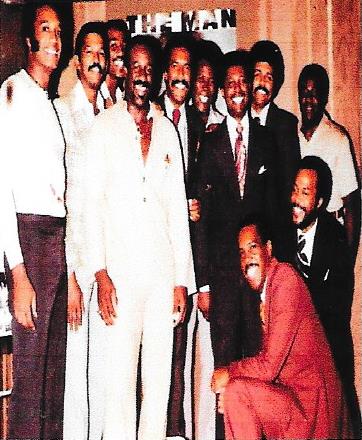
JIM VANCE &amp; CREW0009MY GUYS Celebrities who reach back; Willie Wood back row on far right / Willie standing second on left.
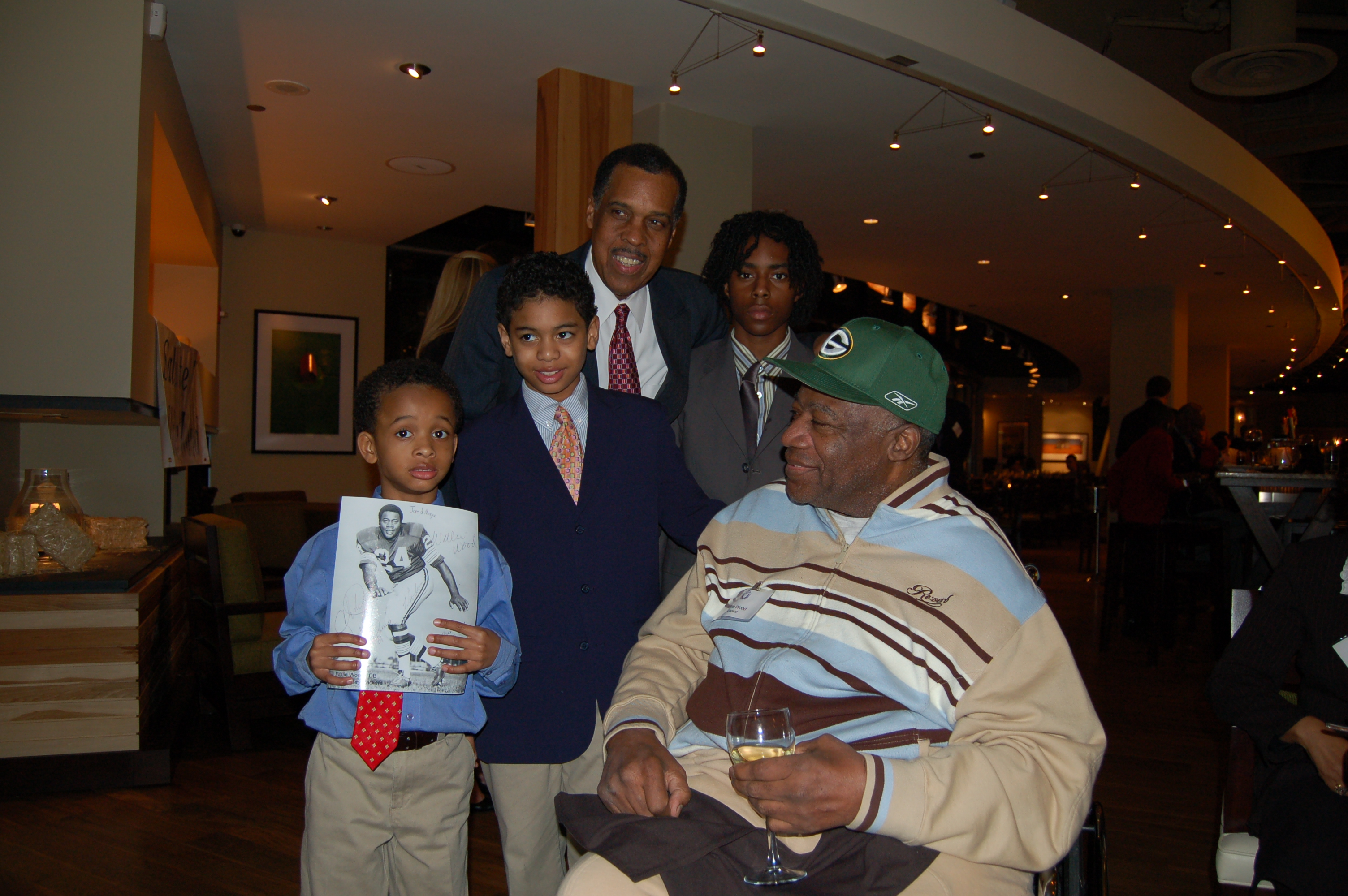
In December 1968 after the riots he shipped a box of toys home to DC from Green Bay.  The toys were from him and his teammates for my first ever Kids In Trouble Christmas toy party.  The toys were for needy children who were victims of the riots.

DSC_0163DickHellerscan0022

Willie saying hello to young admirers and presenting KIT Life Time Achievement Award to the late sports columnist, Dick Heller.


In 2013 Kids In Trouble hosted its last toy party for needy children making it the longest on-going community based toy party in DC.  I thank the generosity of Willie Wood for the success of the parties.  He never forgot who he was and where he came from.

The DC City Council on Tuesday December 13, 2011 named the street in NW DC where he was raised in his honor, Willie Wood Way.  He really deserves much more than a street named after him, he deserves a Charter School or a recreation center named in his honor.  Willie Wood’s accomplishments in the community and athletics are second to no one.

A BLACK HISTORY MOMENT IN THE NBA: SPENCER HAYWOOD 2015 NBA HALL OF FAME–ABOUT TIME!

SPENCER LEGACY AWARD0002

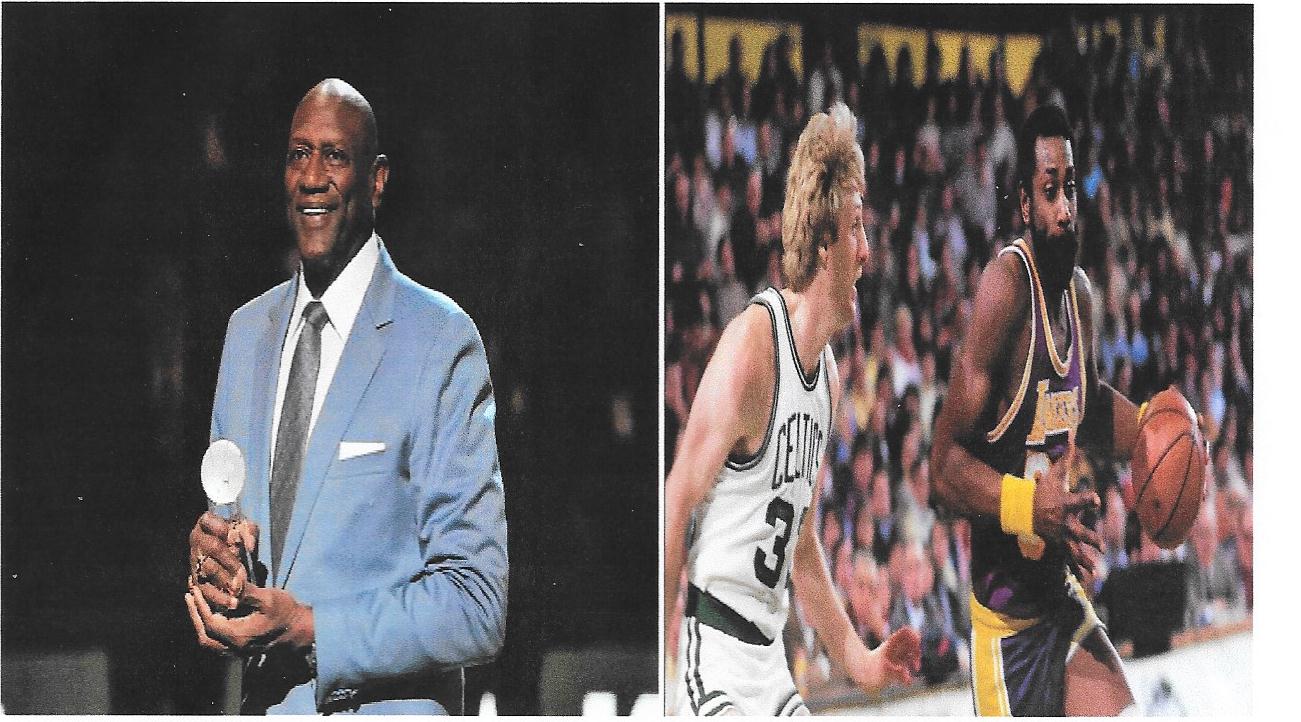
Spencer receives Legacy Award in Memphis and goes one on one with Larry Bird

He left the cotton fields of Mississippi for Detroit and Pershing High School and the rest is American sport’s history.  Pershing High School won the 1967 Class A state championship, five other players from that team would eventually become pro athletes.

Spencer attended Trinidad State Junior College in Trinidad, Colorado, during the 1967-68 college season, where he averaged 28.2 points and 22.1 rebounds per game. Due to his exceptional performance and talent, Haywood made the USA Olympic Basketball team in 1968.  Spencer was the leading scorer on the USA’s gold medal winning basketball team. He average 16.1 points per game, and he set a USA field goal percentage record of .719.  Spencer was only 19 years-old, the youngest player to ever make a U. S. Olympic team.  He held the Olympic scoring record until Kevin Durant (NBA Thunder) broke it in 2012.

Remember, this was the year that many black athletes boycotted the 1968 Olympic Games because of the overt racism.  Kareem Adul Jabar was one of those athletes whose absent created a slot for Spencer Haywood.  He was in the right place at the right time.

JOHN&amp;CARLOS0029

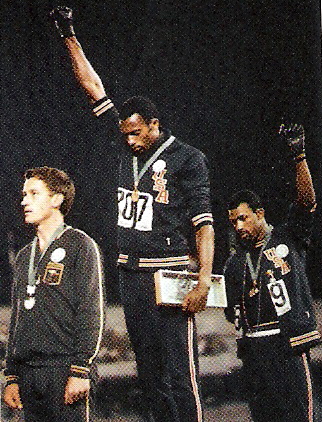
I will never forget the historical sight of sprinters John Carlos and Tommy Smith standing on the podium with black gloved fist raised to the sky protesting.  They were both banished from the games.  This would be a watershed moment for the 19 year-old Spencer Haywood.

Spencer returned to Detroit thinking he was going enroll at the University where he would play for his Godfather, the great Wil Robinson.  Coach Rob had been promised the head coaching job, but the school reneged on its promise.

Despite his disappointment, Spencer averaged 32 points and 22 rebounds for the Titans in his sophomore year. But that turned out to be his swan song.  He bolted for the ABA an upstart pro basketball league in what would become a landmark move and decision.

Spencer remembered the ABA saying to him, “We didn’t get Kareem, but we are going to go after you.” And I’m thinking, ‘How are you going to do that? ” During that time, the NBA had the ‘four-year rule,’ preventing a player from turning pro until his four years of college eligibility were up.

Haywood said. “I was a sophomore going into my junior year, and they said, ‘Well, we’re going to take the chance, we’re going to explain it to the press about why this happened.’

“When I decided to go, the NCAA and everybody went crazy, the NBA went crazy. They said the ABA is renegade people, they can’t do that, what’s wrong with you?”

As Piston’s Hall of Fame resident Dave Bing put it, “He wrecked the ABA in 1969-70, leading the league in scoring (30 points per game) and rebounds (19.5).”

“All of a sudden, Denver reneged on the contract I had signed, because they knew I couldn’t go back to college and I couldn’t go to the NBA,” Haywood said.

“So Sam Schulman (owner of the NBA’s Seattle Super Sonics) came in and said, ‘We want to break the NBA four-year rule, because we can’t compete with the ABA if they get all the good players.’ He signed me to a contract, and he says, ‘Don’t you worry about a thing, because we’re going to go in the first round of the courts, and the NBA will give in, because they know it’s the wave of the future.’

That case, Haywood vs. National Basketball Association, went to the U.S. Supreme Court, which ultimately backed Haywood by a 7-2 vote, saying athletes had the same rights as everyone else to make a living.

Spencer went on to a 12-year NBA career, scoring 19.2 points per game with 9.4 rebounds. He was a four-time NBA All-Star, and also played two seasons in Italy before retiring in 1983 from the Washington Bullets.

His stats and dominating performance alone more than qualified him to be inducted into the NBA Hall of Fame decades ago.  Instead, he had to wait 27 years while the-powers-to-be tried to run him back mentally to the cotton fields in Mississippi.  They made him practically beg for acceptance in their hall of fame.

He had to prove himself all over again to show he was worthy (which is the America way).  Spencer was asked to perform community service by the NBA to help assist them to see if he had earned entry.  This was so ironic, because he was in the community his entire NBA career, the only NBA player who cared longer was Dave Bing.  Spencer’s priority has always been our youth.

I remember one show when a female caller called him a hero and saying we needed more positive role models like him, he didn’t agree.  His response was “I am sorry to say, if your child has to look beyond his or her dinner table for their heroes, you have a problem.” 

This double-standard was a hard-ship for Spencer, even though I was not there during his NBA after life of Trials and Tribulations; having to prove himself all over again. I felt his pain, he was too proud to beg, but he was left little choice.

I knew Spencer Haywood “The Man” who would do anything for a friend.  He is a proud and honest individual, and when he gave you his word, you could carry it to the bank.  I thank my mentor, NBA color analyst and playground basketball legend Sonny Hill for introducing me to Spencer.

He was by no means perfect, but still I would jump over ten of any other “Pro athlete Sacred Cow” (Ali and Red Auerbach exception to this rule) to get to him.

He was someone you could trust and you knew he had your back in the good times and the bad.

Drugs can often make the user paranoid, but I remember having only one bad experience with Spencer during our relationship.

He was a regular on my radio talk show Inside Sports, he participated in my Kids In Trouble, Inc Youth forums, we played one on one tennis (he kicked my ass) and we hung out in jazz clubs in DC and Detroit together.  He is a jazz fanatic and was a jazz radio talk show host in Detroit.

scan0006

Spencer standing tall at KIT Youth Violence forum in DC / co-host Tom Davis (R-Va.) & NFL Legend Jim Brown

BBALL ROUNDTABLE

He hosted the Inside Sports You Tube College Basketball Round Table, special guest were Mike Jarvis (George Washington U), Clarence ‘Bighouse’ Gaines (Winston-Salem State), Gary Williams (Maryland U), John Chaney (Temple U), and Butch Beard of Howard U).

I think Ken Griffey, Jr. summed it up best for me, when he was recently inducted into the Baseball Hall of Fame.  He was asked by members of the sports media about the players left out because of alleged steroid use. His response was on the one, he said, “They were Hall of Fame players before they started using steroids.”

The same can be said of Spencer Haywood, he was definitely a NBA Hall of Famer before the drugs and the stupid mistakes he made during that down period in his “After NBA Life!”  If drugs are the yard stick the NBA selection committee is using for induction, the hall should be half empty.

As he was being honored in Memphis during the celebration of Martin Luther King’s birthday, he said, “To be here at the Wright Museum, the largest repository of black history in the world. Here I am here being honored, a poor boy from the cotton fields of Silver City, Miss., to Detroit, to here, it don’t get no better than that.”

I am happy that Spencer Haywood can now rest in peace and stand even taller despite, the many naysayers who are now patting him on the back, instead of stabbing him in the back. And the NBA smiling faces who told lies.

There are those who may want his legacy to be breaking the “four-year rule” but the NBA stats proved, he put ‘The Power’ in the NBA Power Forward and earned his way into the NBA Hall of Fame. I was a witness.  Peace and blessings my friend.

Note Worthy/ http://www.nba.com/halloffame/ Spencer’s Hall of Fame acceptance speech


REV. MARTIN LUTHER KING: BLACK WOMEN KEEPING HOPES AND DREAMS ALIVE!

Someone once said, “If you don’t know your history you are bound to repeat it.”  The problem, some people who don’t know their history or don’t have a history, they don’t want others to have or own a history.

In the 1950s my wife Hattie Thomas Bell and her mother Elease Thomas along with her siblings were “Foot soldiers” in the early days of the Civil Rights’ movement in Orangeburg, S.C.  Her father Dr. Charles H. Thomas, Jr. was President of the local chapter of the NAACP.  He was often seen holding down picket lines with no one else in sight, but his family.   He was also seen leading members in the ministry in downtown boycotts or he could be seen collecting Hattie and her siblings from the city jail after putting his house up as collateral to bail them out along with other students who had been arrested.  He was voted into the Black South Carolina Hall of Fame in 2007.

DR. CHARLES H. THOMAS JRDRTHOMASFREEDOMNOWDRTHOMASJAILBIRDS1MOMMYT&amp;HATTIET

Dr. Charles H. Thomas, Jr. marched with Dr. Martin Luther King.  He made Civil Rights a family affair. Photos: he is seen in downtown Orangeburg, asking for “Freedom Now”or collecting his jailbird children, L-R Loretta, Hattie T in shades and brother Reggie. The black women behind the black man, Mommy T and oldest child Hattie T.

DR.KINGINORANGEBURG

Rev. Dr. Martin Luther King was just a face in the crowd at an Orangeburg, S. C. NAACP rally organized by Dr. Charles H. Thomas, Jr. in the early-50s. 

I started the week Monday January 11, 2016 by deleting names from my extensive telephone Rolodex of friends who I am no longer in touch with and ones who were now deceased.  I re-discovered two old friends, with whom I had not spoken to in at least five years.  They were once Kids In Trouble board members, Santa’s Helpers and confidants, Ms. Betty Clegg and Ms. Rachel Kennedy (Masters Degree).  They are now retired teachers and administrators in the DC Public Schoolsboth are like sisters I never had.

I had three other meetings that day, including stopping into visit with Rachel. When I called the house to say hello and wish her a Happy New Year, her friend Paul answered the phone.  It was then I discovered she had a stroke on a cruise during the Christmas holidays and she was in the Washington Hospital Center in a coma. The next day I went to the hospital to see her, several days later I took Hattie to visit.  Paul had told me on my first visit, she could hear what was going on around her.  Hattie read to her (get well wish cards).  Rachel responded by blinking her eyes—she made our day.

I had been surrounded by heroes all day, starting with Ms. Davis, and sitting with Ms. Kennedy.  Her story is truly remarkable.

Her late husband Henry Kennedy, Sr. was like a big brother to me.  He worked in the Post Office, and she was a DC school teacher.  They put three children through college, two grads from Harvard (Henry Jr. and Randy), and daughter grad from Princeton.  Angela was a classmate of of First Lady Michelle Obama.

RachelKenneyscan0028RANDY KENNEDYscan0006

Santa’s Helper Rachel Kennedy / Fox Trappe Santa’s Helpers, L-R son Randy and husband Henry Sr. on extreme right and Judge Henry Kennedy, Jr.

Her late husband Henry Kennedy, Sr. was like a big brother to me.  Rachel lives two blocks from Coolidge HS. The day turned out to be a cross/country city run but at the end of the day it was worth it.

On Thursday January 14, 2016 I met with the Head of Cemeteries for the State of Maryland, Ms. Marilyn Davis and her lead investigator Ms. Brenda Rappozzi at Ft. Lincoln Cemetery in Prince Georges County. They had drove in from their home office in Baltimore, Maryland.

I have had a complain and issues with Ft. Lincoln Cemetery since 2007 related to missing crypts.  Long story short—issue resolved.  After ID of our crypt Ft. Lincoln agreed to place a fully engraved memorial marker on our crypt spot at no cost to us.  Proving government can work when you have good people like Ms. Davis in place to cut through the Red Tape. She was very professional and a class act.

20160114_123037

L-R Deborah Rappozzi, family friend Andrew Johnson, Hattie T, HB and Marilyn Davis

I also want to thank Prince Georges County Atty. Charles Kenney for referring me to Ms. Davis from the very beginning.  She wasted no time in assigning Ms. Rappozzi her lead investigator to the case.  I know we complain that government sometimes does not work for the people (I am guilty), but there are rare birds like Ms. Davis who are not sitting around on their hands.  There is little doubt she is in the war zones of the struggle.

When I think of Baltimore I think of two other black hero women in the struggle, the Mayor and Prosecutor of the six police officers charged in the death of Freddy Gray.

Mayor Stephanie Rawlings-Blake and Prosecutors Marilyn Mosby saved lives during the riots in Baltimore after the murder of Freddy Gray.  If they had not stepped in and taken charge blood would have been flowing in the streets.  If these cops are not found guilty it will be back to “Business as usual” in the black community as it relates to police brutality. There are some Good Cops in our communities who want to be Good Cops but the system is so embedded with Bad Cops, the Good Cops are intimidated to go along to get along.  Thanks to the KKK like existent of the Thin Blue Line, Code of Silence and corrupt unions.

The most remarkable thing about Thursday January 14, 2015 was when the day had ended, I realized I had spoken to and had met with some of the most remarkable black women in my life time (Black American History).  These hero athletes, politicians and pimps in the pulpit seen as trailblazers are often the blind leading the blind.

There were meetings with my ITT folks and a publisher at the I Hop Restaurant right down the road from the cemetery at 5 pm (full circle).

During the meeting at the I Hop, I looked around and I was sitting with three PhD’s, Dr. Catherine Williams (Publisher)Dr. Janice Mitchell (writer, educator and editor), Dr. Mattie Giles (Educator & Consultant) and my wife Hattie T (Masters Degree).  I had called and spoken  to old friends like Carolyn Blount, the Publisher and Editor of About Time Magazine in Rochester, NY.

Sitting in the company and talking to these black women of academia, I felt like the “Big Dummy” my college football coach Bighouse Gaines often called me back in the day when I decided to run my own pass patterns.

This was better than sitting in a meeting with Muhammad Ali, Red Auerbach, Jim Brown and some other All-Pro athletes. These black women are the real super-stars in the Game Called life. How many times have I said, “My heroes were black women?  While listening to them chit-chat during dinner, I felt like 007 James Bond (spy) and an outsider.  I wanted to turn on my video camera to capture some of “The common sense nuggets” they were discussing and then copy the conversation to politicians on Capitol Hill.  I wanted them to hear some common sense solutions to many of our problems, but my battery was dead.

My heroes were much like these black women, they could not kick a football 60 yards in the air, shoot a jump shot or hit a baseball out of the stadium, but they were Super-Stars in the Game Called Life, meet Grandma Bell and Mommy B.

GRANDMA BELL1BellFamilyscan0007PUDDIN

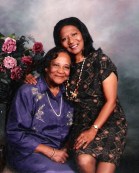
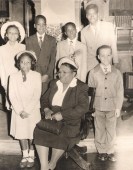
Amy Tyler Bell (aka Grandma Bell) and her crew of grands and Mattie Bell (aka Mommy B) and her boys and younger brother Tyrik (aka Puddin, Billy, William).

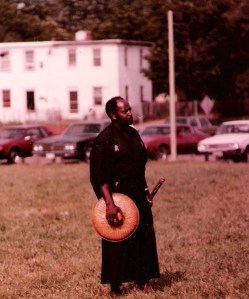
Dr. Janice Mitchell is not only an educator and editor, but she also holds a Black Belt in the martial arts and sits on the board of the oldest black martial arts organization in the World, Simba Da Jang.  Her late husband Scotty Mitchell, also held a black belt and was a pillar in the community when it came to Civil Rights.

SIMBA GRANDMASTERS 10006

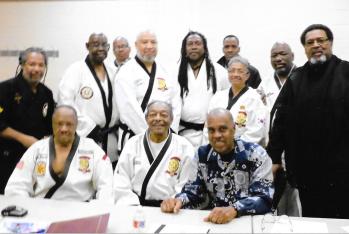
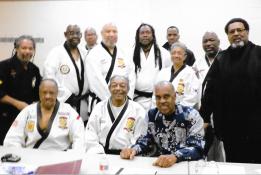
Seated: Simba Da Jang founders 10th Degree Black Belts, Furman Marshall (also founder of Black Ski) and Phil Cunningham.  In November 2015 I was honored to be named the first civilian to sit on the Advisory Board of the organization.  Dr. Janice Mitchell is standing directly behind me.  My only belt was the one I was wearing.

Dr. Catherine Williams is President and CEO of STEPS, LLC.  Her academic credentials include; a Bachelor’s degree in French from Norfolk State University (Norfolk, VA); a Masters in Urban Administration from Georgia State University (Atlanta, GA); Masters of Divinity from Virginia Union University, School of Theology (Richond, VA).  and a Doctorate in Public Administration from the University of Georgia (Athens, GA). After completing graduate school, she maintained dual careers, college professor (Hampton University) and owner of a consulting business.  She was CEO and President of Institute for Academic Coaching and Counseling which provided tutoring, mentoring, self-esteem, karate and parenting programs for inner-city youth and adults.

Dr. Mattie Giles received her doctorate in Higher Education Administration from Virginia Tech University in Blacksburg, Virginia. She served as a member on the faculty of the University of the District of Columbia for 35 years.  She was the Chairperson of the DC Regulatory Commission serving two term appointments, one each by by Mayor Marion Barry and Mayor Anthony Williams.  She said one of her proudest moments during the Civil Rights movement was participating in The March on Washington in 1963.  Dr. Giles volunteered as a Big Sister for the Little Sisters in the Washington metropolitan area and was a Santa’s Helper for Kids In Trouble, Inc.

In a hour long telephone conversation with Carolyn Blount (spent mostly with her husband Jim talking sports) we tried to catch up and thank God that we were still in this Game of Life.  About Time Magazine is truly an amazing story in media history.  Only God knows how this magazine and this husband and wife team have held on operating with a year to year shoestring budget and broken promises.

ABOUTTIMEMAG

Jim and Carolyn Blunt publishers of About Time Magazine were honored with The Kids In Trouble Life Time Achievement Award.

I closed out week (Saturday) in the company of another remarkable Black Woman, Ms. Virginia Ali.  Her and husband the late Ben Ali found the World famous Ben’s Chili Bowl in Washington, DC in 1958.

BEN'S20150820_150747JOHNNY AND MOOKIE

The brain trust behind the success of Ben’s Chili Bowl, CEO son Kamal Ali and matriarch Virginia Ali.  The University of Stanford basketball team and native Washingtonians, head coach Johnny Dawkins and Assistant coach Mookie Payne stop by the Chili Bowl for a hot dog on the way to Europe during a school break.

I am the Historian for Ben’s Chili Bowl, as a fourth generation Washingtonian, I have lived the history of the U Street, NW corridor, once known as “Black Broadway!”  The Chili Bowl now has 7 locations in the District of Columbia, Maryland and Virginia (DMV).

All these great black women I was meeting with led me into the January birthday celebration of the Rev. Martin Luther King and leading me into the Black History Month of February.  We should be celebrating Black History 365 days of the year.

Hattie and I finally dragged our selves back home around 8 pm.  Black Women, thanks for all that you do and try to do for others. Thanks for keeping hope alive and trying to hold up black men. God bless.

Note Worthy: We must not forget the great Dr. Frances Cress Welsing who died two weeks ago even though major media outlets like the Washington Post would like for us to. She was the forerunner in modern day black history who called a spade a spade when came to exposing the genetic components of racism in American.  Her memorial services has been removed from Howard University’s Crampton Auditorium (thank God).  It was there the powers-to-be refused to renew her tenure as a professor in 1971 after the papers she wrote on racism where nationally recognized.  The services will now be held the same date but a different place. Mark on your calendar, Saturday January 23, 2016 at Metropolitan AM & E Church located at 15th and M Streets, NW from 11:00 am until 3:00 pm.  Please come out to honor this hero in the Civil Rights Movement.

FRANCES WELSING JPEG0002

FRANCES WELSING IN STUDIODR. FRANCIS WELSING

Dr. Al-Tony Gilmore and I listen as Dr. Welsing discuss racism in America on Inside Sports. 

OMAR TYREE: FLY GIRL MEETS FLY BY NIGHT BOY!

Let me introduce you to my friend Omar Tyree via e-mail.  He is a bestselling author for literary giant Simon & Shuster.

From: “Omar Tyree” <omar8tyree@aol.com>

Sent: Monday, January 4, 2016 9:24:47 PM

Subject: Omar Tyree / Where Are We Now Song

Greetings All,

It’s the new year of 2015 and as promised, here is the final “Where Are We Now?” spoken word song Master to begin the sharing, uploading and the SPREADING THE WORD process especially to the college crowd radio and student body as I continue to shop my February tour.

The completed YouTube video will be on the way before this weekend is up…

Sincerely,

Omar Tyree

704-564-4978

OMARTYREEOMAR CORRUPT COVER

These books best describe the life story of Omar Tyree      

This is his Little Known Black History Fact in his early story book relationship with Kids In TroubleInside Sports and Harold Bell.  You don’t have to worry about seeing this story published in a Simon & Shuster book.

To make a long story short, when Omar was a student at Howard University (back in the day) and writing a column for the Capital Spotlight a DC community newspaper, I was his mentor and shoulder to cry on as it related to trying to survive as a black man in this Game Called Life (sound familiar?).

He went on to become a millionaire as a author for literary giant Simon & Shuster (according to him). He lost it all chasing the music business and the Hollywood Spotlight (his words).  During his high profile period during his literary career (Fly Girls) I tried my best to get him to assist me in writing my book.  I chased him down at book stores and book signings, but never could get a commitment from him to help me (what else is new).

He fell on hard times without me knowing, but I still stayed in touch by telephone, e-mail.  We met and had lunch while I was in his hometown of Charlotte, NC for the annual CIAA Basketball tournament. Years later he would confess “I am dead broke I made some bad investments chasing stardom via the music business in Hollywood and trying helping my family.”

Hold on to your seat belts for this next one, he asked to borrow $5,000 from me for a book project that would help him to get back on his feet and he would repay me with interest.  I could not believe what I was reading in the e-mail.

He got a break when the late Marion Barry asked him to be write his life story, “Mayor for Life.”

Omar called me and said, “I think I just got that break I was looking for, Marion Barry has asked me to help write his book, but I don’t know anything about him!”

Marion was aware that he should  keep his distant from NBC TV 4 newsman Tom Sherwood and Washingtonian Magazine’s writer Harry Jaffe.  They were “Bad News” they tried their best to abuse and misuse their media access to him for their own financial good.  I told Marion to run when he saw them coming!

Omar was the perfect foil for Marion; no one has ever called Marion “A dam fool” to his face but me.  And that was after I told him that the FBI was trying to sit him up and he should lay low and stay out of the streets for minute.  This encounter took place on the parking lot of Face’s Restaurant, the home where the so-called In-Crowd hung out in NW DC.

The eye-witness to this conversation was his security man DC Police officer William Stays.  Marion’s response, ‘Harold, thanks man, but I have everything under control.’  It was then I said, ‘Marion you are a dam fool’ he smiled and walked back into the restaurant. Stays looked at me and threw his hands up in the air and said, ‘You tried!’ Six months later ‘The Bitch Sit Him Up!’ You won’t read that in the book ‘Mayor for Life.’

His last media stop before heading to jail was Inside Sports.  My talk show was heard on W-U-S-T Radio. I remember it was on a late Saturday evening.  My former college teammate and roommate, Dr. Arnold McKnight (DC Boxing Commissioner) had called me the night before saying that Marion might be coming by the station to apologize for not listening to me.

I was halfway through the show when my producer Salim Edwards pointed to the main entrance behind me signaling that I had guest.  It was Marion and Dr. McKnight headed to the studio.  Marion had this big grin on his face, he seem to be in good spirits.  This was his first guest appearance on Inside Sports since the show first aired in 1970.  He never apologized on the air, but as I was walking him out he turned and shook my hand and said, “Keep telling the truth I should have listen to you.”

There were many who thought Marion and I were bitter enemies, but the truth was we played tennis occasionally on the tennis courts near his home in Hillcrest Heights SE.  We talked sports all the time, especially, the Redskins.  He liked to gamble and I remember we made a bet when he was in the Riddick Bowe boxing camp.  I took Evander Holyfield to beat Bowe in their second meeting.  We were at the Hillcrest tennis courts and he was talking loud about how Bowe was going to knock Holyfield out for my amusement.  I went over to him and asked “How much you want to bet”?  His response was ‘make it light on yourself.’   I said, ‘A thousand’ and he said ‘hell no!’  He then said, ‘A hundred’ and I said ‘you are betting with scare money?’  We finally settled on five hundred.  Holyfield beat Bowe in a big upset.  Marion didn’t know I had inside information that Bowe was out of shape and could not keep his ding-a-ling in his pants.  Eddie Futch his legendary trainer was threatening to quit if Bowe didn’t get his act together.  I took advantage of that information, because I knew Holyfield would be coming into the ring in tip-top shape and I was right.

It took me three months to catch up with Marion to get my money.  I walked into Face’s for lunch one day and there he was holding court.  He saw me coming and reached into his suit coat pocket and torn off five one-hundred dollar money orders and his only words were, “How did you know?”  I said, ‘They don’t call me Inside Sports for nothing!” 

Marion, using Omar was a smart move.  Omar, had the hook-up with Simon & Shuster and the name credibility and he was broke.

His latest e-mail means he has finally been paid.  Omar’s agreement with Simon & Shuster was to be paid on “The Come” meaning a certain amount of books had to be sold before he saw a dollar bill.

This Negro, I want to use the N word so bad it hurts, but once ESPN’s Michael Wilbon went on National television and told everyone that it was okay to use the N word among family and friends, I promised my wife that I would try to abstain from using it.  This was after Wilbon and I had sit in the Wizard’s media press room and he told me that his bosses at ESPN wanted him to go on “Outside the Lines” to discuss the use of the N word.

He said, ‘Harold Bell, I am refusing to participate, because the white host Steve Levy has no horse in the race.’  I was so proud of Michael, I almost cried, but I stayed cool.  My cool didn’t last long, on the following Sunday on ‘Outside the Lines’ whom do I see sitting front and center defending the use of the now dreaded N word, its Michael Wilbon. I firmly believe there are times like this I should get a pass, so I broke my promise and used the N word in front of my wife. I said “I cannot believe that N just said that!”  Hattie looked at me and my response was, ‘he just said it was okay to use the word in front of family and friends.’ She just shook her head.  By the way, Wilbon can do no wrong when it comes to my wife.

Now here comes Omar Tyree with an offer he thinks I cannot refuse because I am broke!  He has the nerve to ask me, “Man, see if you can make a contact for me in Floyd Mayweather’s camp.  I would love to cut a deal to write his life story.  Simon & Shuster would jump all over that deal and I will cut you in.  And put in a good word with Ben’s Chili Bowl about me writing their story.”  I wanted say N please again, but I was cool and I would guess that is why I am still broke.

I learned a long time ago money does not make you a free man in America, ask Radio One Fly Jock Tom Joyner, if money makes you free?  Freedom ain’t FREE.

Omar met his responsibility by helping with the editing and allowing his name to be used, I cannot blame him for that.  I do blame him for not reaching back to help someone he once called a “mentor”, but he is par for the course in our Black World (the list is too long for me to mention).

His latest rap song as he tries to return to his world of Milk & Honey is appropriate “Where Are We Now Song!”  His follow up song should be, ‘Where I once was and forgot!’


DR. FRANCES CRESS WELSING 1935-2016: LIFE CELEBRATED AT THE SCENE OF THE CRIME?

FRANCES WELSING IN STUDIOMombabiesscan0008
DR. FRANCIS WELSING

Dr. Welsing and Dr. Gilmore have my undivided attention on their guest appearance on Inside Sports in December 1972

THEGIRLS

FRANCES WELSING JPEG0002

When I received the sad news of the passing of Dr. Frances Cress Welsing at the age of 80 in an e-mail from Dr. Al-Tony Gilmore, I had to step away from the computer and take a deep breath.  Back in the day she was like a sister I never had.

I had no idea her age, because I always thought she was younger and definitely smarter. There were no better interviews then Dr. Welsing and Dr. Harry Edwards when it came to the topic of Human Rights.  She was a regular guest on Inside Sports in the 70s.

I tried my best to book Jim Brown or Dr. Harry Edwards on the show when I had Dr. Welsing but it was always a scheduling conflict.  The show would have been a master piece on racism, today and yesterday. This would have been one of those shows where birds of a feather flocked together—three brilliant minds to include, Dr. Gilmore joining Dr. Welsing in studio.

Dr. Welsing never got the props that she deserved.  She was “Black Balled” by a HUCB, Howard University.  She was an assistant professor of pediatrics in the school of medicine.

In 1974 her paper the “Cress Theory of Color-Confrontation” received national attention and the Powers-To-Be at this historical black college decided not to renew her tenure.

After her sudden departure from Howard University she would spend the next two decades as a staff physician for the Department of Human Services here in DC.

Howard University wanted nothing to do with her while she was living but now celebrates her in death.  On Saturday January 23, 2016 there will be a Memorial from 11:00 am until 3:00 pm held in her honor at Crampton Auditorium on the campus of Howard University—how ironic.

The one thing we had in common was her love of children.  During her tenure at the Department of Human Services she was a specialist in both child and general psychiatry, gaining particular acclaim for her work with young people.

Dr. Welsing was also a celebrated scholar who studied the origins of white supremacy from a psychological and biological perspective.  She was also, a proponent of the “Melanin Theory,” which espouses black superiority due to a higher concentration of melanin in people of African descent.  Her theory did not go over too well in major media.  The proof is in the pudding, check out the obituary columns in the Washington Post since her death two weeks ago.

As a psychiatrist, Dr. Welsing used Freudian symbolism to explain white supremacy, including the interpretation of guns, money, the cross and gold.  She has faced some controversy regarding her stance on homosexuality, which she said was imposed on black men by whites who wanted to reduce the Africa population.

Dr. Welsing, is perhaps best known for her 1991 book, The Isis Papers, which reportedly came about after 20 years of research and analysis from her private practice. It is considered required reading for those interested in the psychological origins and manifestations of white supremacy.

If you are looking for a story on this great lady in major media as it relates to her outstanding work and contributions to American History, don’t hold your breath.

Greg Carr, head of Howard University Department of Afro-American Studies, said it best, “The fact that she was largely unknown and/or caricatured when discussed at all in white public discourse reflect the tremendous gap that continues between black and white public spheres.

Dr. Frances Cress Welsing was a warrior and a stand-up lady that I admired and respected.  Dr. Welsing will truly be missed.  RIP my sister.

https://www.facebook.com/lovebeingblack/videos/10152912033031928/?theater / Dr. Welsing was black and proud