ARTHUR ASHE: A MAN FOR ALL SEASONS


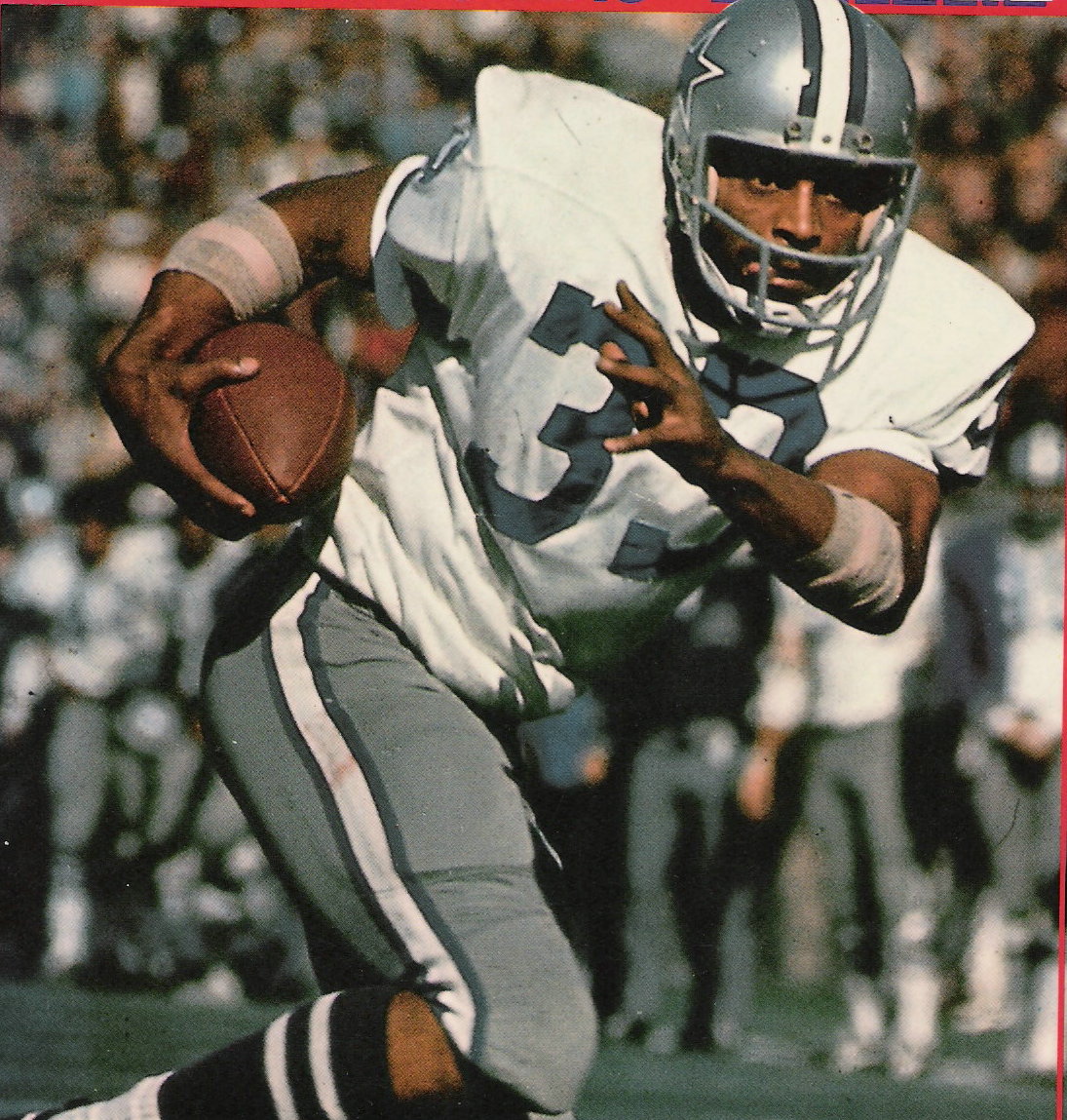
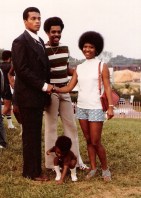
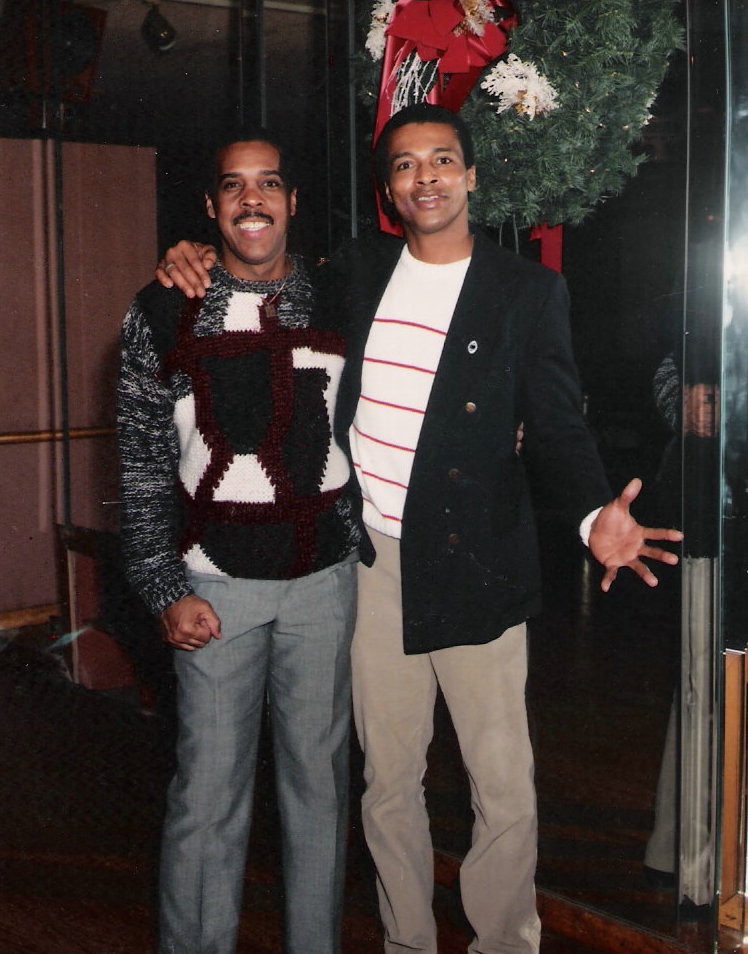
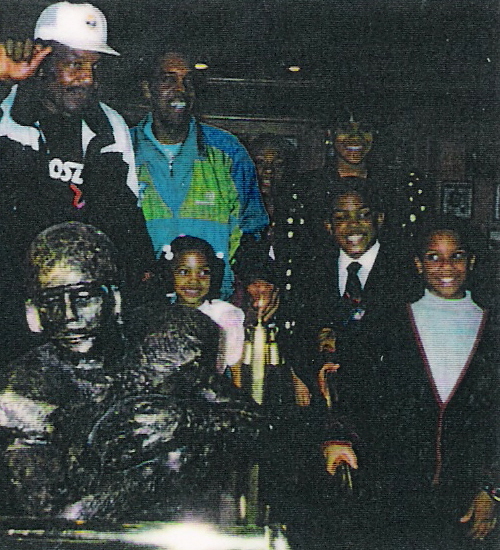
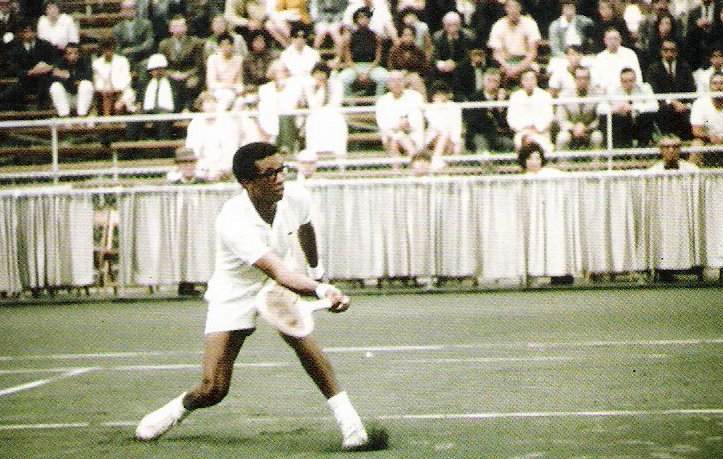
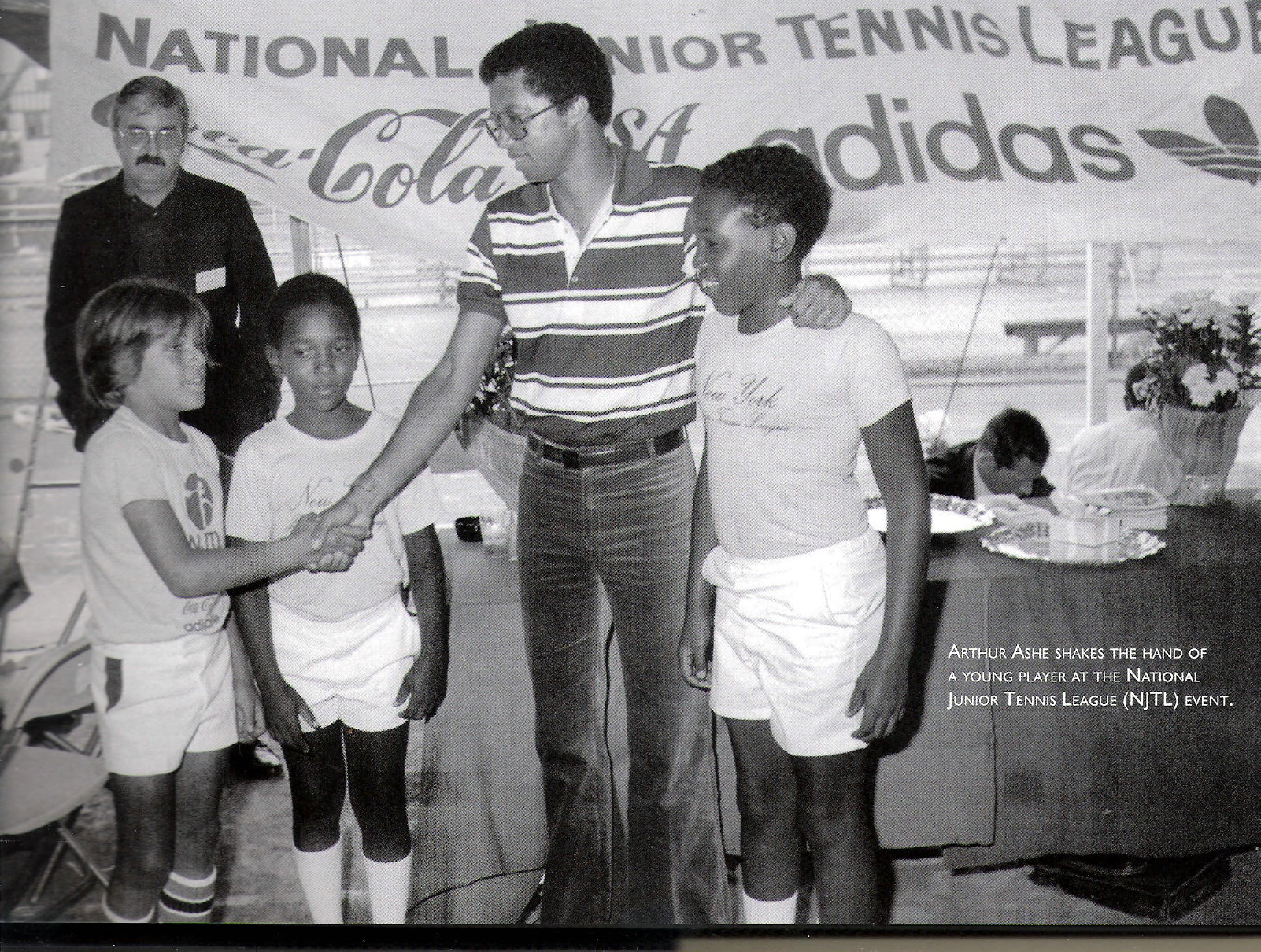
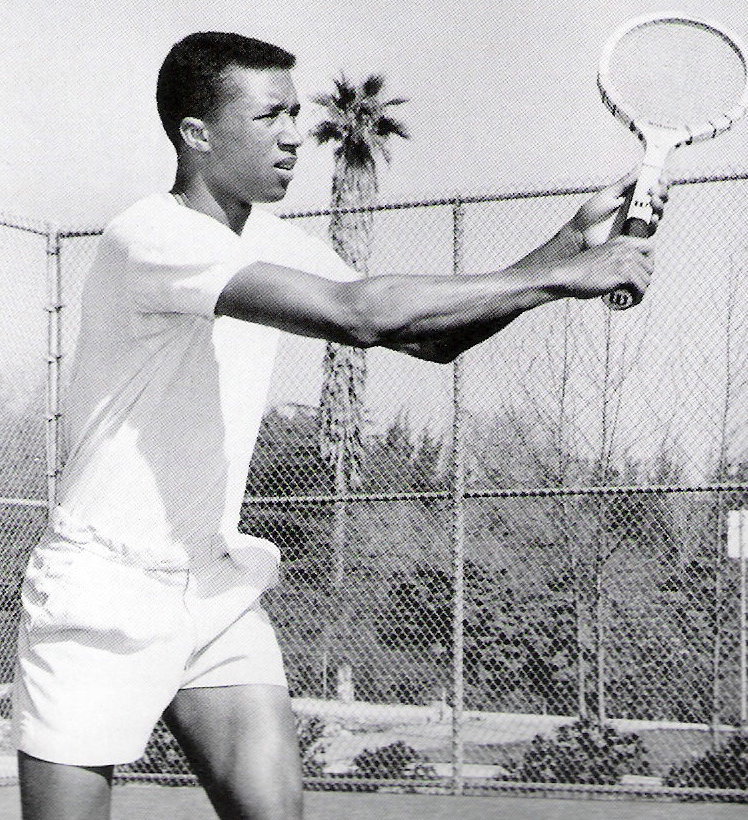
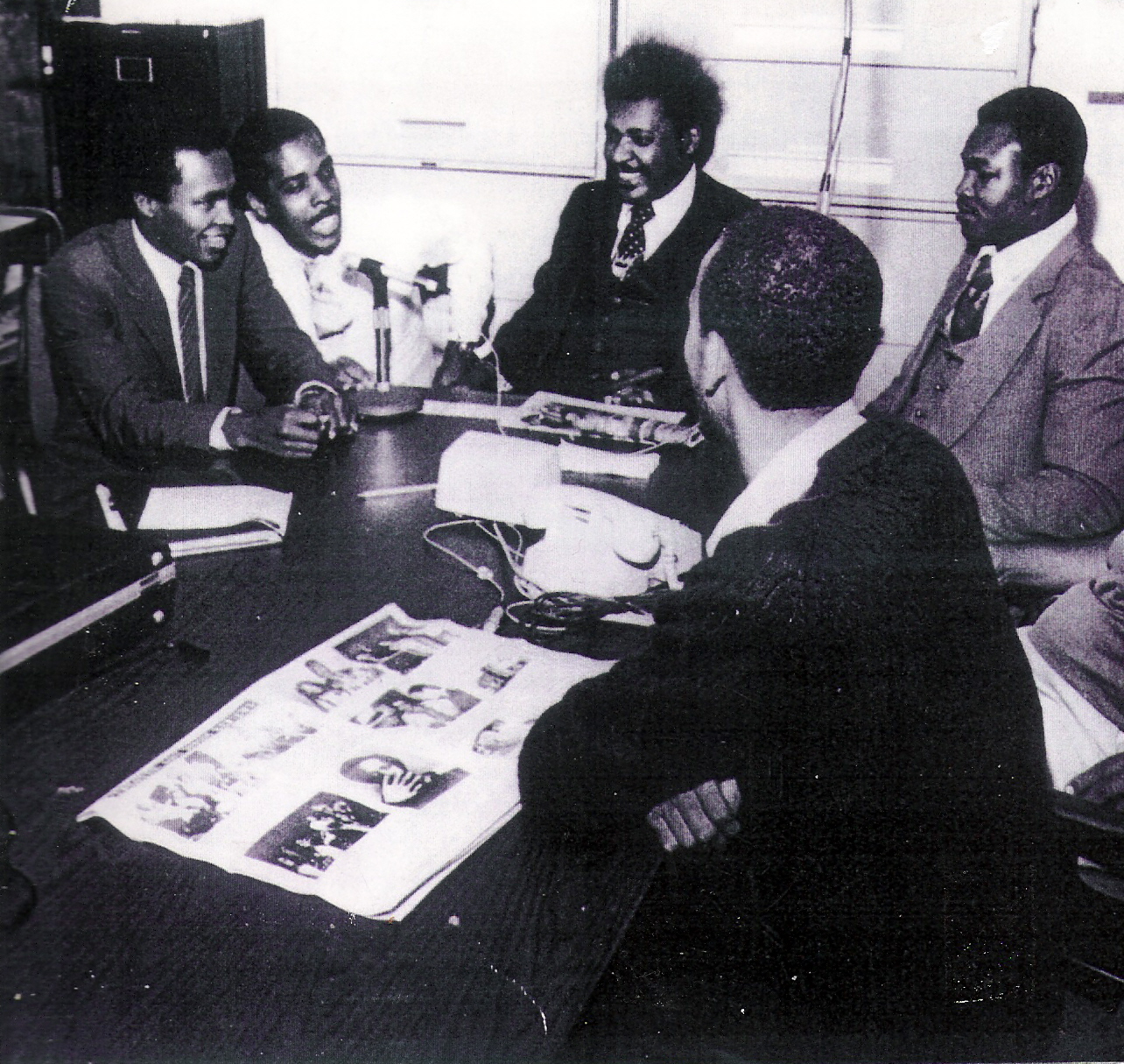
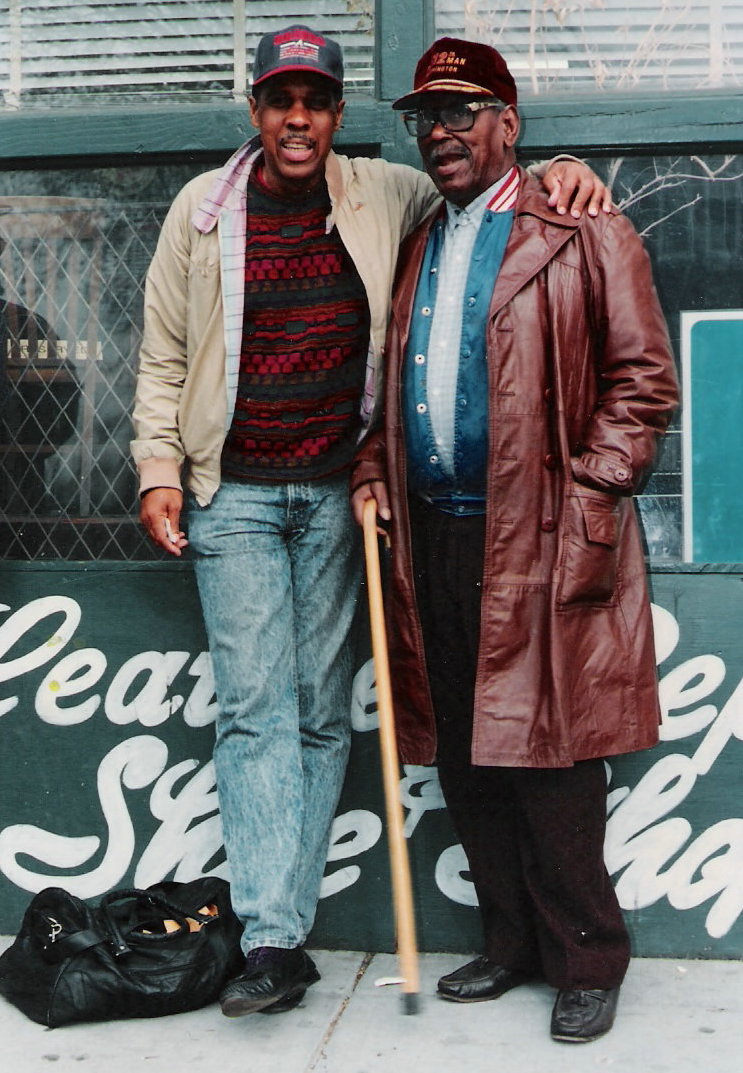
ARTHUR IN ACTIONARTHUR & NJTL KIDSASHE RECEIVING SERVE

Serena Williams wins her 19th career Grand Slam and her 6th Australian Open.  She beat Maria Sharapova in straight sets. More history was made when three black female players made it to the quarter finals.  Never in Grand Slam history has this ever happen.  Serena and sister Venus and nineteen year old Madison Keys are keeping hope alive in American tennis.

There has not been a No. 1 black male tennis player since Arthur Ashe in 1971.  Where are all the black American men?

A footnote in Black History: While we celebrate Serena lets not forget Arthur and Althea  Gibson who started it all.

I remember a black Newspaper Columnist, Adrienne Washington writing, “I am still trying to figure out how our story gets told by everyone but us?”  Adrienne, What took you so long to figure that one out?  First, we don’t own any major media outlets to tell our own stories.

Our history is either being ignored or stolen while we stand idly by and do and say nothing.  The thieves are stealing our music.  The Oldie but Goodies formats are being sold out all over the country and it has gotten so bad if you spot a black face in the audience you celebrate.   The most popular rapper in America has blond hair and blue eyes–Emien.  A black jockey has not been seen at the Kentucky Derby since the 1800s. Asians have taken over the soul food market, when was the last time you saw an Afro-American own cleaners?

When I talk about stolen goods I have to look no further than ESPN’s VP Steve Walsh.  He listened to Inside Sports while working in the Style Section of the Washington Post in the 70s.  In 1978 he took the concept and format of the show and parlayed it into Inside Sports Magazine and today’s ESPN television format.  It was my fault because I didn’t trademark the name as my attorney had advised me.

I decided to separate my sports talk radio format from his magazine so I re-named my format “The Original Inside Sports!”   You would not believe he is still trying to claim ownership, in his profile on the internet he calls his magazine“The Original Inside Sports Magazine!”  He has no shame in his game! You still want to know why our history is being told by everyone but us?

In 1968 tennis legend Arthur Ashe won his First Grand Slam, the U. S. Open.  Shortly after the big win he and his good friend, business partner and Davis Cup teammate, Donald Dell were driving around Washington DC when Arthur came up with the BRAINCHILD the National Junior Tennis League (now under the umbrella of the USTA).

arthur davis cup teammates

Arthur and his Davis Cup teammates, Donald Dell in dark sport coat

Arthur and Donald had just finished conducting a tennis clinic for inner-city youth at the Bannecker Recreation Center on Ga. Ave. NW.  The Rec center was located directly across the street from Historical Black College, Howard University. Despite his success Arthur had not forgotten who he was and where he came from!  He remembered the harsh reality of racism in his hometown of Richmond, Virginia.  He had to leave town just to escape racism on the tennis courts.

arthur ashe tennis clinic

Arthur conducting tennis clinic in NW DC

Shortly after the devastating riots in 1968 had torn DC apart, several blocks away at 14th & W Streets NW there was another youth works project in progress.  Kids In Trouble was designed to help rescue at-risk children in the Shaw/Cardozo community.

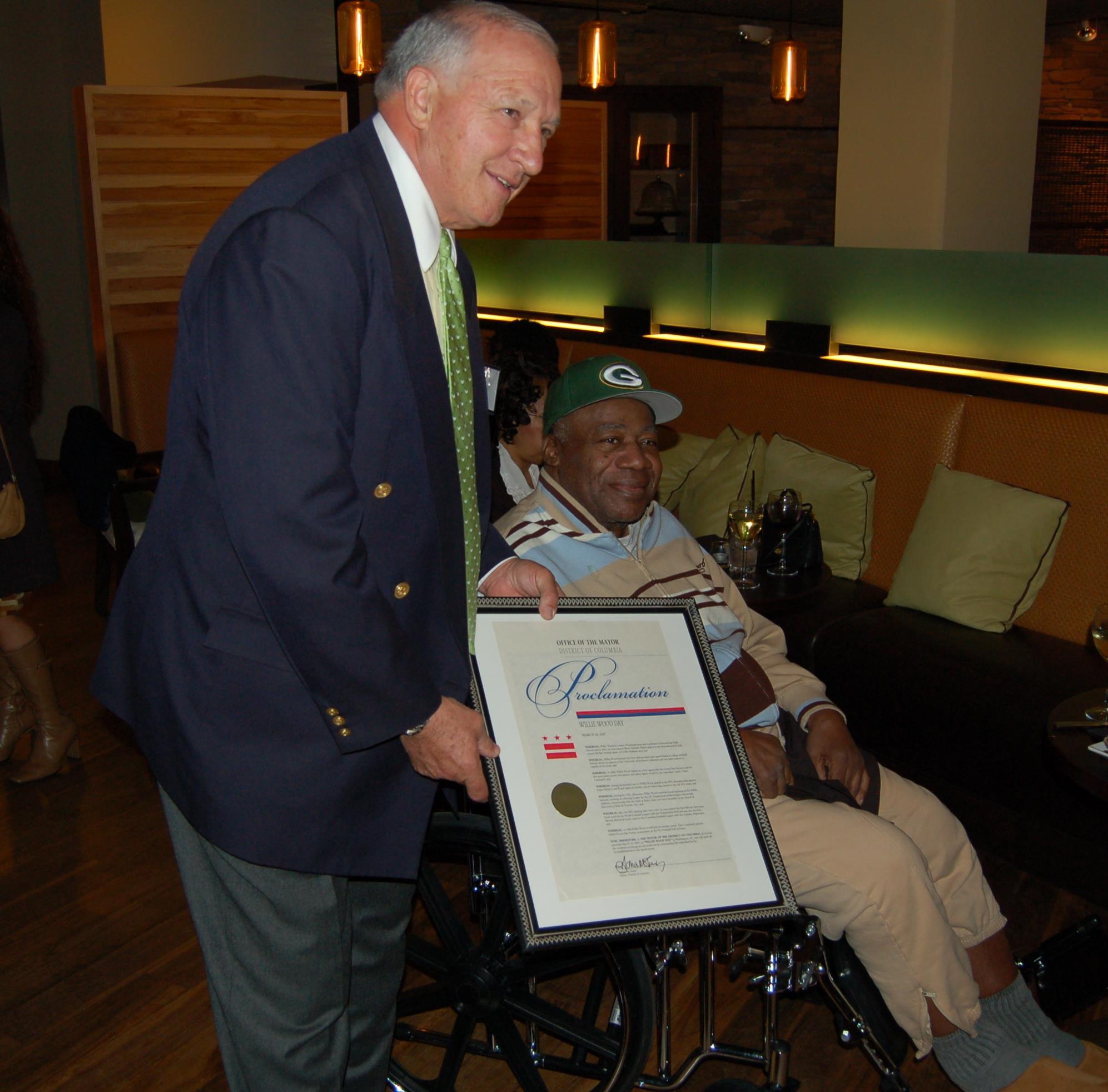
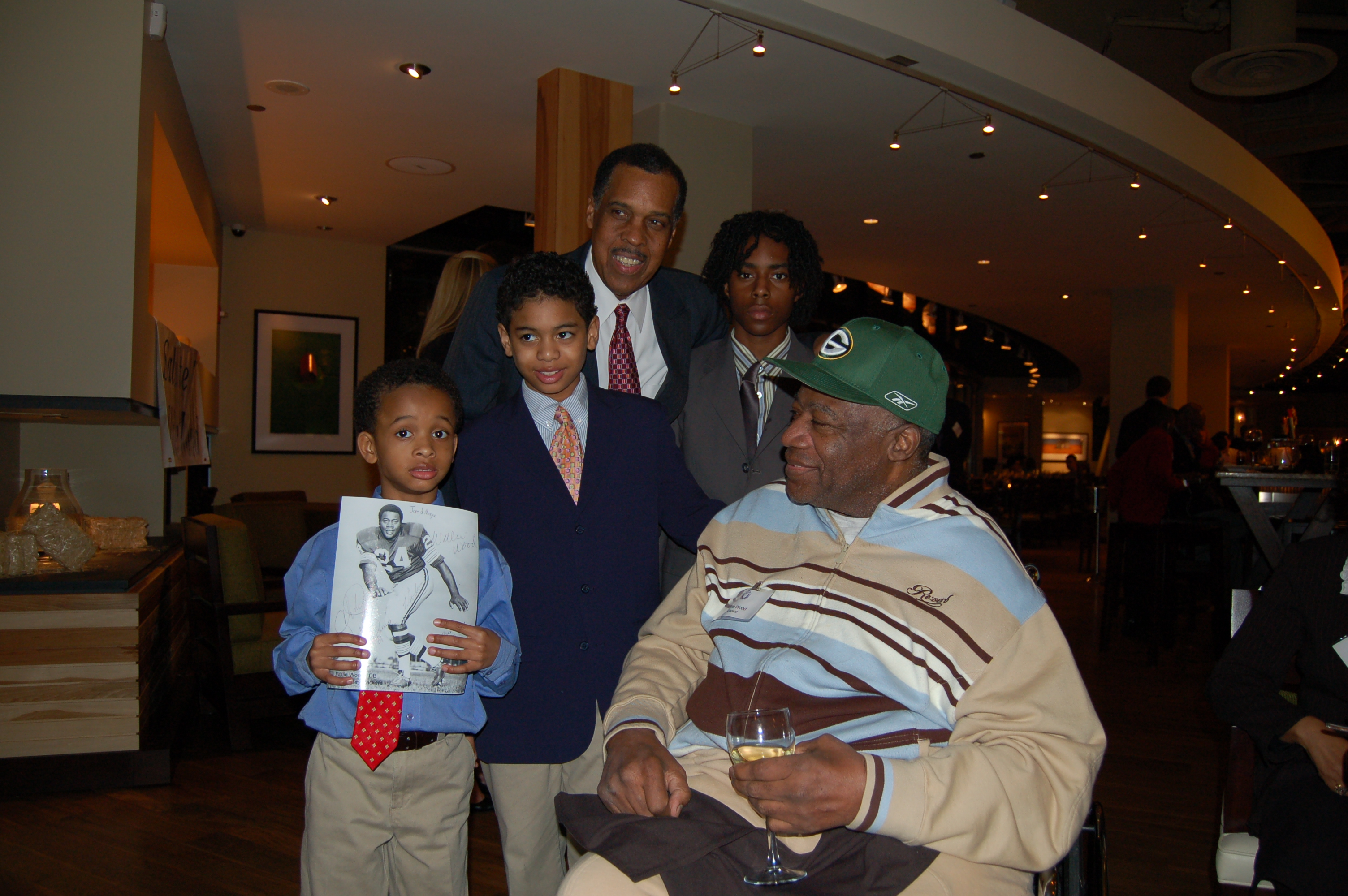
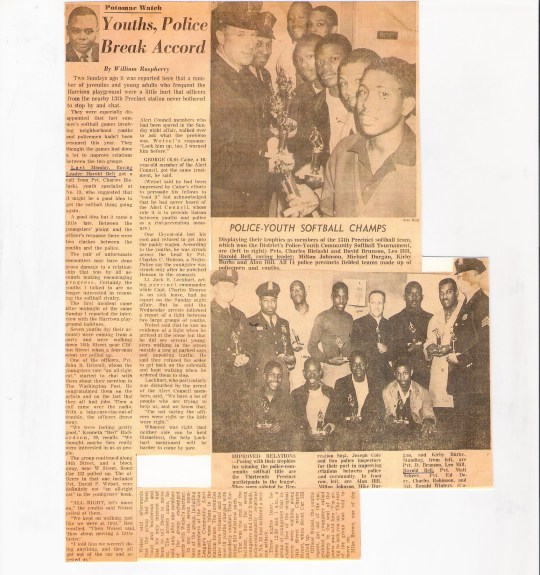
I was working for the DC Recreation Department in its elite Roving Leader Program (Youth Gang Task Force).  KIT was a non-profit organization and my BRAINCHILD.  The program was established to help the growth of inner-city children using recreation and tutorial programs as a vehicle.  Pro athletes were invited to be mentors.  Native Washingtonians, Dave Bing (NBA) and Willie Wood (NFL) were the first to volunteer.  Today every pro sports franchise from, Major League Baseball, NHL, NFL and NBA “Cares!”

In 1970 Arthur Ashe won his Second Grand Slam, the Australian Open.  In 1971 he won his first French Open Doubles Championship with doubles partner Marty Riessen.  Arthur was ranked the No. 1 tennis player in the world.

 The idea for the title Inside Sports for my ground breaking radio talk show came from my wife, Hattie.  It was 1971 and we were having dinner one evening when he asked her to suggest a title for my new show and without hesitation she blurted out “Inside Sports.”  The airing of Inside Sports made me the first black to host and produce his own sports talk show in the Nation’s Capitol on W-O-O-K radio.   

Sports talk in America would never be the same.  Long time sports columnist Dick Heller has called me “The Godfather of Sports talk—the good kind.”

In 1972 during a break in the action at the Evening Star Tennis Tournament in DC I would asked Arthur Ashe if he would come on my show for an interview, but he turned me down.  In the infancy of the tournament the media and players co-habituated in and under one tent.  We were all up close and personal.  The Media had total access to the players.

 Ashe turned me down but Jimmy Connors standing nearby over heard the conversation and volunteered to be onInside Sports via telephone.  The Sunday of the show NBA legend Red Auerbach and his wife Dotie were scheduled to be my guest.  It was 15 minutes into the show and as promised Jimmy called.  Red and Dotie were unaware of my special telephone guest because I was not sure if he was really going to call.  My producer Carl Furgerson was the only one I told about the possibility of Jimmy calling into the show (he managed the phones).

When Carl signaled me that Jimmy was on the line I plugged him into the studio and said “Jimmy Connors say hello to Red and Dotie Auerbach.”  When Jimmy said ‘Hello’ Red dropped his unlit cigar out of his mouth in disbelief!  Red was a big tennis fan and during our long friendship he participated in several of my celebrity tennis tournaments.  Red took over the show and made me the guest as he and Jimmy talked tennis for next 15 minutes—I enjoyed every minute of it.

July 2013 will mark 40 years since Arthur Ashe became the first black to win the Evening Star Tennis Tournament(Legg Mason) in Washington, DC.  Covering the event at courtside was the only black sports reporter and talk show host in DC covering the event—Harold Bell.

July 2013 will also mark the summer riots of 1968 and how my good friend and head U. S. Marshall Luke Moore and I walked arm and arm with Willie Wood in the 14th Street NW cooridor trying to save lives.  It also marks the birth ofKids In Trouble.

In 1973 Inside Sports was the talk of the town and the No. 1 ranked listened to sports talk show on the airwaves!

In 1975 Arthur Ashe won his 3rd Grand Slam, the French Open beating arch-rival and nemesis the legendary Jimmy Connors in 5 sets.  In November 1975 I became the first black ever to host and produce his own sports television special on NBC television in prime time.  The show was aired on NBC affiliate WRC-TV 4 in DC prior to the Washington Redskins taking on the Oakland Raiders in Oakland.  My special guest was The Greatest, Muhammad Ali.

Today Arthur Ashe is still the only black man to be ranked No. 1 in the World and win all 3 Grand Slams. His humanitarian efforts on behalf of the less fortunate and the underdog, makes him a better human being than an athlete.

They say the greatest form of flattery is imitation; the original Inside Sports talk show format has often been imitated around the country but never duplicated.

During Black History Month 2013 I was invited to be a guest on a sports talk show on the Howard University radio station WHUR.

The host was Ricky Clemons an old friend whose sporting credentials are vast and unchallenged.  His show’s title“Sports Insider” sounded vaguely familiar!  He confessed on the air that his title for the show was inspired by the original Inside Sports.  I said ‘Why Not’ everyone else seems to have been inspired by the title for example; Inside Major League Baseball, Inside the NFL, Inside the NBA, Inside Hockey, Inside Tennis, and the political talk shows have even got in on the act with Inside Washington, etc.

The benefactors who have emerged from the shadows of Kids In Trouble and Inside Sports before their 15 minutes of fame read like a Who’s Who in media, John Thompson, James Brown, Sugar Ray Leonard, Grant Hill, Michael Wilbon, Cathy Hughes, Dave Aldridge, Adrian Dantley, Kevin Blackistone, and Adrian Branch.

American and Black Sports History will one day look back and take note that while Arthur Ashe and Harold Bell were 2 ships passing in the night in Washington, DC, they were making waves and clearing a path for our youth!

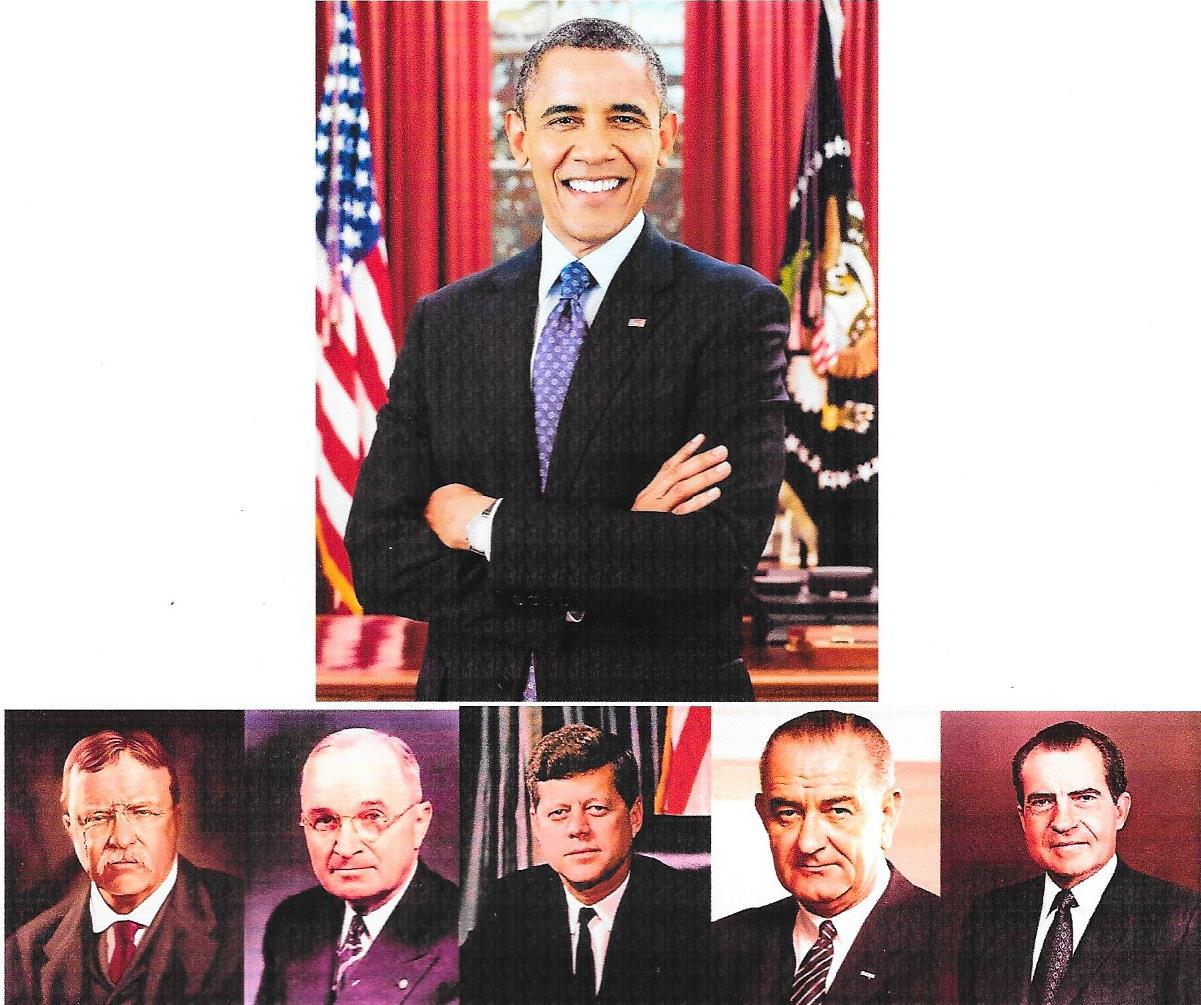
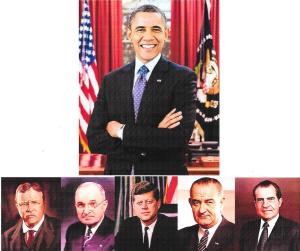
A TRAIL OF CIVIL RIGHTS IN THE WHITE HOUSE: ROOSEVELT, TRUMAN, KENNEDY, JOHNSON, NIXON!


PRESIDENTSV

OBAMA

ROOSEVELT

TRUMAN

KENNEDY

JOHNSON

NIXON

I have always thought and I have practiced Black History should be taught 365 days of the year.  Since I have been on social media I have discovered there is too much bad information being passed around by the so-called experts on the black community as it relates to our history.  They don’t seem to have a clue. It has been more like the blind leading the blind. I am going to use the next 30 days to try to enlighten some and teach others.  Several days ago I read where someone was under the impression that President Barack Obama is not allowed to have a black agenda because he is President of all the people.  Nothing could be further from the truth. For decades white Presidents have had black agendas.  If Roosevelt,Truman, Kennedy, Johnson and Nixon didn’t have black agendas there would be no President Barack Obama!

For almost 8 years we have heard over and over again President Barack Obama say “I am the President of all the people” that would be great if everyone was playing on an “Even Playing field.”   His supporters have become his echo and can be heard saying the exact same thing!  Therefore, they claim he cannot be seen publicly making life better for the poor, the down trodden and people of color in America.  Why should he be any different from any other President?  Especially, with 1% of the population controlling all the wealth in America and in 2015 a white man’s salary still doubles that of a black man. The Supreme Court recently passed a campaign finance law that further empowers the rich and gives the poor no hope of an “Even Playing Field” in America.

See list below for some Presidents who blazed a Civil Rights trail while in office to improve the lives of people of color while white.

It has been often said “If you want to hide something from a black person put it in a book.”  We can now add the World Wide Internet.  The information gathered in this blog can be found there.   

President Harry Truman

A 1947 report by the Truman administration titled To Secure These Rights presented a detailed ten-point agenda of civil rights reforms.  In February 1948, the president submitted a civil rights agenda to Congress that proposed creating several federal offices devoted to issues such as voting rights and fair employment practices. This provoked a storm of criticism from Southern Democrats in the run to the national nominating convention, but Truman refused to compromise, saying: “My forebears were Confederates … but my very stomach turned when I learned that Negro soldiers, just back from overseas, were being dumped out of Army trucks in Mississippi and beaten.”  

Instead of addressing civil rights on a case-by-case need, Truman wanted to address civil rights on a national level. He made three executive orders that eventually became a structure for future civil rights legislation. The first Executive Order 9981 came in 1948, is generally understood to be the act that desegregated the armed services. This was a milestone on a long road to desegregation of the Armed Forces.  After several years of planning, recommendations and revisions by Truman, the Committee on Equality of Treatment and Opportunity, the various branches of the military, Army units finally became racially integrated.

This process was also helped by the manpower shortages during the Korean War as replacements to previously segregated units could now be of any race.

The second order, also in 1948, made it illegal to discriminate against persons applying for civil service positions based on race. The third executive order, in 1951, established Committee on Government Contract Compliance (CGCC). This committee ensured that defense contractors to the armed forces could not discriminate against a person because of their race.

In retirement however, Truman was less progressive on the issue of race. He described the 1965 Selma to Montgomery marches as silly, stating that the marches would not “accomplish a darn thing.”  Famous last words.  He must be turning over in his grave to now see that historical march being shown on movie screens across America and to see participation of a diverse group of people taking to the streets around the world saying “No” to police brutality in America.  “No” to police departments hiding behind a Code of Silence, Blue Wall and a Us Against Them Mentality.

President Franklin D. Roosevelt

The New Deal was a series of economic programs implemented in the United States between 1933 and 1936. They were passed by the U.S. Congress during the first term of President Franklin D. Roosevelt. The programs were responses to the Great Depression, and focused on what historians call the “3 Rs”: Relief, Recovery, and Reform. That is, Relief for the unemployed and poor; Recovery of the economy to normal levels; and Reform of the financial system to prevent a repeat depression.

His wife Eleanor became an important connection for his administration to the African-American community during the segregation era.  She was vocal in her support of the African-American civil rights movement,  despite her husband’s need to placate southern sentiment.  Mrs. Roosevelt was the Michelle Obama of her day. 

She was outspoken in her support of Marian Anderson in 1939 when the black singer was denied the use of Washington’s Constitution Hall and was instrumental in the subsequent concert held on the steps of the Lincoln Memorial. The first lady played a role in racial affairs when she appointed Mary McLeod Bethune as head of the Division of Negro Affairs.  She was seen in New York City in support of black Civil Rights leader Rev. Joseph DeLaine.  It was Rev. DeLaine and his friend Harry Briggs who led the fight against segregation in the Clarendon, South Carolina school system in 1949.  The Biggs vs Elliot was the forerunner of Brown vs Board of Education.   Rev. DeLaine had to flee Clarendon, SC after his church was burned to ground.   The KKK tried to ambush his family while they slept in their home.  He surprised them and returned their gun fire.  The next morning the sheriff took out a warrant for his arrest for attempted murder.  

President John F. Kennedy

The turbulent end of state-sanctioned racial discrimination was one of the most pressing domestic issues of the 1960s. The Supreme Court of the United States had ruled in 1954 in Brown v. Board of Education that racial segregation in public schools was unconstitutional.  Still many schools, especially in southern states, did not obey the Supreme Court’s decision.  Segregation had also been prohibited by the Court at other public facilities (e.g. buses, restaurants, theaters, courtrooms, bathrooms, and beaches) but continued nonetheless.  Alabama and Mississippi in 2017 still have the most segregated school system in America.

Kennedy verbally supported racial integration and civil rights; during his 1960 campaign he telephoned Coretta Scott King, wife of the Reverend Martin Luther King, Jr.  Dr. King had been jailed while demonstrating for equal access for African-Americans.  Kennedy secured the early release of King, which drew additional black support to his candidacy.

Nevertheless, President Kennedy believed the grass roots movement for civil rights would anger many Southern whites and make it more difficult to pass civil rights laws in Congress, which was dominated by conservative Southern Democrats.  He distanced himself from the movement.  He also was more concerned with other issues early in his presidency, e.g. the “Bay of Pigs” fiasco and Southeast Asia.  As articulated by brother Robert, the administration’s early priority was to “keep the President out of this civil rights mess”.  As a result, many civil rights leaders viewed Kennedy as lukewarm, especially concerning the Freedom Riders who organized an integrated public transportation effort in the south, and were repeatedly met with violence by whites, including law enforcement both federal and state.

Kennedy assigned federal marshals to protect the Freedom Riders as an alternative to using federal troops or uncooperative FBI agents.  Robert Kennedy, speaking for the President, urged the Freedom Riders to “get off the buses and leave the matter to a peaceful settlement in the courts. 

In September 1962, James Meredith enrolled at the University of Mississippi, but was prevented from entering.  Attorney General Robert Kennedy responded by sending 400 U. S. Marshall.   President Kennedy reluctantly federalized and sent 3,000 troops after the situation on campus turned violent.  Campus Riots left two dead and dozens injured, but Meredith did finally enroll in his first class. On November 20, 1962, Kennedy signed Executive Order 11063, prohibiting racial discrimination in federally supported housing or “related facilities.”

In early 1963, Kennedy made Martin Luther King, Jr. aware as it related to the prospects for civil rights legislation.  He said, “If we get into a long fight over this in Congress, it will bottleneck everything else, and we will still get no bill.”  Still, civil rights clashes were very much on the rise that year.  

His brother Robert and Ted Sorenson pressed Kennedy to take more initiative on the legislative front.  On June 11, 1963, President Kennedy intervened when Alabama Governor George Wallace blocked the doorway to the University of Alabama to stop two African American students, Vivian Malone and James Hood, from attending.  Wallace moved aside only after being confronted by Deputy Attorney General Nicholas Katzenbach and the Alabama National Guard.   The guard had just been federalized by order of the President, hours earlier they had been under Wallace’s command.

That evening Kennedy gave his famous civil rights address on national television and radio, launching his initiative for civil rights legislation – to provide equal access to public schools and other facilities, and greater protection of voting rights. His proposals became part of the Civil Rights Act of 1964.  

The day ended with the murder of N.A.A.C.P. leader, Megar Evers, at his home in Mississippi.  As the president had predicted, the day after his TV speech, and in reaction to it, House Majority leader Carl Albert called to advise him that his two year signature effort in Congress to combat poverty in Appalachia (Area Redevelopment Administration) had been defeated, primarily by the votes of Southern Democrats and Republicans.

Kennedy signed the executive order creating the Presidential Commission on the status of Women on December 14, 1961.  Former First Lady Eleanor Roosevelt led the commission. The Commission statistics revealed that women were also experiencing discrimination; their final report documenting legal and cultural barriers was issued in October 1963.  Earlier, on June 10, 1963, Kennedy signed the Equal Pay Act of 1963, a federal law amending the Fair Labor Standards Act, aimed at abolishing wage disparity based on sex.

Over a hundred thousand, predominantly black Americans gathered in Washington for the civil rights March on Washington for jobs and freedom on August 28, 1963.  Kennedy feared the March would have a negative effect on the prospects for the civil rights bills in Congress, and declined an invitation to speak. He turned over some of the details of the government’s involvement to the Dept. of Justice, which channeled hundreds of thousands of dollars to the six sponsors of the March, including the N.A.A.C.P. and Martin Luther King’s Southern Christian Leadership Conference (SCLC). To ensure a peaceful demonstration, the organizers and the President personally edited speeches which were inflammatory and agreed the March would be held on a Wednesday and would be over at 4:00 pm Thousands of troops were placed on standby.

Kennedy watched King’s speech on TV and was very impressed. The March was considered a “triumph of managed protest”, and not one arrest relating to the demonstration occurred.  Afterwards, the March leaders accepted an invitation to the White House to meet with Kennedy and photos were taken.  Kennedy felt the March was a victory for him as well and bolstered the chances for his Civil Rights bill.

Nevertheless, the struggle was far from over. Three weeks later, a bomb exploded on a Sunday at the 16th Street Baptist Church in Birmingham; at the end of the day 4 little girls had died in the explosion and aftermath.  As a result of this resurgent of violence, the civil rights legislation underwent some drastic amendments that critically endangered any prospects for passage of the bill, to the outrage of the President.

Kennedy called the congressional leaders to the White House and by the following day the original bill, without the additions, had enough votes to get it out of the House committee.

In 1963, FBI Director J. Edgar Hoover who hated civil-rights leader Martin Luther King, Jr.,  and viewed him as an upstart troublemaker, presented the Kennedy Administration with allegations that some of King’s close confidants and advisers were communist. The President was concerned that the allegations, if made public, would derail the Administration’s civil rights initiatives.  Robert Kennedy and the President both warned King to discontinue the suspected associations.  But after the associations continued, Robert Kennedy felt compelled to issue a written directive authorizing the FBI to wiretap King and other leaders of the Southern Christian Leadership Conference, King’s civil rights organization.

Although Kennedy only gave written approval for limited wiretapping of King’s phones “on a trial basis, for a month or so,” Hoover extended the clearance so his men were “unshackled” to look for evidence in any areas of King’s life they deemed worthy.  The wire tapping continued through June 1966 and was revealed in 1968.

President Lyndon B. Johnson

In conjunction with the civil rights movement, Johnson overcame southern resistance and convinced Congress to pass the Civil Rights Act of 1964, which outlawed most forms of racial segregation.  John F. Kennedy originally proposed the civil rights bill in June 1963.  

He called the congressional leaders to the White House in late October 1963 to line up the necessary votes in the House for passage.  After Kennedy’s death, it was Johnson who picked up the torch and pushed the bill through the Senate.  Johnson signed the revised and stronger bill into law on July 2, 1964.  Legend has it that, as he put down his pen to paper, Johnson told an aide, “We have lost the South for a generation”, anticipating a coming backlash from Southern whites against Johnson’s Democratic Party.

In 1965, he achieved passage of a second civil rights bill, the Voting Rights Act, which outlawed discrimination in voting, thus allowing millions of southern blacks to vote for the first time. In accordance with the act, several states, “seven of the eleven southern states of the former confederacy” – Alabama, South Carolina, North Carolina, Georgia, Louisiana, Mississippi, Virginia — were subjected to the procedure of pre-clearance in 1965, while Texas, home to the majority of the black American population at the time, followed in 1975.

After the murder of civil rights worker Viola Liuzzo, Johnson went on television to announce the arrest of four Ku Klux Klansmen implicated in her death. He angrily denounced the Klan as a “hooded society of bigots,” and warned them to “return to a decent society before it’s too late.” Johnson was the first President to arrest and prosecute members of the Klan since Ulysses S. Grant 93 years earlier. He turned the themes of Christian redemption to push for civil rights, thereby mobilizing support from churches North and South.

During a Howard University commencement address on June 4, 1965, he said that both the government and the nation needed to help achieve those goals: 

“We have to shatter forever not only the barriers of law and public practice, but the walls which bound the condition of many by the color of his skin. To dissolve, as best we can, the antique enmities of the heart which diminish the holder, divide the great democracy, and do wrong — great wrong — to the children of God.” In 1967, Johnson nominated civil rights attorney Thurgood Marshall to be the first African American Associate Justice of the Supreme Court.  

We seem to have forgotten that it was President Johnson who appointed the National Advisory Commission on Civil Disorders, known as the  Kerner Commission in 1967.  The Commission was appointed to look into and investigate the causes of the 1967 race riots in America.  The objective of the Commission was to provide recommendations for the future.  The Kerner Commission was headed by lllinois Governor Otto Kerner.                                                                                                                                          

The Commission’s fact finding efforts discovered the America was headed for two different societies, one black and one white.  President Johnson who had already pushed the Civil Rights Act and the Voting Rights Act said, “Enough is enough” and threw up his hands and ignored the report and rejected the Kerner Commission’s recommendations, as did the NAACP, Urban League, and the soon to be Congressional Black Caucus on the Hill comprised of black politicians.

American leadership both black and white sit on their collected hands and did absolutely nothing.  Now as predicted the two different societies, one black and one white and Donald Trump had nothing to do with it.       

In 1968, the Nixon years witnessed the first large-scale integration of public schools in the South.  Nixon sought a middle ground between the segregationist Wallace and liberal Democrats, whose support of integration was alienating some Southern whites.  Hopeful of doing well in the South in 1972, he sought to dispose of desegregation as a political issue before then.  Soon after his inauguration, he appointed Vice President Spiro Agnew to lead a task force, to work with local leaders—both white and black—to determine how to integrate local schools.  President Nixon appointed Vice-President Agnew to head the effort but the Vice-President had little interest in the work, and most of it was done by Labor Secretary George Shultz.                                                                                                                                                                                                  

Federal aid was available, and a meeting with President Nixon was a possible reward for compliant committees.  By September 1970, fewer than ten percent of black children were attending segregated schools.  But by 1971, however, tensions over desegregation surfaced in Northern cities, with angry protests over the busing of children to schools outside their neighborhood to achieve racial balance.  Nixon opposed busing personally but did not subvert court orders requiring its use.

In addition to desegregating public schools, Nixon implemented the Philadelphia Plan in 1970—the first significant federal affirmative action program.  He also endorsed the Equal Rights Amendment after it passed both houses of Congress in 1972 and went to the states for ratification.  Nixon had campaigned as an ERA supporter in 1968, though feminists criticized him for doing little to help the ERA or their cause after his election, though he appointed more women to administration positions than Lyndon Johnson had.

There is a lot pain and frustrations in the black community with the likes of designated spoke persons such as, Oprah, Michael Dyson, Cornell West, Tavis Smiley, Steve Harvey, Joe Madison, and Al Sharpton.  There is no meeting of the minds willing to sit down together.

They all have the same problem, hidden agendas and giant egos.  Instead of being INCLUSIVE they are busy being EXCLUSIVE and have no creative ideas of their own to include the community at-large.  Oprah to give credit where some credit is due to some extent has reached back by coming up with a Book Club, using her TV network and magazine as vehicles to improve the lives of others.  The club opened some doors for aspiring black authors who would have never been heard.

She traveled to Africa to open an all girl’s school it was another brilliant idea but charity should always start at home.  Her hometown of Chicago (or Mississippi) would have been a great place to start and then the next stop Africa!

If you carefully checkout the credentials of today’s media know it alls, they only became experts on the black community after they became on air and print media personalities.  Starting out they knew absolutely nothing about the war zones of their own community.

A good example; Harvard Law Professor Randy Kennedy as it relates to his wishing he had spend more time speaking to the mass incarcerating of men of color.  There is one thing I know, his parents exposed him and his siblings to the real “Game Called Life” from the very beginning.   The Bill Cosby Show on NBC could have easily been the Kennedy household in Washington, DC.  Henry and Rachel Kenny were definitely the Cosbys of NW DC.

Randy Kennedy has forgotten his early teachings, but I would still bet on him in a black horse race against many of today’s front-runners on civil rights.

In summarizing what has gone wrong in our community I always refer back to a 60 minute interview with the founder of the Dance Theater of Harlem’s, Arthur Mitchell.  In the interview about the financial struggles of his theater and a lack of support from blacks, Morley Safer asked him if he was angry!  He did not miss a beat, Mitchell responded, “You show me a black person who is not angry about the status of black America and I will show you a black man and woman who need to see a psychiatrist.”

Our problems run deep and we have to look no further then the mirror on the wall.

In January 2017 as we continue to fight for the Even Playing Field we must remember that the poor state of Black America does not fall all on the shoulders of Barack Obama or Donald Trump. 

According to a published story in USA Today newspaper dated August 15, 2012 “Just 61 bills have become law to date out of 3,914 bills that have been introduced by lawmakers, or less than 2% of all proposed laws, according to a USA analysis of records since 1947 kept by the U. S. House Clerk’s office.

In 2011, after Republicans took control of the House, Congress passed just 90 bills into law.  The only other year in which Congress failed to pass at least 125 laws was 1995.  

These stats make the 112th Congress, covering 2011-2012 the least productive two-year gathering on Capitol Hill since the end of World War II.   Not even the 80th Congress, which President Truman called the “Do nothing Congress in 1948, passed as few laws as the one in 2012, records show.”  

In 2017 Minority American voters were caught between a rock and hard place, a do nothing Congress on both sides of the aisle and what too many consider a “Do nothing President!”      

It does not matter your feelings as it relates to President Barack Obama, the bottom line—the answer was definitely not Mitt Romney in November 2012.  As President Obama prepares to head off into the sunset of retirement, the future does not look bright with the Republicans controlling both houses of congress and President Donald Trump in the White House for the next 4 years–fasten your seat belts. Wake up everybody!
 

THE ORIGINS OF THE ORIGINAL INSIDE SPORTS AND WHERE ARE WE NOW?

In Appreciation

PETEY GRINS FROM EAR TO EARRED AND DOTIEALI ON THE MOUNTAINCBS SONNY HILL

Petey Greene                                          

Red & Dotie Auerbach                                                  

“The Greatest” Ali                                        

Sonny Hill

When the late Petey Greene gave me an opportunity to report sports on his talk show on WOL radio in Washington, DC in the late 60s, I had no clue where the road would take me.  WOL Radio DJ Bobby Bennett also deserves an assist because I moved from five to ten minutes on Sunday evenings with Petey to one hour on Saturday at noon with Bobby.  In 1971 I signed on with W-O-O-K radio and the rest is sports talk radio and community history. Inside Sports took the DVM by storm it was one of a kind.

Muhammad Ali and Red Auerbach gave Inside Sports instant credibility.  Sonny Hill was then the color analyst for NBA/CBS television.  He was the best to ever do it.  He is a playground basketball legend and was a teacher of the game.  He mentored me through my early years in radio.

My media association started with the NBA in 1971 with the Washington Wizards and the Washington Pro Football team. I have seen the Good, Bad and Ugly and sometimes they have been one of the same.  My relationship with the NBA got off to a rocky start.  In the late 70s Sonny Hill invited me to attend the NBA All-Star Game in Houston, Texas. He then explained to me the proper procedure for requesting press credentials.  I called the league office and got the mailing address to request credentials and filed a request. When Sonny and I arrived in Houston we checked into our hotel room. Our next stop would be the press media room to pick-up our credentials. There we would find the man in charge of the credential process, Mr. Brian McIntyre.

He was sitting almost alone and there was no one waiting in line (compared to today’s media circus). Sonny introduced me and picked up his credentials. But Mr. McIntyre could not find my request and refused to issue me credentials. I pleaded with him for understanding; as why would I fly all the way to Houston from DC and make up a story about credentials?  He would not budge.

I stood there for almost 30 minutes watching media types pick-up their credentials. It finally hit me I had an “Ace in the hole” NBA legend Red Auerbach. The next break at the press credential table I asked Mr. McIntyre if he knew Red Auerbach? His response, ‘Yes do you?’ I then asked for permission to use his phone, request granted. I remembered my last conversation with Red, he said he would not be coming out for the game. I knew Red and Dotie’s number by heart and I called their residence. The voice answering the phone would be Dotie. I asked for Red and she told me he was out at Woodmont Country club Playing cards.

I would guess she heard the urgency in my voice and asked me if everything was all right? I explained to her that I was in Houston for the NBA All-Star Game and I was having a problem getting press credentials. She asked to speak to Mr. McIntyre. The two spoke for a couple of minutes. He hung up the phone and said “No problem” and wrote me a credential for access.

The press credential problem continued in the Bullets/Wizards press rooms. It was there I would encounter “The Media Relations Directors from Hell!” There were no minorities in charge of media relations during that era.

I remember when me and Frank Pastor a white sports writer decided to integrate the Bullets press table in 1974. Frank and I were just returning back to our seats from a half-time break. We were waiting at the top of the arena for a break in the action. We looked down and notice that all the white media was seated on one side of half-court and all the blacks were seated on the other side of the half-court line. I mentioned my observation to Frank and without hesitation he said “I am going to sit in your seat and you sit in mine.” We quietly integrated the media press table without a police escort or an angry word, but everyone was not overjoyed about the new pecking order.

Mark Splaver was the man in charge of the Bullet press table and he was not a happy camper. The very next game I discovered how unhappy he was. I arrived at my seat a little late but I noticed that members of the media had been issued new media guides, but there was none at my seat. I found Mark to tell him about the oversight and he just looked at me and walked away without a word.  I then returned to my seat.  Jerry Sachs was the Bullet’s President and he was a class act. He would usually be seated at floor level near the press table. We often shook hands and exchanged words as I walked by. This time he asked me was everything all right? My response “I am fine Mr. Sachs.” In less than 10 minutes Mark came back to the press table and tossed the media guild on the table in front of me and walk away.

This was unacceptable and I got up to follow him and evidently Mr. Sachs had watched the whole episode unfold. He stepped in front of me and said “I got it.”

It would be the start of the 4th quarter that Mark returned to the press table and apologize for his unprofessional actions. I accepted his apology.  In 1980 I was named “Washingtonian of the Year and Jerry was one of the first to mail me a personally hand written note congratulating me. My main man the one of a kind and Hymie called me and cussed me out and warned me not to get too big for my britches –the congratulations carried different messages but one of the same, respect.

The Good Bullet players Phil Chenier, Larry Wright, Carlos Terry, Greg Ballard, Coaches, KC Jones and Bernie Bickerstaff and front office types like GM Bob Ferry and Bob Zurflu all supported my community endeavors (Celebrity Tennis & Fashion Shows).

The Bad press relations with blacks in media continued at the Verizon Center. There were other mistakes like someone thought a black Judy Holland was VP material–far from it. Her most famous media relations project was how to get player Rick McHorn in her bed.

I spoke with Mr. McIntyre at the NBA All-Star Game in Philadelphia over 2 decades ago about minority problems in gaining access to NBA press tables as it related to the Bullets/Wizards.  He suggested we meet for lunch and discuss the matter.  It took a minute but in the meantime, he was making an effort to bring about change in his own way. But according to veteran sports writer Bill Rhoden of the New York Times, progress in sports media press rooms around the country are on a slow boat to China.  Rhoden’s recent appearance on the widely acclaimed television news show Meet the Press, he said, “the NBA, NFL and MLB are still dragging their feet. In my travels there are media press rooms I go in where I am still the only black face in 2014!”

That is a sad commentary, but it is what I suspected all along.  Media press rooms at Deadline are still the Last Plantations.  Pioneering broadcaster and former NBA CBS basketball analyst Sonny Hill and now a sports talk show host on WIP Radio in Philadelphia said, “I am not surprised by Rhoden’s statement, very little has changed in media press rooms. One of the problems there is no networking among blacks who have moved it up the ladder.” That is an understatement. Rhoden was a regular on The Inside Sports Media Roundtable long before he appeared on ESPN’s Sports Reporters and Meet the Press–but he is one of those who has forgotten.

In 1978 a writer in the Style section of the Washington Post conspired with several of his colleagues and owner Donald Graham and took my show title “Inside Sports” to New York City. In 1979 he found and published Inside Sports Magazine. He is now the VP of ESPN television, his name is John Walsh.  The copy rights for Inside Sports is own by News Week Magazine and it is own by the Washington Post. The beat goes on!
I have been in the sports media for 45 years and I was still having problems gaining access, of all places at the Verizon Center. First, there was a problem with the PR Men from hell, Brian Sereno and Matt Williams. It was brought to my attention that Sereno was disrespecting the ladies of The Round Ball Report. He had called co-host Christy Winters-Scott a liar over something trivia. Andrew Dyer the Executive Producer of the show asked me if I would intervene and I did.  He thought there was a double standard.

The Round Ball Report is aired on Prince Georges Cable 76 in Maryland (is strictly a basketball show). I e-mailed Sereno and asked for a meeting. The meeting was set before a Wizard’s game in the press lounge but Scott Hall was the lead man. Scott was a breath of fresh air. He listened and we disagreed on some points but when we walked away from the table we were on the same page.  The next thing I knew Brian was gone and Matt Williams had replaced him. Williams had an ego that was as big as he was (400 lbs). He not only alienated members of the media but people in his own department. He was soon gone without a trace.

Christy Winters-Scott has since moved on and she is now a studio co-host for Comcast Sports another media plantation. It is very difficult to see and understand perceived slights (racism) if you have not walked in the other person’s shoes. Enter, Scott Hall Scott’s willingness to discuss what was thought to be a problem has since become a lesson of what can happen when folks can sit down and talk. I will bet his staff is one of the most diverse in the NBA (I could be wrong). The problem with racism people are scared and uncomfortable talking about it (including some blacks).

The Good, The Washington Bullets’ home was the Capitol Centre in Landover, Maryland.  Hymie Perlo was and still is irreplaceable. His presence is still missed today.  His heart was as big as the arena that he worked in. He was the best PR man in the NBA bar none.  The community and everyone in it was a friend, the old and the young, the black and the white and the healthy and the lame. Hymie was a jewel of a man.

I was honored to speak at his retirement held at the arena just before the Bullets moved to Washington and changed their name to the Wizards. Denny Gordon was in ticket sales and it seem like he knew everyone who brought a ticket. He loved his job and Bullet ticket holders loved him. I look around and the holdovers from Landover in 1978 are far, few and in between. There is Dolph, Arnie, and Paul still on staff. Phil Chenier is on the broadcast team and Kenny Burns is a Supervisor in security.

The Ugly In 1975 Bullets coach KC Jones was fired by owner Abe Polin after losing in the NBA finals to the Golden State Warriors in 4 straight games. He was made the scapegoat after being sold out by his assisstant coach Bernie Bickerstaff and others.  Bickerstaff was rewarded when he landed a job with the new Bullet coach Dick Motta.  KC was and is a class act. He is one of the nicest men in pro sports.

1977 I was a Nike rep when Nike NBA rep John Phillips invited me to meet him in the NBA Office in New York City. The meeting revolved around a charity all-star game scheduled for the Bahamas, the island home of NBA star Mycal Thompson. The game had been played the year before without incident or controversy.  Magic Johnson was one of All-Stars participating. Representatives from the NBA included VP Ron Thorne, Legal Counsel Gary Bettman and head of security Horace Balmer.

John and I were in for a shocking revelation.  Bettman claimed the game could not go on as planned because the NBA own the players. We could not believe our ears. My response was, “Are you saying this is a plantation?” The room went silent, Thorne called the meeting off and said he would call us later, but he never did. Magic disappeared and changed his telephone number. Gary Bettman is the Commissioner of the NHL, Thorne is somewhere lurking in the NBA, Balmer has since retired and Magic is a role model for Black America?

The short existence of basketball legend Michael Jordan as a Wizard’s player and Executive in the front office was unexpected when Abe Polin dismissed him.  He was last seen heading south on 495 in his Mercedes convertible to North Carolina.

In December 2009 Gilbert Arenas brought a handgun into the Wizards locker room. After the story broke he and several teammates made light of it during introductions of a game. He was eventually suspended for most of the 2009–10 season. Gilbert has long vanished from the Wizard’s landscape.

The thing that I find disturbing about NBA owner Donald Sterling charade is that folks are acting like they were surprised by his rants against blacks.  I bet you cannot guess who his running partner was during the fiasco–would you believe Magic Johnson?

I also notice the same “Old faces and voices” were called on to respond to the racist acts by men like Sterling—when they are a part of the problem . Faces and voices like Magic Johnson who suddenly run and hide behind there blackness.  He and Sterling were good friends because “Birds of a feather flock together.”

I have never forgotten a meeting in the NBA League Office in 1978. Nike NBA rep John Phillips and I met with former NBA player and now an NBA VP, Rod Thorn. Joining him were League Counsel Gary Bettman and Head of League Security, Horace Balmer.  The meeting centered around whether Magic Johnson, Mycal Thompson (the father of Warrior guard Seth Thompson) and a group of NBA All-Stars would be allowed to travel to the Bahamas for a charity basketball game without league approval.

The game had been played in the Bahamas the previous year without incident or controversy. It was obvious that there was a power-play being made by the league office to cancel the game. Thorn open the meeting by asking who was going to be responsible if one of the players was hurt during the game? John’s response, “Each player has his own insurance policy.” Bettman response, “You cannot assume that each player has insurance and you cannot go forward with this game without the league’s permission.” John and I had met with Magic and Mycal before the meeting and had given them a heads up. They both were still ready to participate. Magic suggested that the topic of conversation just might be centered around an injury to a player. He was right on point. To this day I think Magic had a previous discussion with the league office. I responded to Thorn’s concern because it was legit. I tried to explain that playing the game was no different then one of the players participating in a pick-up game on a New York City playground in the off-season. In fact they would be safer playing in the Bahamas among their peers. The risk of injury was minimum, before Thorn could respond to me Bettman blurted out “You cannot do that we own them.”

John looked at me as if to say ‘I cannot believe he just said that.’ My response to Bettman, “What do you mean you own them. What is this some kind of plantation?” The room went silent and Horace Balmer the only other black in the room just shook his head and seem to be lost for words. The meeting went downhill from there. Thorn called off the discussion and promised to get back to us but he never did.

In the meantime, Magic Johnson disappeared and changed his number. John Phillips met with Mycal Thompson and cancelled the game.  Mycal was a class act but his hands were tied when Magic decided to do his Houdini act.  Gary Bettman now runs the NHL, Ron Thorn is still in the NBA somewhere calling the shots.  Horace Balmer has since retired and Magic is the black face in the middle of the Donald Sterling charade. The Race Card is front and center.

Check Magic’s history out and you will discover the two have a lot in common. Magic’s claim to be a minority owner of the LA Dodgers is another sham (token black face).  I know for a fact he was anything but a victim. Rev. James Brown (CBS Sports) another mis-guilded brother claiming to be a minority baseball owner and an expert on racism.  He did finally admit on the late George Michael Show (Sports Machine) “I have no say in making baseball decisions as a minority owner.” His role as a minority owner is to be paraded out on Opening Day as the black face to read the starting line-ups. Come on man!

ESPN’s Michael Wilbon, was front and center as an expert on racism in America with ABC’s Diane Sawyer. This is the same Michael Wilbon that I had at least two recent conversations about the use of the N word as a term of endearment. I have to give him credit, he will at least talk to me face to face and not behind my back. I tried to explain that his rationale that his grandfather’s use the word as a term of endearment does not make it right today. I told him he should not go on national television saying it is okay to use the N word among friends and family.

It gives bigots like Donald Sterling the Green Light to do the same among his friends and family. Plus, Michael told me he was not going to appear on the ESPN Show Outside the Lines because the white host had no horse in the race! Two weeks later I turn on the television and there he is front and center. I wish that Magic, James, Michael and the rest of the media experts would defer to black men like Hank Aaron, Dr. Harry Edwards and even Jim Brown and Bill Russell. Brown and Russell sometimes talk out of both sides of their mouths. But they wear the battle scars and have been on the front lines of the civil rights movement in real life and in the sports arenas of America. In other words, they have been there and done that. I guess that is wishful thinking, especially when everyone wants to be an expert on television.

In the meantime, they don’t know their asses from a hole in the ground but the beat goes on and on. In 1964, Red was the first coach to play the first-ever black NBA starting five.  They were Bill Russell, Willie Naulls, Satch Sanders, Sam Jones, and K. C. Jones.  Auerbach would go a step further in the 1966-67 NBA season, when he stepped down after winning nine titles in 11 years, and made Bill Russell player-coach. Russell would eventually be the first black to win an NBA championship. He would later be named the NBA’s first black General Manager. It was Red Auerbach and Walter Brown who not only talked the talk but walked the walk. They led the way against all odds.

Fast-forward to April 2014, how was it that Donald Sterling’s racist actions against minorities went undetected under the NBA radar for decades?

First, Sterling belongs to the exclusive 1% club of billionaires in America. He does not need to wear the traditional KKK robe to be a member in good standing. There are far too many crying “Foul” and playing the victims in this charade, to include some NBA owners.

Let me start with my homeboy, the great Elgin Baylor who was the Clippers GM for over 2 decades. His teams were perennial losers on the court and in attendance, but he picked up his check every two weeks and kept his mouth shut.  Elgin lived by the premise “You don’t bite the hand that feeds you.” Elgin finally cried “Foul” when Sterling fired him.  He carried his former boss to court in 2010. He filed a wrongful termination and sued Sterling for racism. In his deposition, Elgin spoke about what he called Sterling’s ‘plantation mentality,’ alleging the owner in the late 1990s rejected a coaching candidate, Jim Brewer, because of race. Baylor quoted Sterling as saying: ‘Personally, I would like to have a white Southern coach coaching my poor black players.’ He dropped the racism from the suit. The case was thrown out of court in 2011.

The other entity to cry foul and caught with their hands in “The cookie jar” was the local branch of the Los Angeles NAACP (The National Association for the Advancement of Colored People). Talking about an organization needing a change of name and a face-lift–meet Leon Jenkins. Jenkins called a press conference trying to explain why the local branch was honoring Sterling during the 100th Anniversary of the organization next month. He explained the previous award had been approved by the man he replaced and he just went along to get along.  But this time he was on the hot seat for approving the second award in May.

Jenkin’s excuse for not cutting ties with Sterling was lame at best. He said “We were reluctant to make decisions based on rumors!” We deal with the actual character of the person as we see it and as it is displayed.” This is another example of the blind leading the blind all that Jenkins could see was “Show me the money.” The taped revealed exactly how Sterling felt about black people, including his good friend Magic Johnson. He had his fingers in Magic’s eyes and his foot in his butt at the same time. Sterling won’t be the first to sleep black and think white when it comes to sex, politics and money. Slave owners lived by the credo and in modern-day history there was the late Senator Strom Thurmond. The plantation mentality is just a board meeting away.

When all is said and done, the real victim despite all of her baggage is the girlfriend (The Whistle Blower) V. Stiviano. NBA Commissioner Adam Silver during his announcement as it related to the punishment of Donald Sterling, he apologize to black NBA pioneers Earl Lloyd, Chuck Cooper and Magic Johnson. But forgot to thank V. Stiviano? I am betting Magic Johnson and his NBA counter-parts will throw her under the bus—-stay tune.

MAYOR DAVE BING FOULS OUT IN DETROIT!

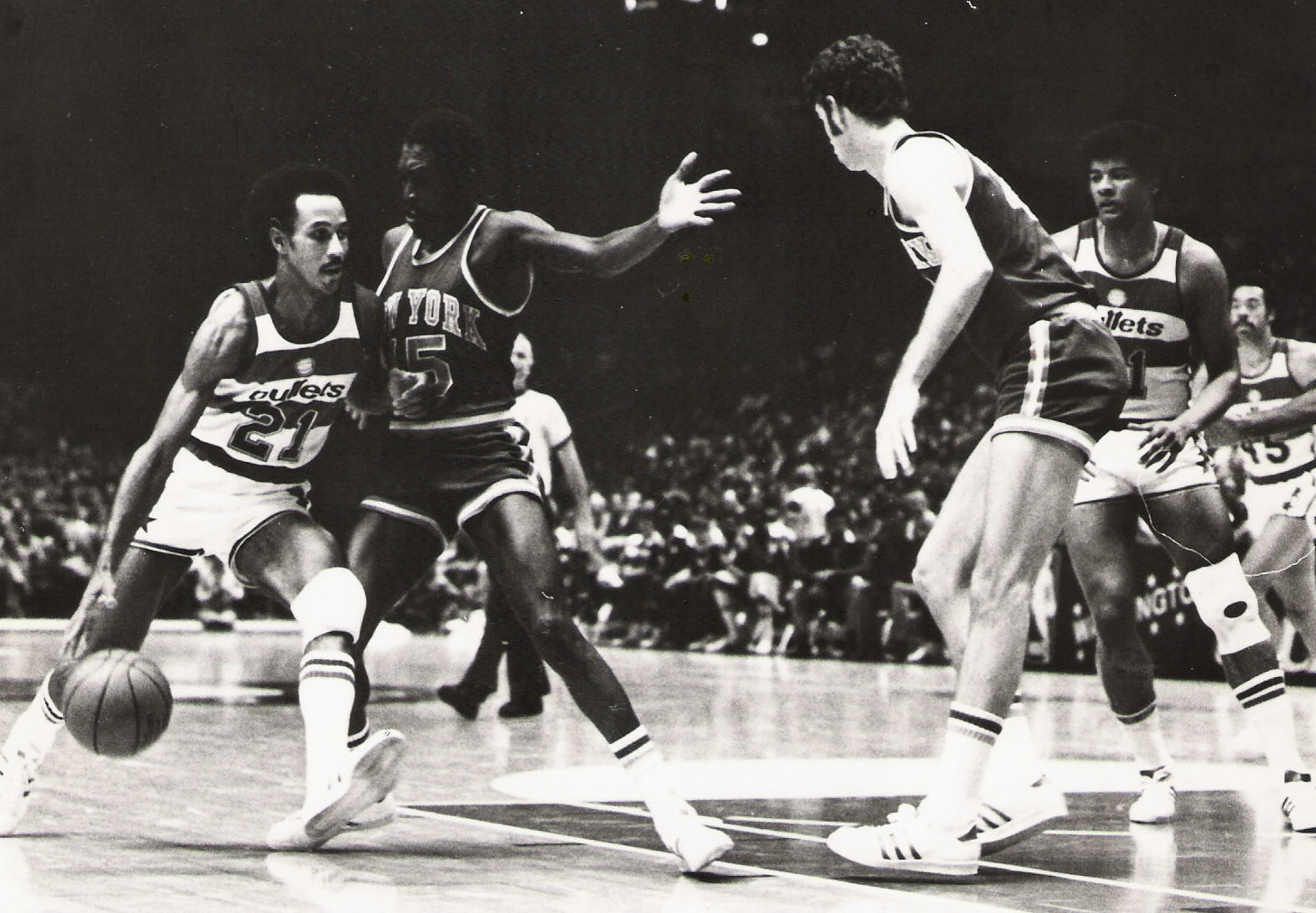
       BING AND EARL ONE ON ONEDAVEBINGCAMPBING ALL-STARSBING&BELL

One on one with The Pearl
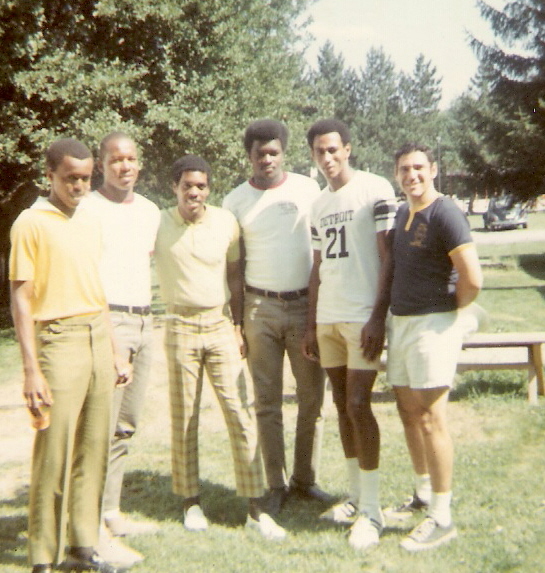
Dave Bing basketball camp in the Poconos
Hillcrest Saturday Program in DC
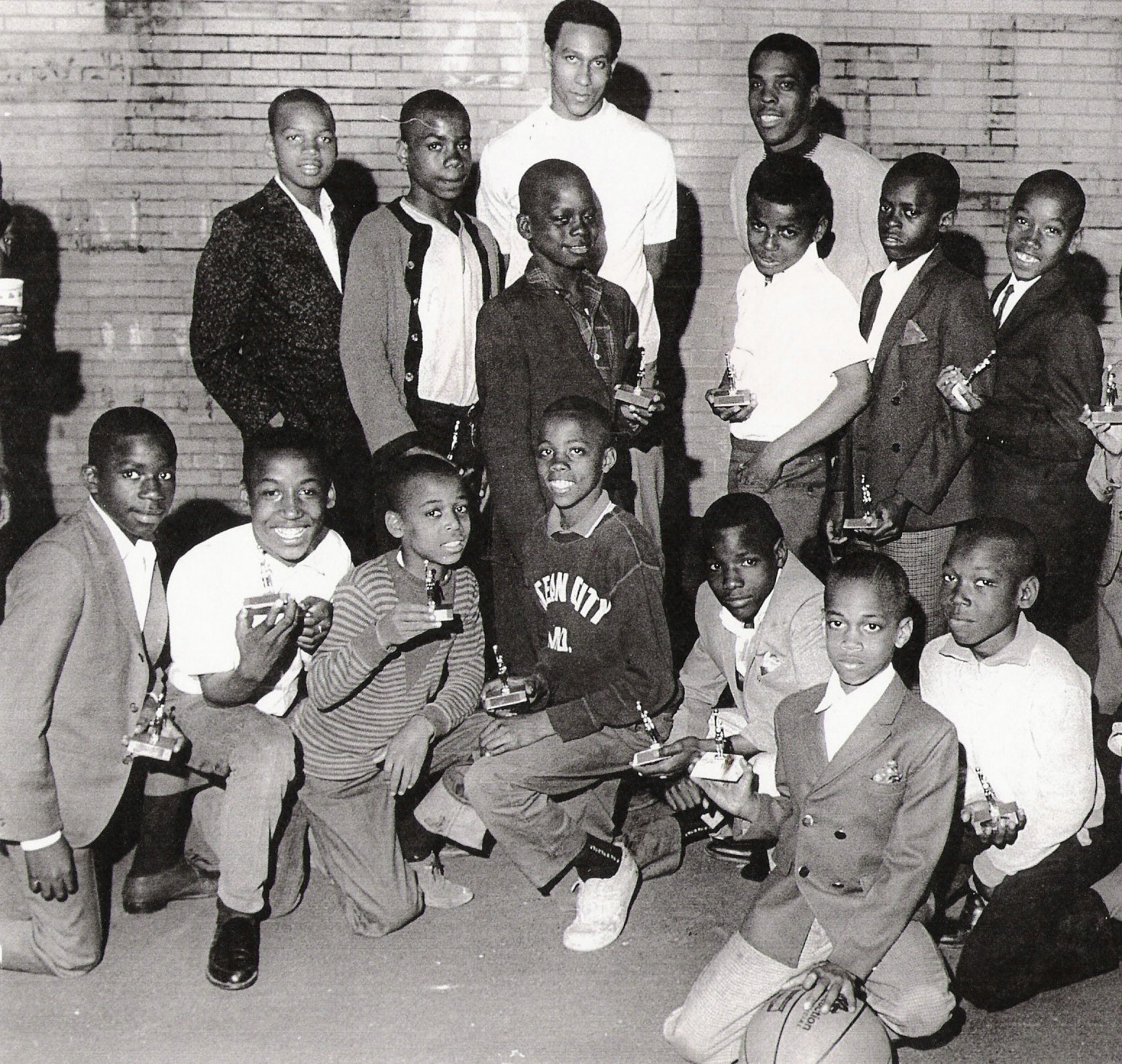
Kids In Trouble MVP
HE CARED LONG BEFORE THE NBA
 In 2008 Dave Bing came back to his original hometown of Washington, DC and officially announced to friends and family he was running for Mayor of Detroit. The announcement came during a Spingarn high school class re-union in Prince Georges County, Maryland.  My question to him was, why?

It looked like he was a man that had everything. He was a NBA Hall of Fame basketball player and voted as one of the 50 Greatest Players of all time. He had money earned as a successful businessman and three daughters to take over and run the family business.

Why the headaches that come with trying revive a city on life support?

The city of Detroit was “Dead” the only thing left was for someone to start shoveling the dirt to bury it. I admit I was at a disadvantaged.

I was on the outside looking in, but still the question of why stayed on my mind. It finally hit me that Dave had made Detroit his home for the past 43 years, what did I know and when did I know it?

I have known Dave since he was a little skinny kid playing basketball on the playgrounds of Watts and Kelly Miller. He was from a hard working family in the NE section of DC. I watched him develop and grow as an athlete and a man. His development as an athlete was ahead of his development as a man.

I made it as difficult as I could for him on the basketball court. I made sure he earned every shot he took. The playground rules were, “No harm, no foul.” We met in pick up games on the playgrounds and alumni basketball games at our alma mater Spingarn High School.

We shared the same high school basketball coach, Dr. William Roundtree.

We both learned several lessons from Coach Roundtree and the lessons had nothing to do with basketball. I was one of the team’s best players in my senior year in 1958 but I was asked to turn in my uniform and enjoy the rest of the season from the stands.

My style of selfish play earned me an early exit. The lesson learned, “No one is indispensible.” Dave ran into several rough bumps in the road during his high school career also. Coach Roundtree became his savior and traffic cop in the ‘Game Called Life.’

I was there to watch and cheer Dave on as he took our alma mater to its first City Championship and was named to the All-American High School basketball team.

I watched as he took his game to the next level and I clearly remember the lesson he taught me during a summer basketball encounter at Kelly Miller. It was his junior year at Syracuse, he was serving notice he was now in charge.

I lined up in my usual position and chose to play him man to man. He jumped and shot over me and ran circles around me. When I left the court that day I felt like I had just come out of a Maytag washing machine on spin dry. His message was loud and clear “New Sheriff in Town.”

There was a slight smile of satisfaction on his face as we left the court. I never challenged Dave Bing One on One again. He made me a believer.

In 1966 he was the number one pick in the NBA draft of the Detroit Pistons. I watched the draft like a proud Big Brother. I said to no one in particular “I taught him everything he knows.” I was just joking, but I was proud that I had played a small role in his development.

I was having lunch at Frank’s a popular restaurant hangout in NW Washington in the summer of 1966. I looked up and Dave walks into the restaurant with Spingarn alumnus and my childhood friend, Arnold “Tank” George.

They came over to my table and I stood up to shake hands with both. I then congratulated Dave on an outstanding NBA season (he was named the Rookie of the Year). He then said “Harold you helped prepare me for the NBA.” I was stunned and I thought to myself, ‘What a classy thing for him to say’.

I had become cynical of homeboys like Maury Wills and Elgin Baylor forgetting who they were and where they came from. They never came back to their hometown for camps or just to visit schools to talk with young people, unless there was an emergency.

You can add to that list, John Thompson, Sugar Ray Leonard, James Brown, Adrian Branch, Adrian Dantley all came through Inside Sports and Kids In Trouble. Dave and I exchanged telephone numbers and for the next decade we would become partners in the community working together with at-risk children.

In 1967 I traveled to Baltimore for the NBA All-Star Game to ask Dave if he could come to our alma mater and speak to the students. I was then working as a Roving Leader for the DC Recreation Department.

I had been assigned to Spingarn to help quell a shooting of a Spingarn student after a basketball game. There were talks of revenge. I thought “These kids need to hear a voice of reason” and the voice was playing in the NBA All-Star Game in Baltimore, Dave Bing.

I was waiting at the player’s entrance to the Baltimore Civil Center when Dave walked up with teammate Bob Lanier. He introduced me to Bob and then asked “What’s up?” I explained the Spingarn situation and asked him if he could come to Spingarn the first thing Monday morning and speak to a full assembly.

He said, ‘No problem.’ His appearance was like the calm before the storm, the students gave him a standing ovation as he walked to the stage. It helped they had just seen him the day before on National television playing in the NBA All-Star Game.

He was representing Spingarn High School and now he stood before them. The timing was perfect, the talks of revenge subsided — the storm had passed.

During the campaign I was surprised to read Detroit newspaper reports that Dave did not relate to the community. The community involvement of professional athletes started with native Washingtonians Dave Bing and Willie Wood (NFL) in 1967 and 1968 respectively.

The Dave Bing and Harold Bell community encounters that involved at-risk children, his teachers and friends go on and on; Dave Bing Basketball camps in the Poconos,Hillcrest Children’s Center Saturday Program, Kids In Trouble, Inc Spingarn Teacher Appreciate Day, Dean Wood Neighborhood Appreciation Day, guest appearances onInside Sports, etc.

Despite the miles Dave stayed in touch with his hometown of Washington, DC. In 1969 I was attending a workshop on the campus of Michigan State University for the DC Recreation Department. He picked me up on campus and took me back to Detroit to help celebrate my birthday.

I know he thinks I have forgotten, I have not. He joined the Washington Bullets on the downside of his NBA career. We sit down on his arrival to discuss the negatives and positives.

He has always been there and was never more then a telephone call away.

Like most 50 year friendships, partnerships and marriages there are disagreements and conflicts. Dave and I had our share. One of the problems, Dave has been surrounded by an entourage of Player Haters, cheerleaders, wannabees and Yes Men.

The biggest enemy in our community is still envy and jealousy. There were those in that group who were envious and jealous of our strong bond and relationship. There was a communications breakdown and out of sight became out of mind.

There were several incidents that I had to address of “He say, She say.” The one that hurt the most involved our late former coach, Rev. William Roundtree. I went directly to Dave by way of written letter for clarification.

I never got a response and when we would see each other at different DC functions he would act like nothing had ever transpired. The truth can hurt sometimes. So I let go and I let God.

Despite the disagreements and harsh words said by me, Dave flew to DC during his campaign and was one of our honored guest during the Kids In Trouble, Inc 40th Annual Toy Party. Hattie and I also celebrated our 40th Wedding Anniversary on that December evening in 2008.

He received The Kids In Trouble, Inc Life Time Achievement Award in the name of our beloved late coach, Rev. William Roundtree. My success as a community and media icon would not have been possible without Dave Bing.

When you love someone you never have to say “I am sorry.”

I think Detroit got the best MAN for the job.

He CARED long before the NBA.

</div

MARCH MADNESS: DR. LEO HILL-DICK HELLER–WIL JONES

COACHHILL0014DickHellerscan0022WILLJONES

Coach Leo Hill

Dick Heller receives KIT Life Time Achievement Award from Green Bay Packer great Willie Wood

Wil Jones


IN DC BASKETBALL THERE WAS ELGIN BAYLOR AND WIL JONES AND EVERYONE ELSE FOLLOWED

When I think of March Madness it has nothing to do with basketball.  I think of Dr. Leo Hill, Willie Jones and Dick Heller, the common denominator, each one went home to be with the Lord in March 2013.  They were all DC Institutions and were Superstars in the Game Called Life.  They touched hundreds of lives in the DVM and beyond. I owe each one dearly for my success in the community and in sports media. They loved me in spite of myself.

Dr. Hill’s coaching career began at Spingarn in 1952 where he taught and coached for 10 years. During this span of time Dr. Hill coached 9 championship teams: One in football in 1954, 2 in baseball in 1953 and 1957 and 6 and won 6 cross country team championships from 1955 to 1960. He taught me that the most important game being played in the world today was not football, basketball or baseball, it was the game called life. It was the only game being played where being called a Super Star had real meaning. In my early years as an athlete at Spingarn High School in Washington, DC I was a mess and trying my best to go to hell in a hurry.

My savior Coach Dave Brown allowed me to dress for the DC Public High School football Championship game against Cardozo High School at Griffin Stadium in 1955 (freshman) but I never left the bench. Poor grades and bad attitude were the deciding factors and two 6’5 wide receivers by the names of Dickie Wells and Charles Branch. I could barely see over the line of scrimmage but I could catch a football. Spingarn played Cardozo in the championship game and we tied 0-0.
The game was decided on a rule called Penetration. The rule states, “The team that crosses the other’s 50 yard line more frequently is the winner.” Cardozo was declared the winner.

When I finally got some decent grades I went out for the baseball team in my junior year. I made the team and earned the starting position in left field for a talented team that had promise. For some odd reason I thought I was the Willie Mays of high school baseball. Dr. Hill watched me run from under my hat and make basket catches on routine fly balls, steal bases without permission and swing at pitches that he signaled for me to take. It all came to an abrupt end in a game against Fairmont Heights High School in Prince George’s County, Maryland.

It was a close game with Fairmont Heights leading 4-3 in the bottom of the 7th inning. I bunted my way on to first base with 2 outs. I would steal second base successfully without the go signal from Dr. Hill. He called time out and came on to the field of play. He reminded me that our best hitter Donald “Cornbread” Malloy was at bat. Before Dr. Hill could get back to the bench I had stolen 3rd base. I dared not look his way.

Donald stepped out of the batter’s box and just stared at me. He fouled off the next 2 pitches and the next pitch I took off to steal home—I was out by a mile game over.

I remember sitting in the Spingarn locker room when Dr. Hill walked quietly up to me and asked me to turn in my uniform. He reminded me that there was only one Willie Mays and he played in New York City. Spingarn would go on to earn the right to play Wilson for the DC Public High School Championship. The game would be played at Griffin Stadium home of Major League Baseball’s Washington Senators and where the Negro League Homestead Grays played their home games. It was a stadium I dreamed of playing in one day. Donald Malloy never let me forget that Spingarn lost 5-4 to Wilson. He reminded me years later that the player who replaced me in left field made 2 errors that cost Spingarn the championship.

My junior year was a tough one. Coach Brown locked me on the school bus during half-time of a game against rival Phelps because I needed an attitude adjustment. Basketball Coach Rev. William Roundtree gave me my walking papers my senior year. It looked like I was trying to make my Middle School Principal William Stinson’s prediction come true. He told my mother, “He won’t live to get out of high school.”
It took years but I finally learned the lesson that my coaches first tried to teach me. The lesson, no one is indispensable and baseball like the game called life is a team sport. Thanks Dr. Hill.

Willie Jones was “One of a Kind” in DC basketball history. There was Elgin Baylor and Willie and everyone else followed. Elgin was like poetry in motion on the court. He could rock you to sleep. Willie was like an AK47 (mouth almighty) on the court no time to sleep—he had everyone’s attention.

If he had a basketball he would travel. He was a winner at every level, playground, middle school, high school and college. If he had been given the opportunity he would excelled at the pro level.

As a coach in DC he was second only to the legendary Red Auerbach. There are three coaches in the District/Maryland/Virginia (DMV) area who won National NCAA basketball titles, John Thompson, Gary Williams and Willie Jones.

Thompson and Williams were never in his class when it came to the Xs and Os of coaching basketball. Willie not only played the game at an extremely high level—he coached at an even higher level. He was a great recruiter because he had been there and done that. The young players loved him. He spoke their language (with many, many bleeps).

There have been many basketball discussions in pool rooms, on street corners, playgrounds, and the sports bars in DC. The topic: What if Willie had the talent that Big John had at Georgetown—how many championships would he have won? Every discussion I have heard it is unanimous, Willie would have won at least 3 National NCAA Championships.

The bottom–line, Georgetown is building a 60 million dollar sports complex on its campus in the name of John Thompson. This is a legitimate pay-off for putting them on the sports map and bringing in millions of dollars of revenue for the school and himself by any means necessary. The million-dollar question now is—can he save his son’s job?

Willie Jones put two universities on the basketball map, American University and UDC. But there will be no statures or sports complexes built in his name—which proves crime does pay.

What I will remember most about Willie is that he was flawed like most of us human beings but he was trust worthy to the point if he gave you his word you could carry it to the bank. He also took coaching seriously, especially when it came to his players. They were always first.
If you were a friend, he would go to war with you or for you. I am reminded of his co-worker the legendary athlete and coach Bessie Stockard when the UDC Administrators targeted her for dismissal from the school, it was Willie who went against the grain and testified on her behalf in court—she won.

He was like a brother to me. I could never stay mad at him. Whatever our difference of opinion, the next time we saw each other he would be joking and smiling like it never happen. A family member said it best, “You two where Kindred Spirits.” Thanks Willie.
Sports columnist Dick Heller was a class act. He was an officer and gentleman and a man of integrity. His word meant something unheard of in media today. He was a loyal friend and mentor to me for over two decades. Thanks to him I am still in the fight for truth in media and my eyes are still on the prize—our children. Dick was there for me and anyone else I supported. Especially, homegrown talent like Willie Wood (NFL), Earl Lloyd (NBA) and LA Dodger great Maury Wills.

Willie Wood was a benefactor after the NFL had blackballed him because he would not go along to get along during his NFL coaching days. There was some drug abuse by several NFL players on the team. He spoke out against the abuse and was not asked to return the next year. He was out of pro football for several years until the Canadian Football hired him as the first Afro-American Head Coach. Willie was voted one of the greatest defensive backs to ever play in the NFL. His coach, the great Vince Lombardi said, “Willie Wood is my coach on the field.” Still the powers-to-be shut him out of the NFL Hall of Fame. I went to Dick and brought him up to date. Willie was voted into the NFL Hall of Fame in 1989 two years after some timely stories appeared in sports media outlets (radio and print) spearheaded by Dick Heller.

Earl Lloyd was the first black to play in the NBA in 1950. He was from Alexandria, Virginia and played in the CIAA (BHC). He was overlooked for his contributions in the CIAA and NBA. I turned to Red Auerbach and Dick. They took charge and suddenly there was a story on Page One of the Washington Times talking about the trials and tribulations of Earl Lloyd early NBA days. The photo on the page showed Earl and Red in a forum at the Smithsonian during Black History Month. In 2001, over fifty years later Earl Lloyd was inducted into the NBA Hall of Fame. Thanks Red Auerbach and Dick Heller.

Dick tried his best to help our homeboy Maury Wills get his just deserts. Maury revolutionized offense in Major League Baseball. He made an art out of the stolen base. He made the fans forget about the homerun in the 60s. He was master of all he surveyed in ballparks around the country but his off the field antics of drugs and domestic abuse have been hard to ignore by the voters. He is still on the outside looking in as it relates to the Baseball Hall of Fame.

Dick’s first love has always been baseball and he tried his best to get Maury inducted with a brilliantly written two page story in the Washington Times over a decade ago but “The Haters” have refused to budge. Dick, Maury never said thanks but I will.

Dick was not only a talented writer and editor but he was also a risk taker. He never sit on the fence to see whether it was safe to fall on one side or the other. He loved his hometown of DC and all of its sports teams but you could never mistake him for a cheerleader if the home team made a wrong move. He would take them to task. For example, in 1977 he exposed several Maryland University players for poor academic records during the watch of Charles Driesell, aka Lefty.

He gave the players and Lefty the kind of fame they could have done without. He published their names with photos and their academic records in the sports pages of the Washington Star. Talking about opening up a “Can of Worms.”

The university student newspaper, The Diamond Back followed Dick’s lead and published the player’s grade point average. Six players on the teams sued Dick, the Washington Star, and their own Diamond Back newspaper for invasion of privacy, publishing confidential university records and intentional infliction of emotional distress. The players sued for 72 million dollars in damages.
In 1979, the Maryland Court of Special Appeals upheld a lower-court decision and ruled in the paper’s favor in the case known as Bilney v. Evening Star.

The court ruled “The Players had achieved the status of public figures solely by virtue of their membership on the university basketball team. Therefore, their possible exclusion from the team—whether academic or any other reason was a matter of public concerned.”
The decision continued: “Having sought and basked in the limelight, by virtue of their membership on the team. Appellants (i.e., the players) will not be heard to complain when the light focused on them on their potential imminent withdrawal from the team.”
Bilney vs. Evening Star remains an important case in the first amendment law and has been cited in legal proceedings, in text books and courses taught in media law.

Tim Kurkjian ESPN broadcaster who started his media career at the Star said, “Dick was a kind of mentor to the younger guys, I cannot stress enough how helpful he was and how patient he was with us.”
Dick Heller was not only a mentor to younger guys during his long and distinguishing career in print media. He was also a mentor, friend and brother to Old Guys like me. I am a better writer today thanks to Dick Heller.
I look at the sports media sitting at press tables, media newsrooms, talk show host and analyst they are “The New Jack City Spooks That Sit by the Door” and have blocked the door extremely well. They see no evil, speak no evil, hear no evil and write no evil. All they care about is show me the money and “Look at me.”

Some even claim that it is okay to use the N word as a term of endearment. You would think that it would be names like Michael, James, Jason, Stephen, etc. leading the fight to right the wrongs of a Willie Wood, Earl Lloyd, Maury Wills and Spencer Haywood, but it was names like Dick, Rick Snider (Examiner) and Dave (McKenna, City Paper) kicking down the doors for other brothers of another color.
Coach Leo Hill, Willie Jones and Dick Heller—–we never could have made it without you (RIP).

BILL RASPBERRY: WINS PULITZER COVERING THE HOOD!

Bill Raspberry           Bill and me shooting hoops at Georgetown University KIT Celebrity Basketball game.

When I learned of the passing of Washington Post columnist William Raspberry on Tuesday July 16, 2012 I was moved to remember the song “The Way We Were.”

I met Bill along with my mentor and friend the late legendary radio icon Petey Green in Face’s Restaurant in Washington, DC.  This was shortly before the riots in 1968.  Face’s was a hang-out for the so-called “In Crowd” in what was then known as “Chocolate City!”

Petey and I were sitting at the bar debating whether the Redskins would win a game during the upcoming season and he looked over at this little guy sitting a couple of bar stools away and asked “My man what do you think?”  Bill looked up from his plate and said “Man I don’t have a clue I am from Mississippi!”

As only Petey Green could the conversation went from the Redskins to picking cotton.  He made Bill laugh so hard he had to get up and go to the bathroom before he peed on himself.  The three of us would become fast friends and football, kids and politics would be our topic of conversation for the next several hours.

Petey was than working with the self help group the United Planning Organization as a Neighborhood Worker, Bill was working for the Washington Post (he never mentioned he was a writer) and I was working for the DC Recreation Department as a Roving Leader (Gang Unit).

We would meet at Face’s on Friday (lunch or Happy Hour) for its legendary fish fry.  Ms. Booker cooked the best fish in town.  I don’t remember when Bill told us he was a writer but there were two things Petey pretended to hate, the Redskins and anybody who wrote for the Washington Post!  But, Bill passed the smell test because he and Petey got along fine.

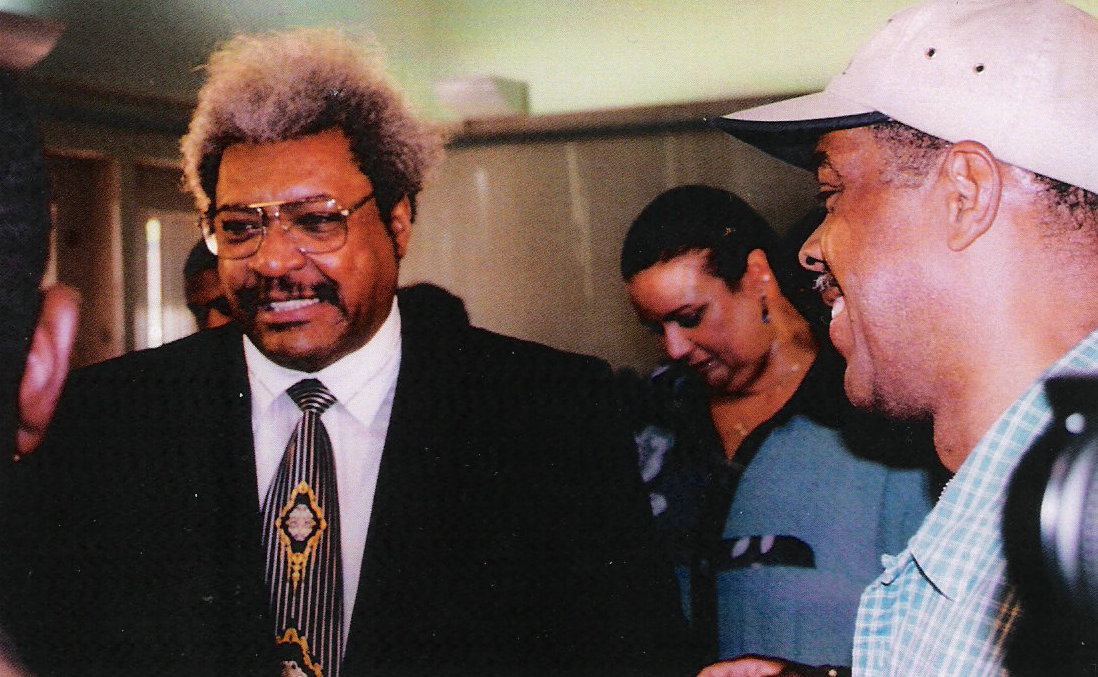
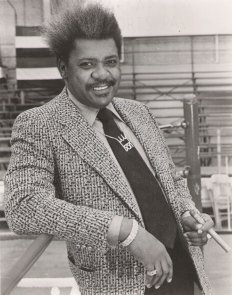
My wife Hattie and I founded the Hillcrest Children’s Center Saturday Program and Kids In Trouble in December 1968 (the result of the 1968 riots).  The Center was located at 14th and W Street s in northwest DC.  The program was housed in the old Turner’s Arenawhere legendary entertainers once performed and it was the first home of the now world famous WWE and wrestling promoter Vince McMahon ,Jr., (he took over the mantle handed down by his father and James Dudley).  Mr. Dudley lived directly across the street from the arena and was Don King before Don King.  He was the first black to be inducted into the WWE Hall of Fame.  He was also my “checks and balance” guy.

The building was then the Hillcrest Children’s Center.  The Center was run by Children’s Hospital and catered to children with behavior problems.

During the riots there was talk of burning the building down because the neighbor children resented the fact that they were not allowed to use the building.  The center had an indoor swimming pool, indoor and outdoor basketball courts and classrooms.  It didn’t make it any easier when black neighborhood children would see white kids parading in and out of the building during the week.  The building was closed on the weekend (special needs children would sometimes stay over night and into the weekend).

The administrators became concerned when the neighborhood children begin to harass the staff and their clients verbally.  Someone in the community brought me to the attention of Center Director Nicholas Long as “Mr. Fix It!”

A Monday morning meeting was arranged for me to sit down with Dr. Long to discuss how to mend the fences between the center and the neighborhood.  Without my knowledge Dr. Long had already devised a“Game Plan.”

The plan was for me to coordinate and oversee a Saturday recreation program for the neighborhood kids!  I didn’t think much of the idea because it would intrude on me moonlighting as a wide receiver for a minor league football team on the weekends.  The Virginia Sailors was an affiliate of the NFL Washington Redskins.  I still had dreams of becoming a player in the NFL.  I left the office of Dr. Long saying “I would think about it.” 

What I was really saying was “No way Hosea!”

I could not wait to catch up with Petey and Bill on Friday at Face’s to get their opinions on how to get out of making a commitment to this“Dream Buster” of an idea!  I called Petey and Bill to make sure we were still on to meet because sometimes one of us would be a no-show because of prior commitments.  Petey could not make lunch so we agreed to meet at the evening “Happy Hour.”

Bill had never seen me play for the Virginia Sailors but Petey would come out to the home games played on Saturdays in Reston, Virginia.  He would leave usually at half-time without acknowledging he was there (Hattie would see him coming and going)!  He was a student of the game.  Petey could tell me precisely what pass patterns I had run and exactly when I would be free lancing on my own.  He would always say “You would have made a great actor!”  It was all a part of the on field game that I played with the defensive back to get the upper hand.

The meeting at Face’s took a turn for the worst when both of them jumped on me for putting football ahead of the kids.  I was surprised when Bill said, “You need to do this and we got your back.”  Petey just looked at me and said “Don’t look at me!”  The decision was made and the rest is community history. 

My Spingarn high school teammate Andrew Johnson was a DC cop in the neighborhood and my brother Earl both physically covered for me on the weekends when the team was out of town.

Bill Raspberry’s word was good (unheard of today in media), during our relationship he never lied to me.  You could carry his word to the bank.  Folks in media run a close second to politicians when it comes to telling a lie.

Bill and I didn’t always agree, if I brought something to his attention and he didn’t feel comfortable addressing, he would say “Harold I am going to pass on that one you handle it.” And I would!

For the next decade Bill’s columns would challenged the DC Police Department when they refused to allow my brother Earl K. Bell employment because of his juvenile delinquent past.  Shortly after his story was published the department back tracked and hired him.  There would be several other stories in his column with me as the focal point.  He really had my back as he followed my trials and tribulations in the community as it related to kids in trouble.

With Bill and Petey showing their support by participating in my community endeavors others would follow their lead (athletes, judges, politicians, entertainers and media personalities, etc. joined the team).  It also didn’t hurt to have their VIP wives Sondra and Judy in their ears as back-ups on my behalf!

William Raspberry’s support allowed me to excel and blossom as a Youth and Community Advocate.  He also gave me an earful when he thought my radio show the “Original Inside Sports” was politically incorrect, but it was always “Constructive Criticism and never Destructive Criticism!”

We went our separate ways over a trivia disagreement and for the past 2 decades we have been like ships passing in the night (never seeing each other).  Much like Petey, Bill died without me telling him how much I appreciated and loved him.

In December 2012 Hattie and I will celebrate and coordinate our 44thAnnual Christmas Toy Party for needy elementary school children (without grants or loans).  The first was held at the Hillcrest Children’s Center Saturday Program in 1968.  It only happened because Bill Raspberry kicked me in the butt and made me get my priorities in order when I truly needed to.

Thanks Bill and Sondra.

MARION BARRY: THE MAN WHO COULD HAVE BEEN KING!

marion-barry-book.w490.h645 

I remember when Marion Barry blew into Washington, DC like one of those Midwestern hurricanes in 1965. He came in as the first DC Chairman of the Student Nonviolent Coordinating Committee (SNCC). He came with the credentials of being involved with the Black Civil Rights Movement in Tennessee, first as an organizer in the Nashville Student Sit-ins.

When he arrived in Washington in 1965 I had just returned to my hometown after spending two years chasing my dreams of playing in the NFL without success. I was home looking for a job when my friend Petey Green alerted me that the United Planning Organization (UPO), a self-help community oriented organization was hiring. Petey knew the Director, Jim Banks and told me to meet him at the 11th & U Street NW office the next morning.

UPO hired three Neighborhood Workers for the Shaw/Cardozo community. Petey Greene, H. Rap Brown and me. The rest is community and media history. That same year the Student Nonviolent Coordinating Committee decided to make Washington, DC its home base—enter Marion Barry.

The late Petey Greene would make his mark as a legendary community and radio/television personality and H. Rap Brown would follow in the footsteps of Marion Barry as Chairman of SNCC. Brown is now serving a life sentence in Georgia for the shooting death of a State Trooper and Marion died on Sunday November 23, 2014.

I am “The Last Man Standing!”

Marion would parlay his civil rights and community involvement activities into a political power base base that will never be seen again in the Nation’s Capital. He was the first civil rights activist to become mayor of a major American city. In 1967, his path to political power was enhanced when he and his future wife, Mary Treadwell, co-founded Pride, Inc., a Department of Labor-funded program to provide job training to unemployed black men. Marion used Pride, Inc., as a springboard to a seat on the DC School Board, City Council and Mayor for Life!

Pride was the brainchild of a NE street dude by the name of Rufus “Catfish” Mayfield. Mayfield’s childhood friend Clarence Booker was shot and killed by a white police officer. His crime, he had stolen a pack of cookies on the wrong side of the tracks. In a brief chase and confrontation with the police officer, his life ended.

Booker was unarmed (Ferguson/Michael Brown). Mayfield and Booker were both from my old neighborhood, a NE housing project called Parkside. Thanks to a grant given to the DC Recreation Department by UPO to hire additional Roving Leaders, I was hired by the department to work on the staff of the Youth Gang Task Force.

I was assigned to the scene of the crime to help quell the violence that might result from this senseless shooting of a black teenager. There was an outcry of racism because of the recent brutality directed by the DC Police Department against the black community. The federal government intervened and made a deal with Rufus “Catfish” Mayfield to provide job training for unemployed black youth. Pride, Inc. was born and the organization hired hundreds of teenagers to clean littered streets in DC. Mayfield was not a learned individual and brought Marion to the table for some direction—before he knew it he was on the outside looking in and Marion Barry never looked back.

Petey Greene and I were very territorial when it came to our hometown. H. Rap Brown won us over with his down to earth personality but when we encountered Marion it was like ships passing in the night.

Marion went on to become a three term City Councilman. While serving in March 1977 he was shot as a group of Hanifi Muslims took over the District Building. He lived to tell about it. Against all odds, Barry went on to become a two term mayor in the Nation’s Capital. In 1984 Barry gave the presidential nomination speech for civil rights leader Jesse Jackson at the Democratic National Convention.

There are people in the media who are often heard saying, “You either loved Marion or you hated him, there was no middle ground.” I beg to differ, I didn’t love Marion but I did not hate him either. He was a bright individual with a hard head that would not listen to sound advice. The media people who thought they knew Marion didn’t have a clue. He used them and beat them like a drum. He had them thinking that they had the inside story or scoop over one of their colleagues by remembering their first names.

Marion knew that local DC reporters such as Karen Gray Houston, Tom Sherwood, Pat Collins, Joe Madison, Maureen Bunyan, Courtland Milloy and Bruce Johnson had no clue about the black community. He knew these media types only became experts on the black community after they became columnist and television/radio personalities. Marion had the upper hand because all of them followed him into DC.

In 1990, Barry was videotaped smoking crack cocaine in a hotel room in NW DC. This later became known as “The Bitch Set Me Up” heard around the world. The media “know-it-alls” had no clue of the upcoming sting.

The irony is that he was forewarned by yours truly. In the summer of 1989 I ran into the only guy in his entourage that I think knew the definition of integrity and loyalty. Officer William Stays was his Driver/Security Guard and a class act. He had the Mayor’s back.

Officer Stays was sitting in the car in the Faces Restaurant parking lot on that summer evening when I approached him. Faces was where the so-called “in-crowd” hung out during the week and weekends to escape the rigors of the business world and politics. You could always find Marion there with members of his inner-circle. I asked Officer Stays to go and tell Marion I needed to see him in the parking lot right away. Stays never asked, “What was so important” He just when in and brought Marion back out with him.

I told Marion that there was a FBI sting being organized to catch him in a compromising position and I thought it was best for him to step back for a moment.

The next words out of his mouth, 25 years later still have me shaking my head.

He said, “Harold I appreciate your concern but I got my bases covered.” As he walked back into the restaurant I went over to Officer Stays who was standing outside of the car. It was then I told him about my concerns and Marion’s response, he just shook his head and said, ‘Harold what else can you do?’ We shook hands and said “Good night” and six months later “The Bitch Set Him Up.”

My “Deep Throat” source was an undercover FBI agent out of Newark, New Jersey. We met on the U Street corridor during the riots and we became close friends. He would later leave the city and become an FBI Director in one of our urban cities (retired).

Marion Barry avoided coming on my radio show “Inside Sports.” I knew his hangouts and the dubious characters he hung out with. Even though we were like passing ships Marion and I shared a lot of moments away from the media spotlight.

He loved sports but he could not play dead. I could beat him with my left hand and the other hand tied behind my back. His tennis instructor was my college roommate and teammate at Winston-Salem State University, the late Dr. Arnold McKnight. He would let me know where he and Marion would be hitting balls and I would show up and beat them both. Marion and I would run into each other at the Hillcrest Heights tennis courts located near his home on Suitland, Road, SE.

Dr. McKnight was also the DC Boxing Commissioner and as you know Marion was a part of the Riddick Bowe championship years. One day Marion and I were at the Hillcrest Tennis Courts hitting some balls just before the second Riddick Bowe vs. Evander Holyfield fight. He started talking about how Bowe was going to take out Holyfield in their rematch. I took the bait because everyone knew he was talking at me.

Riddick Bowe could have easily gone down in boxing history as one of the all time great champions. But he had too many distractions around him (Rock Newman, Marion and Cora Masters, Dick Gregory, Willie Wilson, etc). He had one of the all time great boxing trainers in his corner in Eddie Futch. Riddick Bowe would not train and would not listen. He was overweight. Marion was not aware that I knew all the confusion surrounding Bowe. There was one thing you could count on with Evander Holyfield–he was going to be in boxing shape.

I finally said to Marion, “What do you want to bet man?” His response, “Make it easy on yourself.” I knew Marion loved to gamble, so my response, “Lets bet $1,000.” He said, “Oh no.” I then countered with $500 and again he said “No.” He finally said, “$100” and I said, “Bet.” We shook hands on the deal. To make a long story short, Holyfield beat Bowe and it took me two months to collect my $100 from Marion. But one day I walked into Faces for lunch and there he was. Before I could get over to him he had reached in his pocket and torn off a money order for $100. His parting words to me were “How did you know?” I said, “Inside Sports.” Marion was not a bad guy and I really liked him but his head was always between his legs.

The Washington, DC drug culture is a very small community and Marion’s substance abuse was well known along with members of his inner-circle.

Kids In Trouble, Inc. had Santa’s Helpers with names like, Slippery Jackson, Bob Wayne, Philadelphia Jake, Dog Turner, Zack, Happy, Nook, Cornell. These guys had a laundry list of entertainers, politicians and media personalities with drug abuse problems.

I was not surprised when Marion called WRC TV 4 News Anchor Jim Vance for assistance and advice. Jim had been a main stay when it came to my community endeavors and my tennis partner, but it all came crashing down in 1978. One of my street contacts brought a check to me written by Vance for the drugs. Again, I was not surprised because the word had already filtered down to me. It was not a problem, because none of my guys had ever tried to involve me in their substance abuse activities so I became like the 3 Little Monkeys, “I saw no evil, I spoke no evil and I heard no evil.” My street contact really liked Vance but he said to me and I understood exactly where he was coming from, “Man I cannot tell this brother to step back because I am in business, but I think it would be better coming from you.”

That night I took the check up to TV 4 and waited for my friend to finish the 11:00 news. When he came out of the station I called him over to my car and gave him the check explaining he needed to re-group. He took the check and stopped speaking to me. He didn’t speak to me again until 3 years ago (1978-2010) during a tribute to sportscaster Glenn Harris at Howard University.

It was while he was paying tribute to Glenn that I discovered where his head really was. He thanked Glenn for sticking by him during his trial and tribulations with drugs and had not left him blowing in the wind as some other friend! I could not believe my ears; it finally hit me he was talking about me. His words reminded me of vocalist Nancy Wilson’s classic “Guess Who I Saw Today—I Saw You!” That was the way it hit me!

My thinking at the time was to take the check for the drugs up to the station; I thought I was trying to save the life and career of a dear friend. The death of Marion Barry and his reaching out to Jim Vance has allowed me to get this heavy load off of my shoulders and off of my chest.

As I continue to reflect back, I recall Marion, on the Saturday before he was to start serving his 6 month jail sentence made “Inside Sports” his last media stop. I owe the thanks to my roommate, Dr. Arnold McKnight. McKnight had called me on Friday evening and said, “Marion wants to be on your show tomorrow.” My response, “Bring him on!” I never thought he would show up, but he did.

I started the show the way I did every Saturday. I gave the sports quiz and then turned around to see McKnight and Marion coming into the station. Marion had this big smile on his face and said as he entered the studio “You thought I was not coming didn’t you?” I took a commercial break and thanked him for coming.

When I came out of commercial break and introduced him, the first thing out of his mouth was “There is one thing you can count on when it comes to Harold Bell and that is you are going to get the truth.” When he said that I decided I was not going to chastise him.

When the show ended I wished him and reminded to stay strong and I would keep him in prayer. His last words were, “I wish now that I had listened to you!”

Marion could have been the greatest black politician in the history of Black America, but he would not listen.  But in the end—he did it his way.

I AM KING: AL HAYMAN THE NEXT DON KING?


HB DK CALVINDK HBKING I AM BOXING ROUNDTABLEDK AND CORA

HB, Don King and Calvin Woodland

Don King Day in DC

Inside Sports studio / L-R Sugar Ray Leonard–HB–Don King–Larry Holmes–

Don King & Crew / L-R Nat Williams, Cora Barry, Don King, Dave Jacobs and HB


I remember it was in Cleveland against almost everyone’s wishes including Wallace Muhammad (Nation of Islam) begging Ali not to open the door and give Don King his first opportunity to be a black promoter.  But it was popular R & B singer Lloyd Price who introduced King and convinced Ali to do the right thing and give a brother a break.

Lloyd would be one of the first King would kick to the curve when success came knocking.  He thanked Ali the same way he did most of the fighters he promoted, he took their money (Ali 1.5 million).  When Ali threatened to take King to court and sue him, King told the champ “I will have you in court for years and really break you.”  Ali settled for $50,000.  King thought his promoter’s license gave him a license to steal.  He would go on to create a boxing empire unmatched in the history of boxing but not without controversy.  There were many kissing his ring and his ass, I refused to kiss either.

In 1971 I was fresh on the sports talk radio scene.  I jumped at the opportunity to ride to Cleveland with the late Washington Star sports writer and columnist J. D. Beathea and Atty. Harry Barnett to see my main man, Muhammad Ali.  Harry represented future heavyweight champion, George Foreman.  In Cleveland Ali would be fighting an exhibition for a Children’s Hospital. The promoter for this charitable event, Don King.   His credentials, a numbers runner and backer who served time in prison for manslaughter.

J. D. would also invite me to have breakfast with him and King the next morning after the fight.  He was writing a story on King becoming Black America’s first big time boxing promoter.  It was during this breakfast King would say, “Harold stick with me baby we are going places” forty plus years and broken promises later, he is the only one that has gone some place.

We all make mistakes in life but Don King was one of Ali’s biggest.  The champ was just trying to network and saw an opportunity to pull another black brother along.  But King was one of those brothers, “You could take out of the ghetto but you could not take the ghetto out him.”  Don King is not comfortable in his own skin unless he is trying to scam or use someone.  The proof is in the pudding (the fighters) and I was an eye witness.

Mike Tyson described King best when he said, “Don King is a ruthless wretched, slimy, reptilian Mother F—–.  This is supposed to be my black brother’ right?  He’s just a bad man, a really bad man.  He would kill his mother for a dollar.  He’s deplorable he doesn’t know how to love anybody but himself.”  

Tyson told some friends, “I would kill that black son of a bitch if I thought I could get away with it.”

When Ali gave Don King an opportunity to become the country’s first black major boxing promoter in the 70s he didn’t expect business as usual–the  plantation and gangster mentality, but that is exactly what he got.

The biggest benefactor in the Muhammad Ali era was Don King.  There is little doubt Don King is the greatest boxing promoter of all-time, but he carried a lot of baggage into the Boxing Hall of Fame.

Major media was a thorn in King’s side because of his dark and shady criminal past.  There was a “Honeymoon” period with the media when he first arrived in New York to sit up shop.  But the honeymoon didn’t last long, the sharks in sports media repeatedly wrote and broadcast stories to remind boxing fans that Don had served time for murder and was an unscrupulous numbers backer.  This was definitely a media double standard because boxing has always had mob and small time gangster ties.  Don King was right at home under the category “Small time gangster.”

I was one of a few in a tiny minority black sports media circle who consistently supported King’s position as a black boxing promoter.  It was the American way—second chances.  I also thought that Don King’s success would mean my sports media success, I really dialed a wrong number.

Ali’s business manager Gene Kilroy once said, “Harold if you were white you would be a millionaire.”  The late Hymie Perlo, Community Relations Director for the NBA Washington Bullets/Wizards said, ‘Harold if you had played the game they would be calling Howard Cosell the white Harold Bell.’

In the meantime, in Washington, DC Washington Post sports columnist Michael Wilbon called and asked me if I would be willing to go on television  “Geraldo Live?”  The topic, Don King’s role in professional boxing.  He said, ‘Harold this is perfect for you, no one in media has been tooting the horn of Don King louder then you.’  He was right.

Wilbon had been a regular on my sports talk show ‘Inside Sports’ and he was familiar with my history with King.

This is the same Michael Wilbon who would often cry the blues to me about George Solomon his sports editor looking over his shoulder and changing his column.  He was still writing for the Washington Post and serving as a co-host with the overrated Tony Korheisner on ESPN’s PTI and as a color analyst on NBA Sunday and he had a radio talk show on ESPN.  It looks like he was a media success story, but at what cost (a heart attack)?  If he allowed George Solomon to change his column at the Washington Post who is to say ESP is not currently writing his script.

I now find it hard to believe anything that Michael writes or says, but what do I know and when did I know it?  Ebony Magazine in its December 2009 issue picked him one of “The Power Players” in sports media!!

scan0012

Wilbon during a Black History Month tribute to Gary Mays

Wilbon was playing both sides of the fence.  He knew he could not go on the show and defend King and be a member in good standing with the Washington Post.   He could not take a stand against King because he was scared of him and his gangster background.  I had a choice of choosing between major media and Don King.  I choose King, I had nothing in common with major media and I grew in a community of Don Kings.  My mother had her own number book in our housing project.

The man who Don King most resembled in my community was a slick talking street hustler by the name of James Dudley. He was Don King long before Don King.

DUDLEY GODFATHERDUDLEYWWE0002

Mr. James Dudley was the first black inducted into World Wrestling Hall of Fame in 1994 the WWE is now a two billion dollar enterprise

The World Wrestling Federation/Entertainment was born and first open its doors on 14th & W Streets in NW DC in the early 60s.  Its home was Turner’s Arena and the Godfather of the neighborhood was James Dudley who ran the arena.  The “Under Cover Boss” was the late James Vincent McMahon a small time promoter whose son now owns the WWE.   McMahon Sr. hired Mr. Dudley to run the day to day operations of the arena.  Mr. Dudley was never late for work he lived directly across the street from the arena.  On the weekends it was like a Who’s Who of entertainers and sporting events performing at the arena.  The great jazz artist, boxing and wrestling shows held there were the talk of the town and Mr. Dudley was the Godfather of the community and the arena.  When I started the Hillcrest Saturday Program in the building in (Hillcrest Children’s Center an affiliate of Children’s Hospital) 1968 he had my back.  The building was off limits during the riots and sacred ground on Monday thru Friday for the outpatient residents. Mr. Dudley was the Sheriff on the block and I was his deputy.

In the meantime, once I saw the line-up for the Geraldo show I clearly understood why Wilbon wanted no part of the program. First there was my homeboy and friend by way of New York City, Boxing Publisher and author, Bert Randolph Sugar.  And the man who was responsible for the movie “The Life, Lies and Crimes of Don King” New York Times writer Pulitzer Prize winner, Jack Newfield, plus the host Geraldo.  Three anti-Don King media personalities, Wilbon had thrown me into “The Lion’s Den.”

Bert and I often shared hotel rooms and he sometimes had the same problem applying for press credentials with King as I did.  I remember one title fight my credentials were at ringside and Burt’s were in the nose bleed section of the arena.  I traded my credential seat with Bert, but I expected no mercy from him tonight on the subject of Don King.

I knew I was red meat when Rivera introduced the segment with, “Don King is a petty thief and numbers runner who has served time in jail for murder and has stolen money from the likes of Muhammad Ali and Mike Tyson.”

I could not call him a liar because it was all true.  I took the hits from Newfield and Sugar but I defended King regardless—it was all about loyalty a word you will never hear King mention in his extensive vocabulary or something you would in the black community today.

My radio and print media commentaries defended Don King despite the lawsuits brought against him in courts all over America for thief from the various fighters he represented.  When heavyweight champion Larry Holmes threaten to take Don to court, he called Larry into his office and threaten to do bodily harm to him and his family–case closed.

Ali and Mike had hearts as big as Las Vegas and were very charitable when it came to their money.  All you had to do was ask them for it, but Don King decided he would rather steal from them.  I think the thing that hurt Mike more then anything else were the guys that he grew up with, his homeboys, Roy Horn and John Holloway were a part of the heist.  Roy was on such an ego trip he took his part of the heist from King and tried to become a movie star.  I smelled a rat because I would often see Don and John huddled together in dark corners of restaurants.

In the early 70s King invited me to New York to meet with him.   We were to meet in his office at 3: 00 pm.  I spend three hours waiting for him.  The time served me well thanks to his “Girl Friday” Connie Bennett.  Connie ran King’s New York office and was an old and trusted friend from his days in Cleveland.  During that three hour wait she gave me a 101 Boxing Lesson Plan on how to deal with her boss.  The best advice “Don’t ever take any money from him you have not earned.”

When Don finally arrived he took me out for dinner and we were joined by “The Hands of Stone” the legendary Roberto Duran and his interpreter Luis Hernandez.  Luis was one of the good guys and a class act in the seedy world of boxing.  During dinner I discovered that Duran did speak English it was not fluent but it was sufficient enough for him to be my guest later on Inside Sports.

I stayed with Luis at his home in upstate New York that night it was a little late for me to be heading back to DC.  Luis had a son who was an outstanding high school basketball player and I stayed over for a couple of days to watch him play.  He scored 27 points in a lost but he lived up to the advanced billing of his proud dad.

My first assignment with Don King, he asked me to use my influence to get Sugar Ray Leonard to sign a promotional contract with him.  I knew going in that was “Mission Impossible.”  Ray had already signed an agreement with a group of white businessmen recruited by his trainer Janks Morton.

The group was led by an ambulance chasing lawyer by the name of Mike Trainer.  He was a softball teammate of Janks.

Roberto Duran and Sugar Ray Leonard met for the second time in New Orleans.  It rained the whole dam weekend and the only thing I got to see was the fight.  I remember trying to get some asleep in Don’s hotel suite in another room when I overheard Don telling Duran’s handlers “Just remind Roberto all he has to do is to be on his feet at the end of the fight and he will still be the champion.  The only way he can lose this fight is Ray will have to knock him out.”

This all made sense to me Duran had never been knocked off of his feet in his career.  In their first fight in Montreal, Canada Duran manhandled and frustrated Ray and won a unanimous decision.  I thought, “There is no way Ray was going to knock Duran out.”  I had already gone out on a limb on my radio show ‘Inside Sports’ and I was quoted in the Washington Post that Ray would lose the fight.  I thought he was taking the fight too soon after his defeat in Montreal—wrong again.

One of my female listeners on my sports talk show challenged me, that if Ray beat Duran I would walk on the U Street corridor in front of Ben’s Chilli Bowl wearing nothing but a pair of bikini swimming trunks after the fight.  I accepted her challenge.

Duran, was a headstrong and proud warrior of the ring.  His pride cost him the fight in New Orleans.  I was sitting ringside when Duran uttered the now famous “No Mas.”  Many of us at the press table could not figure out why the fight had been stopped.  When we heard the reason why we still could not believe what we had just heard “No Mas?”

Duran had quit in round eight while defending his titled.  I am sure he cost Don King a bundle of cash.  All he had to do was stay on his feet and he would have retained his welterweight title.  There is still a mystery that still surrounds the fight.  The bottom line Sugar Ray outsmarted Duran with his now you see and now you don’t style.  Duran could not hit what he could not see and he quit in frustration.

I returned home from New Orleans and donned my bikini bathing suit in front of Ben’s Chilli Bowl on the coldest day of the month (November 30, 1980) and kept my word.

I watched closely how King treated those around him who borrowed money or those who would take money they had not earned.  He treated them like hoes with no respect.  Some of the things he would say out his mouth to grown men made me cringe.  Connie’s advice served me well.

Connie, was loyal to a fault but I guess the price was right.   In the 90s the IRS was closing in on King for income tax fraud, she took the fall for him. She served several years in jail for income tax evasion and lived financially happy and wealthy after her release from prison.

I grew up in a housing project in Northeast DC in a single parent home.  My mother was the neighborhood bookie, sold bootleg liquor and cut poker games on the weekends to help make ends meet.  I watched as the local cops raided our home taking my mom out in handcuffs.  I evidently felt some misplaced kinship to Don King.

I remember Mike Tyson fought-Buster Mathis in Philadelphia in 1995 and several members of the media kept complimenting me about a commentary that was written in the boxing program for the fight.  Philadelphia Inquirer columnist Elmer Smith said to no one in particular, “Harold Bell is the most courageous sports journalist on the planet.”  I had no idea what they were talking about and decided to go to the media room to get a program.  There in the program was a commentary I had written for the Washington Afro-American Newspaper.  The commentary spoke to the double standard major media use in judging black folks like Don King titled “Justice & Just Us.”  Someone at Don King Productions had decided to publish my commentary in the program without my permission.  It was easy to figure out who—Don King.

I encountered King on the elevator and asked him why would he publish my story without my permission?  His response was typical of a street hustler “Harold baby, I didn’t know you could write like that—brilliant.”  As we parted company he got the last word, I said, “Don, your problem, you think you are smarter then everyone else.”  His response, ‘I know.’

Don King took the high road with me while Ali was still active but once Ali retired he acted like I was suddenly a pain in the ass.  I would travel to Las Vegas paying my own expenses (airfare) to cover Don King Production fights.  Bert Sugar or New Amsterdam Newspaper columnist Howie Evans would share a hotel room with me.  My problem would be getting press credentials.  Don was usually hiding out on site and his son Carl or some other member of the team would tell me his location.  I would walk up on him and challenge him about my credentials.  He would then get an attitude claiming he had nothing to do with credential assignments.  His press relations office had all white faces running the show with a token go-fer black face on hand.

I will never forget the Larry Holmes and “Bone Crusher” Smith fight in Las Vegas.  I stayed in my hotel room because I was denied credentials.  I could not locate his hideout.  The second Riddick Bowe and Evander Holyfield fight in Las Vegas.  I was assigned a seat in the AUXILIARY section of the arena to watch the fight on close circuit television (low blow).  It gets worst, Don promoted a fight card here in DC in my hometown and told the PR man Charlie Brotman to deny me credentials.  Brotman later apologized.  Thanks to the likes of Don King and Don King wannabes the battle for equal access at media press tables (Boxing, NBA, NFL, MLB, etc) continues to be an on-going battle.

BERNARD HOPKINS

Bernard Hopkins’ savior trainer the late Bowie Fisher.  He kicked Bowie to the curb in a money dispute–it never ends. 

It really was a low blow when legendary boxer Bernard Hopkins hires white trash like Kelley Swanson to run his press relations office.  Bernard and I have had several conversations as it relates to the two faces and the deceit of Don King.  He brags about putting Don King out of business (boxing) and turns around and follows his lead.  Swanson is a protege of Rock Newman another Don King wannabe.  Rock claims Swanson has a great a Head on her shoulders and attributes that for her rapid rise to PR success in the boxing world!

Rockscan0002

Head Lady Swanson and Rock Newman

Don is one of the best examples, of Sam Greenlee’s best selling book The Spook That Sit by the Door.  Unlike Greenlee’s character, King’s goal has always been to keep the brothers out.  He has never been Black & Proud, only “Green & Greedy.”  He is truly one those brothers that you can take out of the ghetto but you can’t take the ghetto out of him.  My problem, I never kissed his ass or his ring like other media types–it was not my style.

Don King came back to DC in 1995 to promote a boxing show at the Capitol Centre in Landover, Maryland.  I cut him back after the charade in Philadelphia after the Mike Tyson and Buster Mathis fight.  I finally reached the conclusion that he was about nothing other then using any and everybody.

I was sitting at ring side talking shop after the conclusion of the card and King called me to join him in the ring.  He welcomed me with his signature “shout out” what’s up my man?  The next words out of his mouth almost floored me, he said “I owe you and I got your back.  Meet me at the Hilton Hotel in downtown DC tomorrow around 11:00 a. m. and lets talk.”

Adrian Davis a local DC boxer and now a successful trainer approaches me as I exit the ring.  He wants to know if he could have a word with me and I say why not!  The conversation revolves around Don King.  He claimed King owed him $10,000 and since I had his ear would I please ask King to pay him.  I got my own problems with Don and here comes another brother who wants me to plea his case.  I said if the opportunity presented itself I would ask King what was the problem and I did.  Don broke it down to me how Adrian had borrowed advance money from him ($10,000) and he took it out of his purse.  Many make the mistake of borrowing money from Don and because they don’t see him write it down they think he has forgotten, but nothing could be further from the truth.  Remember, he was a numbers runner and backer and they are good at keeping numbers in their head.

When I explained to Adrian Davis what Don had told me, he stopped speaking to me, I am still trying to figure that one out?

Things would go down hill for me and Don after that meeting in Washington, DC.  He made promises he never kept after telling me “I owe you my brother.”  I chased him in boxing circles for two years trying to make him keep the promises made to me but I was like a dog chasing my tail.  My last try, I showed up in Las Vegas at one of his fights and as soon as he spotted he started yelling “Harold Bell don’t nobody owe you anything.  I don’t know what your problem is.”  I just looked at him and didn’t say a word.

On Sunday after the fight I waited for him in the lobby and as he headed for his limo I stepped in front of him.  He was surprise to see me and said, “Harold Bell what’s happening baby, give me those figures for the sponsorship of your show again.”  He then called his secretary over to write down the figures that were needed.

Don as is his way hollered “I will be in touch soon, love you my brother.”  Three months later I would receive my divorce papers and a Dear John letter from him.  The two thousand dollars he mentions in the letter was the money he gave me to give to my wife Hattie as a “House Warming Gift.”  We had just moved into our first house (see letter below).  Only in America—black America, where a man’s word means absolutely nothing!

Via Federal Express

November 24, 1996

Harold Bell

President 

H.B. Sports Promotions and Marketing, Inc. 

Re: “Promises Made, Promises Kept”

Dear Harold: 

I received your acerbic letter and I do apologize for my tardiness in fulfilling my promise of sending you a check for eight thousand dollars in addition to the two thousand dollars ($8, 000) I gave you in Washington, D. C.

Enclosed you will find my check in the amount of eight thousand dollars ($8,000) representing the remainder of my commitment to you.  This check fulfills my promise to you and ends our beautiful relationship.  I deeply regret this, but you are absolutely correct that you should not have to kiss my black ass for anything.” 

I am sorry for any inconvenience I may have caused you.  It certainly was not my intention to disrespect or hurt you in any way.  While I do not agree with what you wrote about me, I do respect your right to express yourself. 

God bless you Harold.  I wish you well in all your endeavors.

 Good luck and best wishes, 

 Don King

scan0007DK CHECK

Copy of letter on King’s stationary and me returning his $10,000 back to him via cashier’s check

The above photo was taken by my late brother Tyrik Bell aka Puddin, Billy and William. Don hired him as his photographer and Tyrik moved to Florida to work for him.  I tried to explain to my brother this was just a ploy by King for me telling him to kiss my ass for the past two decades.  I understood he could not turn the job down but I warned him to keep his bags packed.  He lasted two years in Florida, longer than I had anticipated.

PUDDIN

Photographer Tyrik Bell

I don’t know Al Hayman but it is rumored he is the brains behind Floyd Mayweather, the richest and best boxer on the planet (pending on his disposal of the Pac Man).  It is also rumored that Hayman controls a stable of some 40 to 50 boxers and he just closed a deal that would bring FREE boxing back to television (NBC).  If all these things hold true he is on his way to surpassing Don King as the Greatest promoter ever.  I hope the rumors that he has a plantation mentality when it comes to pro boxing and today’s fighters.  I hope this is just “He say she say!” Another King we don’t need—Don King.

A RENAISSANCE MAN: GARY MAYS THE ONE ARM BANDIT!

 
GARYCATCHER                                                                                                                                                                     THE BANDIT

The catcher

The batter


It has been said “Don’t ever look back because someone might be gaining on you.”  In the case of Black people in America there was never a need for White folks to look back.”  We have yet to gain on them!

For example; in 1969 the income for White households doubled that of Black households.  In 2011 when people measured the progress of blacks in America, the first thing they pointed to was a Black President in the White House.

The real measure of success in America has always been financial success.  In 2011 the average White household still doubles that of a Black house hold (1969 and 2009 Census).

In February 2011 I coordinated and hosted a series of Black History Moments in Sports at the historical and World famous Ben’s Chili Bowl in Washington, DC.  Much of the series was spend honoring unsung heroes in the Black Community.

In February 1926 the legendary and great writer/poet Carter G. Woodson gave us Black History Week and in 1976 Black History Week evolved into Black History Month.  This disproves the myth of White folks giving us the shortest month of the year.  The month of February and the annual tribute was a Black man’s idea!

The most popular tribute at Ben’s Chili Bowl was the one paid to Gary Mays who as a young child had his left arm blown off by an accidental blast from a shotgun, he was 5 years old. 

BANDIT HBWILBON HB MAYS


Gary attending a tribute and sharing a laugh with Michael Wilbon at a tribute to him

Gary moved to Washington, DC from West Virginia at the age of twelve.  His story of growing up on the tough streets and playgrounds of Washington, DC should be on a movie screen.

He had a double whammy growing up he was a black male child and had one arm.  Gary grew up in NW DC in a neighborhood where it would have been a challenge for a two armed kid. 

The bullies that he encountered would make today’s bullies look like choir boys.  Thanks to a knockout punch in his powerful right arm and hand allowed him to take names and kicked ass.

The powerful punch was developed early thanks to his uncle Charles Aubrey who was a semi-pro baseball catcher in West Virginia.  During backyard catch games Gary was on the receiving end of his uncle’s many fast balls thrown high and sometimes low and in the dirt.  This daily drill helped to prepare him as young kid to be a one of a kind athlete.

When Gary left for D.C. to live with his mother, one of his Uncle Charles’ teammates gave him a parting gift, it was a baseball glove.  The rest is baseball history and what legends are made of today.

Once he had arrived in DC he started playing organized baseball at the age of thirteen with young men years older on a team called the Georgetown Panthers.

Gary picked Armstrong Technical High school to take his athletic skills to the next level.  He was already a playground legend and still his baseball coach Major Robinson was a skeptic.  He didn’t think Gary could make his team.  But it didn’t take him long to make a believer out of Coach Robinson.

He was not only a feared catch but was a power hitter his bat was just as feared as his throwing arm.

I first heard of Gary through my older brother the late Robert Alfred Bell better known as Bobby.  My brother played second-base on the Armstrong team. 

We grew up with my grandmother and Bobby would come home and tell stories about the feats of his one armed teammate.  I thought he was making these stories up until I saw “The One Arm Bandit” with my own eyes.

I was a student at Brown Middle school in the early 50s when Gary and Elgin Baylor were the talk of the town.

Brown Middle School is located at 24th and Benning Road in NE DC.  It sits on a hill like no other school system in America.  There are three other schools located within a stone’s throw of each other.  First there is Spingarn High School the home of NBA Hall of Famers Elgin Baylor and Dave Bing, next is Charles Young Elementary, and directly behind it sits Phelps Vocational High School and at the end of the street there is Brown Middle School.  

The basketball court that sits directly across from Brown is the site of some memorable playground basketball games that included the likes of Gary, Elgin, Bing, John Thompson, Willie Wood, Willie Jones, etc.  Elgin and Dave are in the NBA Hall of Fame and Willie Wood is in the NFL Hall of Fame.  The late Len Ford of Armstrong is the other student/athlete in the NFL Hall of Fame.

The DC Public School system is the only public school system in America that can lay claim of having four student/athletes in the NFL and NBA Hall of Fames.

Directly across the street from Spingarn is historical Langston Golf Course where I got to see Heavyweight Boxing Champion Joe Louis and legendary golfer Charlie Sifford up close and personal.

This unique school setting allowed me to watch my brother and Gary play at least twice a year.

This historical hill and school system are an endangered species.  In the near future this hill will be the home of the rich and famous with million dollar homes and condoms replacing the schools.

The golf course will become a country club for the residents who will definitely not look like us.  They will dock their boats on the Anacostia River and travel by streetcar on Benning Road to work and back home. 

There is no way in hell the city is building street car tracks for Black and poor high school students to share with rich White folks!  “The Educational Hill” will disappear right before our very eyes and become the Residential Hill.

Gary said, “This has been in the plans for decades.”

When he became a high school senior he was built like a linebacker at 5-foot-11, 185-pound with an arm and wrist so powerful he threw would be base stealers out with ease.

The Washington Star, Daily News and the Times Herald ignored his great feats on the field of play.  Despite the non-recognition he was still named as one of three finalists for the Paris Trophy, given to the city’s top prep baseball player.  This was a statement in itself since the only thing preppy about Gary was he sometimes wore a sweater to school.

Gary won the sportsmanship award, but he didn’t win the city’s MVP award.  He was not chosen for the MVP or selected to play at the whites-only, season-ending All-High, All-Prep Game at Griffith Stadium.  Since he played in Division II athletics in the DC Public High Schools he was not eligible.

He was definitely worthy, according to the Washington Daily News, Gary batted .375, yielded zero stolen bases and didn’t make a single error. The paper noted that the recognition was earned and not based on “sympathy” it was his pure talent that got their attention.

In June 1954, The Washington Senators’ held their annual tryout camp, home to hundreds of hopeful young men and more than a dozen major league scouts. During those three days Gary was the best player in Griffith Stadium.

This is the same ballpark where he once wasn’t allowed to compete in a prep all-star game.  In a camp-closing scrimmage, Gary threw out a base runner and hit the only home run, a 350-foot drive over the center-field fence. He was unanimously voted camp MVP.

He dominated a group of players that included future Washington Senator outfielder Chuck Hinton.  Chuck went on to have a 11-year major league career. Gary did not receive a contract offer.

A Major League scout explained to the Daily News that Gary could never be an effective catcher because “he’s at a disadvantage on a ball thrown in the dirt.”  This statement was just a smoke screen and use to cover up his racist and bias attitude for not offering Gary a contract.

Gary dismissed the racial overtones as, “That is the way it was and no one ever said Life was fair.”

It was Gary’s basketball coach Charlie Baltimore that gave him the tag “The One Arm Bandit.”

One day in practice Coach Baltimore got pissed off after Gary had stolen the ball for about the sixth time he screamed at no one in particular, “How in the hell do you guys keep letting that “One Arm Bandit steal the ball?”  The name has been with him ever since.

In 1954 months before desegregation was outlawed in all public schools in America by the Supreme Court, Armstrong and Spingarn High School played each other for the Division II basketball title.

Gary and his teammates would face the greatest basketball player to ever touch a ball in the annals of DC basketball—Elgin “Rabbit” Baylor.

In one of the biggest games in Division II basketball history and against all odds Armstrong would meet undefeated Spingarn and “Basketball God”, Elgin Baylor for the title.  The two teams had met twice during the regular season and Baylor had averaged close to 50 points in the two victories.

Armstrong Coach Charlie Baltimore knew he had no chance of beating Spingarn if he didn’t find a way to stop Elgin Baylor.  Just before tip-off he called his Captain Gary Mays and teammates together.

He instructed everyone on the floor to play a zone defense with the exception of Gary.  He was told to play Elgin Man to Man.  Coach Baltimore said “I want you to stay with Elgin regardless of where he decides to go including the bathroom and once he gets there, you sit on the toilet paper!”

The final score Armstrong 50 Spingarn 47.  Gary held Elgin to 18 points half of his regular season average on his home court, talking about against all odds!

GARYHOOKSHOT

GARYHOOKSHOT


Gary shoots over Spingarn defenders that including No. 23 the legendary Elgin Baylor

The defense Coach Baltimore devised was called a Box In One the same exact defense my high school Coach the late Dr. William Roundtree had asked me to play my senior year at Spingarn.  Until I heard Gary’s story on why he was able to hold Elgin to 18 points I was walking around thinking I was the first high school basketball player to play in a Box In One!

There were three other things that Gary and I had in common we were both raised by our grandmothers (early years) we worn the number 23 as high school athletes and we were both were piss poor students.

I was in the same boat with Pittsburg Steeler’s QB Terry Bradshaw you could spot me the C-A in cat and I still could not spell it.

The similarities end there he was easily the greatest all-around athlete in the city.  He could swim like a fish, played pool and held his own with the sharks and hustlers.

Gary was due to graduate in June 1954 but he had to return to Armstrong to get credits for English and a piano class.  He passed both courses and graduated in January 1955.

He wanted to take his athletic skills to the next level by attending college and had been asked by the legendary basketball coach Johnny McLendon to play for him at Tennessee State University in Nashville.  The late Coach McLendon was a class act and he was one of the finest coaches to ever coach the game of basketball.  He was an innovator and created “The 4 Corners.”

As bad luck would have it Elgin Baylor and Dunbar High School student/athlete Warren Williams came home on a college Christmas break and asked Gary to join them at the College of Idaho.

They made him an offer he could not refuse and Gary joined them for the 54 hour ride by train where Black faces were in short supply.  They joined R. C. Owens who would later go on to be an All-Pro wide receiver for the NFL San Francisco 49ers. 

During his tenure in the NFL he and NFL Hall of Fame QB John Brodie created “The Alley Oop” pass play.  The pattern consisted of Owens running straight down the field and Brodie throwing the ball as far and high as he could get it.  Owens would use his basketball skills to out jump the defender for the ball.

In the meantime at the college of Idaho, Elgin, Warren, Gary and R. C. were pioneers during the 50s.  There was an unwritten rule that no school could play more than three blacks at time, but the College of Idaho was different.

He reminded me of the great NBA legendary coach, Red Auerbach, as the basketball coach, Sam Vokes walked to his own drum beat.

He wore two hats, he coached basketball and football.  He needed players and he would not allow their color to be used to disqualify them.

The school was located in Caldwell, Idaho a small town located near the Oregon border.

The town of Caldwell took some getting use to when Gary decided to go to town he would stop the traffic and the people.  They would stare at him.  The looks he received were looks of surprise and not hate.  They had never seen blacks before.

The locals were very friendly.  Winning can do wonders and the town’s folks fell in love with the black players.  The school’s basketball team was suddenly hot and could not be stopped.

Elgin averaged 31.3 points and 18.9 rebounds a game. R.C. Owens grabbed 37 rebounds in a single game.  The team went undefeated in the Northwest Conference.  Where once you could not give tickets away the school was now turning away fans.

Gary hardly ever got any playing time but he could have cared less!  He was having so much fun.  He and Elgin would put on “Globetrotter-like” dribbling exhibitions during halftime.

The town had really embraced the players and Gary says “I had the best seat in the house, on the bench.”

Gary played baseball for the Coyotes (the team’s nick name) and worked at a Caldwell sporting goods store.  He befriended the white owner, Pat O’Connor, a well-known war hero.  The two would go hunting and Gary would borrow a shotgun from a local dentist he had befriended.

O’Connor took Gary on sales trips along the Oregon border and he would speak to the school children.  He would entertain the children by tying and untying his shoes. The kids loved it but all good things must come to an end.

In a March 7, 1955, an article was published in Sports Illustrated that said, “The College of Idaho was winning games by admitting academically unqualified athletes.”  A blind man could see where the fingers were being pointed.

The fingers were being pointed at Elgin, Warren, R. C. and Gary.  They were identified as the “Usual Suspects.”

It was reported that Elgin earned all Bs during his first semester.  I would guess if you checked Elgin’s high school transcript you would ask yourself how in the hell could this guy get all Bs?

Coach Vokes stood his ground for the Black athletes against the school administrators.  He was fired following the basketball season.

Elgin left for the University of Seattle, which he later led them to the Final Four. Warren Williams transferred to Virginia Union University in nearby Richmond, Virginia and Gary went back to Idaho in the fall, but he didn’t like the new basketball coach.  He quit school and returned to DC.

Once home he received a couple of letters from the owner of the Harlem Globetrotters, Abe Saperstein.  He offered Gary a tryout but he decided he did not want to be a part of the Globetrotter’s side show.

He started his own construction company, drove a cab, ran a numbers book in what is now known as the DC, Maryland and Virginia lotteries and had one of largest black own liquor stores in DC.

Gary was always a self starter.  It would be 50 years later before he returned to Caldwell, Idaho.  The occasion, the Coyotes were inducting the 1954-55 basketball team into its basketball Hall of Fame.

  1. C. Owens and Gary were the only Black players to return for the induction ceremony.  The town folks remembered him and the weekend he spent there for the induction was a love fest.

Today Gary Mays is 75 years old and has a “Family Tree” that consists of Donna his wife of 20 years, a daughter who has her college degree in Communications and a 16 year old son who is a computer whiz.

He loves talking about his 9 year old cousin, Cameron an upcoming track and field superstar or his cousin, A’dia Mathies, who was Miss Kentucky Basketball in 2010.

The 2011 Black History Month tribute, recognition by ESPN Magazine and the City Paper was great and long overdue.  The one thing that he enjoyed most was the discovery that he is the original “One Arm Bandit.”

The two men laying claim to that title are John S. Payne a rodeo rancher and Larry Alford II a golfer.  There are pictures of them using prosthesis to aid them in their pursuit of excellence.  Gary is the only one that uses the one arm to play in the Game Called Life.  This Black History fact makes him “The Original One Arm Bandit.”


WHO WANTS TO BE SUGAR RAY LEONARD? “NOT ME” SAYS SUGAR RAY LEONARD, JR!


Sugar Ray Leonard Jr. and his family

HB&SRLscan0003DON KING COURT Sweet Sugar Ray SUGAR RAY KIT FASHIONSFOXTRAPPE MODELS

Inside Sports W-O-O-K Radio studio—KIT Celebrity Fashion Show at Foxtrappe—Models: Sonny Hill—Ray—Ricky Jennings and Earl ‘The Pearl’ Monroe

In the 1980s Sugar Ray Leonard, Jr., also known as “Little Ray” was the cute little kid appearing in soft drink commercials with his father and boxing rival Roberto Duran and his son. 

“Little Ray” is all grown up and speaking out as Ray Leonard, Jr.

In 2013 Sugar Ray Leonard, Sr., shows up in his hometown of Washington, DC to promote his new book titled, “Sugar Ray Leonard: The Big Fight in and out of the Ring.”  The Sub title should have been “The Big Lie in and out of the ring!”

Sugar Ray Leonard kicked off the tour in New York City and then moved on to the ESPN studios in Bristol, Conn. where all of his charm was on display.

Ray Sr. was first seen earlier in the studio giving dance lessons to one of the ESPN female reporters.  During the interview with a different female reporter there was little or no conversation about the book.  The interviewer touched briefly on the sexual abuse issue.

The 10 minute interview was spent talking about his performance on “Dancing with the Stars” and if the eventual winner of the contest Pittsburg Steelers’ WR Hines Ward and whether Ward could beat him in a street fight!

When he made it to DC the media cheerleaders were in rare form.  The first stop was the nationally syndicated Tom Joyner Morning Radio Show.

When I listen to morning talk radio (rarely) I listen to The Tom Joyner Show.  I try not to ever miss the Huggy Bear segments of the show.  Huggy  usually starts my day with a smile.

I have been honored on the show during Black History Month as a “Little Known Black History Fact” and there was a story written on my community exploits.  But there is talk in the black community that Tom and his crew take the black community as a joke and seldom discuss the issues that are important to them, everything is always a joke!

The departure of Tavis Smiley caused many listeners to think of him as a selfish ego tripping personality that took him self too serious.  That school of thought has since changed.

I made sure I e-mailed Tom my blog on Sugar Ray Leonard and the lies Ray has been living throughout his boxing career.  He continues to tell those same lies in and out of the ring.

This was the opportunity to prove whether Harold Bell was a liar or was Sugar Ray Leonard perpetrating a fraud!

Tom starts the interview by asking “Ray why did you put in the book the part about the sexual molestation by one of your boxing trainers?  I could have lived with just knowing of your success as a boxer!”

The response was pure B. S.  Ray claimed he didn’t fight the sexual advances off because one of the perpetrators was giving him money and the other held his Olympic future in his hands.  His response proved he was involved in homosexual acts before the 1976 Olympics.  Tom never pressed the issue of who the perpetrators were!

A good reporter or interviewer would have to know or should have known there were more than two trainers/ boxing coaches involved in Sugar Ray Leonard’s early career.  Ray’s cop-out by not naming the perpetrators leaves his other coaches/trainers with question marks as it relates to their sexual preference!

There are those who were in the inner-circle who remember one of Ray’s trainer/coaches picking him up late at night and they would go for long rides not to return until the wee hours of the morning?

The two trainers/coaches Pappy Gault (House of Champions) and Jim Merritt (Hillcrest Boxing Club) are both dead.

Tom Joyner asked Ray to respond to Atlanta Pastor Eddie Long’s homosexual charade, he paused and said “No comment.”  I thought he was going to apologize for asking the question.

Tom sheepishly replied, ‘okay’ and moved on to the next non-enlightening question, ‘How is little Ray?’

Ray: “little Ray is 37 years old and has given me 4 grandchildren. He is a sharp and smart young man and doing real well.”

Tom: What about Juanita?

Ray: Tom this book has given me the opportunity to make amends and apologize to her because I was not a good husband or a good father (talking about an understatement).

Tom: What is happening with your boxing promotions?

Ray: It is on the back burner for the time being but I am going to get back into it and I am thinking about bringing you in!

Tom: I am ready lets do it, Ray Leonard’s new book it is in now the stores!

Sad commentary, but that is par for black news in the black community.  It is either one or two things, you are either getting it a week late or when you get it LIVE it is filtered.  Sounds all too familiar!

Next stop is Fox 5 Morning News and they open up the Ray Leonard segment with him dancing with the female reporter who just happens to be doing the interview.

Ray puts his foot in his mouth several times, once he claims he didn’t have a girlfriend until he was 20 years old but the fact remains that Little Ray was born when he was 17!  What was Juanita lunch meat?

It gets worst at W-U-S-A TV 9 where the interviewer is sports anchor Bret Haber who is so infatuated with Ray I thought he was going to lean over and kiss him.  He is definitely no Warner Wolf or Glenn Brenner!

The weatherman Topper Shutt was heard on set saying, “I wanted to ask Ray to sit in for me but I was scared he might be too good.”  The only thing missing from the set was anchorman Derrick McGenty wearing a short skirt and waving pom-poms.

Ray was last seen at a book store on Connecticut Ave NW it was here the Usual Suspects showed up to pay homage and kiss his ring and his ass.  Boxing/trainer Janks Morton was the first in line followed by his two brothers, Kenny and Roger and long time friend Claude Boger.

Missing in action were Team Leonard members, Dave Jacobs, Irving Millard and Julius “Juice” Gathling.

The young child whose picture Sugar Ray Leonard worn on his socks in the 1976 Olympics is now a 37 year old independent young man raising a family of his own.

On Wednesday June 8, 2011 Ray Leonard Jr. read my blog account of his mother Juanita and he allegedly pulling a gun on his father and this was his response:

“Dear Mr. Bell, I have never pulled a gun on my father.  I am a great father and husband to my wife and I have not followed the same path.  Please do not slander my name by saying something that is far from the truth.

Thanks,

Ray Jr.

My follow-up response / Wednesday June 8, 2011

Dear Ray Jr.,

I am happy to know that you did not pull a gun on your father and you have not traveled in his path of self-destruction.

It was also great to hear that unlike Sugar Ray Leonard Sr., Sugar Ray Leonard Jr., is a great father to his children and a great husband to his wife.

The pulled gun story came from a family member who should have known.  I will not ID that person because to exasperate another problem in the family serves no purpose.

A son should not be blamed for the ill-will that was perpetrated by his father!  I promise to drop the gun story line upon any further oral or written conversation as it relates to you and your father.

I know first-hand the uneasy feeling of seeing your name in print (Sporting News, Washington Star, Washington Post and LA Times newspapers) and being accused of something that was never said or acted upon by me.

Your father’s bogus book gave me an opportunity to re-visit those lies that were planted by him and Mike Trainer and read around the World.

First, they planned lies with the late Sporting News sports columnist Bryant Burwell and then with L. A. Newspaper sports columnist Earl Gustkey.  Bryant was desperately trying to convince your father to let him write his life story and Earl Gustkey was just another hoe in sports media who would have been better suited as an L. A. Laker cheerleader with pom-poms and wearing a short skirt.

It cuts deep when the one telling the lie is the one who turned to you when he could not turn to anyone else.

Janks Morton, Dave Jacobs and Ollie Dunlop didn’t have a clue on how to help him in 1976 and Mike Trainer and Charlie Brotman where nowhere to be found.

The truth of the matter is, Dave Jacobs was the first fired in the group by Trainer and Janks.  Dave had to come to me to get his job back.  The same holds true with Ollie Dunlop.


SUGAR&JANKSDAVE JACOBS 2

Ray, Janks and I discuss the firing of Dave Jacobs

When Mike Trainer and Janks Morton were treating your father’s family with no respect it was me who told them to back off–Kenny and Roger had no say.  Once I discovered that Mike Trainer was seeing Ray’s checks before he was, it was me who pulled your father aside and told him to make changes immediately.  I advised him to put your aunt Bunny into the office for the Checks and Balances and he did.  She at least had an accounting background. Trainer eventually convinced Ray to remove her and it was not long after that move the office was torched and burned to the ground—all records were destroyed in the fire–coincident?


JoeBrody&Rayscan0030

His Best Man and Best Friend the late Joe Brody (second on right) was the only true friend he had on the Team and Ray kicked him under the bus.  Joe loved him but his love and friendship was not returned.

Ray Jr., as you have discovered with your father, when you tell one lie it leads to another and another lie.  A LIE will change a thousand times but the TRUTH never changes.  Your father has told so many lies he has no idea where one lie ends and the truth begins.

The next time you talk with your father face to face ask him “Did Harold Bell ever ask you for a job or for money during your pro career?”

It was your father who called me on my radio talk show “Inside Sports” in December 1979 after he had won the Welterweight Championship of the World by beating Wilfred Benitez.  He said, “Harold I am the Welterweight Champion of the World today because you were there when no one else was.”  When I met with him at the new home he brought in Glen Arden shortly after the fight.  He thanked me for my support and asked me “Harold how can I help you I owe you.”  My response, “You owe me nothing, all I want you to do is reach back and help others like I helped you. But when your busy schedule allows I would like for you to co-host my radio show Inside Sports when you are in town.”  His response, ‘No problem.’  We shook hands, hugged.  He was never a guest on my sports talk show again.

You know it was Janks who brought Trainer to the table to represent your father without any credentials for the job!  As I had predicted, when all was said and done, Trainer would walk off into the sunset saying No Mas.  Before leaving, he kicked Janks and the rest of the family and friends to the curve (fired).  In summing up this charade, I must steal a line from Don King, “Only in Black America.”

When I took your father under my wing as his mentor in 1976 he was a “Kid in trouble.”  He didn’t have two-dollars or a pocket to piss in or a window to throw out!

It was HAROLD BELL who kept hope alive and jump-started his professional career but according to his book I never existed.

Today your father is considered to be of the greatest boxers of all-time, according to Mike Trainer he has earned over 100 million dollars but that does not count what Trainer took to the bank.  Ray is now a member of the Boxing Hall of Fame.

My question to you and your father—where is the beef?

Ray Jr. I am hoping that when you decide to write the book to clear your name, suggested title “Sugar Ray Leonard, Jr. I am not my father.”  It is either that or change your name.  Peace of mind is not for sale!

In closing, I thank you for wanting to set the record straight.  I wish you nothing but the best in your endeavors and may God continue to bless you and your family.

As Always,

Harold Bell

Ray Jr.’s Response / Wednesday June 8, 2011

Thanks My Brother,

I can not go back and change the transgressions of my father, but I can stop the cycle and not put this burden on my kids.  My father is still a deeply troubled man, and the scars from what I went through as a kid, and still deal with as a grown man will stay with me forever.  We all have a responsibility to be good people and produce better people.  My entire family is a mess, and I moved way out to where I live to get away from it all.

I was going in that same destructive path for some time, with the women, drinking, and since of entitlement, I woke up and decided to stop the cycle anyway possible.  I have been married for almost 9 years and have been with my wife for 13 years.  I have 4 wonderful children, 2 girls and 2 boys.  My oldest will be headed to UCLA or Stanford in a year and I couldn’t be happier.

I am actually in the process of meeting with a writer to write my own book, because I am the only one not under contract to never be able to write anything negative about SRL.  Even though I have enough things to say that would shock many people, I will not be airing my family’s dirty laundry in the book.  I will speak the truth on the things that have already been said and hopefully give a road map to others that end up following in the path of their destructive parents.

I am far from a perfect man, but I can look my self in the mirror and face my family everyday with no regrets.

I appreciate your contribution to sports journalism and hope you continue to speak on what you feel is right.

I have attached a picture of me and my family, which is the reason I strive to be a better man every day.

God bless.

Ray Leonard Jr


P. S. I had heard years ago that Sugar Ray Leonard Sr. had made each family member sign agreements not to ever write anything negative about him with the threat of cutting off the dollars!  I take my hat off to Kenny because he looked the other way when Ray committed an unspeakable act on a family member.  I commend Ray Jr. for having the courage and strength to write this response to me.  It proves that a good apple can fall far away from a bad tree.