A DC LEGEND THAT NEVER PLAYED THE GAME!
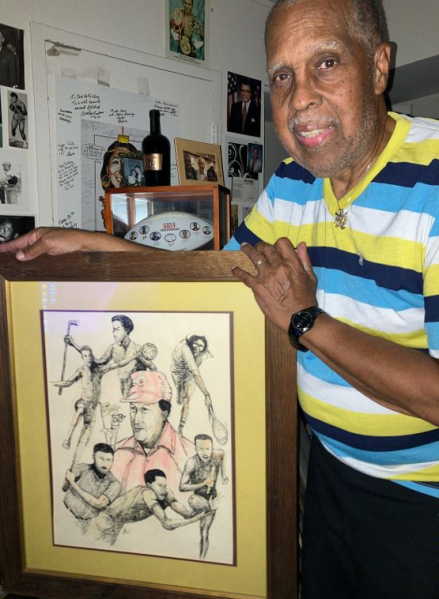
Artist George Nock: Spotlights DC sports legends, Coach Dave Brown in the middle calling signals-Elgin Baylor-top left, grabbing a rebound-Max Julien-top right (born Maxwell Banks) first serve, and Harold K. Bell-bottom photo-touchdown. The three high school athletes share several deep historical, and personal connections in the Nation’s Capitol.
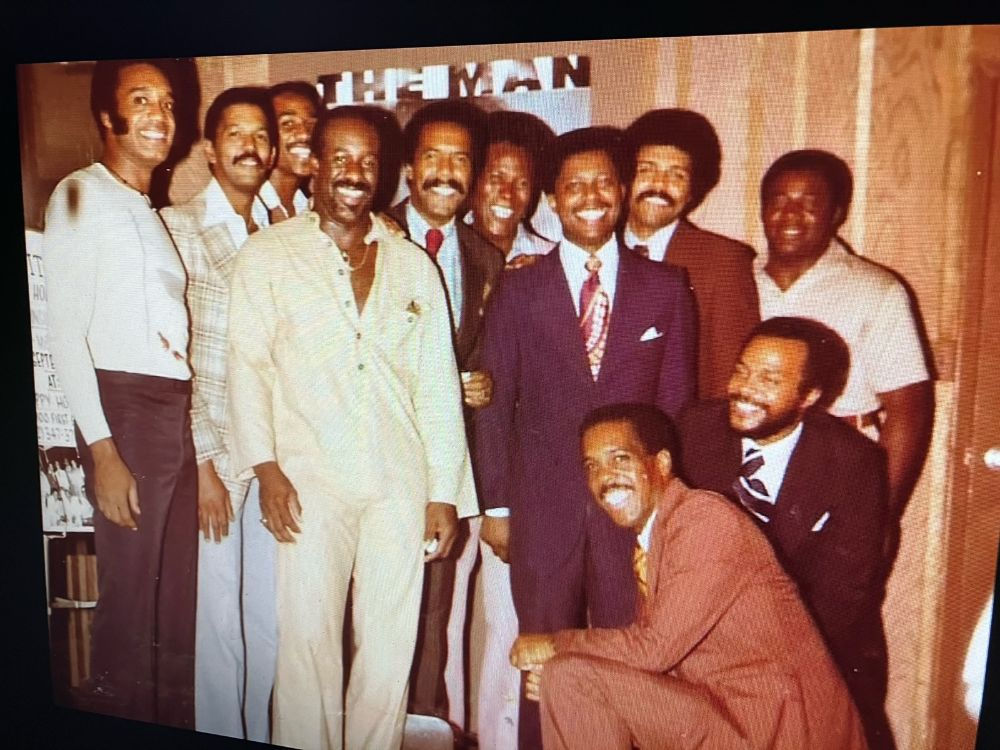
The Usual Suspects of Kids In Trouble and Inside Sports-Former NFL RB and artist George Nock is front and center.
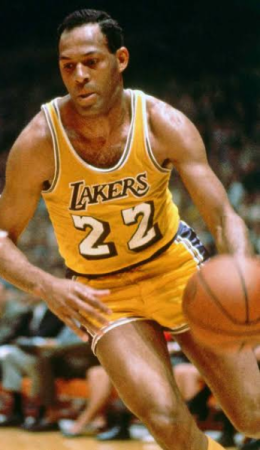
NATIVE WASHINGTONIAN-ELGIN BAYLOR
Elgin Baylor aka “Rabbit” and Maxwells Banks aka “Max Julien” attended Phelps Vocational High School. The legendary coach Dave Brown was their guiding light for their first two-years. He would move next door to the newly built Spingarn High School in 1953. Baylor followed him to Spingarn, but his status was questionable. Maxwell decided to stayed at Phelps and graduated in 1954. Baylor would eventually enroll at Spingarn and become a part of the first graduating class in the school’s history in 1954.
When there is a conversation about DC Basketball-it starts and ends with Elgin Baylor.
He was and is the God of high school, and playground basketball in Washington, DC. In the early 50s I was attending Brown Jr. High School on the landscape known as “Education Hill”, located at 24th and Benning Road NE. The anchor was and is today, the historic Langston Golf Golf Course at the corner of Benning Road and 24th Street NE. The golf course was the first thing I saw when I got off the bus to walk to Brown Jr. High.
There were four educational institutions on that 24th Street landscape: Spingarn High School-Phelps Vocational High School-Charles Young Elementary School and Brown Jr. High School. It was the most unique and a one of a kind “Educational Hill” in the United States.
Despite being on “The Hill” in the early 50s, I never got to see Elgin play in a high school basketball game. Coach Brown made the gym off-limits to spectators. My focus was on the football team that practiced outside everyday depending on the weather. My heroes were RB George Carlos and my childhood friend, QB Donald Wills. I would sit on the hill and watch practice everyday.
I did see Elgin play when the ‘Big Boys’ gathered at Bannecker Recreation Center and Parkview Playgrounds on the weekends in NW DC.
The ‘Big Boys’ was Tarzan Spencer, Warren ‘WW’ Williams, Earl Lloyd, the brothers, Willie and Frank Jones, etc. This was playground basketball at its best-no harm, no foul. Earl Lloyd would travel from Alexandria to play at Parkview. His brother lived blocks from Parkview.
I was there at epic confrontation at Kelly Miller playground (my home court), when Elgin Baylor and the great giant Wilt Chamberlain faced off for the very first time in their basketball careers.
My high school hero and friend, Dave Harris was a former DC Super Star athlete. He was Wilt’s college roommate. He convinced Wilt to stay over at his home for a couple days after the long drive to DC from Kansas University.
He also convinced Wilt that he could arrange for him to connect with “Rabbit” aka Elgin Baylor. The two had never met, but there was conversations about the DC phenomena during the ride to DC. Wilt agreed to meet Elgin for a workout, the workout led to the Kelly Miller playground. It was he playground game that was heard around the basketball World, especially on the East Coast.
Elgin Baylor, held every high school scoring record in the DMV. He was the first Black high school player named to the First Team, All-Metropolitan Washington Post basketball team in 1954.
Every where he played, he dominated the basketball courts from, the University of Idaho, to Seattle University. The most important he could not win was an NBA Finals Championship. He played in 8 finals and was 0-8.
The things I watched him do on a basketball court. His Hang Time was off the charts, it actually looked like he was walking on air.
We did not become associates/friends until he married his first wife Ruby, and they moved into Mayfair Mansion in NE DC. My Parkside Housing Project was located directly across the street from the Mayfair Mansion Community.
I was still in high school going to hell in a hurry, when I discovered Elgin was working for the DC Recreation Department during the NBA off-season in the evenings. His designated playground was Bannecker where he once ruled the courts.
Every evening around 4:30 pm, I would wait on the corner of Hayes Street and Kenilworth Avenue for Elgin to drive by. I would hitch a ride to the Langston Golf Course on Benning Road. He would let me out and I would walk to the basketball court located directly across from my Brown Jr. High School.
My last ride with him that summer, we talked about what was next for me. I told him I to return to school because I came up short on credits to graduate. I told him I worn his No. 22, he looked at me and asked, “Can you play?” My response, “You bet I can!”
I did not tell him, I got kicked off the team for shooting too much. His last words, “Listen to Coach Brown, don’t be a knucklehead.” I did not tell him, Coach Brown was not coaching basketball. He was the football coach.
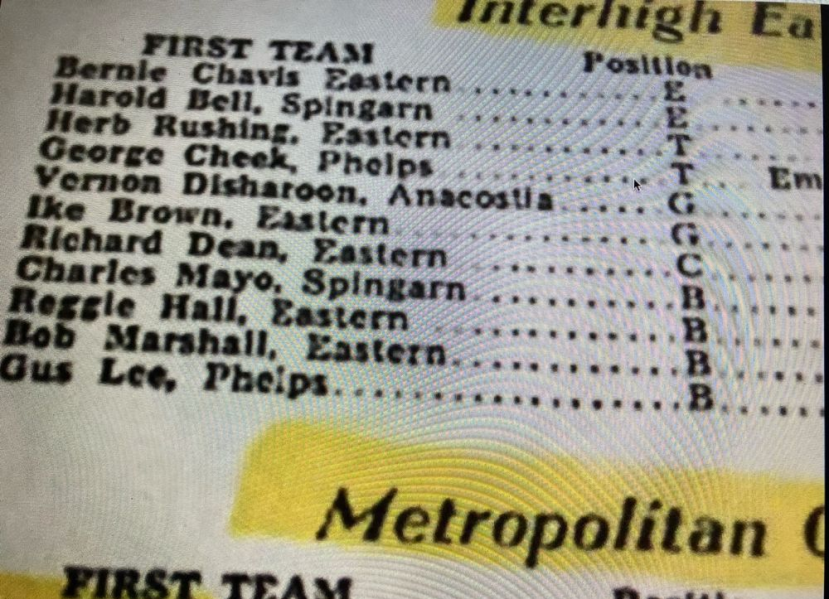
In 1958 I did listen to Coach Brown long enough to make First Team All-East End. I led all ends in touchdowns scored. We lost the East by a half-game (a tied game 0-0 game against our rival Phelps) Anacostia backed into the championship.
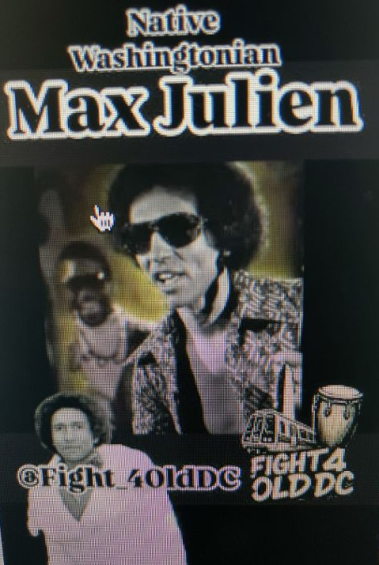
NATIVE WASHINGTONIAN-MAX JULIEN
Maxwell Banks was a star basketball guard at Phelps High School in Washington. DC. He and Elgin Baylor were the dynamic duo while playing for the legendary coach, Dave Brown. Coach Brown moved to the newly built Spingarn High School in 1953. Elgin followed, but his status was questionable. Maxwell stayed at Phelps and graduated. He enrolled at Howard University, majoring in drama. He then moved to New York City and Broadway came calling. His next move would be Hollywood. It was here he would become a star in the Black exploitation films. He adopted his stage name-Max Julien. His most successful movie was “The Mack.” He was also a co-star with actress Vonetta McGee in the 1974 western, Thomasine & Bushrod. Gordon Parks Jr. was the Director. The movie was the Afro-American counterpart to Bonnie and Clyde, the notorious duo bank robbers played by actors, Faye Dunaway and Warren Beatty. Despite the fame and success, Max never forgot his hometown of Washington, DC.
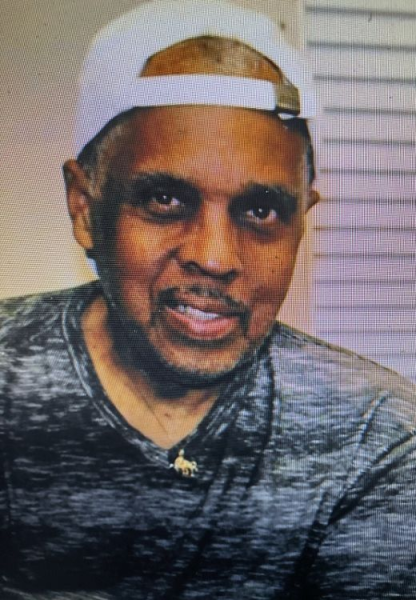
NATIVE WASHINGTONIAN-HAROLD BELL
- Lifelong Friendship & Community Legacies: I made my name nationally known as a pioneering D.C. radio sports talk show host. Through my work on Inside Sports, I frequently documented and celebrated the athletic and cultural legacies of both Elgin Baylor and Maxwell Banks aka Max Julien. Poems, videos and stories of my explores have become folklore in DC history.
- Elgin Baylor, Maxwell Banks, and Harold Bell all owe their success to Coach Dave Brown. Bell says, “I remember, the most important lesson Coach Brown ever taught me was, “When you help others, you help yourself.”
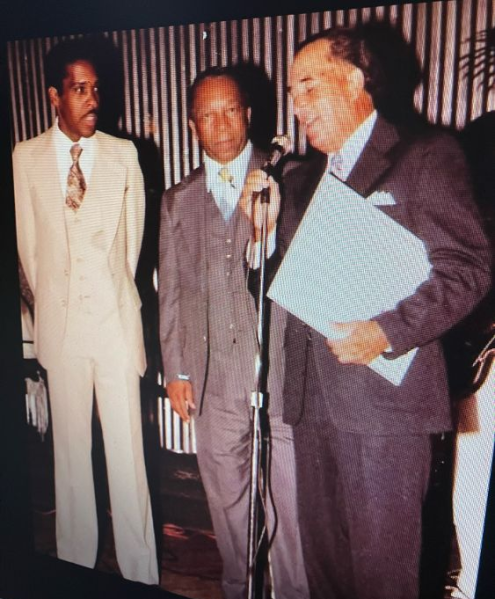
TRIBUTE: COACH DAVE BROWN, “SMELLING THE FLOWERS” WITH DC MAYOR WALTER WASHINGTON
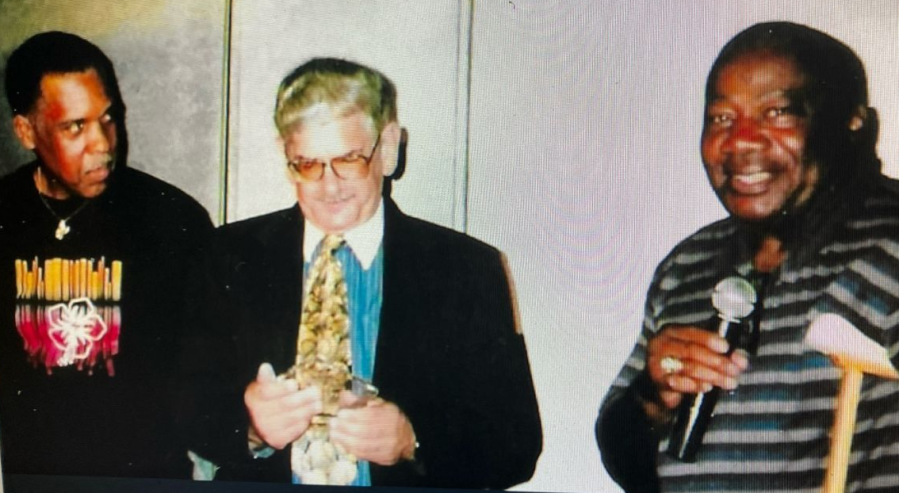
1989 NFL HOF inductee Willie Wood says, “Thank you” to Dick Heller of the Washington Times Newspaper. Dick, receives “The KIT and Inside Sports Man of the Year Award”, as I look on. Heller’s push to get Willie inducted was second to none.
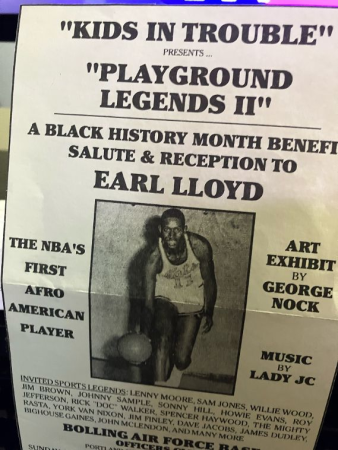
When Alexandria, Virginia native and next door neighbor Earl Lloyd cried “Foul” and un-sportsman like conduct by the NBA in 2000 regarding his failure to be inducted into the NBA HOF. It was an issue of his NBA contributions being overlooked and ignored.
He was the first Black on a starting five for the Syracuse Nationals NBA Championship team in 1950. He was the second Black Head Coach for the Detroit Pistons. In 1964 he was bypassed by as the head coach for a 24-year old white NBA player/coach.
Lloyd was sitting on the bench as an assistant coach for the Detroit Pistons in 1964. The GM Don Wattrick named 24 year-old Dave DeBusschere “Player/Coach” making him the youngest head coach in NBA history. if the Pistons had been an Equal Opportunity Employer, Earl Lloyd would have been the first black head coach in NBA history, not Bill Russell.
When Lloyd called asking if I would campaign for his induction into the NBA HOF, he remembered I campaign for Willie Wood’s into the NFL HOF.
I called my friends, sports columnist, Dick Heller, Civil Rights advocates, Congressman John Lewis, and NBA legend, Red Auerbach of the World Champion Boston Celtics for an ‘Assist.’ The Boston Celtics were the front-runners in the Civil Rights struggle in pro sports.
Boston Celtic owner Walter A. Brown was the owner of the Boston Celtics when Red drafted Chuck Cooper in the second round of the 1950 NBA draft. When someone pointed out to Brown that Cooper was black, Brown famously replied, “I don’t care if he’s green, striped, or polka-dotted. The guy has ability, and we need him.”
While I wrote extensively about Red Auerbach, Walter Brown, and the Boston Celtics’ groundbreaking role in NBA civil rights history—I frequently defended their legacy against claims that the franchise was racist—Washington Post sports editor, George Solomon allowed me to pen my first free-lance column for the paper defending the Boston Celtics Civil Rights history.
In my writings (such as my commentary titled “Racism in Boston Equal to Racism in Mississippi: Red Auerbach, Where Have You Gone?”). I addressed fans and critics who labeled the Celtics as racist by highlighting their history in Civil Rights.
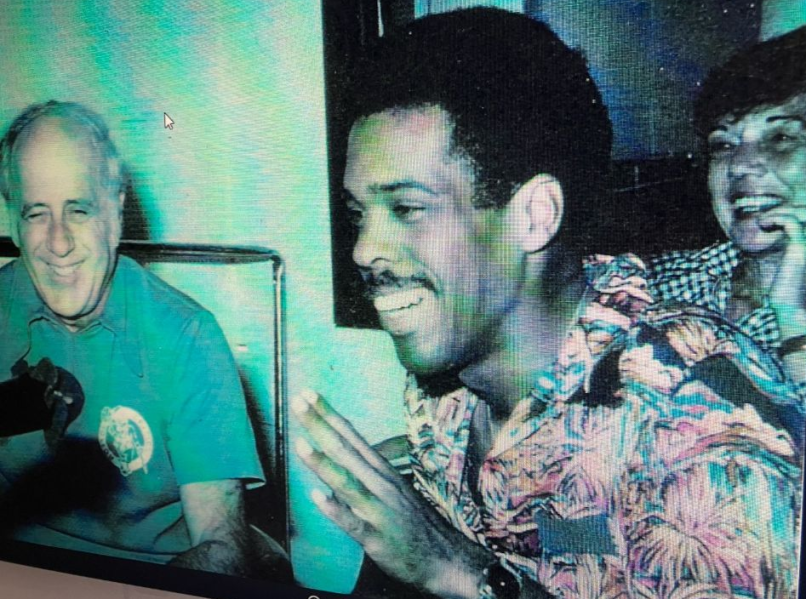
RED & DOTIE AUERBACH ENJOY TALKING WITH TENNIS ICON JIMMY CONNORS ON INSIDE SPORTS!
Boston Celtics Civil Rights History: First All-Black Starting Lineup (1964): Auerbach fielded the NBA’s first all-Black starting five (Bill Russell, Sam Jones, K.C. Jones, Willie Naulls, and Tom “Satch” Sanders).
First Black Head Coach (1966): Auerbach named Bill Russell as player-coach, making him the first Black head coach in major American professional sports history. Russell was first because the Detroit Pistons were not an Equal Opportunity Employer.
I frequently emphasized that while the city of Boston struggled with severe racial tension, Auerbach and the Celtics organization were trailblazers in human and civil rights who judged players strictly on ability and character, independent of race.
Lloyd was sitting on the bench as an assistant coach for the Detroit Pistons in 1964. The Piston fired head coach Charles Wolf and GM Don Wattrick named 24 year-old Dave DeBusschere “Player/Coach” making him the youngest head coach in NBA history.
Earl Lloyd was named head coach of the Detroit Pistons in 1971, making him the first non-playing Black head coach in NBA history.
He did not last long, his tenure lasted into the start of the following seasons:
In the 1971-72 season: He coached 70 games during his first full season, finishing with a 20-50 record: 1972-73 season-he was relieved of his duties 7 games into the season after a 2-5 start. In total, his head coaching career with the Pistons lasted 77 games across parts of two seasons, yielding an overall record of 22–55.
Earl, and his first wife Gwen and I were close friends. He was a frequent guest on Inside Sports after his NBA career. In several off the record conversations with both. They revealed that Dave Bing and Bob Lanier sabotaged his coaching career by their lack-luster NBA performances.
Ray “Chink” Scott took over after Lloyd was fired. Scott and Earl were close friends, he only took the job with Earl’s approval. There was an immediate turn around by the team. Scott, was named the “Coach of the Year” in the 1973-74 season. The honor made him the first Black coach to win the award.
I found it ironic, Bing was not a part of the campaign for Earl’s induction into the NBA HOF. He was in DC but was nowhere to be found during the NBA All-Star Weekend. His reach-back efforts were always suspect even when he was there for me.
Especially, for the basketball clinic in Lloyd’s hometown of Alexandria, Virginia. The clinic was held at the Charles Houston Recreation Center with hundreds of kids participating. Bing’s partner Bob Lanier was front and center representing the NBA and Commissioner David Stern.
Red Auerbach, Sam Jones, KC Jones, Al Attles, Sonny Hill, Phil Chenier, and Earl Monroe all participated in the weekend events in honor of Earl Lloyd. at the Charles Houston Rec Center, and at the Bohemian Caverns on Black Broadway-U Street NW Corridor.
Earl Lloyd was finally inducted into the NBA HOF in 2003. Thanks to John Lewis, Red Auerbach, Dick Heller and Harold Bell. Dave Bing was his presenter at the HOF!
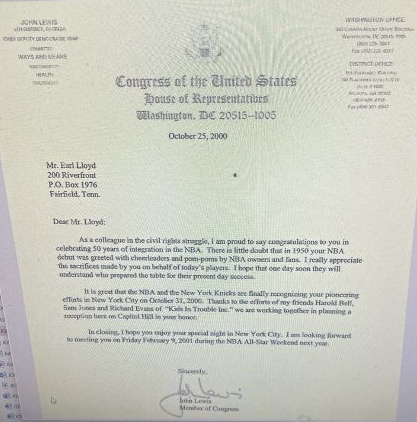
THANK YOU CONGRESSMAN JOHN LEWIS (RIP)
Baylor, Banks, and Bell are featured in classic Artwork: All three were commemorated together in a famous original artwork by former NFL player, and artist George Nock titled, “Dave Brown & His Boys!”, was highlighted with prominent D.C. sports figures and protégés connected to Coach Brown.
Princeville, North Carolina, holds a momentous place in American history as the first town chartered by African Americans in the United States. Its history is defined both by its cultural resilience and its ongoing battle with devastating environmental disasters.
The Event: After Hurricane Dennis pre-saturated the ground, Hurricane Floyd dropped over 15 to 20 inches of rain across eastern North Carolina.
The Breach: A 44-foot earthen levee built by the U.S. Army Corps of Engineers in 1965—designed to protect Princeville—was overtopped by the swollen Tar River.
The Impact: The entire town was submerged under up to 20 feet of water for nearly two weeks. Over 1,000 residents were evacuated, almost 1,000 homes were damaged or destroyed, and town records, schools, and historic structures were lost.
The push to Rebuild: Federal and state officials debated buying out the land and turning Princeville into an open space due to the extreme flood risk. However the residents firmly rejected federal buyout proposals.They knew that leaving Princeville meant surrendering the sacred land that their ancestors had carved out when they had nothing. With national media attention and community advocacy, the town chose to rebuild.
The Push to Rebuild: Federal and state officials debated buying out the land and turning Princeville into open space due to the extreme flood risk. However, residents firmly rejected federal buyout proposals. Leaving Princeville meant surrendering the sacred that their ancestors had carved out when they had nothing. With national media attention and community advocacy, the chose to rebuild.
In Washington, DC Kids In Trouble, Inc and Inside Sports recruited members, friends athletes, judges, media personalities, family and friends of his Board of Directors met at Union Station in Washington, DC for their annual Christmas Toy Party. Not only did we gather hundreds of toys for the children, we raised $5,000.00 for the town. Roy Jefferson and Sam Jones would rent a U-Haul and drive to Princeville to delivery the toys, clothing and the check.
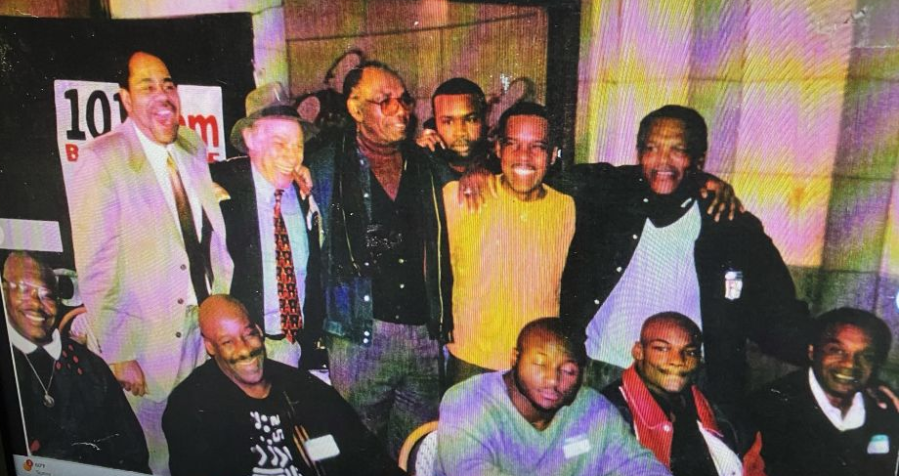
Kids In Trouble and Inside Sports: Proved for forty-five straight years without grants and loans “No One Was Too Tall To Stoop To Help A Child.” Standing tall during difficult times in our community-Butch McAdams (WOL Radio)-Bert Sugar (Boxing Historian)-Sam Jones (NBA) HB-Lenny Moore (NFL)-A seat at the table, NBA Jim Bad News Barnes NFL RB and artist, George Nock-Student Athletes, Lamont Jordan (Suitland High School)-Lawrence Wade (Eastern High School)-NFL Roy Jefferson-not in the picture-Jim Vance (WRC TV 4).
MUHAMMAD ALI-MAJOR MEDIA BLACK OUT-NOW YOU SEE ME AND NOW YOU DON’T!
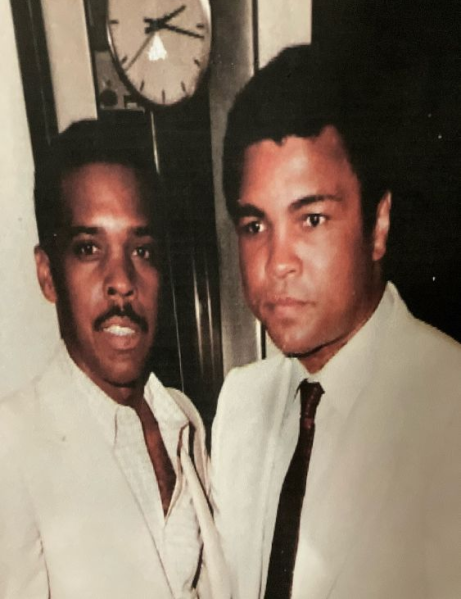
HB & ALI–BIRDS OF A FEATHER FLOCK TOGETHER!
Why did Muhammad Ali grant me the exclusive interview following the Rumble in the Jungle? It was all about a man keeping his word to someone that looked like him and thought like him. It was about a promise, he had made to me before the Rumble in the Jungle.
The untold story behind Ali’s exclusive never told story before his one on one interview with trailblazing pioneer sports talk radio host, Harold bell (Exception Dave Aldridge-The Athletic/NY Times)
- A Pre-Fight Promise: Ali and I first met on the campus of Howard University in 1967. He was on a tour of colleges around America to explain his opposition to the Viet Cong War. We did not meet agains until five years later in Cleveland, Ohio. He was fighting an exhibition for Children’s Hospital. The hospital was in jeopardy of closing its doors because of financial problems. It was 1972, and I had just found my pioneering radio sports talk show, Inside Sports. I was walking across the lobby of fight headquarters with Washington Times sports columnist, JD Bethea, and Attorney Harry Barnett. I had hitched a ride with them to the fight. When suddenly a loud voice boomed yelling, “Harold Bell, what are you doing this far away from home?”
- It was Muhammad Ali, you would have thought I was trying to hide from the police. Ali scared me, I all most peed on myself, Ali, scared me. This was the heavyweight champion of the whole wide world, I had not seen him in five years, and he recognized me from DC. All eyes were on me, and I was trying to hide behind JD and Harry. My response, “Hi Champ.”
- It was downhill from there. I started to attend his camp in Deer Lake, Pennsylvania. The camp was only a couple of hours ride from DC. I became a regular. One day after his workout, his brother Rahman approached me and said, the champ wanted me to join him on the rock during his press conference.
- My role, I would point out the members of the press who wanted to ask the champ questions-that was real special. In 1974, Ali was breaking camp to head back to Chicago to prepare for the showdown in Africa with George Foreman.
- One day we were sitting in the trailer having hot dogs and beans, and Ali asked me out of the blue, “Harold Bell, “What is that you want to do.” I was caught completely off guard, but I caught on real fast on what he was trying to say. My response, “I want to do a one on one interview with you for television.” He said, “Okay, why don’t you come to Chicago, and we can talk about it.”
- When I declined HIS invitation to travel to Zaire due to a fear of transoceanic flying, Ali promised that he would give me his first post-fight interview when he returned to the United States.
- Loyalty and Trust: Ali was known to value genuine connections over mainstream media prestige. Rather than calling major networks or high-profile broadcasters like Howard Cosell, Bryant Gumbel, or Ed Bradley, Ali kept his word to me, calling me directly after landing in New York City, five nights after he knocked out George Foreman. We shared Vision and Community Focus. This was a no-hold barred interview-nothing was off limits.
- We shared Vision and a Community Focus: Ali knew my work in Washington, D.C., as a radio host and youth advocate. During the hotel room interview, we bypassed typical boxing talk—spending only a couple of minutes on the fight itself—and used the platform to focus on broader social issues, philosophy, and “The Game Called Life.”
- Fifty-two years later, major media still has not forgiven Muhammad Ali for leaving them by the side of the road-with no news to report on the greatest fight of his pro boxing career. Fifty-two years later, I still remember that rainy Sunday night in October 1974 like it was last night. Ali lives on!
HAROLD BELL IN DC

