GOD’S COUNTRY: EASTLAND GARDENS NE DC!
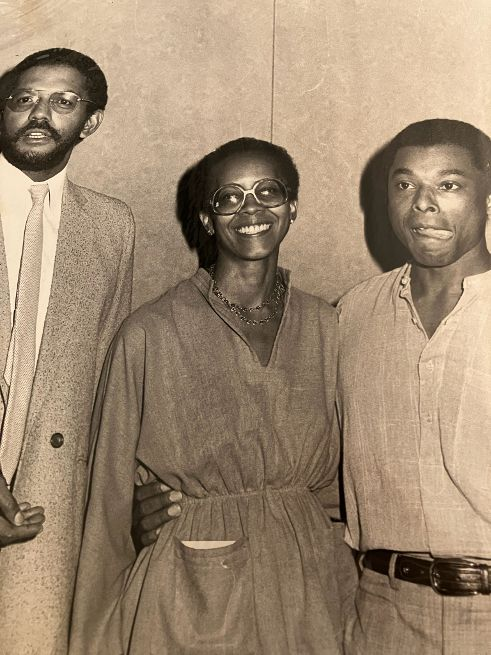
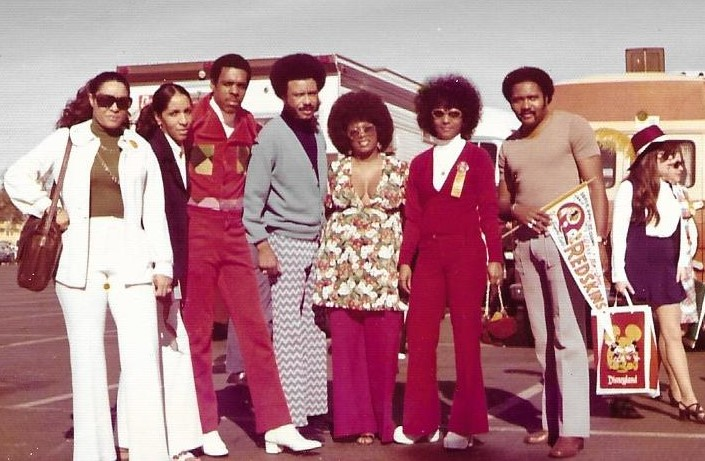
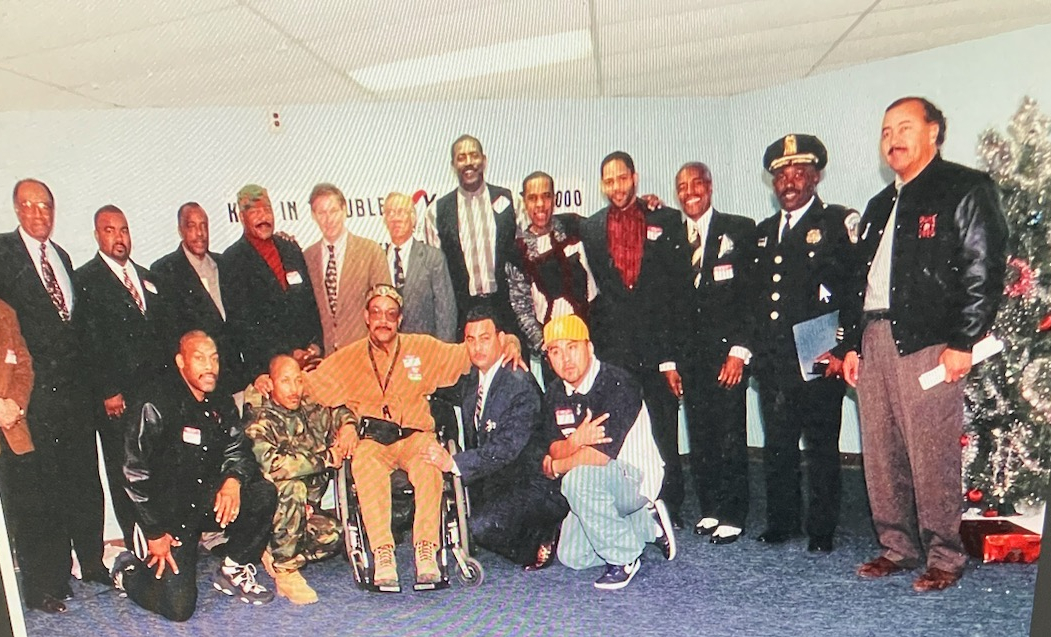
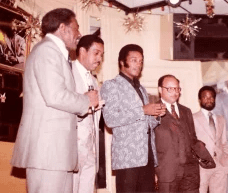
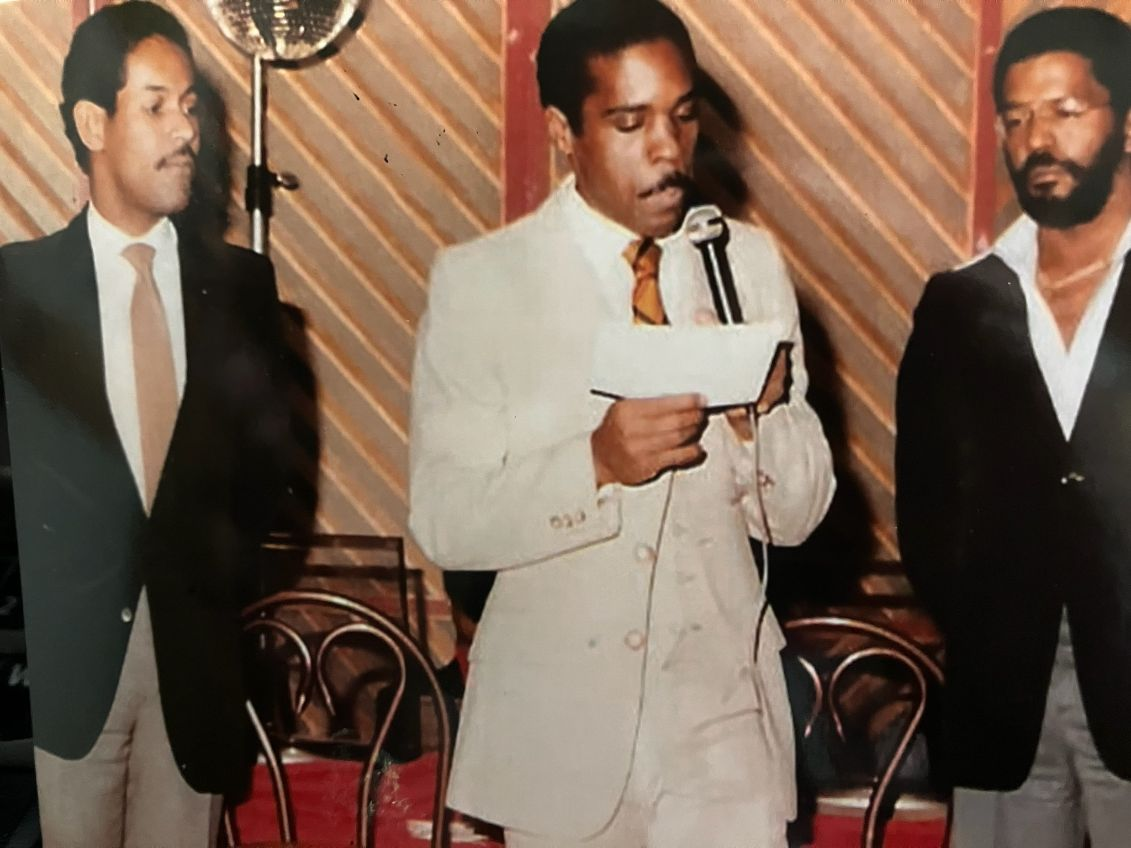
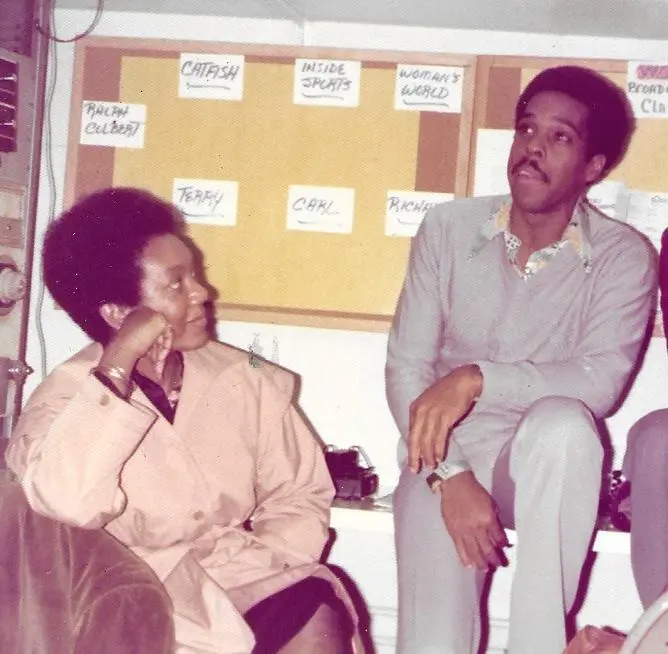
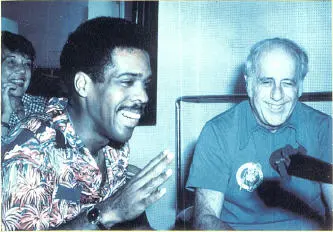
Margie B hanging with the late WRC TV 4 News Anchor Jim Vance and sportscaster Martin Wyatt at annual Kids In Trouble toy party at the Foxtrappe. She was also a model in my Inside Sports Celebrity Fashion Shows.
As a 4th generation Washingtonian I had the best of all worlds growing up in NE DC and having Eastland Gardens as an important part of my historical journey in this Game Called Life.
My father Alfred Bell, was a native Washingtonian and my mother Mattie Smith was born and raised in Sumpter, SC.
They became friends with benefits in the late 30s. I was born in Brooklyn, New York in Kings County Hospital. My mother was 6 months pregnant with me when she followed my father to the Big Apple.

The name on the certification of birth was-Male Belle.
It was three years later after hanging out with my Aunt Ertis in the Bronx, my mother and I took a midnight train home to DC. She found a one room shack and an outhouse on Douglas Street NE in Eastland Gardens near the Lilly Pond (now a historic landmark). We lived two blocks off of Kenilworth and Eastern Avenues NE, the highway led to 295 north to Baltimore/New York City.
This was the highway that my Great-Uncle Attorney William “Billy’ James, my mother and her siblings traveled when the KKK chased them out of Sumpter with nothing but the clothes on their backs.
Uncle Billy was the first black allowed to practice law in Sumpter. He wanted change and he wanted it yesterday. The KKK responded with a burn cross on his lawn and he got the message. He was inducted into the Black South Carolina Hall of Fame in 2000.
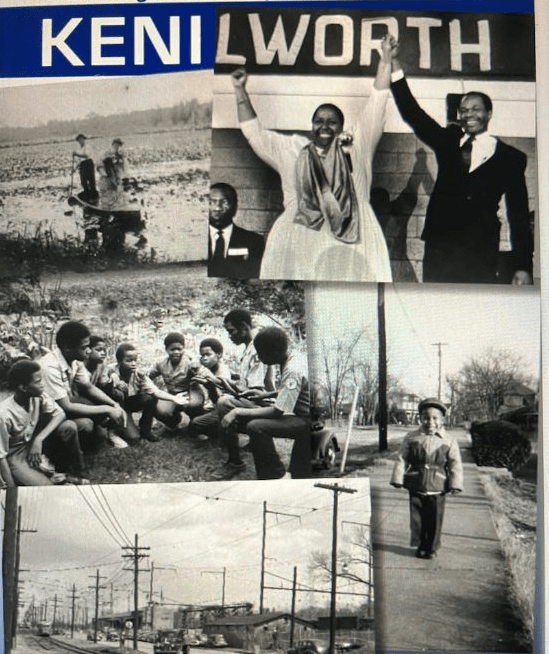
Douglas Street NE, Lilly Pond, The housing project run by community activist, Kimmy Gray and DC Mayor for life, Marion Barry.
One year later the shack went up in flames. Mommy B aka Mattie Bell, revealed to me years later, it was me or my dog Billy that accidently knocked the keroscene lamp over to start the fire.
The story, she left the shack early one cold January morning thinking I was asleep, my dog standing guard and the keroscene lamp to keep us warm. Thinking everything was secure she left for the corner store to pick up milk and bread.
On her return, fire trucks were all over the street. The one room shack was completely burned to the ground. She found me sitting on the cold ground crying with my dog Billy standing over me. The only other thing left standing was the outhouse.
Mommy B thanked the fire figthers for pulling me out of the shack. They said, “He was sitting here in the yard when we arrived with the dog.” To this day, I have no clue how I got out that burning shack–my dog Billy never said a thing!
It was off to Grandma Bell’s house, my father’s mother. There I would join my older brother Bobby. He had been dropped off by Mommy B two years earlier.
I have often said, “My Heroes were not Black athletes, my heroes were Black Women. None could throw a football 60 yards in the air, hit a baseball 400 feet, or shoot a jump shot. To me they were still Super Stars in The Game Called Life, the most important game being played in America today.“
The lessons learned at Grandma Bell’s house relating to God, church, family and the truth, has lasted me a life time. When Mommy B came to reclaim her boys, Grandma Bell made her an offer she could not refuse.
She said, “Mattie, you can take Harold and Earl, I will keep Bobby.” Earl and I cried our eyes out, we did not want to leave Grandma Bell-but she had spoken case closed. It would be years later I would learn why she favored my brother Bobby. He was the first grandbaby to cross the doorstep at 5539 Jay Street, NE. Grandma had become attached to Bobby and refused to let go. He would later claim she was his mother.
Once Earl and I reached our new home in the housing project in Parkside we were good, leaving Grandma Bell’s house felt like a jailbreak. No more curfews, no church during the week and a break from Aunt Sara’s backhands when we crossed the lines and forgot “The Rules of the House.”
We were still in the zip code of Eastland Gardens and in blocks of Kenilworth and Eastern Avenues. Our new address was 715 Kenilworth Terrace NE. My mother’s cousins (they were like sisters) lived within blocks. My favorite, Aunt Doretha lived 5 minutes away in Mayfair Manions Apartments and Aunt Evelyn aka Miss B lived 10 minutes away at 1204 42nd Place in Eastland Gardens. I had come full circle without leaving the zip code of all my early heroes.
Black Eastland Gardens has been the best kept secret in DC for decades. Historians claim black architechs built the first homes in 1928-I think it was much earlier.
Mommy B was a graduate of Cardozo High School, home of the Clerks. After graduation she was hired at the Government Accounting Office in downtown DC as a clerk typist. The job made her eligible to apply for public housing in the District of Columbia.
My cousins, Roland (Aunt Doretha) and Tommy (Miss B) were my “Big Brothers.” Earl and I were around 7 and 8 years of age when Mommy B came to claim us at Grandma’s house in 1945.
Eastland Gardens, Parkside, and Mayfair were truly “A Village.” Our mother was a single parent in every sense of the word.
She worked an 8 hour job, came home cooked dinner, made sure we kept up with our school work, and checked on our school attendance. This was lot for single parent with two knuckleheads like me and Earl.
We were lucky we came along during an era our next door neighbors were our Naval Thomas Elementary teachers, postal workers, lawyers, nurses. They made up our Village. They had no problem knocking on your door to let your mother know there was a problem with her child.
They were “The First Neighborhood Watch aka Snitches.” They enhanced the lives of untold children in the projects.
Mommy B’s “Good Government job didn’t last but 2 years before she lost it. Losing her job had something to do with, “The last hired, the first fired.”
Mommy B kept it moving, she went on welfare, it was called “Relief” during the 40s and 50s. She was an independent soul and marched to her own drum beat. She dispised the welfare system and its restrictions.
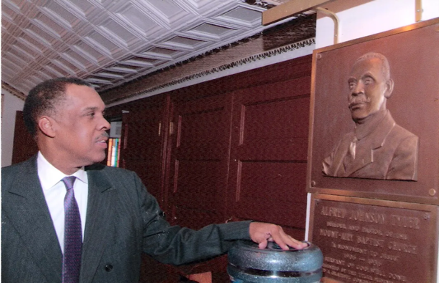
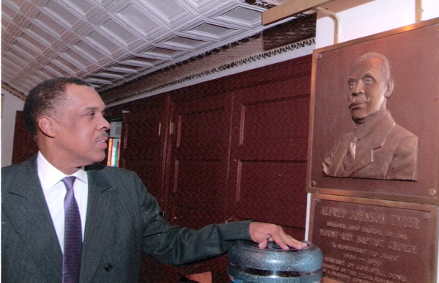
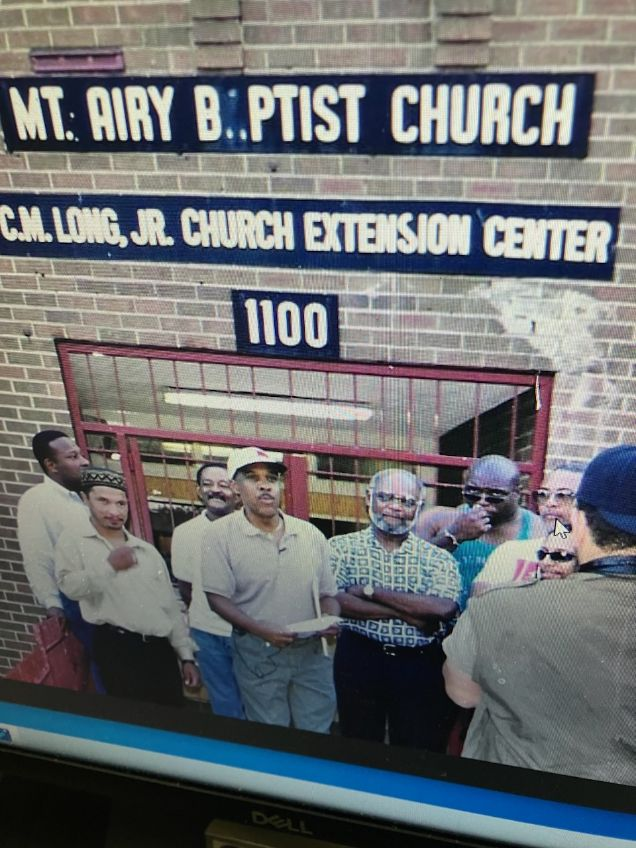
These were some difficult times, Grandma Bell and Mount Airy Baptist Church help keep us afloat. The church family was truly a blessing. My Great-Grandfather, the Rev. Alfred Tyler Johnson laid the first brick to build the church in 1893. The church is located at North Capitol and L Streets, NW in the shadows of the United States Capitol.
The Tyler House located two blocks north of North Capitol Street and New York Avenue is a residence for Senior Citizens. It is named after my Great Uncle, the Rev. Earl Tyler. After leaving Grandma Bell’s house, the church was still our sanctuary. Grandma Bell was the matriarch and the Boss of Bosses!

I am paying homage to my Great-Grandfather in the church lobby. Grandma Bell and grands L-R Cousins, Brenda, Ronnie & Tommy ‘Red’-Top Row: Cousin Carole-the brothers HB-Earl and Bobby Bell.
Things got kind of rough for Mommy B after she loss her job, despite Welfare restrictions, she bounced back. Her business instints kicked in as an entrepreneur. She came from a family of educators, and great cooks. Cousins Miss B, Dotie, and sister Mary all were at home in front of a stove.
First, Mommy B started selling chicken, chitlins, and fish dinners on the weekends. Her potato salad, candied yams and collar greens were the talk of the neighborhood. On Fridays and Saturdays folks in the neighborhood started to line-up at our door as early as 4 pm. Earl and I had to come home from school to help her out.
She took it to the next level and the card games of poker and pittyy-pat would follow. Mommy B would cut five to ten cents on every dollar won in the card game. The nickle and dimes added up and things got a lot easier. She even sold half-pints of bootlegged wiskey.
It got so good her luck extended to playing and hitting the street numbers. She could dream a number one night and hit it the next day or the day after.
A number backer who did not live in the neighborhood by the name of Billy Jackson, he lived on Sheriff Road on the other side of the railroad tracks. He would drive to the projects almost everyday to take the number bets from the residents. Mommy B would frequently be his biggest winner.
Mr. Jackson, one day offered my mother a part-time job she could not refuse-her own number book for the neighborhood. She would get a percentage of every winning bet and a percentage of the numbers played. She took the job. The money was coming in from everywhere, my dead beat father even showed up a couple times to help her.
I knew he was taking advantage of her kindness and forgiveness. She would help anyone out who was down on their luck, especially family.
With success and money comes envy and jealousy. Suddenly, the cops was raiding our home in the wee hours of the morning on the weekends. Earl and I would sit on the steps and cry watching our mother carried out of the house in handcuffs. She would say, “I will be back in the morning for church.”
Someone was snitching and mother called a moratoriam on the card games and bootleg liquor. The dinners continue to sell. She waited a couple of weeks and moved the games to Ms. Bee’s in Eastland Gardens, everything went well no trouble from the boys in blue.
It was back to Parkside for the next game of cards. Like clock work, the boys in blue were back. Mommy B waited another two-weeks for her next game, but this time when the cops came in, the card games in progress were Bid Whist and Pinochle-no money in sight.
I remember a sharp black detective, his name was Gulf. He ordered a chitlin dinner, with potato salad and greens to go-mother said, “No Charge.” He said, “Thanks Mattie” and walked out the door, that was the end of the card games at 715 Kenilworth Terrace.
I was a junior at Spingarn High School when mother had a mental breakdown. She would spent the next 30 years in and out of St. Elizabeth’s Mental Hospital.
My brother Earl, Billy and I went in three different directions. Our next door neighbor Ms. Winniefred Powell adopted Billy, Earl was sent to Cedar Knoll Receiving Home for juveniles. I was homeless sleeping from pillow to post. I was determined to continue my role as a student/athlete, inspired by my athletic accomplishments as an All-Around Athlete.
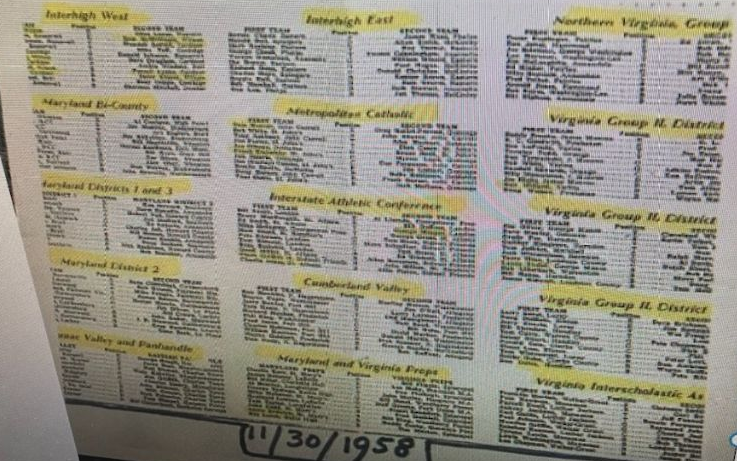
Selected to the 1958 First Team All-Star East Football Team for the DC Public High Schools
In Parkside I spend the nights in the home of Rudy, and Earl Thorpe, Sacky Lee, the Smiths, the Powells, all on Kenilworth Terrace. Some times I would have my meals with Sacky and his mother. Ms. Powell and her sons Gaylord and Sonny. They always had a place at the table for me and my little brother, Billy.
Enter Eastland Gardens, when there was nowhere else to lay my head. I would join my cousin Tommy in the basement of 1204 42nd Place, NE, Washington, DC 20019.
He would leave the basement door unlock for me. I would get up early in the mornings and catch the bus or hitch a ride to Spingarn High School to start my day.
The Billingsleys, aka Uncle Charlie and Aunt Evelyn (Mr. Bee and Ms. Bee) went along with the program. My cousins, Charlita and Margie were around the ages of 10 and 12 years-old. I was 17 years-old during those difficult times, but God was on my side.
In Parkside or Eastland Gardens I would join my extended family for dinner, if I got there in time after practice (football-basketball-baseball). They were truly my “Village.”
The recreation center at Naval Thomas Elementary School in my Parkside housing project, I developed my athletic skills. I owe Bootsy Harris, Nick Turner, Walter Brooks and Jaky Mathews, all great teachers and coaches for my success as an athlete and human being.
When I heard my high school coaches describe me as being a great athlete, I would just smile. There were some brothers in Parkside, I could not carry their jockey straps as an athlete.
They just never got an opportunity to showcase their skills at the next level, high school and college. There were circumstances beyond their control.
I grew up around my big cousins, Tommy Mathews and Roland Gaines. Through them I was able to enhance my athletic skills. Tommy was the fastest guy in Eastland Gardens. He and Roland would race other neighborhood guys from one end of the street to the other. We would shoot hoops and play baseball at the nearby playground.

My Uncle Charlie aka Mr. Bee was a part time comedian and truth teller/ my cousin Tommy kept me on my toes. They both drove home the importance of my education.
Sleeping and eating from pillow to post would come to an end once my favorite aunt and “Guardian Angel”, Doretha Gaines found me sleeping in her car in her Mayfair Mansions parking lot early one morning. Coincidently, Mayfair was just a 5 minute walk to Eastland Gardens, once I crossed the creek.
Aunt Dotie was my mother’s cousin, Ms. Bee’s sister and Roland’s mom. This pillow to post journey turned out to be a ‘Family Afair.’ Aunt Dotie invited me to live with her, Roland was working and had found his own place to live. There I was in the right place at the right time.
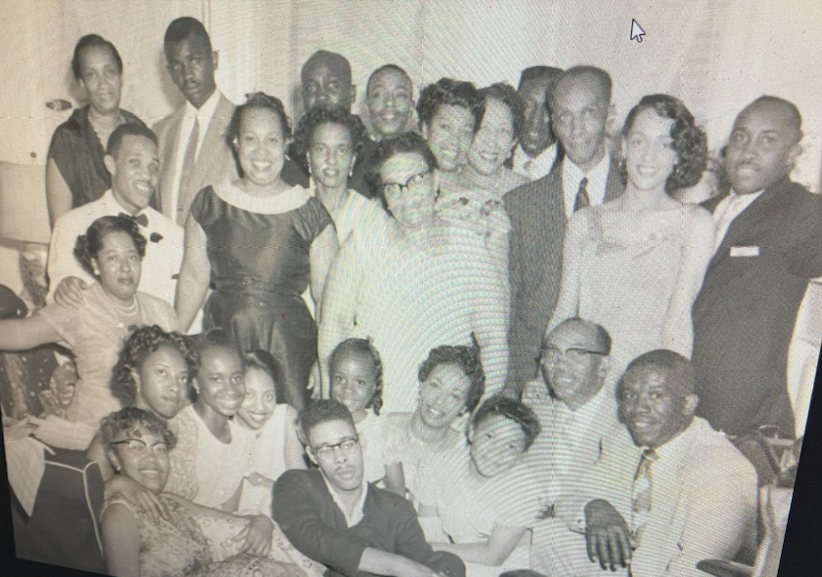
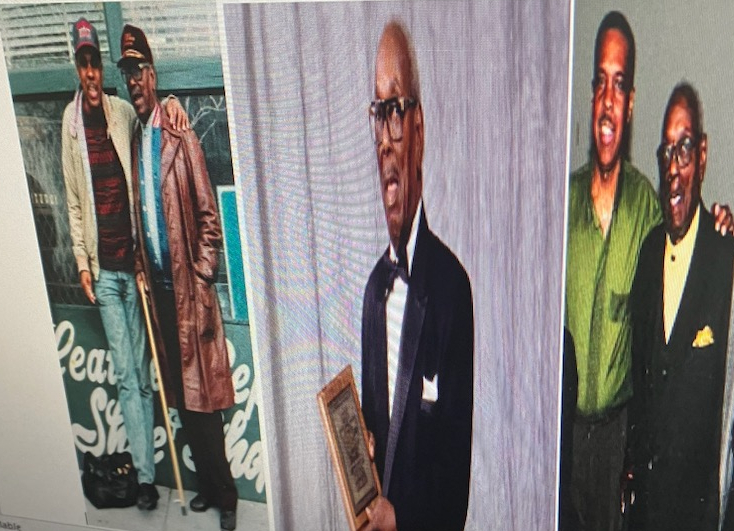
Birds of a feather flock together-THE JAMES FAMILY TREE hanging out at club 1204 in Eastland Gardens. Family matriarch, “Uncle Billy” (glasses) kneeling next to New York cousin, Frankie.
Against all odds I graduated from high school and earned an athelitic scholarship to Winston-Salem State University. I left before graduating to chase my NFL dreams-the dream never materialized.
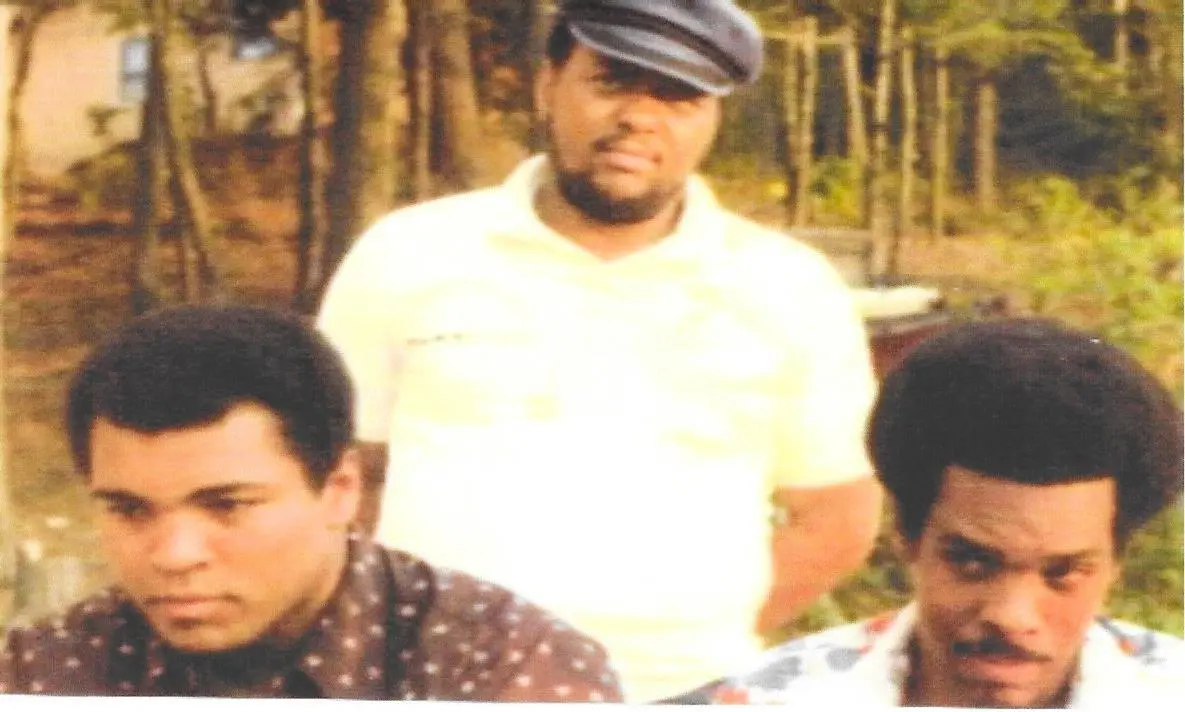
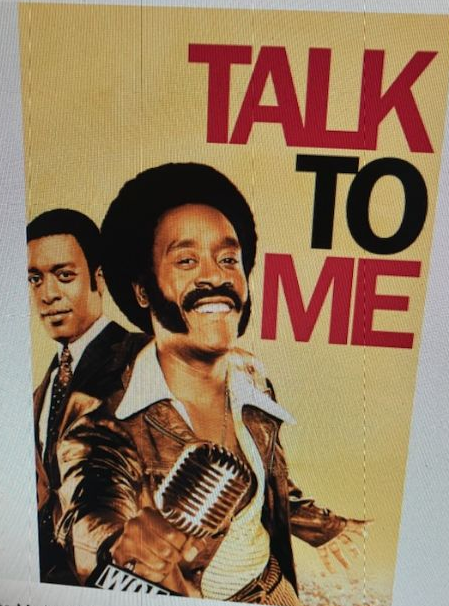
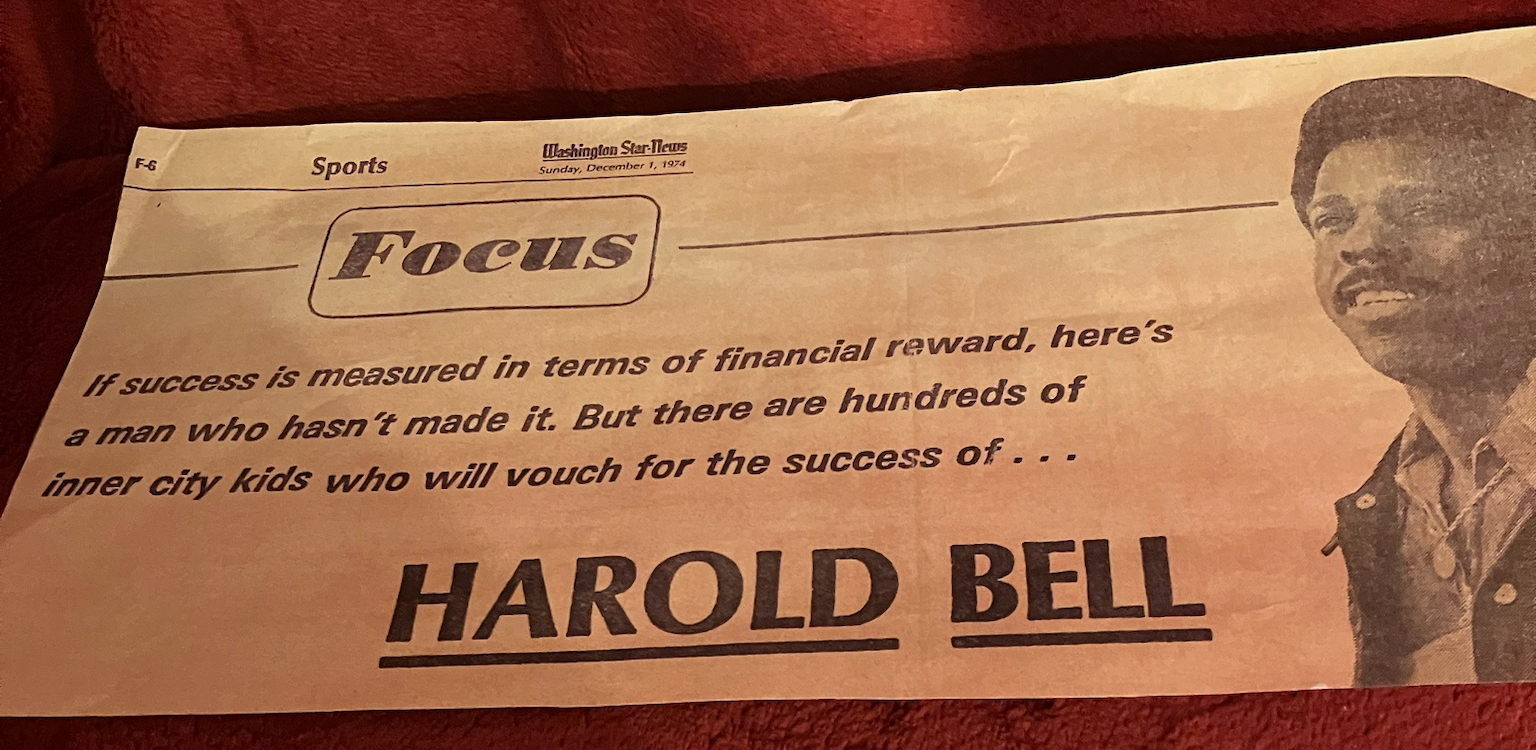
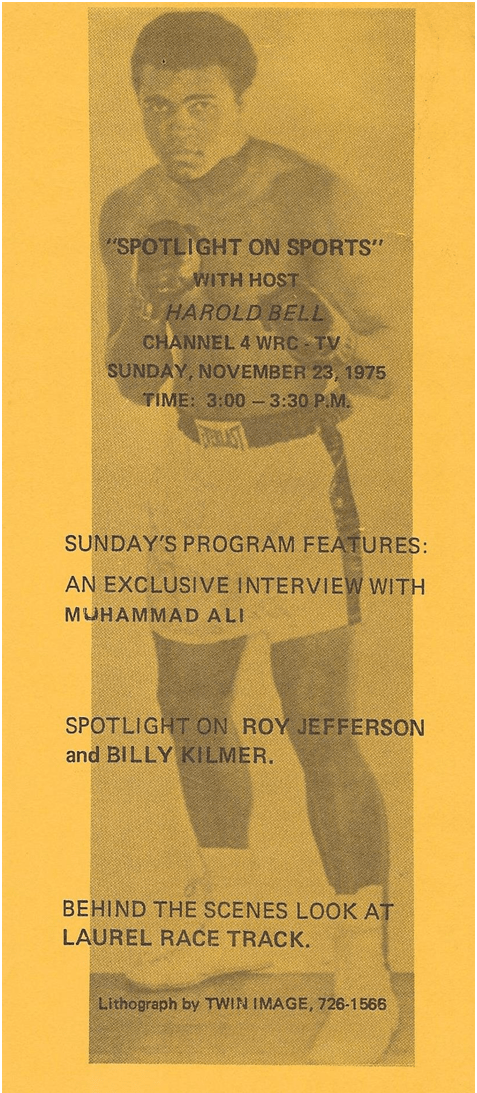
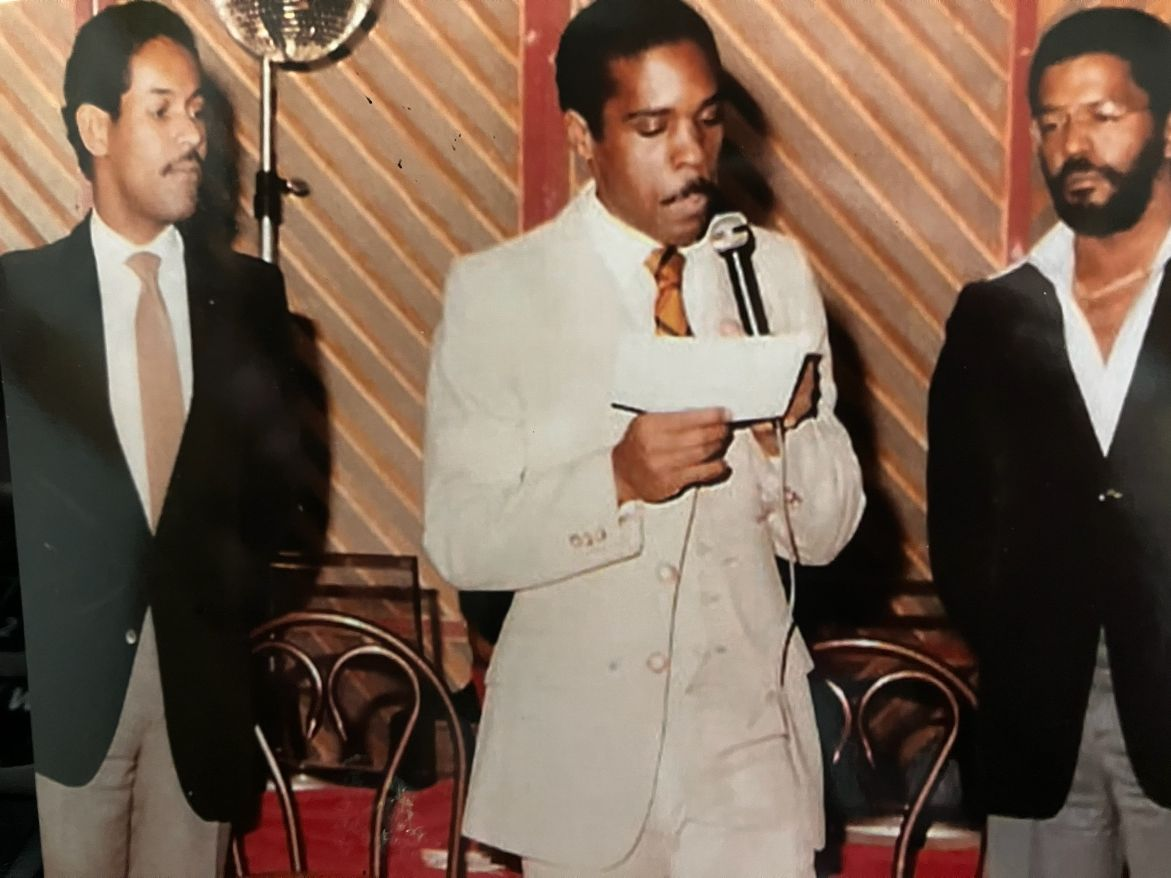
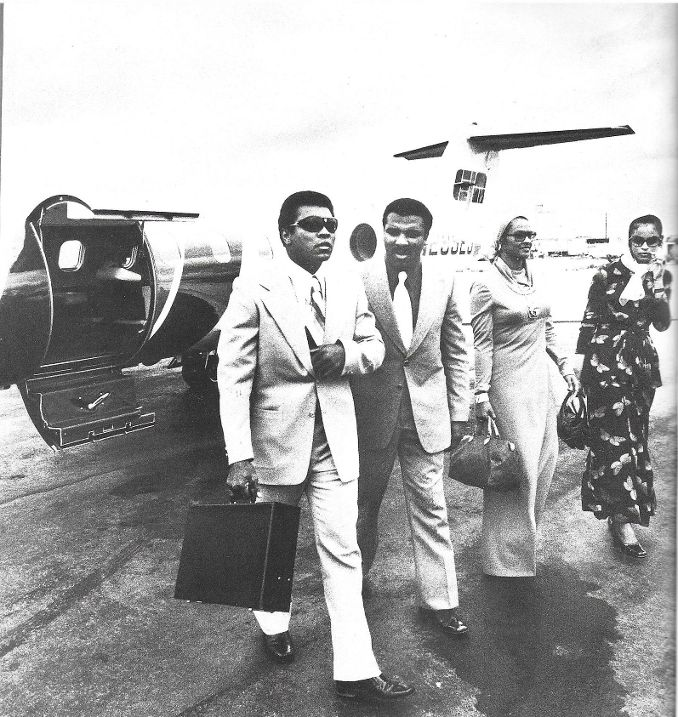
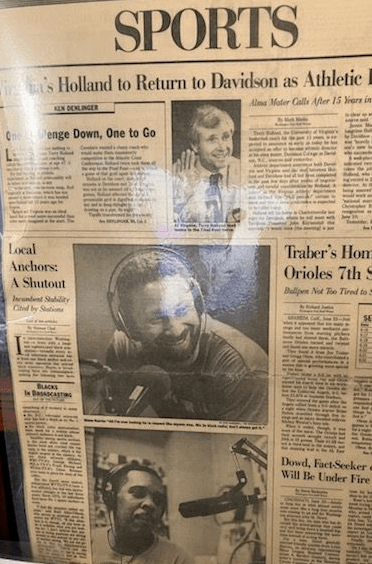
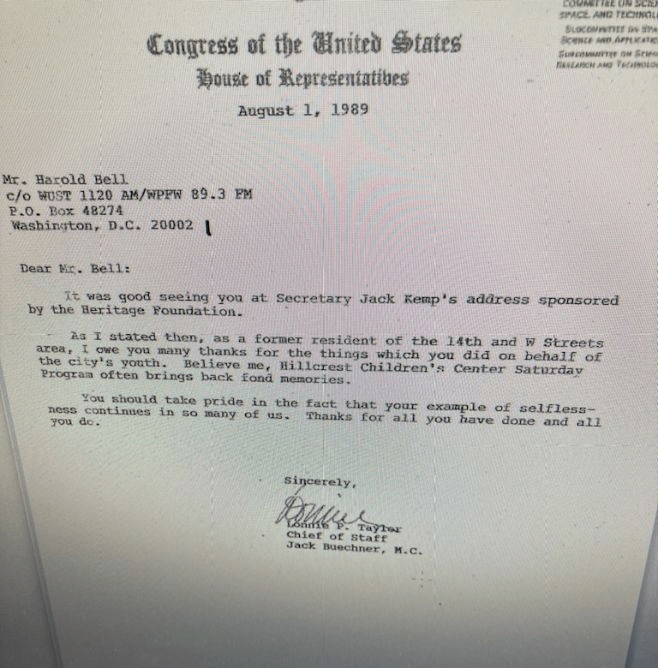
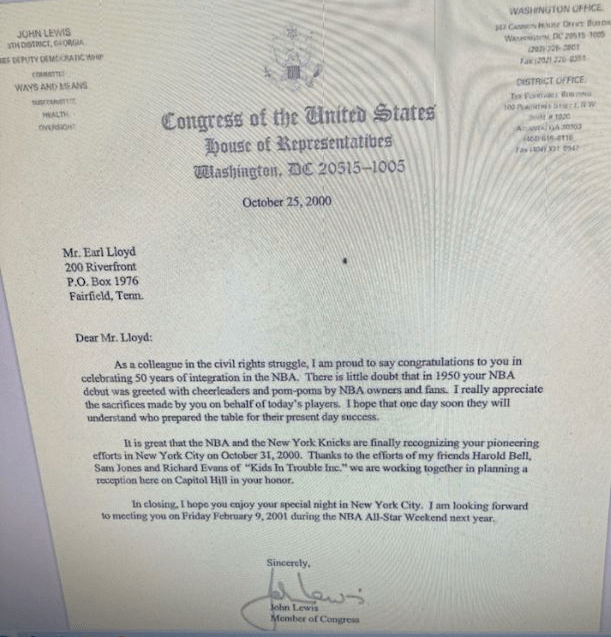
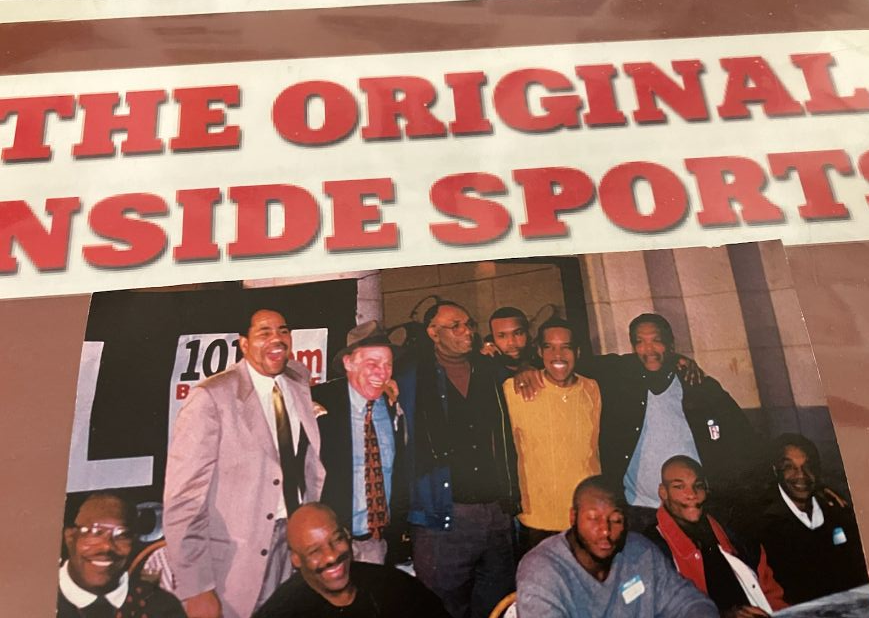
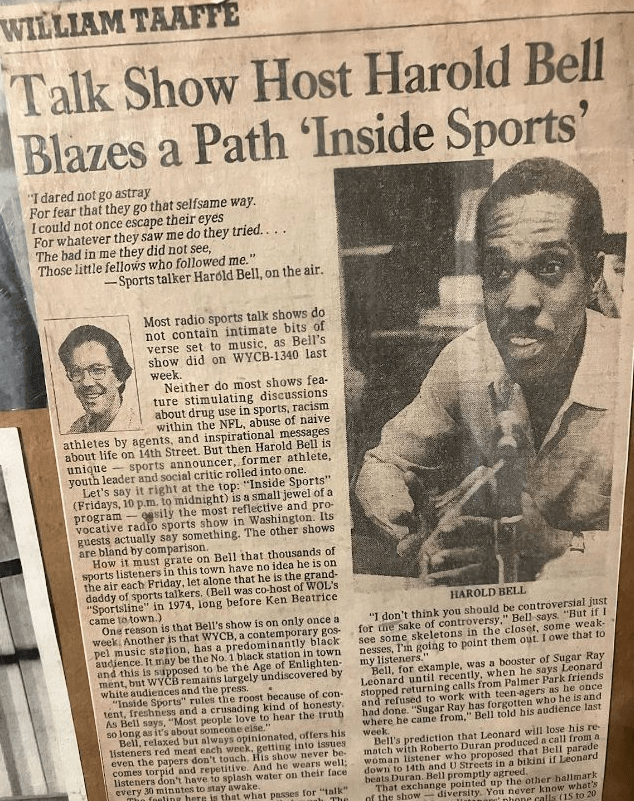
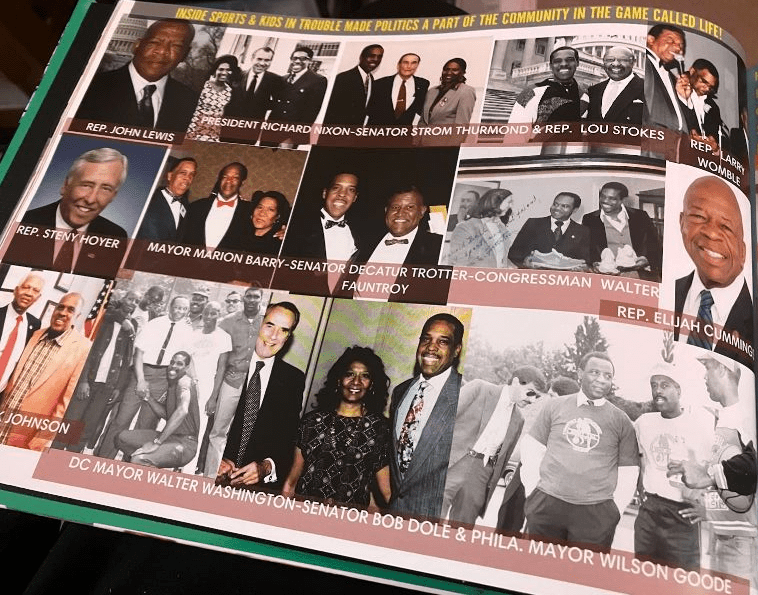
Instead, I became a Presidential appointee, and a legendary youth advocate working with youth gangs and at-risk children in the DVM. I also became a trailblazing sports talk radio pioneer, “Inside Sports” changied the way we report and talk sports in America and beyond. The Greatest, Muhammad Ali named me “The Chosen One” in sports media.

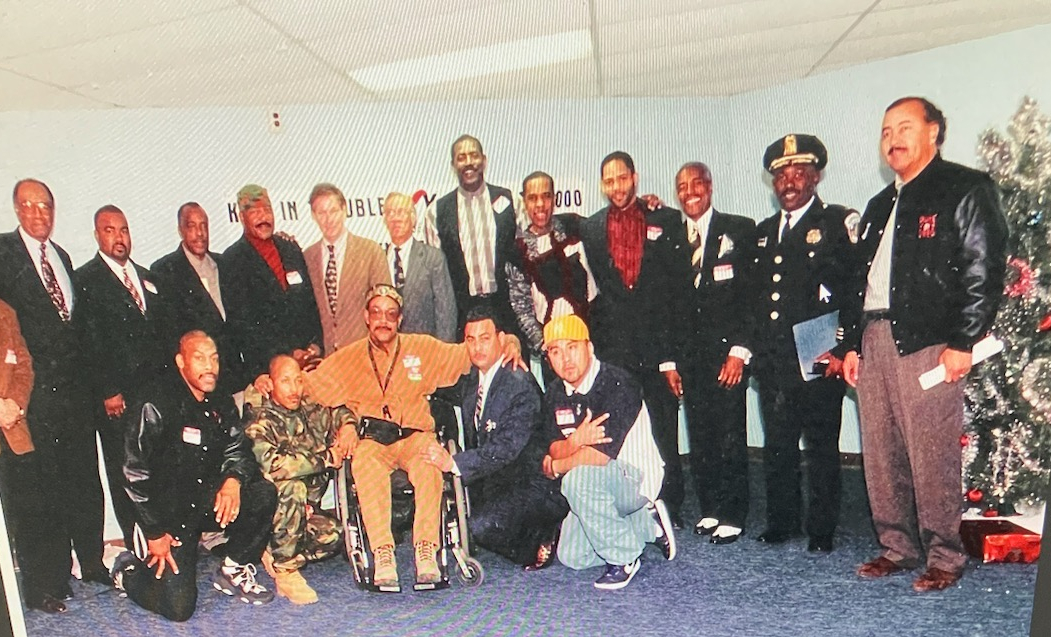
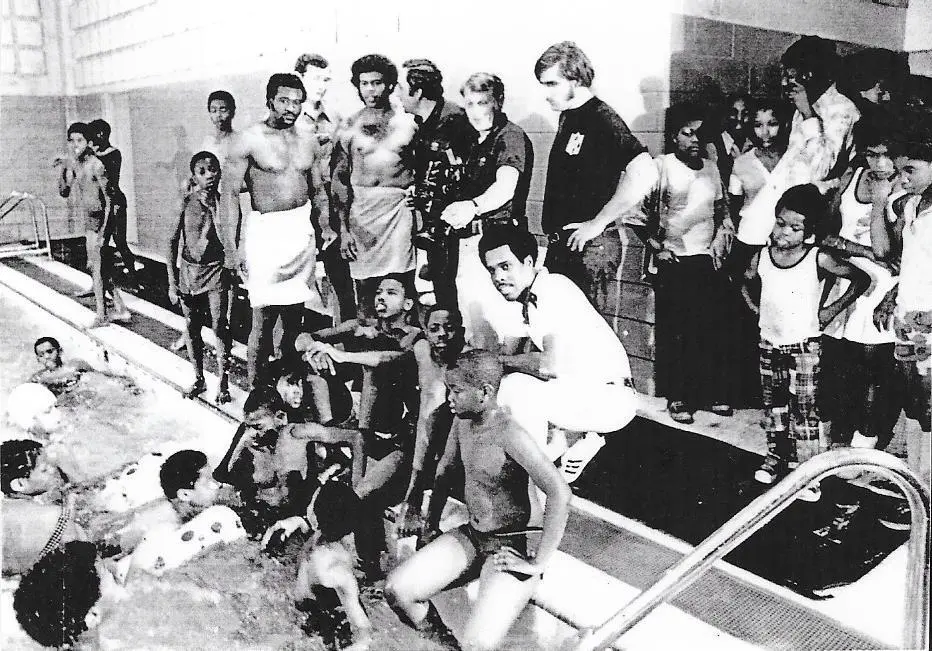
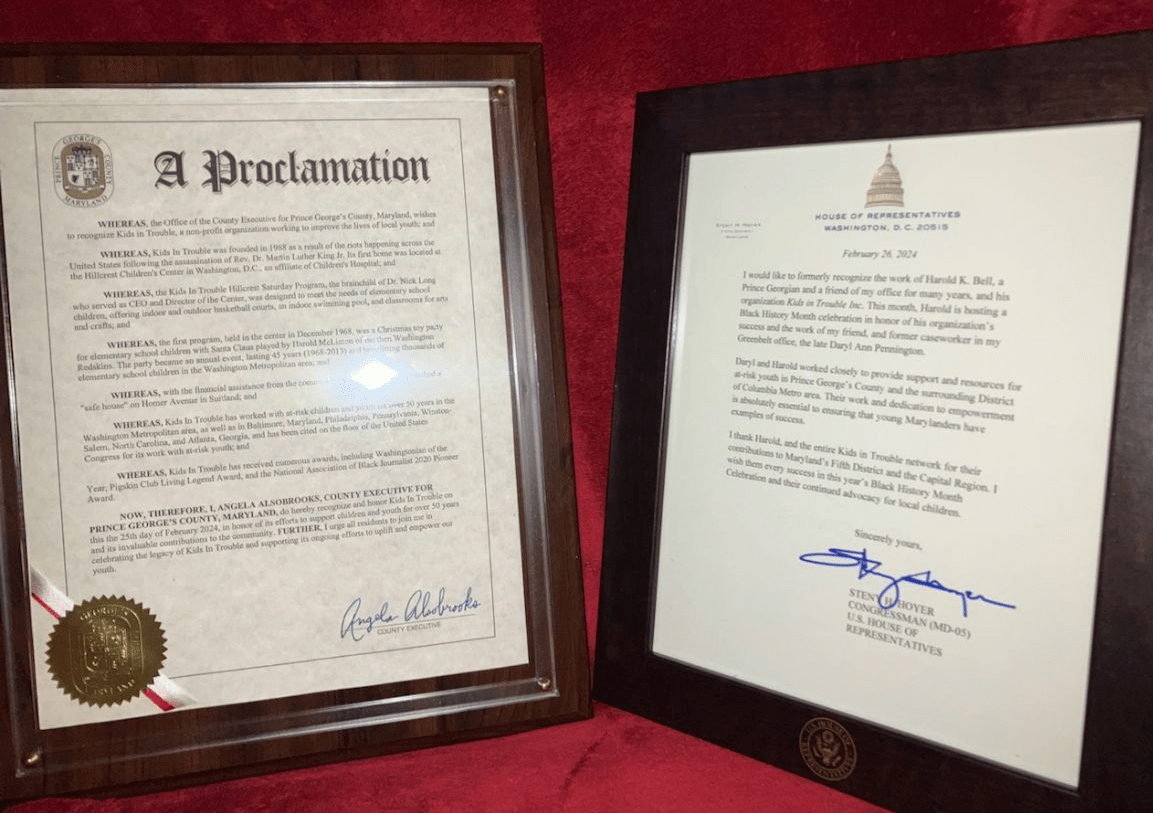
KIDS IN TROUBLE INC. 50+ years of CONSISTENCY saving as many children as possible (1974-2024)
I carried my little cousin Margie B via Kids In Trouble and Inside Sports along for the ride on my historical journey in this GAME CALL LIFE. Marching to my own drum beat-I am who I say I am!
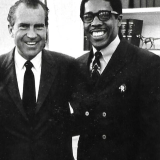

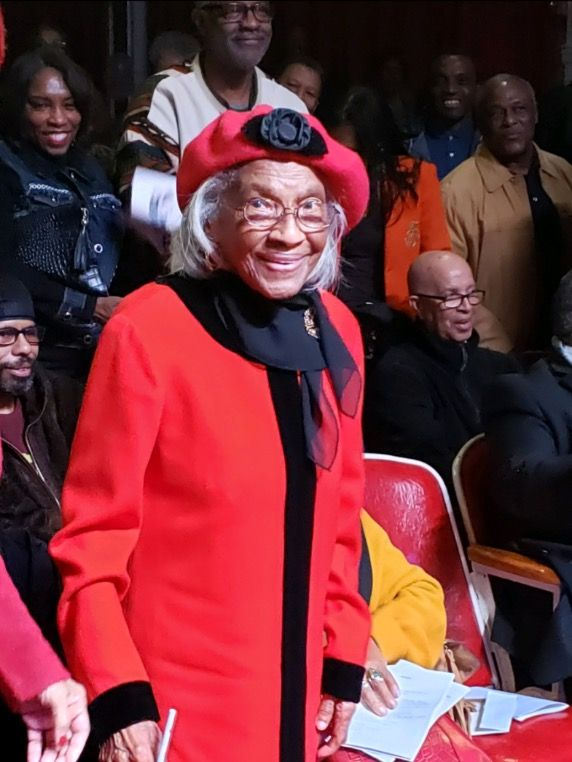
I traveled full circle, I went from a NE Outhouse in Eastland Gardens to a NW White House. All the glory goes to God. Margie B (RIP).






































 theoriginalinsidesports