Category: Uncategorized
THE MIS-EDUCATION OF ELGIN BAYOR: INSIDE SPORTS THE TIE THAT BINDS!

It was 2 am Tuesday morning I was sitting in front of my computer when I decided to check my email box for the last time before heading to bed–the first email read, “Harold, why don’t you do a piece on Elgin? When I came up, he was, not only my favorite basketball player, but my favorite athlete too (He and Willie Wood). You know baseball was the thing back then. Elgin, Willie Mays, and Lenny Moore were my favorites. I was a Baltimore Colts fan. My brother liked Cleveland, so I couldn’t pick Jim Brown. I know Elgin’s legend has died out for the youngsters nowadays, but he is more than deserving of a final tribute, from those of us who are still left to remember how truly great he was. He was in a category with Wilt, Russell and Oscar, without question. You, more than anyone, should know that. In another strange way, he was a lot like the one-armed bandit, only Elgin had two arms. They were both D. C. legends, with talent that was freakish. I remember the day he scored 64 points. Everybody was up Ridge Road saying they were “Elgin Baylor.” (But in my mind I was the real Elgin Baylor).
I know Bing, Austin Carr, Reggie Rucker, Dantley and a lot of the few ballplayers left from those times, would really appreciate the memories. It would be a great Post-Black History tribute to one of our greatest athletes. The D. C. legends know that Elgin was the best to come out of D. C. This would be another feather in your own hat when it comes to the real history of DC.
As I try to be unbiased and thorough in my assessment of all time great pro basketball players, I just can’t leave him off of my top 10 list. I heard Dantley, and others on the news say a little about him and they felt like me. John Thompson used to say that you put Elgjn at the top, skipped 2nd, 3rd and 4th, then continued your list of all time greats with number 5 and so on.
I vaguely remember seeing him play in the pros. I must have been around 8-10 years old, or maybe a little older. My cousin used to take me to sports games. He was a semi-pro baseball player, maybe a little older than Elgin.
His death reminded me of how great he was.
Harold, you knew Elgin personally so who would be better to do this than Harold Bell? You are still here today to do things like this.
Harold, when I close my eyes, I can still see Elgin bouncing that ball up and down, in cadence with his famous head bobbing up and down, just before driving in for the kill. Even Wilt didn’t want to mess with that.
Lord God, thank you for Elgin, may he rest in peace. Amen.” Bro. Lawrence Brown
ELGIN BAYLOR HANGING IN DC BEFORE HE HUNG IN THE NBA!
Just in case there is someone in the DMV and they are not aware of who is the greatest basketball player ever to lace up a pair of basketball shoes in this city–Elgin “Rabbit” Baylor is his name. The late John Thompson, the fraud of the city was right, when he said, “when there is a conversation about the top five or top 10 players in DC, you start with Elgin.” I am here to remind you who he was.
I remember Elgin, the memories start when I was a student at Brown Middle School in NE DC. Every weekday morning I would take the bus from my NE Parkside Housing project to 24th and Benning Road. The first landmark I would walk past would be the Langston Golf Course, the home of golfing legend, Lee Elder. The next landmark would be Spingarn High School the home of Lieutenant/Coach Dave Brown and Elgin Baylor. I would stop and mingle with the students, some I knew from my neighborhood. They would be hanging out in front of the building and on the sidewalk leading into the school. There was this cop, officer Ray Dixon who was the keeper of “The Hill.” It seems like he would eyeball me like he knew I didn’t belong among this crowd. He would bark “Keep it moving” and he was never smiling–I kept it moving!
After school was out at Brown I would sit on the grass above the Spingarn practice field and watch the athletes practice baseball, football, or the track and field guys workout on the fringes of the field. It was there I discovered my older brother Bobby playing second base for the Armstrong baseball team with the great Wilie Wood as a teammate. I never knew he was playing baseball for Armstrong because he lived with my grandmother. Watching my big brother play inspired me to become an athlete.
The one place I wanted to be was in the Spingarn gym watching Elgin practice or play in a game. Every time I attempted to find a way into the gym it seems like Officer Dixon could smell my presence and give me that look.

My Spingarn teammate and friend, Andrew Johnson lived in Langston Terrace, the Spingarn gym was a few minutes away from where he lived. Langston Terrace is the second oldest black housing project in America (Atlanta 1933 & DC 1938). Andrew recently described to me how he sat in the Spingarn gym and watched Elgin score 64 points against rival Phelps–priceless!
I remember the day Armstrong played the BIG game against Spingarn and the One-Armed Bandit, Gary Mays became an American folk hero. The morning of the game I got off the bus and started my usual journey to Brown and all I heard was talk of the BIG game being played that evening for the championship. George Deal a teammate of Gary remembers, Armstrong Coach Charlie Baltimore preparing for the rematch and giving specific instructions to Gary, “If Elgin goes to the bathroom, I want you right there behind him.” Coach Baltimore had not forgotten earlier in the year Elgin had torched Armstrong for 45 points.

Deal, also remembered Elgin being an excellent free throw shooter. “We beat him up pretty good that game and most of those 18 points came from the free throw line. I never saw him miss a free throw until he got to the pros!”
Elgin was averaging in the neighborhood of 30 points a game when Spingarn and Armstrong had the face-off on The Hill that day. Spingarn lost by 3 points killing their undefeated season. Gary was given the credit for the defensive stop, but according to Deal, “the media tried to give the credit to another player and playground legend, Terry Hatchett.”
Amstrong and Spingarn High Schools are the only public high schools in America that can showcase four pro athletes in the pro sports hall of fames. There are Len Ford and Willie Wood in the NFL Hall of Fame (Armstrong), Elgin Baylor and Dave Bing (Spingarn) in the NBA Hall of Fame. The common denominator, both schools have been shut down and that important history has been lost.
I never had the opportunity to be an eye witness and watch Elgin torch Armstrong for 45 points, Phelps for 64 points, or watch the One Arm Bandit literally hold him to 18 points in a championship game, but I was there to watch him perform his magic during his tour of the DC basketball courts from Lincoln, Bannecker, Park View, Henry T Blow, Brown and Kelley Miller playgrounds.
It was at Kelley Miller where he and Wilt Chamberlain would go head to head. Every basketball fan and sports writer and talk show host in the DMV claim they were there or had first hand knowledge. I had a heads up from my long time friend Dave Harris who was Wilt’s roommate at Kansas on their time of arrival at Kelley Miller. When they pulled up in that bright red convertible Oldsmobile on 49th street NE, Dave threw me the keys to park the car.
I read where some of these wanna-bees claim they played against Elgin on the playgrounds like Kelley Miller, Henry T Blow, Brown and Watts, the domains of playground basketball in NE DC. If Elgin was there nine times out of ten I was there. I introduced Elgin to the Brown basketball court located directly across the street from my Brown Middle School. He had never played there until he moved to Mayfair Mansions in NE in 1958.
I got to know Elgin that summer of shortly after his NBA rookie year and he married Ruby Saunder. Wilt was a member of the wedding party. After the wedding Elgin and Ruby moved to a housing development in NE DC called Mayfair Mansions. The development was located directly across the street from my Parkside Housing Project.
Elgin had taken a summer job with the DC Recreation Department, and worked evenings at Bannecker Playground in NW DC. His introduction to Brown playground basketball–I led the way. I would be on the corner of Haynes Street and Kenilworth Avenue in the evenings when he would be heading to work. I would hitch a ride with him to 24th and Benning Road. I would then walk from Benning Road to Brown playground for an evening of basketball.
This ride share would go on for the entire summer. There were times I would be running a little late and he would be parked waiting for me. One evening he dropped me off at the playground to check things out, but no one was there. He got out the car and got a basketball out of the trunk. We shot baskets for about 20 minutes and then other players started to arrive. He left the basketball with me and went to work–that was his introduction to Brown.
The one thing Elgin and I had in common was our high school Coach Dave Brown. There would be no Elgin Baylor and Harold Bell without Dave Brown. With all these so called know it alls as it relates to the legend of Elgin Baylor, how many in media or other wise have you heard or read about the man who guilded him to the NBA–Coach Dave Brown?
Dave Brown was his first coach at Phelps the first two years. He left for Spingarn in 1953, leaving behind Elgin’s playmaker guard, Maxwell Banks aka Max Julien. According to J. A. Preston a native Washingtonian an outstanding track and field star at Armstrong High School, Max played an important role in Phelps’ success those first two years.


J. A. was also an accomplished actor on stage and screen (A Few Good Men and the Spook That Sat by the Door). He says, “Maxwell was one of the best guards in the city bar none. He was the cornerstone of that Phelps team with Baylor. He would go on to become best known as an actor for his off-Broadway performances, but it was Hollywood where he received critically acclaimed fame for his role as Goldie in the1973 blaxploitation film,’The Mack.’ He also appeared in Def Jam’s How to be a Player. Max Julien was also a great writer, he wrote and produced Cleopatra Jones starring Tamra Dobson and Bernie Casey. He and comedian the late Richard Pryor became great friends.”

Timing was everything, Elgin and his 1954 teammates never got the opportunity to play against their white counter parts in the DMV. They were one year away when my Spingarn teammate Spotswood Bolling a student at Sousa Middle School in NE was the lead petitioner in Bolling vs Sharpe when it became a landmark in the United States Surpreme Court case. The attorneys argued that the Constitution prohibited segregated public schools in the District of Columbia. The decision was originally argued on December 10-11, 1952 a year before Brown vs Board of Education, but Bolling vs Sharpe was re-argued again in 1953 before it was passed, cheating Elgin and the black DC Public high school athletes out of their just do on an “Even Playing Field!”


With Coach Brown it was always tough love–but love never the less. There are rumors that Elgin ran afoul of coach during a game, and at half-time Coach Brown settled the matter by locking his star player in the lockerroom. I could not verify that rumor, but I can verify being locked in the school bus during half-time of a football game against our rival Phelps. The game was played at Eastern High School. The team won without me and Coach Brown got my undivided attention. Thanks to him I didn’t go to hell in a hurry as predicted by Mr. Stinson.
I would not see Elgin again until my freshman year at Winston-Salem State University in 1960. The Minneapolis Lakers were in Greensboro, N. C. for an exhibition game before heading to their new home in L. A. I decided to travel to Greenesboro the home of the N. C. A & T aggies to see if I could catch up with Elgin. The drive was 30 miles north of Winston-Salem.
First, I tried to convince my homeboy Donald “Duck” Wills to go with me, but he begged off claiming he had a date. I was disappointed because Donald’s brother was the great shortstop for the L. A. Dodgers, Maury “Sonny” Wills. Elgin and Maury were great friends from their Stonewall days in DC. Maury was a great all-around student/athlete at Cardozo. He played football for the Stonewall, AC football team during his off-season in the minor leagues.
I remember Coach Brown inviting the Stonewalls to particpate in a scrimmage against the Spingarn varsity in 1957. It was MEN against BOYS. Sonny was a great punt and kick-off returner and running running back, but during the scrimmage he played defensive back. He lined up in front of me and he never allowed me to catch a pass from his brother QB Donald Wills. After the scrimmage he would tell us, “You guys are going to be all right” and we were!
Back to Elgin, my plans were to double team Elgin with Donald, but it looked like I had to go at it alone. I borrowed my roommate Arnold McKnight’s (former DC Boxing Commissioner) car to make the trip down highway 85 to Greensboro.
I had no problem finding the Lakers’ motel a friendly cop gave me the directions. I went to the front desk and the lady gave me Elgin’s room number (what a difference a day makes). I took a deep breath and knocked on the door. He opened the door and the first words out his mouth were, “Bell what in the hell are doing way down here?”
I told him Coach Brown had talked me into taking a scholarship to Winston-Salem Sate University. He smiled and said, “The old man is still at it huh!” He invited me in and we talked about the Lakers move to L. A. He was overjoyed about the move, the weather was the determining factor. He ordered room service and we ate and talked until it was time for him to head to the arena. He gave me four tickets, a twenty-dollar bill, a Lakers’ jacket (too big) and I headed back to Winston-Salem. I gave the four tickets to the lady at the front desk and it made her day.
My next encounter with Elgin would be my first NBA All-Star Game in Houston, Texas (80s). Former playground legend and all things basketball in Philadelphia, Sonny Hill convinced me to apply for press credentials for the game. It was a great trip but I had a problem getting press credentials and I had a strange encounter with Elgin.
Thanks to Dotie Auerbach (Red’s wife) and NBA PR man, Brian McIntyre we were able to work things out for the credentials. Mr. McIntyre would become a great friend and lifeline for my future endeavors whether it be NBA press credentials for me or the “Roundball Report” a local cable television show in Prince George’s County.
Elgin was another story that I am still trying to figure out today. Mr. McIntyre gave me my credentials and I headed up to my room that I was sharing with Sonny. I got on the elevator and it stopped at the next floor and who gets on but Elgin Baylor and a pretty lady holding on to him. He looked right through me. We rode at least six floors and he never uttered a word. When he and the lady got off, he looked back and said, “Bell it was nice seeing you.”
I could not wait to get to the room and tell Sonny about the encounter. Sonny swears that Elgin could walk on water if he had to and leaves little doubt that Elgin is the NBA G. O. A. T. His response was, “Elgin was just being Elgin, Harold, he did acknowledge you as he was leaving, some folks don’t get that!” All I could do was smile.
My last encounter was in the 80s, I was hosting a retirement tribute to our high school coach, Dave Brown. He was closing out his DC Public Schools coaching and teaching career. I called Elgin to invite him to come home and be a part of the tribute, not knowing what to expect, he took my call. I explained we were doing a tribute to Coach Brown and I would like for him to come home and surprise his coach. He begged off and said their was a conflict in his schedule for that date. The same exact thing he told Dave Bing when he asked Elgin to introduce at his NBA Hall of Fame induction. Elgin did send a telegram thanking Coach Brown for all that he had done for him and wishing him and his family nothing but the best. I never read it!
Sonny Hill once reminded me, “Your hometown will be the last to show you any appreciation and love!” I use to get pissed off at Elgin, Maury and Marvin Gaye because neither ever came back to DC to reach back and pull others with along with them, but they had plent of company.
It is possible they learned early in life that this town was and is overrun with Player Haters and envy and jealous black folks. I have never seen, Marvin, Maury, Elgin, John Thompson, Sugar Ray Leonard, Dave Bing, Len Ford, Willie Wood, all hall of fame athletes photos on Ben Chili Bowl’s Wall of Fame? I remember when they open in 1958, I was senior at Spingarn and hanging out at 7th and T streets around the Howard Theatre and the U street corridor.
I was the Historian at the Chili Bowl for six years-I know the Real history! My childhood friend the late John Snipes became a well known businessman in the U street corridor and the honorary “Mayor of U Street!” I suggested to Kamal who has been the Wind Beneaght the Chili Bowl’s Wings since he was a little kid. He was Mommy’s Baby and Daddy’s maybe. He help keep the bowl afloat during some difficult times. His father Ben decided to go and live in Las Vegas and his older brother Sage left for Hollywood leaving him, baby brother and his mother Virginia to run the business. Kamal carried the load.
The suggestion was to name the room where I was doing the history presentations after John Snipes. The reason, it was Snipes who I first saw escorting white folks around the U street corridor showing them the landmarks of U street after the riots. He had a office over the Chili Bowl. The suggestion went nowhere–Sonny Hill was right.


Elgin died in L. A. at the age of 86 on Monday March 22, 2021. Let me remind those who didn’t know, Elgin was a NCAA Final Four MVP, NBA Rookie of the Year, named to the NBA All-Star First Team 10 straight years and he still holds the record for most points scored in a NBA final’s game, 61 points against the Boston Celtics. His NBA career scoring average of 27 points is ranked only behind Wilt Chamberlain and Michael Jordan.
Elgin Baylor invented “Hang Time” in the NBA but it was just a carry-over from the playgrounds and the Division ll basketball that was played in the all black DC Public High Schools in the early 50s. During his NBA career he averaged 27.4 points and 13.5 rebounds. He is only one of two players to average those numbers, the other is Wilt Chamberlain. Elgin’s best year as a pro was the 1961-62 season when he averaged 38 points a game.
Elgin and Coach Brown started out at Phelps in 1952. Coach packed his bags and moved next door to Spingarn the new kid on the block in 1953. Elgin dropped out of school because of a young baby. He took the responsibility to help raise the child. Many thought this would be the end of the line for him. Coach Brown kept a light in the window and Elgin returned to Spingarn for that 1953-54 history making season. He was in the first graduating class for the new school and he became the first black to make the Washington Post All-Met basketball team.
The segregated schools where he became “Mr. Basketball” were comprised of Dunbar, Armstrong, Cardozo, Phelps and the last to be built was the home that Elgin Baylor and Lieutenant/Coach Dave Brown built, Spingarn.
“The Hill” was the most unique educational hill in America. There were four schools in walking distance of the second black housing project built in America, Langston Terrace. The four schools starting at the bottom of the Hill (Benning Road), were Spingarn, Charles Young Elementary, Phelps Vocational, and Brown Middle School at the end of the road, the home of Principal William B. Stinson. He predicted to my mother I would not live to get out of high school. If you lived in Langston Terrace you never had to leave the neighborhood to complete your formal education. “The Hill” was the first and last word in education in the hood.
My high school basketball memories would take me from Lincoln, Bannecker, Park View, Henry T Blow, Brown and Kelley Miller playgrounds and all stops in between. Elgin would would later take his show on the road in 1954. He was led to Idaho by Warren Williams aka W. W. Warren was a two sports star at Dunbar (football and basketball). They were joined by homeboys, Armstrong phenom, Gary Mays aka One Arm Bandit, and Francis Saunders his Spingarn teammate. They took the Idaho community and college basketball program by storm, especially when R. C. Owens joined them on campus and became the leading rebounder for the team.
R. C. would later play in the NFL where he became an All-Pro wide receiver for the San Francisco 49ers. The Alley Oop pass play became folklore when in 1957 he and QB Y. A. Tittle created the pass play. Y. A. would throw a high pass to R. C. downfield and R. C. would jump over the shorter defensive back and catch the ball (today’s NBA jumpball).
Racism would chase Elgin out of Idaho when the team became too successful for some white folks. The opposing coaches and other whites in the town started to whisper about the grade point averages of the black athletes. This would lead Elgin to transfer to Seattle University where he would lead them to a failed Final Four appearance and to the NBA in 1958 as No. 1 draft choice of the Minneapolis Lakers. The team would leave Minneapolis in 1960 for L. A. and all things Hollywood. The legend of Elgin Baylor took root in 1953 (media) and ended in L. A. on Monday March 22, 2021. All these frauds/folks coming out of the woodwork confessing their love for Elgin Baylor don’t even know how to spell the word. His legend will hang in L. A. forever and a day–in DC he will just be a memory not on a wall.
THE WINNER MARVELOUS MARVIN!
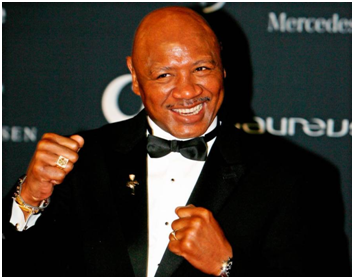
HE WAS THE MIDDLEWEIGHT CHAMPION WHO WILL BE FOREVER LINKED TO THE WELTERWEIGHTS!
Muhammad Ali revived the sport of boxing in the 60s with his brash personality, flare and traits he borrowed from the great pro wrestling sensation, Gorgeous George. Ali’s style was copied but never duplicated. The heavyweight division was full of stars, in the 60s and 70s but none bigger than Muhammad Ali. There was Joe Frazier, George Foreman, Ken Norton, Ron Lyle, Ernie Shavers and others who help to make the fight game legit again. During the Ali era boxing attracted the Hollywood stars, pro athletes, the entire entertainment world, the gangsters and would be gangsters. When Ali retired in 1985 the game lost some of its glitter and gold. https://www.youtube.com/watch?v=m-JZf8J0Dsk
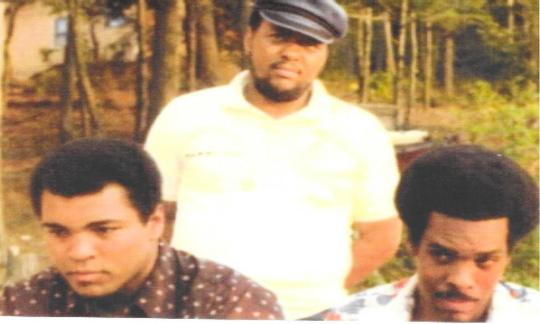
The vacuum was filled by the little guys who would become giants of the game like Wilfredo Benitez, Roberto Duran, Sugar Ray Leonard, Thomas Hearns, Alexis Arguello, and Aaron Pryor, The former middleweight champion of the world, Marvelous Marvin Hagler was a step above the little guys in the welterweight division, but he would be a force to be reckon with in their later years. Hagler died on Saturday March 13, 2021 in Barlett, New Hampshire. During his career he caught hell chasing the middleweight champion. Fighters and their managers wanted no part of him. In 1980 he finally got the opportunity to win his first middleweight championship in Wembley, London. The champion Alan Minter played The Race Card saying, “I hope that black boy don’t think, he is coming in here and win my title.” Hagler knocked Minter out in the 3rd round. He changed his name in 1982 to Marvelous Marvin Hagler. The changed was made because network announcers often refused to refer to him by his nickname “Marvelous!”
Hagler was born and raised in Newark, New Jersey. He moved with his family to Brockton, Massachusetts in the late 60s. Hagler’s name will be forever linked to the welterweight division, it was there he had some of his most controversial and memorable fights. There was Roberto “The Hands of Stone” Duran. Duran took him the full 12 rounds and Hagler won a unanimous decision. He would next face Thomas “The Hit Man” Thomas Hearns in what is called today, the greatest three rounds of boxing in the history of the game. Hagler knocked out Hearns in the third round. His third and most controversial fight was with boxing great welterweight champion, Sugar Ray Leonard. Hagler’s ring record of 62-3-2 with 52 knockouts was nothing to sneeze at. Marvin had to literally chase Ray around the country for over five years trying to talk him into a fight. The fight between the two would be worth millions of dollars to the promoters and the fighters if they could come to some agreement. Ray lured Hagler to the Capitol Centre arena in Landover, Md., a stone’s throw from where Leonard grew up in Palmer Park, Md.
In a packed arena with thousands of boxing fans looking on, Ray took the microphone to make the announcement on his future in boxing. When it was all said and done, Hagler felt like the bride left at the altar. Ray announced that he would be retiring and there would be no fight between him and Hagler. Time brings about a change, the two later signed their names on the dotted lines for a fight that has gone down in boxing and folklore history.
The long-awaited fight was scheduled for April 6, 1987, in Caesars Palace. The fight would take place in a temporarily sold-out arena built just for Sugar Ray Leonard and Marvelous Marvin Hagler. Ray had fought just once in five years because there was potential for a career-ending eye surgery. This would be the biggest fight of his career bar none. Hagler was one of the most feared fighters on the planet. He was no joke and 52 knockouts proved he was to be feared. The fight was everything I thought it would be except the controversial split decision awarded to Sugar Ray Leonard, but I understood the how and why of the decision.
Sugar Ray Leonard is the greatest rags to riches story in the history of boxing. I was there when he arrived home from the 1976 Olympic Games in Montreal, Canada with his Gold Medal expecting a ticker-tape parade in his honor. The Washington media had other ideas, they made him the lead story for having a baby out of wedlock, what a difference a day makes (1976-2021). Ray lost all of his self-esteem and went into his home in Palmer Park, Md and refused to come out.
I was playing tennis at Anacostia Park in SE DC on one beautiful September evening and I looked out into the parking lot and I see Janks Morton and Melvin Jackson. Janks was the trainer of Sugar Ray Leonard and Melvin was a close and dear friend of mine. It donned on me, both were great athletes, but neither played tennis. I stopped play and went out to greet them. We shook hands and I asked, “What’s up?” I was surprised when Janks explained the reason for their visit.
He said, “We have a problem with Ray” my response was “Ray who?” I could not believe my ears as Janks explained that Ray refused to leave the house because of the media attacks on his having a baby out of wedlock! I laughed and asked the question again “What’s up?” Melvin then chimed in and said, “We need for you to go over to the house and talk to him. He respects you and will listen to you.” I said, “No problem, I will check him out in the morning and see what the problem is!” I returned to the tennis court to finish my game. Ray and I had established a “Big Brother” bond during his amateur boxing days.
I would show up when they were trying to raise monies to go on trips to fight in different cities around the country. I encouraged my partner radio talk show host Petey Greene and Congressman Walter Fauntroy to support the Palmer Park boxing program. The following morning after the visit from Janks and Melvin I made my way out to Palmer Park to visit Ray. It was around 10:00 a. m. when I knocked on the door. He opened the door with tears in his eyes and I jumped right on his ass. I cannot use the language in this story that I used to get his undivided attention. But I will sum it up by saying, I suggested he put on a tie and suit and put his Gold Medal around his neck and follow me. I had called a friend of mine on the way to Ray’s house, his name was Mr. Cousins and he was the Principal of Harrison Elementary School in NW DC. I asked him to do me a favor and have a group of students ready for a visit from Sugar Ray Leonard after lunch. He said, “No problem.”
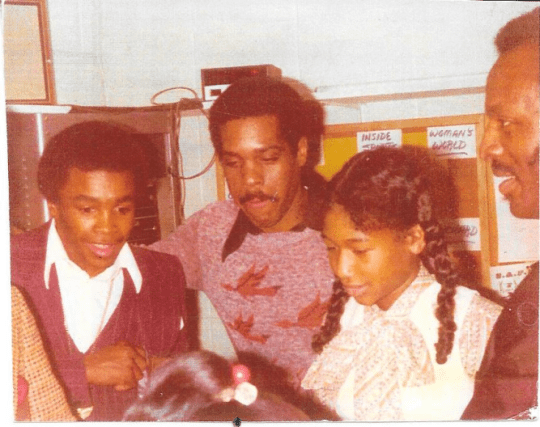
The kids treated Ray like the hero he was and you could see him regaining confidence as he told the kids about his winning the Gold Medal at the Olympic Games. We would visit more schools in the area and I made sure they were all elementary school children because they had not yet developed or grown into the envy and jealous characteristics of some young adults. Ray would slowly come out of his shell. I let him co-host my Inside Sports talk show on Saturdays to help him grow as a public speaker. Ray and I were both butchering the King’s English so bad my wife Hattie a teacher in the DC Public schools brought Ray a book of poems. She suggested he read the poems out loud to himself to improve his pronouciation and diction. We gave it to him as a wedding present.
Ray still had not made up his mind on what he wanted to do for his future. It was between turning pro or getting a job to support Junita and little Ray. He claimed his hands were too brittle to turn pro and he thought it best to find a job. I contacted my friend Dr. Bill Rumsey, he was the Director of the DC Recreation Department. Dr. Rumsey was a well-known educator and former athlete in the DC Public Schools. I set up an appointment for Ray to meet with him about a job opportunity. We met in his office with, Willie Wood (NFL), Jim Vance (TV 4 anchor), and Sonny Hill (NBA color analyst).
Ray was offered a job, but before he could start work, I received a telephone call one morning around 8 a. m. saying, “Sugar Ray Leonard was holding press conference in The National Press Building. The caller was boxing promoter Don King. I broadcasted my Inside Sports talk show on WYCB radio in the National Press Building.
Don wanted me to meet him and Larry Holmes (Heavyweight Champ) at the Grand Hyatt Hotel in downtown DC. I arrived around 10 a. m. This was all a surprise to me the press conference was scheduled for 11 a. m. When Don asked me did I know anything about the press conference all I could say was “Hell no!” Ray was announcing he was turning pro and I was the last to know. I was being scooped in my own work place.
I swallowed my pride long enough to get Ray, Don King, and Larry Holmes in the studio for an interview. I should not have been surprised by Sugar Ray Leonard’s announcement to turn pro. Ray didn’t have two pennies to rub together and he needed the money. He went on to become the first pro boxer to earn 100 million dollars in boxing revenue.
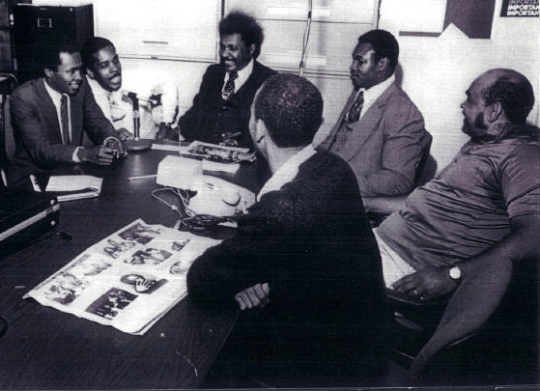
When Sugar Ray Leonard needed a way out of no way, there was no Janks Morton, Mike Trainer, Charlie Brotman, J. D. Brown, Rock Newman, Glenn Harris or anyone in his family there to give him advice or to lend a helping hand.
For example, when his best friend Joe Brody brought to my attention that Mike Trainer was seeing Ray’s checks before he saw them, it was me who pulled Ray aside and told him, “this cannot continue.” I suggested he put his sister Bunny in Trainer’s office to be the caretaker for all his mail, she had an accounting background. Bunny, barely lasted a year in the office and she was gone. I saw the handwritting on the wall and told Ray, Janks Morton, Ollie Dunlop and Dave Jacobs, “when this ride is over Trainer will own the bank!” I became the “Trouble maker” in the camp when I saw Trainer or Janks talking down to to Ray’s family, I would remind him, that blood was thicker than water!
I made arrangements for a bus to take a group of Sugar Ray Leonard fans to the Baltimore Civil Center to watch him make his long awaited debut against Luis ‘The Bull’ Vega. The group included, radio talk show host Petey Greene, television news anchors Jim Vance, Fred Thomas and Maureen Bunyan, actor Robert Hooks and his son Kevin were among a host of fans and friends who would be there to cheer him on. I coordinated “The After Party” for Ray to meet and greet family and friends. The jockeying for position to be around him was a little overwhelming for me. It was then I walked away from the madness.
In December 1979 I was in the WYCB radio studio hosting my sports talk show with comedian Chris Thomas. This was after Ray beat Wilfredo Benitez for the welterweight championship of the world. My producer started to wave frantically that I had a call on line two. I punched in the line and on the other end was Sugar Ray Leonard LIVE. He called to thank me for all that I had done for him because I was there when no one else was. I thought the call was pretty special, but the call runs a distance second to the call I received from Muhammad Ali. It was five years earlier after Ali beat George Foreman for the undisputed heavyweight championship of the World in Zaire, Africa in December 1974.
I received a blog correspondence from Sugar Ray Leonard, Jr. several years ago. He was responding to a blog I had written about an alledge encounter he says he did not have with his father. He wanted to clear the air and set the record straight and he did. I let it go. The heading of his blog read, “I Am Not My Father!” He went on to say, “I am trying to be a better father to my children than my dad was to me.”
Despite all his success in the ring and the millions of dollars he has earned, Ray Leonard Sr. is a loser in the Game Called Life. He has left a trail of deceit and the sad part of his deceitful journey, he has not fooled his first born, Ray Jr. He mentioned to me he wants his father to go on a tour of the U. S. to discuss domestic violence–I told him not to hold his breath.
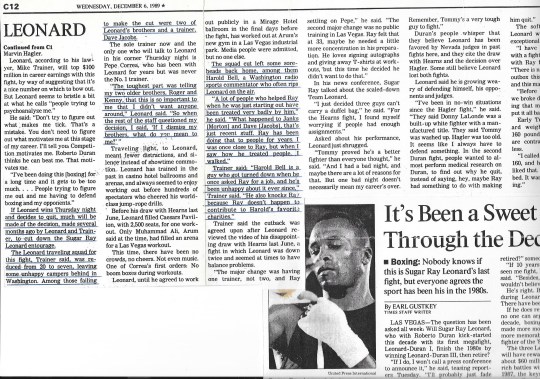
I understood exactly where Ray Jr. was coming from because his father and his partner Janks Morton had done the exact same thing to me, but they use one of the most read newspapers in America- the L. A. Times to tell lies about things that never happen as it related to my relationship with Sugar Ray Leonard. The story was written in 1989 by legendary sports columnist, the late Earl Guskey. It was written during the second Thomas Hearns fight in Las Vegas. The column was about Ray having to leave members of his entourage home for this particular fight including his brothers.
I have no clue how my name got mixed into Ray’s entourage. According the late Mike Trainer, I was one of those guys who helped Ray out when he first started, but I had become pissed off after I asked Ray for a job and got turned down–it never happen??? What really pissed me off was that Ray and Janks Morton allowed this “Redneck Proud Boy” to lie about my relationship with them. First, I have never been a part of anyone’s entourage including Muhammad Ali, second I have never asked Ray for a ticket, a dollar bill or a job! When I did need some help and support he never answered his phone.
His drug habit and domestic violent problems were of his own doing. His best man Joe Brody was the only one to come to me saying, he was scare Ray was going to OD and die. Joe said, he was drinking congac straight and snorting cocaine at the same time. Joe begged me to talk with him. He came with the old familiar song, “He will listen to you”, I reminded Joe that was when he was broke, but now he has money, he thinks he is smarter than me. In my last correspondence with Ray Jr. I asked him to do me a favor and ask his father if I ever asked him for a job, money or a ticket. I wanted clear the record also. I am still waiting for a response.
In my last face to face interview with Sugar Ray was in DC in 2014 when he was promoting “The Contender” a boxing series for NBC television. The show follows 16 promising pro boxers who come to LA to compete in a tournament. The finals taking place in Las Vegas and the winner taking home one-million dollars. Ray would be an analyst with Sylvester Stallone. He got his his first broadcasting experience co-hosting Inside Sports and now he has his own show on ESPN and now shares analyst duties with Hollywood icon, Sylvester Stallone. The beginning of the interview it looked like Ray was looking for the closest exit out. Yea, ESPN and NBC was eons away from W-O-O-K radio in NE DC. TRUTH needs no evidence!. https://www.youtube.com/watch?v=JEC9hX3jQVo/
The Monday Morning Quarterbacks had it all wrong on why and how Hagler lost the fight to Ray. A debate that is talked about today in barbershops around the world. There are claims that Ray did absolutely nothing during those 12 rounds to earn a split decision and then there are those who claimed Ray stole the fight in the closing of each round with the flurries and that is what impressed the judges. I think that is a valid point.
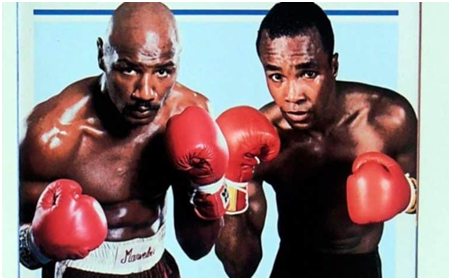
My thoughts, Ray won the fight in the eyes of the judges because he outsmarted Hagler not because he outboxed him. His thing was to stay out of harm’s way and not be a victim like Thomas Hearns. Hearns decided to go toe to toe with Hagler. The judges were blindsided because they were saying to themselves, “If Hagler didn’t knock Leonard out he lost the fight.”
Ray outsmarted Roberto Duran and Don King in New Orleans in 1980 in much the same way. He frustrated Duran until he quit. Duran had the fight won before he entered the ring, but he let his ego determine the outcome. Why would I say Duran had the fight won? I was in Don King’s suite when Duran’s brain trust met with him shortly before the fight. The door in the other room where I had fallen asleep was left open. I heard Don tell Roberto’s braintrust corner that all he had to do was stay on his feet and he would be the winner—the fix was on. Duran’s ego got the best of him and he decided to do his own thing and the rest is boxing history.
The one thing that fight fans and the so-called experts overlooked—Sugar Ray Leonard was “THE CASH COW” of professional boxing during the 70s and 80s. The best example, in 1979 he beat Benitez in what was a close fight until Ray knocked him down in the 15th round. Benitez beat the clock, but the referee stopped the fight with 15 seconds left on the clock? I still had Ray winning the fight.
The first Thomas Hearns fight in Ceasar’s Palace in Las Vegas Hearns was leading on all three scorecards, 124-122, 125-121, and 125-121 going into the 13th round. Ray desparately needed a knockout and he got a tko in the 14th round.
The fight still haunts Hearns today. Predictably, there was controversy over the tko some experts believed that Hearns was not hurt when the fight was stopped. Evidently, those second guessers had their heads up their asses. Then there were those second-guessers asking, why the fight was not stopped in Hearn’s favor because Ray’s eye was almost completely closed–Cash Cow? In the second fight Hearns defensive skills were vastly improved. The fight would go the distance. Hearns easily outboxed Ray, Ray was holding on for dear life. The fight was called a draw. Ray later admitted Hearns had won the fight.
I think the first Hearn’s fight was some of Ray’s greatest work in his ring career. He was losing the fight going into the later rounds, but he dug down deep and proved his heart was as big as the ring he fought in. If Ray had lost that fight in 1981 Hearns would have easily become “The Cash Cow!” The brain trust in the Kronk Gym in Detroit with Emanuel Stewart, Prentis Byrd and the corner men were class acts and were heads and shoulders above Ray’s brain trust of Mike Trainer, Janks Morton, and Dave Jacobs in Palmer Park. Ray was the nugget that carried the Palmer Park Gym on his back and he was in the right place at the right time.
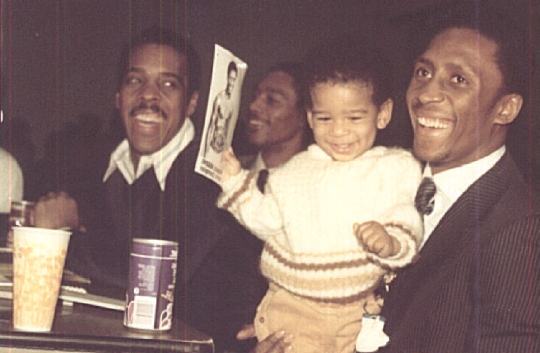
In Detroit, the Kronk Gym had several champions in Thomas Hearns, Hilmer Kenty, and others standing-by waiting their turn to become champions. Aaron Pryor was the great one, on the outside looking in at Roberto Duran, Wilfredo Benitez, Thomas Hearns, and Sugar Ray Leonard. They were The Big Four of the welterweight division.
There was a story written in a sports blog called “Undefeated” in 2016 by a writer named Branson Wright that was completely false. The story was titled “Aaron Pryor: A Boxing Life Remembered!” It was and is “Fake News” completely false as it related to an encounter in 1979 with Sugar Ray Leonard and Aaron. The encounter was falsely claimed to have taken place at a boxing gym in Cincinnati, Ohio. Unless Aaron Pryor has a twin the 1979 encounter reported by Branson Wright is a bald-faced lie. In 1979 the only encounter Pryor had with Sugar Ray Leonard took place in Washington, DC/Palmer Park, Md. I was responsible for transportation and housing for Aaron Pryor during that encounter. Sugar Ray Leonard and Janks Morton invited him to DC to work with Ray for a week and help to prepare for his upcoming fights.
Aaron was a handful for me to handle. He brought his girlfriend/wife with him and he use her as a punching bag. They almost destroyed the apartment I got for them to stay in. My brother Earl was a DC cop and he had to call me after a disturbance at the apartment one night. He was getting ready to lock him up when Aaron blurted out my name–that is what you called being saved by the bell. After 3 days of workouts, Aaron gave Ray a boxing lesson each day. He was too much for Ray to handle and Janks cut the week short and gave him the money owed for the week and plane tickets back to Cincinnati. Aaron Pryor is definitely a boxing life to be remembered, but let us get our facts straight.
Hopefully, Branson Wright will discover a lie will change a thousand times, the truth never changes–truth needs no evidence! Marvelous Marvin Hagler is without a doubt a boxing life to be remembered—and still champion of the World!
You can read this story on http://www.theoriginalinsisesports.blog or http://www.blackmeninamerica.com
The BIG LIE / https://theundefeated.com/features/aaron-pryor-a-boxing-life-remembered/ Branson Wright (Undefeated)
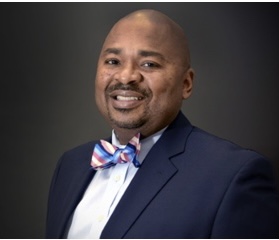
BILL RASPBERRY WINS PULITZER PRIZE COVERING POLITICS IN THE HOOD?
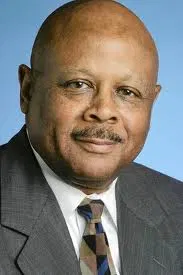
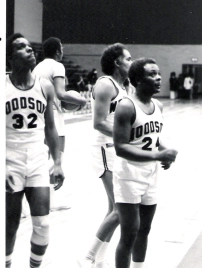
Bill Raspberry whose fiercely independent views illuminated conflicts concerning education, poverty, crime and race. He was the first black journalists to gain a wide following in the mainstream press. In 1994 he won the Pulitzer Prize for his compelling commentaries on on a variety of social and political topics.
When I learned of his passing in the Washington Post on July 16, 2012, I was moved to remember the song “The Way We Were.”
Looking Back: I met Bill along with my friend, the late legendary radio and television icon Petey Green. I remember Petey and I were in Face’s Restaurant in Washington, DC having a late lunch one evening. Petey was working for the United Planning Organization and I had just signed on to work for the DC Recreation Department’s Roving Leader Program (Youth Gang Task Force). This was shortly before the riots in 1968. Face’s was the hang-out for the so-called “In Crowd” in what was then known as “Chocolate City!”
Petey and I were sitting at the bar debating whether the Redskins would win a game during the upcoming season and he looked over at this little guy sitting a couple of bar stools away and asked “My man what do you think?” Bill looked up from his plate and said “Man I don’t have a clue I am from Mississippi!”
As only Petey Green could do, the conversation went from the Redskins to picking cotton. He made Bill laugh so hard he had to get up and go to the bathroom before he peed on himself. The three of us would become fast friends and football, kids and politics would be our topic of conversation for the next several lunches.
Petey was than working with the self help group the United Planning Organization as a Neighborhood Worker, Bill was working for the Washington Post (he never mentioned he was a writer) and I was working for the DC Recreation Department as a Roving Leader (Gang Unit).
We would meet at Face’s on Friday (lunch or Happy Hour) for its legendary fish fry. Ms. Booker the chef cooked the best fish in town. I don’t remember when Bill told us he was a writer but there were two things Petey pretended to hate, the Redskins and anybody who wrote for the Washington Post! But, Bill passed the smell test because he and Petey got along fine.
My wife Hattie and I found Kids In Trouble, Inc. and Hillcrest Children’s Saturday Program in December 1968 (the result of the 1968 riots). The Center was located at 14th and W Street s in northwest DC. The program was housed in old Turner’s Arena where legendary entertainers once performed and it was the first home of the now world famous WWE and wrestling promoter Vince McMahon ,Jr., (he took over the mantle handed down by his father and James Dudley).
Mr. Dudley lived directly across the street from the arena and was Don King before Don King without the baggage. He was the first black to be inducted into the WWE Hall of Fame. He was also my “checks and balance” guy.
The building was the Hillcrest Children’s Center. The Center was run by Children’s Hospital and catered to children with emotional and behavior problems.
After the riots there was talk of burning the building down because the neighbor children resented the fact that they were not allowed to use the building.
The center had an indoor swimming pool, indoor and outdoor basketball courts and classrooms. It didn’t make it any easier when black neighborhood children would see white kids parading in and out of the building during the week. The building was closed on the weekend (special needs children would sometimes stay over night and into the weekend).
The administrators became concerned when the neighborhood children begin to harass the staff and their clients verbally. Someone in the community brought me to the attention of Center Director Nicholas Long as “Mr. Fix It!”
A Monday morning meeting was arranged for me to sit down with Dr. Long to discuss how to mend the fences between the center and the neighborhood. Without my knowledge Dr. Long had already devised a “Game Plan.”
The plan was for me to coordinate and oversee a Saturday recreation program for the neighborhood kids! I didn’t think much of the idea because it would intrude on me moonlighting as a wide receiver for a minor league football team on the weekends. The Virginia Sailors was an affiliate of the NFL Washington Redskins. I still had dreams of becoming a player in the NFL. I left the office of Dr. Long saying “I would think about it.”
What I was really saying was “No way Hosea!”
I could not wait to catch up with Petey and Bill on Friday at Face’s to get their opinions on how to get out of making a commitment to this“Dream Buster” of an idea! I called Petey and Bill to make sure we were still on to meet because sometimes one of us would be a no-show because of prior commitments.
Petey could not make lunch so we agreed to meet at the evening “Happy Hour.”
Bill had never seen me play for the Virginia Sailors, but Petey would come out to the home games played on Saturdays in Reston, Virginia. He would leave usually leave at half-time without acknowledging he was there. Hattie would see him coming and going! He was a student of the game.
Petey could tell me precisely what pass patterns I had run and exactly when I would be free lancing on my own. He would always say “You would have made a great actor!” Acting was all a part of the on field game I played with the defensive backs to get the upper hand.
The meeting at Face’s took a turn for the worst when both of them jumped on me for putting football ahead of the kids. I was surprised when Bill said, “You need to do this and we got your back.” Petey just looked at me and said “Don’t look at me!” The decision was made and the rest is community history.
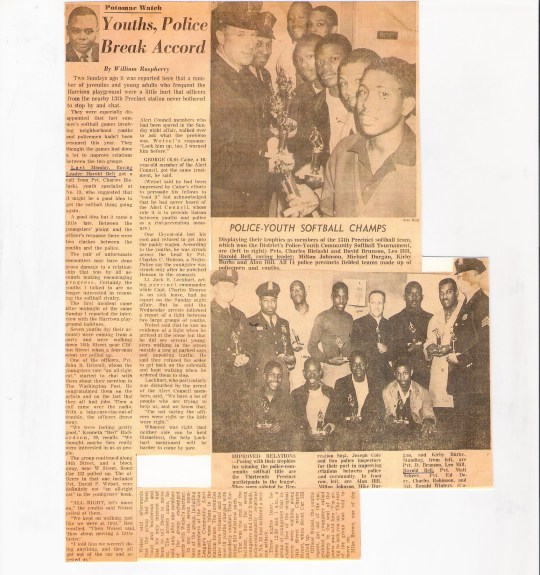
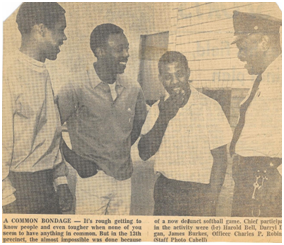
My Spingarn high school teammate Andrew Johnson and my brother Earl were DC cops and covered for me on the weekends when the team was out of town.
Bill Raspberry’s word was good (unheard of today in media), during our relationship he never lied to me. You could carry his word to the bank. Folks in media run a close second to politicians when it comes to telling a lie.
Bill and I didn’t always agree, if I brought something to his attention and he didn’t feel comfortable addressing, he would say “Harold I am going to pass on that one you handle it”, and I would!
For the next decade Bill’s columns would challenged the DC Police Department when they refused to allow my brother Earl K. Bell employment because of his juvenile delinquent past. Shortly after his story was published the department back tracked and him. Earl spent 14 years as a DC cop obtaining the rank of sergeant while fighting the Thin Blue Line and Code of Silence. There would be several other stories in his column with me as the focal point. He really had my back as he followed my trials and tribulations in the community as it related to kids in trouble.
With Bill and Petey showing their support by participating in my community endeavors others would follow their lead (athletes, judges, politicians, entertainers and media personalities, etc. joined the team). It also didn’t hurt to have their VIP wives Sondra and Judy in their ears as back-ups on my behalf!
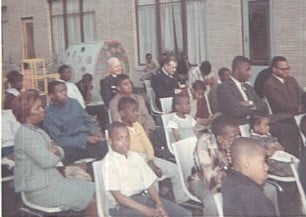
William Raspberry’s support allowed me to excel and blossom as a Youth and Community Advocate. He also gave me an earful when he thought my radio show the “Original Inside Sports” was politically incorrect, but it was always “Constructive Criticism and never Destructive Criticism!”
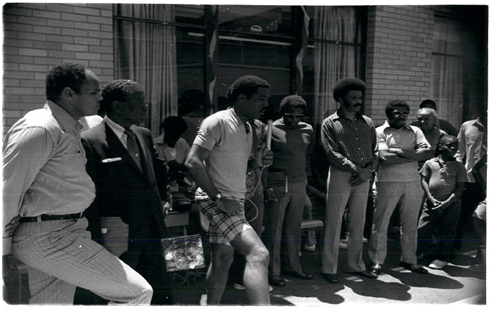
We went our separate ways over a trivia disagreement and we became like ships passing in the night. Much like Petey, Bill died without me telling him how much I appreciated and loved him.
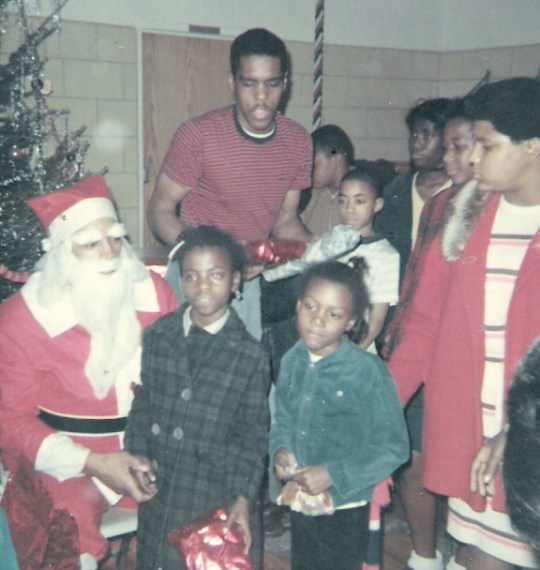
In November 2024 Hattie and I will celebrate our 56th wedding anniversary and December will mark our 56th anniversary annual Christmas Toy Party for needy elementary school children (without grants or loans). The first toy party was held at the Hillcrest Children’s Center Saturday Program in 1968. It only happened because Bill Raspberry kicked me in the butt (verbally) and made me get my priorities in order when I truly needed to.
The first Santa was my Virginia Sailor team mate, linebacker George Kelly. I never thought we would celebrate 56 years of marriage and 56 years anniversaries of these two great milestones.
IN MEMPHIS: OFFICER FRIENDLY HAS NOT BEEN FRIENDLY FOR A LONG-LONG TIME!
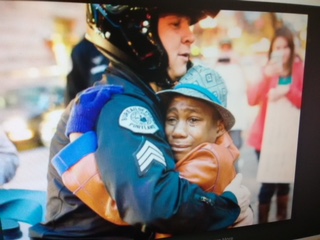
Re-visit January 26, 2023
On Wednesday, March 3, 2021, the House passed a bill titled “The George Floyd Justice in Policing Act.” It is named after 46-year-old George Floyd who died Memorial Day 2020 after a racist Minneapolis police officer pressed his knee against his neck for 8 minutes and 46 seconds. This barberic act was seen around the world. The bill passed along party lines 220-212 with two Democrats voting against the bill and one Republican pressing a button that said “NO” meaning “YES.” He was Lance Gooden of Texas. He was allowed to change his vote.
The police racism and brutality has been so bad in Prince George’s County in 2008 the FOP aka the KKK cops had no problem hanging a young black man in his jail cell. He was awaiting trial for the hit and run death of a white Prince Georges police officer. The young man was not given his day in court and the guilty cops have yet to be caught. Instead, a black jailer in the Upper Marlboro jail was found guilty of conspiracy in Federal Court. Judge Alex Williams (former member on the board of Kids In Trouble, Inc) sentenced him to serve one year in jail. The more things changed the more they remain the same. I met Alex through my friend and mentor, the honorable Judge Luke C. Moore, a pioneering U. S. Marshall and DC Superior Court Judge. Alex a retired Federal Court Judge recently embarked on a Podcast titled, “A Prospective of Justice.” https://www.youtube.com/watch?v=Fkafk63frbg HERE COMES THE JUDGE

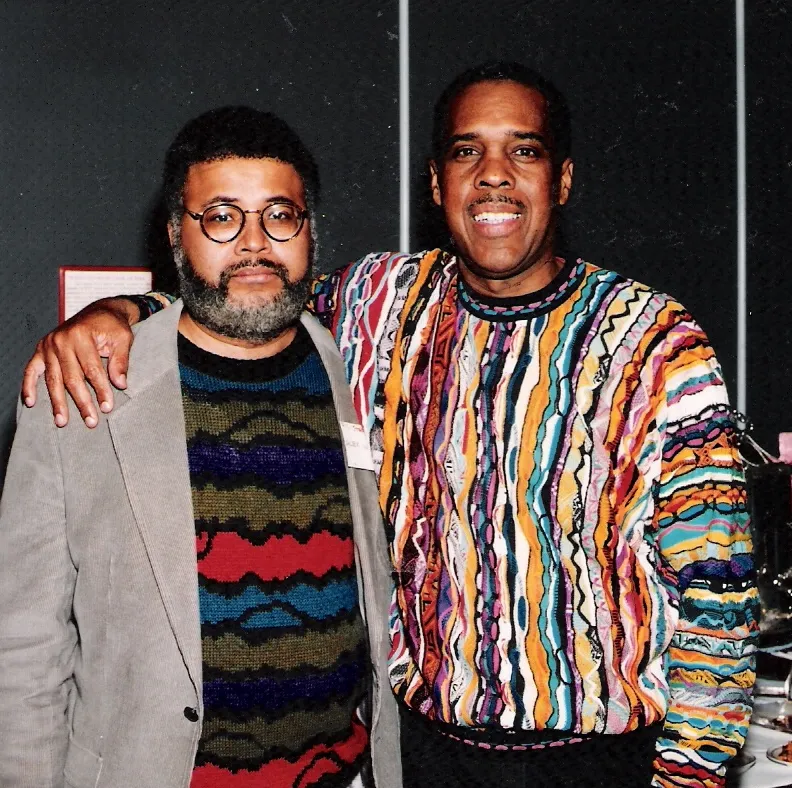
THE WAY WE WERE: FEDERAL JUDGE ALEX WILLIAMS-I HAD HIS BACK AND HE HAD MY BACK I THOUGHT!
The late Melvin High was the Chief of the Prince Georges County Police Department during those trying times. I knew Melvin from his time on the DC Police Department. He and my brother Earl joined the department around the same time in 1969. He would rise rapidly through the department retiring as Assistant Chief after 23 years. He would later take a job as the Chief of Police in Norfolk, Virginia. After 10 years of service he returned to familiar surroundings as the Chief of the Prince George’s County Police Department. My brother obtained the rank of sergeant as he battled the Code of Silence and the Thin Blue Line of racism in the department.
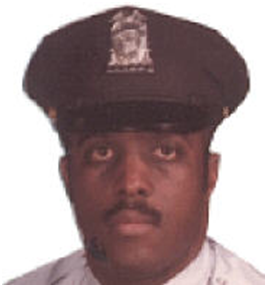
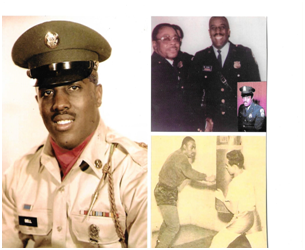
His career in law-enforcement came to an end on a cold morning on March 14, 1984. He was on his way for an temporary assignment to the Police and Fire Clinic when his car hit an icy patch on Southern Avenue SE overhead of the Suitland Parkway. His car slide into a 16 wheeler truck-it was no contest. The truck won. Sgt. Earl K. Bell aka Bull Bell would spend the next several weeks in the Intensive Care Unit fighting for his life. Chief Maurice Turner, and a slew of everyday cops and white shirts that included, Marty Tapscott, Ike Fullwood, Rodney Cato and Melvin High all came to the SE Community Hospital to pay their respects to the man they called “Bull Bell” among other names behind his back.
The doctors gave him a 50-50 chance to live, he beat the odds and left the hopital alive, but he was paralized from the waist down for life.
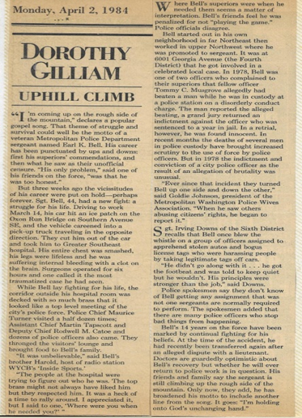
On April 2, 1984 Washington Post columnist Dorothy Gilliam wrote a column on Sgt. Earl K. Bell and the trials and tribulations of a good cop against all odds. Sgt. Irving Downs of the 6th District recalls that Bull Bell blew the whistle on a group of dirty cops who were using the system to benefit themselves. Sgt. Bell refused to look the other way and said, “Not on my watch.” The dirty cops were tried and convicted. His temporary assignment to the Police and Fire Clinic, was ‘Pay Back’ via Ike Fullwood.
Sgt. Downs, was quoted, “Bull Bell didn’t go along to get along. He got foot patrol and was told to keep quiet, but he would not. His priorities and principles were stronger than the job. He was an honest cop, when honesty was not the best policy.” The same holds true today with the present Mayor and Police Chief.
Sgt. Earl K. Bell, spend his last years in a nursing home where he died. His legacy as an good and honest cop still lives today.
Melvin High took over a Prince Georges County Police Department that was overrun with decades of racism and corruption. He was in over his head and left the department shortly after the hanging of a 19 year old black man in the Upper Marlboro jail in 2008. All this corruption and racism took place when Black Americans claimed, “Black Was Beautiful!” Jack Johnson was the County Executive, Glen Ivey was the State’s Attorney and Alex Williams was the Federal Judge. Still it was Justice & Just-Us!
High hrew his hat in the ring seeking the office of Prince George’s County Sheriff. He was voted into office and found a home for 12 years. He died suddenly November 17, 2022 waiting to sign his fourth set of retirement papers in law-enforcement.
My last encounter with High was outside of the Giant Food store on Excaliber Road in Bowie, Maryland. It was Christmas time 12 years ago. I was raising money for my Kids In Trouble annual Christmas toy party for elementary school children. He saw me and came over to my table to say hello. We were exchanging small talk when he said, “The department was not ready for Bull, he was ahead of his time!” The comment caught me off guard and my response was, “Yea I know.” He put a twenty-dollar bill in the jar and said, “Merry Christmas.” High’s response proved, the Bull Bell legacy lives on!
If you want more proof that Sgt. Earl K. Bell was ahead of his time, according to a recent report in USA Today, in 2022 cops killed more than 1,000 Americans this year – more than at any other point in the past decade, according to recent data from Mapping Police Violence. Who was first leading the list of homicides–unarmed black men and children.
Given the nation’s recent emphasis on police reform, this should be surprising. Since the killing of George Floyd in Minneapolis in May 2020, lawmakers have attempted to mitigate police violence by addressing illegal and fatal police tactics. Yet cops are still killing about three people a day.
And many of these deaths ocur during traffic stops. To protect motorists, we need better protocols and better leadership at the top.
As I looked back at the George Floyd Justice in Policing Act, there has been no change in the racist policies and police shootings of unarmed Black men. The USA Today story proves my point. The only change, the Wild-Wild West is now cops riding in cars and not on horses. The lynching of Blacks in Ameica has gone fom a rope to a gun.
Body cameras were suppose to deter the shootings–today’s cops just turn their cameras off and its business as usual. Most cops know that the politicians are just as corrupt as they are so they could care less about another black man or black child dying in the streets. It is still Justice and Just-Us!
We can add Hispanics and those blacks from Africa and the Caribbean Islands who didn’t think they were black to the mix. They are in for a rude awaking once they are stopped on a lonely backroad late at night or in the wee-wee hours of the morning by a racist cop, be he black or white.
The cop approaches their car calling them “Nigger” with his hand on his gun. These blacks who don’t think they are black are trying to explain to the cop that they are not Black, because they are from Haiti or Nigeria. With tears in their eyes they are finally getting the wake-up call they have been waiting for–welcome to Black America!
I started out as a Neighborhood Worker for the United Planning Organization (UPO) in 1965. I remember a shooting in my old neighborhood in NE DC in 1966. A young black man had been shot in the back and killed by a white cop while running away.
His crime, he had allegedly stolen a 29 cents pack of cookies. The crime was committed on Minnesota Avenue and Benning Road NE in a convenience store on the wrong side of the tracks. The victim was Clarence “Bug” Booker. The shooting brought back memories that I would rather have forgotten.
I will never forget how my brother Earl and I left home to cross those same railway tracks that “Bug” crossed in search of food/cookies. Our destination was the Safeway store where I carried groceries on the weekend to help my mother make ends meet. Booker was shot in the same block of the Safeway store. I had flashbacks because there goes me or my brother Earl.
Twenty years earlier on a cold December night. Earl entered the Safeway store from the back and I entered on the Minnesota Avenue side from the front. I was known to the Safeway clerks and staff and no one paid me any attention while I made my way down the aisle pretending I was searching for someone to help carry their groceries to their car or their home in the neighborhood. Earl and I made a clean getaway or so we thought with lunch meats and cheese stuffed down our pants and in our coats.
We were about to cross the railway tracks to our home when a cop car jumped the curb with two white cops jumping out with guns drawn–they were yelling and cussing calling us niggers and telling us to put our hands up high. I was scared to death, but Earl was cool. He was trying to figure out how in the hell did they catch up with us?
The cops threw us in the back of the car and one of the rednecks held his gun on us while the other cop sped up Benning Road to the 14th precinct with the siren on full blast. When they got us to the precinct both jumped out of the car and Earl and I use the moment to hide our meat and cheese under their seats.
They pushed us into the precinct in front of a little old white lady. She looked up and said, “These are not the two niggers that snatched my pocketbook.” For the first time, the word nigger coming from someone white was music to my ears. One of the Redneck cops told us to get the hell out of his station house. Earl and I hurried and got out of his station house.
We started to take a shortcut home through the woods called “G Man Diamond.” We crossed the street heading into the woods and we looked at each other and turned around. We went back to get our food from under the cop car seats. Yea it was crazy-but we were hungry.
The moral of the story, we could have been Clarence ‘Bug’ Booker shot and killed for stealing lunch meat and cheese.
Back to the scene of the crime where Booker was shot dead. His walking partner and friend was a young juvenile delinquent name Rufus Catfish Mayfield, he was a known petty theft and had served time in reform school for stealing a car. He was raising hell trying to stir up things to confront the police, without my knowledge Marion Barry was hanging around the fringes of the crime scene checking things out.
He was working behind the scenes making a deal to quell the threat of more violence. He made a deal with the U. S. Labor Department to sponsor a program called Pride, Inc. The program received a grant the first year for $300,000 to hire hundreds of inner-city youth like Catfish Mayfield. The second-year the grant was worth two-million dollars, Marion and wife Mary Treadwell swooped in on Catfish who was in over his head and kidnapped Pride, Inc. Marion would use Pride as his platform and springboad to kick-start his political career that would make him “DC Mayor for Life.”
I was 10 years Catfish’s senior, but we grew up in the same Parkside Housing project. His family lived in the 600 block of Kenilworth Terrace and I lived in the 700 block of Kenilworth Terrace and that was all we had in common.
I had no love for the police simply because I had never forgotten the lunch meat and cheese encounter and how they use to kick my door down late at night or in the wee hours of the morning raiding my house. They would take my mother out in handcuffs.
She was arrested for selling bootleg liquor, and cutting a nickel on a dollar in a card game called Pitty-Pat on the weekends. She also had a number book during the week in the neighborhood. The number backer Mr. Billy Jackson who lived on Sheriff Road NE. a 20 minute walk from our Parkside housing project. Earl and I would walk to Mr. Jackson’s house with mother to pick up the payoffs for the lucky players. Unlike today there were no numbers played on Sundays. Her same entrepreneur efforts are now legal in local casinos, liquor stores and food marts in the black community seven days a week.
Earl and I would sit on the steps and cry, but my mother would always look back and say, “I will be back in time to dress you for the church in morning” and she always did, I never forgot. My great-grandfather Rev. James Tyler laid the first brick to build Mt. Airy Baptist Church in 1893. The church is located at North Capitol and L Streets, NW in the shadows of the Capitol.
For 50+ years I worked to bring peace to my community as a Neighborhood Worker for the United Planning Organization, Roving Leader for the DC Department of Recreation & Parks, Presidential Appointee for the Nixon White House, founder of my non-profit organization Kids In Trouble, and last but not least a pioneering sports talk radio personality with the Original Inside Sports.
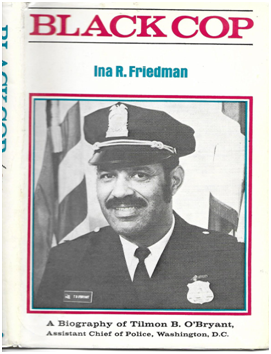
During the 1968 riots, I walked the streets for three days and three nights with nothing but a police badge. My friend and mentor Captain Tilmon O’Bryant convinced me I could make a difference or die trying. He swore me in as a cop without a gun.
Instead of making a difference years later I watched The Thin Blue Line and The Code of Silence hender the growth of my brothers and other good cops. My younger brother, DC cop Sgt. Earl K. Bell was a 14-year vet and my older brother Bobby Bell, was a 20 year vet of the U. S. Marshall Service. I watched them fight a system that is still there today. There are some good cops out there, but they stand by and watch the cowards and bullies run the departments, via FOP/KKK.
My high school friend and teammate, Andrew Johnson was a good cop. He was a foot patrolman, and a decorated homicide detective. He retired as a supervisor for the DEA tracking the bad guys all over the world. We worked hand and hand in the community. I have seen the Good-Bad and Ugly when it comes to cops in the DMV.
During the riots I met a great brother who was an undercover FBI agent, Wayne Davis. He and I became fast friends.
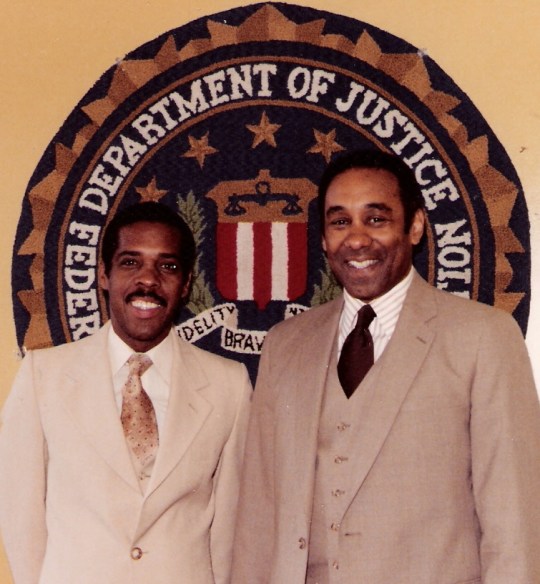
I met the late Wayne Davis on the streets of DC during the 1968 riots. In 1970 he was assigned as a desk supervisor at FBI HQ in Washington, DC. The assignment made him only the second black in FBI history to hold that position. Wayne and I would have lunch years later and he reminded me who were the real heroes of the 1968 riots in DC. He named DC’s first black Mayor, Walter Washington, and Patrick Murphy, the Director of the Police and Fire Departments as the real heroes.
When I asked him to explain, he said, “When my boss suggested to shoot looters on sight, Washington and Murphy said, ‘Hell No.’ We will never know how many lives they saved. J Edgar never consulted with members of his staff, this decision was made solely by him and his inner circle.”
Wayne grew up in Newark, NJ where he was an outstanding high school athlete. He was the captain of the University of Connecticut basketball and track teams. He left DC and the next thing I knew he was the Agent in Charge in the Detroit Office of the FBI. In 1980 I was in Detroit covering Thomas “Hit Man” Hearn’s first title fight. I invited Wayne to attend fight. We watched Hearns knock out the champion Pipino Guevas in the 8th round to become the new welterweight champion of the World. He enjoyed the outing and thanked me for making it possible.
When Wayne retired and took a job to head security at a Fortune 500 firm in Philadelphia we stayed connected. He was my guest several times on my sports talk show Inside Sports during Black History Month.
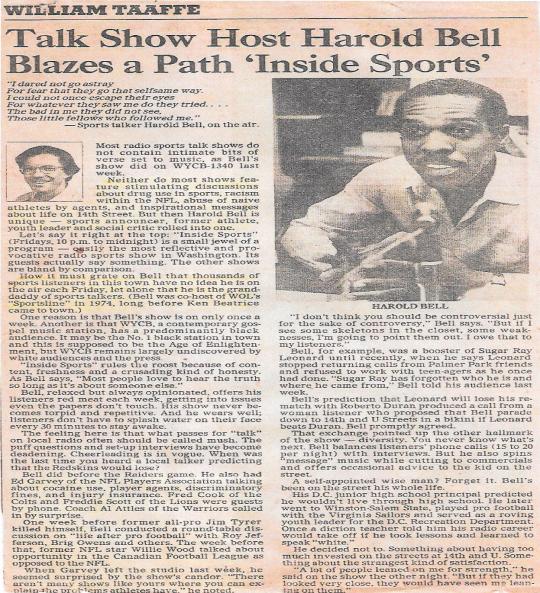
When the FBI was making plans to catch Mayor Marion Barry with his pants down, Wayne asked me to warn the Mayor.
I found Mayor Marion Barry in Face’s Restaurant located on upper Georgia Avenue NW. The restaurant was a hangout for the “DC in crowd.” I asked his driver and security officer William Stays to go into the restaurant and tell the Mayor I needed to see him. Stays without any questions went into the restaurant and brought him out. I told Marion I had information that the FBI was on his trail and he needed to step back. His response, “Harold I appreciate the information, but I got everything under control!” Stays looked at me and said, “Harold what more can you do?” Several months later, ‘The Bitch Set Him Up.”
The Saturday before he was to go to jail on Monday, he stopped by W-U-S-T radio station with my college teammate and roommate, DC Boxing Commissioner, the late Dr. Arnold McKnight. The first world out of his mouth, “Harold Bell is always going to tell the truth.” He confessed, “Harold I should have listen to you.” Too little too late!
I have coordinated too many to count police and youth forums to improve community policing. I encouraged DC Superior Court judges, police chiefs and beat cops to be a part of the community to enhanced the growth of inner-city children via my non-profit organization Kids In Trouble, Inc. My problem, the white cops who needed the forum the most–were no shows. https://www.youtube.com/watchv=RvmdLzVSf38&feature=em POLICE FORUM.
Kids In Trouble, Inc Police and Community Relations Forum at Bible Way Baptist Church in NW DC. Co-host Congressman Tom Davis (R-Vir) and Jim Brown (NFL)

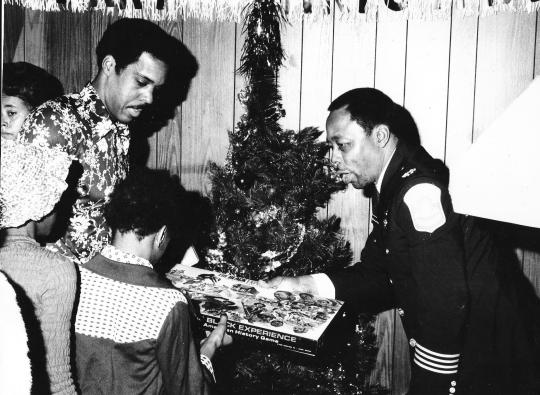
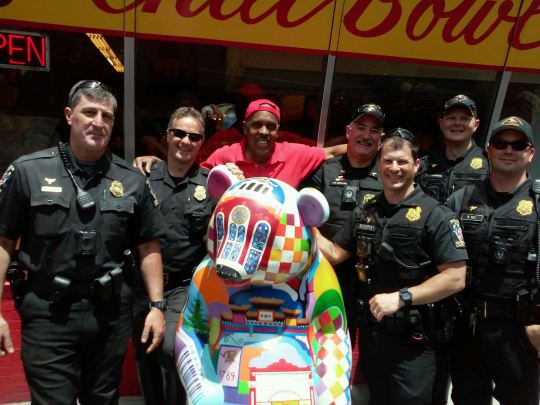
I testified during a DC City Council confirmation hearing against the hiring of Peter Newsham as DC Police Chief. He was not worthy and they hired him anyway. The murder and crime rate skyrocketed every year he held office. I forewarned Mayor Muriel Bowser (Black), Congresswoman Eleanor Holmes Norton (Black) and Councilwoman Mary Che (other) with written proof. I gave to them personally. We cannot blame Newsham or Donald Trump for the lack of black leadership–This is Us.
REST IN PEACE CHIEF MELVIN HIGH
I REMEMBER ‘BLUE’ WHEN A HERO WAS NOTHING BUT A SANDWICH!
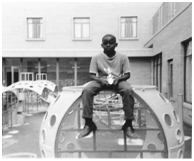
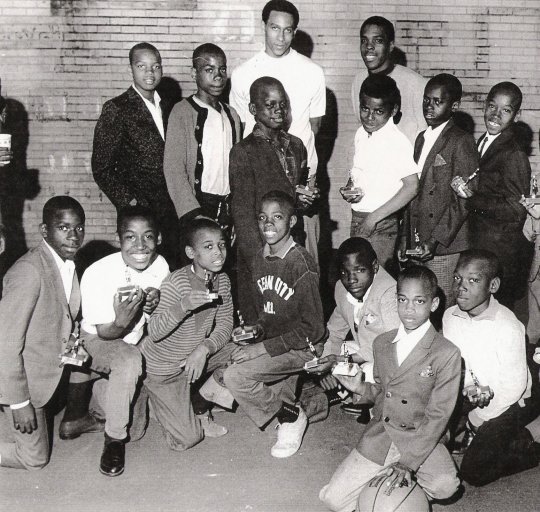
The U street NW corridor was the home of jazz greats, civil rights icons and Ronal ‘Blue’ Hamilton in the late 60s. I met ‘Blue’ at Harrison Elementary School where he was a student/athlete. The school was located directly across the street from Children’s Hospital, two blocks from Cardozo High School and one block from the U Street corridor. Harrison was definitely a inner-city school. When I received the call from Ricky Williams (a card carrying member of the KIT Saturday Program) with the sad news that Ronald Hamilton aka ‘Blue’ had recently made his transition. “The Good Old Days” came rushing back.
In 1965 I watched civil rights history change right before my eyes. It seem like H Rap Brown, Stokely Carmichael and Marion Barry all arrived in DC around the same time. Brown would join Petey Greene and me as a neighborhood Worker for the United Planning Organization, Carmichael took over as the Chairman of SNCC (Student Non-Violent Coordinating Committee) and Brown would follow him as the chair in 1967. Marion had eyes only for Pride, Inc. In 1966 Marion would kidnapp Pride Inc from a teen ager name Rufus “Catfish” Mayfield. I was 10 years Mayfield’s senior, but we grew up in the same NE Parkside housing project. He lived in the 600 block of Kenilworth Terrace and I lived in the 700 block of Kenilworth Terrace that was all we had in common.

Catfish had inherited Pride, Inc as a result of his friend Clarence “Bug” Booker being shot and killed near Minnesota Avenue and Benning Road, NE. Booker was shot in the back by a white cop who accused the pair of stealing a 29 cents box of cookies, all hell broke loose. Catfish was a 17 year old juvenile delinquent who was a petty theft and had served time in reform school for car theft. The potential for violence was real, but cooler heads prevailed, and out of those ashes came Pride Inc.
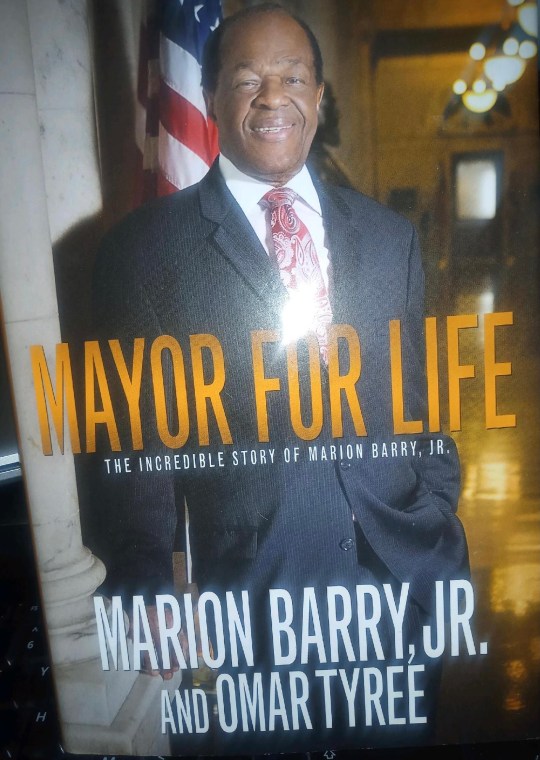
To quell the potential from further violence the U. S. Labor Department sponsored the project with a grant the first year for $300,000. The program would provide hundreds of jobs for at-risk youth like Mayfield. The second year the Labor Department’s grant was worth two-million dollars. Marion Barry and his wife Mary Treadwell were like sharks in the water smelling blood. The two swooped in on Catfish who was just a teenager in over his head. Marion use the Pride platform to jump start his political career. Marion and Mary Treadwell were later convicted in 1983 for fraudulent mis-using federal funds earmarked for Pride, Inc. Treadwell pleaded guilty of all charges sparing Marion jail time. Catfish was able to piggyback off of Marion’s civil rights platform and has since become a designated “Civil Rights” leader. Marion gave little or no credit to Catfish as the creator and heart of Pride, Inc. Read his book “Mayor For Life.”
In 1967 while still working for UPO I would meet Muhammad Ali on the campus of Howard University and the rest is community and sports media history.
1967 would be a very good year for me, UPO would give a grant to the DC Recreation Department to hire additional Roving Leaders for their “Youth Gang Task Force.” I would be a part of that grant package. I left UPO for the Department of Recreation & Parks’ in November 1967. Petey Greene stayed at UPO where he became the radio voice of black DC with “Petey Greene’s Washington.” He was heard every Sunday evening on W-O-L radio. I would later join him with a five minute sports report.
In the meantime, enter Ronald ‘Blue’ Hamilton, Lee House, Bernard ‘Fantastic’ Hillary, Ricky Williams, Gene Ward, Stacy Robinson, Keith Jackson, Raymond ‘Sweet Toot’ Hill, Thurston McLain, Tyrone Shorter, Lloyd ‘Preacher’ Jones, Michael “Dynamite” Palmer, Johnny Robinson, Michael Gordon aka Michael Gee, Jimmy Lee and brothers, Ronnie and Vincent. They were all students attending Harrison Elementary. They spent their evenings at the Harrison Rec Center located directly across the street from the school, both facilities were one block off the U street corridor. This was truly a inner-city school in every sense of the word. They didn’t have a care and politics were the last thing on their fragile minds.
I was re-introducing myself to the school environment in Cardozo/Shaw. My stint as a ‘Neighborhood Worker’ for UPO made it easier for me to transition into my new role as a Roving Leader. School leadship led by Harrison Principal, Mr. Cousins and Physical Ed teacher, Mr. Davis was the best, they really made ‘Children First.’ These black men were a breath of fresh air that I have not seen since. When Sugar Ray Leonard was trying to get his act together, Mr. Cousins granted him an audience with the children. He had lost his self-esteem and they helped him to regain it–they only saw the hero.
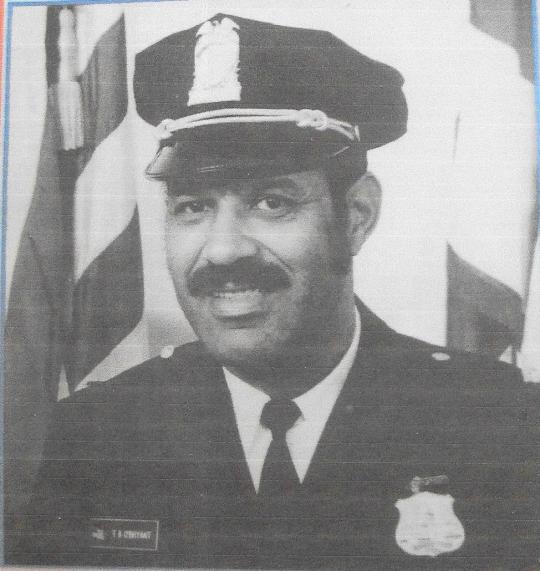
Our Prince of Peace Dr. Martin Luther King was assassinated on April 4, 1968 I spend three days and nights on the streets of DC with nothing but a police badge issued to me by Captain Tilmon O’Bryant of the 4th District Headquarters. The badge allowed me to cross police and military barricades anywhere in the city to help try to keep the peace. The only thing I was scare of was a scare cop mistaking me for a looter and shooting me down in the streets. I could not wait to return that badge to Tilmon O’Bryant.
My wife Hattie and I found our non-profit organization Kids In Trouble and were the host for our first Christmas toy party for needy children in December 1968. After 45 straight years of toy parties in the DMV without grants or loans Hattie said, ‘No Mas’ and I turned in my Santa Hat and keys to the sleigh.
Blue tried to participate in every toy party I gave for the children, he would show up at places I thought were off the beaten path for him, but there he was that smile and “Hey Mr. Bell.” I affectionately called him “Captain Knucklehead.” He was a member of the football and basketball teams at Harrison and Hillcrest Saturday Programs. He could not play dead, but he was one of those guys who gave his all. He also thought I could still make things happen after he became a grown man and I was an old man barely hanging on myself. He would call asking if I could find him a job, pay his electric bill, find him an apartment, etc. One night I was attending a NBA Wizards’ game at the Verizon Center and I spotted him working. He was with my friend Kay Ettridge, she was a former DC cop and she was his supervisor and mentor. I was elated he had a job, but happier that his mentor was Kay. Several years later that job would come to an end with new management. He would later call saying, “Mr. Bell I am over here near Sibly Hospital can you come and get me?” It was Sunday and raining, it was hard to say “NO” but I did.
My last call from Blue came two years ago to tell me his social Security had come through. He wanted me to help find him an apartment! He promised he was going to bring me a piece of money–I am still waiting (smile).
Father Raymond Kemp our watchdog priest from the house of St. Paul & Augustine Church, responding to the news of Blue’s demise on FB, he brought to my attention that there was a drowning incident at the Hillcrest Saturday Program pool back in the day. I remember one incident on my watch. It was on a cold November Saturday and I walked into the pool and spotted a body lying at the botton. Everyone was swimming all around him. I dove in and pulled him out-it was a little kid we called Horsey. I didn’t know mouth to mouth so I ran with him in my arms soaking wet to the Children’s Hospital Emergency Room–they saved his life, but I would take the credit for it everytime I would see him, I would say “Boy I saved your life.” He would just laugh.
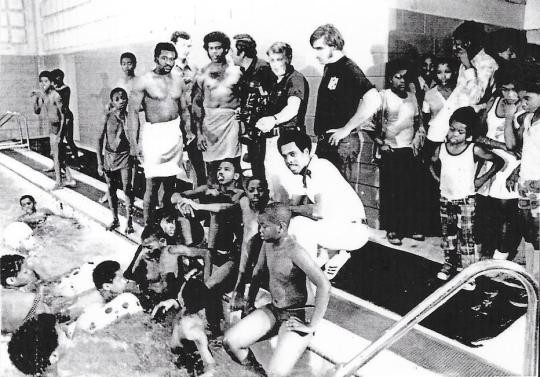
The first ever national NFL community television promo on water safety was video taped at the Hillcrest Saturday Program. Redskins Larry Brown and LB Harold McLinton were taped teaching water safety to the kids. Those were ‘The Good Old Days’ with Dave Bing, John Thompson, Jim Brown, Red Auerbach, Petey Greene, Larry Brown, Harold McLinton, Roy Jefferson, they made Blue and the Kids In Trouble Hillcrest Saturday Program the best in the DMV. Those days were truly “The Good Old Days.”
It makes you wonder how will today’s children describe ‘The Good Old Days’ to their children and grandchildren? Will they remember ‘The Good Old Days’ as Donald Trump being the worst U. S. President in American history and how he let Covid 19 be on track to kill a million U. S. residents? Or will they tell their children stories on how racism in police departments across America killed a record number of black, unarmed minority men and women in our streets for no rhyme or reason? And how a Lie became the New Normal among black and white leadership in American politics? Will they tell how their heroes and sheroes were spooks that sit by the door with titles and high paying jobs, but their success and contribution was like having a “Hero Sandwich” without the meat. RIP Ronald Hamilton.
RIP Ronald Hamilton.
MEDIA THE LAST PLANTATION: FREE BLACK MEN!
THE MOST INFLUENTIAL SPORTS JOURNALIST OF THE 20th and 21st CENTURY!
Black Men in America
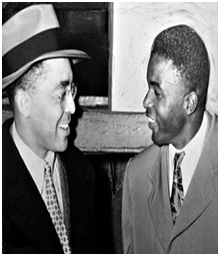
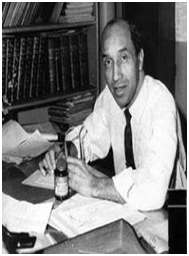
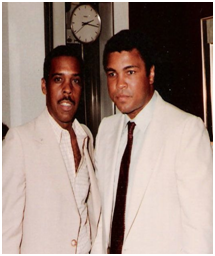
Publisher’s Note: Harold Bell is the foot print of sports talk radio in the 20th and 21st century. The Inside Sports format changed the way we talk and report sports in America. Inside Sports was found in 1972 in Washington, DC, but transition immediately into a national and international branded sports talk show. Thanks to his guest Muhammad Ali, Red Auerbach, Jimmy Connors, Bert Sugar, Dr. J, Roy Jefferson, Gale Sayers, Jim Brown, and Dr. Harry Edwards among others. Washington Post Sports editor George Solomon and his writers played an important role. They provided updated reports from Wimbledon, and Australian Tennis Tournaments, track and field meets were covered from around the world. Hats off to trailblazing sports writers Wendell Smith/Pittsburgh Courier and Sam Lacey/Afro-American newspapers. They left indelible marks in print media. Harold Bell is a Renaissance man who made his mark as an Athlete, Youth Advocate, pioneering radio talk show host, television pioneer, and writer. He successfully encouraged politicians, pro athletes, judges and law-enforcement to reach back into the community to enhance the growth of inner-city children. He successfully campaigned to get Willie Wood (NFL) and Earl Lloyd (NBA) inducted into their hall of fames after they were blackballed. The NFL-NBA-NFL and NHL all followed him into the community. Harold Bell was the prison pipeline for early release for athletes who ran afoul of the law. He is the most influenial sports talk show personality of the 20th and 21st century.
It is often said, “Sports and Politics Don’t Mix” someone forgot to tell the late sports journalist Wendell Smith of the Pittsburgh Courier Newspaper, the late Sam Lacey of the Afro-American Newspaper and Inside Sports talk show host, Harold Bell. These three pioneers and trailblazers are considered the greatest black sports journalist of the 20th and 21st Century. Their common thread, all three could write great stories, were great athletes and were ground breaking journalist, in radio and television. They blazed trails for others to follow.
Wendell Smith was born in Detroit and he is a HBCU graduate, West Virginia State. He encountered racism in the early stages of his athletic career. He was an outstanding pitcher on the baseball team. One day after winning a game, a major league scout approached him and said that he wished that he could sign him, but couldn’t due to baseball’s color barrier, and instead signed the opposing player a white pitcher. It was there Smith promised himself that he’d do whatever he could to see an African-American play major league baseball. He became the sports editor for the college’s newspaper his junior year.
He began his professional writing career in 1937 with the Pittsburgh Courier, then the most popular paper within the black community in the country. He started as a sports writer and then was selected the sports editor the year after. He covered the Homestead Grays and Pittsburgh Crawfords of baseball’s Negro leagues for the Courier. Smith also petitioned the Baseball Writer’s Association of America (BBWAA) for membership but was turned down because he was with the Courier and not one of the white-owned papers. Little has changed in 2021 a segregated newspaper pressroom is second only to a church on Sunday.
Smith is credited with recommending Jackie Robinson to the Brooklyn Dodgers general manager, Branch Rickey was searching for a individual with strong character to successfully execute the integration of MLB. In April 1947 Rickey made it happen. The Courier offered to pay for Smith to travel with Robinson, who had to stay in separate hotels from his teammates due to segregation policies prevalent at the time. Smith traveled with Robinson in the minors in 1946 and with the Brooklyn Dodgers in 1947. In 1948 Smith released his book, Jackie Robinson: My Own Story.
Later Smith moved on to Chicago and joined the white-owned Chicago Herald-American. Smith left his baseball beat and covered mostly boxing for the American. In 1947, his application to join the BBWAA was approved, and he became the first African American member of the organization.
Smith moved to television in 1964 when he joined Chicago television station WGN as a sports anchor, though he continued to write a weekly column for the Chicago Sun-Times. Smith died of pancreatic cancer at age 58 in 1972, just a month after Robinson. Smith had been too ill to attend Robinson’s funeral, but he wrote Robinson’s obituary.
In 1993, he was a posthumous recipient of the J. G. Taylor Spink Award for excellence in journalism. In 1994 Smith was inducted into The Baseball Hall of Fame. His widow Wyonella Smith donated his papers to the Hall of Fame’s archives in 1996, providing invaluable research material on the subject of baseball’s integration. DePaul University and the University of Notre Dame have presented the Wendell Smith Award to the best player of each game between the schools’ men’s basketball teams since the 1972–73 season. In 2014, Smith was the recipient of sports journalism’s prestigious Red Smith Award.
Sam Lacy was born on October 23, 1903, in Mystic, Connecticut to Samuel Erskine Lacy, a law firm researcher, and Rose Lacy, a full-blooded Shinnecock Indian. The family moved to Washington, DC when Sam was a young boy. In his youth he developed a love for baseball, and spent his spare time at Griffith Stadium home ballpark for the Washington Senators. His house at 13th and U streets was just five blocks from the stadium, and Sam would often run errands for players and chase down balls during batting practice.
In his youth Sam witnessed racist mistreatment of his family while they watched the annual Senators’ team parade through the streets of Washington to the stadium on opening day. Sam later recalled what happened after his elderly father cheered and waved an “I Saw Walter Johnson Pitch” pennant.
“Fans like my father would line up for hours to watch their heroes pass by. And so there he was, age 79, out there cheering with the rest of them, calling all the players by name, just happy to be there. And then it happened. One of the white players—I won’t say which one—just gave him this nasty look and, as he passed by, spat right in his face. Right in that nice old man’s face. That hurt my father terribly. And you know, as big a fan as he had been, he never went to another game as long as he lived, which was seven more years. Oh, we’ve come a long way since then. But we’ve still got a long way to go.”
As a teenager Sam worked for the Senators as a food vendor, selling popcorn and peanuts in the stadium’s segregated Jim Crow section in right field. Lacy also caddied for British golfer Long Jim Barnes at the 1921 U. S. Open, held at nearby Columbia Country Club. When Barnes won the tournament, he gave Lacy a $200 tip.
Lacy graduated from Armstrong Technical High School in Washington, where he played football, baseball and basketball. He enrolled at Howard University, he graduated in 1923 with a bachelor’s degree in physical education, a field he thought might lead him to a coaching career.
Lacy played semi-pro baseball after college. He pitched for the local Hillsdale club in Washington He also refereed DC-area high school, college and recreational basketball games, while coaching and instructing youth sports teams.
While in college, Lacy began covering sports part-time for the Washington Tribune a local African-American newspaper. He continued writing for the paper following his graduation, and also worked as a sports commentator for radio stations WOL and WINX in the early 1930s.
He joined the Tribune full-time in 1926, and became sports editor shortly thereafter. In 1929 Lacy left the paper for the summer to play semi-pro baseball in Connecticut while his family remained in Washington. He returned to the paper in 1930, and once again became sports editor in 1933.
During his tenure Lacy covered Jesse Owens medal-winning performances at the Summer 1936 Olympics in Berlin. The world heavyweight title fights of boxer Joe Louis (including his victory over Max Schmeling, and the rise of Negro League. He covered stars such as Satchel Paige, Josh Gibson, and Cool Papa Bell.
Lacy approached Clark Griffith about signing several Negro players from the Homestead Grays, but Griffith voiced concern that the fall of the Negro leagues would “put about 400 colored guys out of work.” Lacy retorted in a column, “When Abraham Lincoln signed the Emancipation Proclamation, he put 400,000 black people out of jobs.
In October 1937, Lacy broke his first major story when he reported the true racial origins of multi-sport athlete Wilmeth Sidat-Sing, of Syracuse University. He claimed Sidat-Singh was of Hindu and Indian heritage, when in truth his widowed mother had remarried, to an Indian doctor. Prior to a football game against the University of Maryland, Lacy revealed Sidat-Singh had been born to black parents in Washington, D.C., and trumpeted the news as a sign the color barrier at segregated Maryland was about to fall. When Maryland officials refused to play the game unless Sidat-Singh was barred from the field, Syracuse removed him from the team and lost the match 13-0. The controversy prompted an outcry against both schools’ policies and actions, and Sidat-Singh was allowed to play against Maryland the following year as he led Syracuse to a decisive 53-0 win. Lacy drew criticism in some circles for divulging Sidat-Singh’s ethnicity, but maintained his stance that racial progress demanded honesty.
In August 1941 Lacy moved to Chicago to work for another black newspaper, the Chicago Defender, where he served as its assistant national editor. While in the Midwest he made repeated attempts to engaged Major League Baseball commissioner Kenesaw Mountain Landis on the topic of desegregating the game, writing numerous letters, but his efforts went unanswered.
Lacy also targeted blacks in management and ownership positions with the Negro leagues, some of whom had a vested financial interest in keeping the game segregated. In a Defender editorial, he wrote:
“No selfishness on the part of Negro owners hip, nor appeasement … to the Southern reactionaries in baseball must stand in the way of the advancement of qualified Negro players.”
On January 4, 1944, Lacy returned East, joining the Afro-American in Baltimore as sports editor and columnist. He continued to press his case for integrating baseball through his columns and editorials, and many other black newspapers followed suit. In one such piece in 1945, Lacy wrote:
“A man whose skin is white or red or yellow has been acceptable. But a man whose character may be of the highest and whose ability may be Ruthian has been barred completely from the sport because he is colored.”
However, Lacy did not make any headway on the issue until Landis died in late 1944. Lacy began a dialogue with Brookly Dodgers owner Branch Rickey, and Landis’s successor in the commissioner’s office, Happy Chandler, lent his support to the effort. It ultimately led to Jackie Robinson signing with the Dodgers’ minor league team, the Montreal Royals on October 23, 1945, which was Lacy’s 42nd birthday.
Lacy spent the next three years covering Jackie’s struggle for acceptance and a spot in the big leagues. He traveled with Robinson to the Royals’ games at various International League cities.
He traveled throughout the Northeast, to the Dodgers’ spring training site in Daytona Beach, to Florida, to competing clubs’ camps throughout the deep South, and to Cuba for winter baseball.
Like Robinson and the other black athletes he had covered, Lacy encountered racist indignities and hardships. He was barred from press boxes at certain ballparks, dined at the same segregated restaurants with Jackie, and stayed at the same “blacks only” boarding houses as Robinson. Robinson would eventually break MLB’s color barrier in 1947 with the Dodgers, but Lacy never allowed their racial bond to cloud his journalistic objectivity. During spring training in 1948, Lacy chastised Robinson in print for arriving 15 pounds overweight, his “lackadaisical attitude” and for “laying down” on the job. He also plastered details of Robinson’s personal life throughout his articles, including the dining, shopping, wardrobe and travel habits of Jackie and his wife, Rachel.
Lacy resisted having his own personal bouts with racism become part of the integration storyline, and kept the focus on the athletes he covered:
“There were a lot of things that were bothering him. [Robinson] was taking so much abuse that he said to me that he didn’t know whether or not he was going to be able to go through with this because it was just becoming so intolerable, that they were throwing everything at him.”
Lacy made sure to cover all angles of the race issue. In 1947, he reported on the interaction between white St. Louis Browns outfielder and rumored racist Paul Lehner, and his black teammate Willard Brown:
“Brown used a towel to wipe his face and neck. Lehner reached over, picked up the same towel, wiped his face and neck. He handed it back to Brown and the latter wiped again. A little later, Lehner repeated the act. Folks, this was something I saw, not something I heard about.”
In 1948, he reacted to the death of Babe Ruth not with adulation for the star but with spite toward Ruth’s personal behavior:
“[Ruth was] an irresponsible rowdy who could neither eat with dignity nor drink with judgment who thrived on cuss-words and brawls whose 15-year-old mentality led him to buy one bright-colored automobile after another to smash up. The rest of the world can hail the departed hero as a model for its youth but I do not wish my [son] Tim to use him as an example. And there is absolutely nothing racial about this observation. The same applies to [black boxer] Jack Johnson, who is also dead.”
Lacy covered the first interracial college football game ever played in the state of Maryland when all-black Maryland State faced all-white Trenton (N. J.) in 1949:
“Down here on the Eastern Shore, where 32 lynchings have occurred since 1882, democracy lifted its face toward the Sun on Saturday.”
Not content to see black ballplayers reach the major leagues, Lacy began pushing for equal pay for athletes of color, and for an end to segregated team accommodations during road trips. His first success on those fronts was persuading New York Giants general manager Chub Feeney to address the latter issue:
“I pointed out to Chub Feeney that he had guys like Willie Mays and Monte Irving and Hank Thompson holed up in some little hotel while the rest of the players, people who might never even wear a major-league uniform, were staying at the famous Palace. Chub just looked at me and said, ‘Sam, you’re right.’ He got on the phone to (Giants owner) Horace Stoneham and that was the end of that.”
Over the ensuing decades, Lacy pushed for the Baseball Hall of Fame to induct deserving Negro league players, and later criticized the Hall for placing such players in a separate wing. He also pressured national TV networks over the lack of black broadcasters, criticized Major League Baseball for the absence of black umpires, targeted corporations for their lack of sponsorships of black athletes in certain white-dominated sports including golf, and highlighted the dearth of black head coaches.
Stories covered extensively by Lacy included the Grand Slam tennis titles won by Althea Gibson and Arthur Ashe two decades apart, Wilma Rudolph’s three & field gold medals at the 1960 Olympic Games in Rome and Lee Elder playing at Augusta National in 1975 as the first black golfer in The Masters tournament.
In 1954, Lacy questioned why the city of Milwaukee had chosen to honor Braves outfielder Hank Aaron with a day in his honor a mere two months into his playing career:
“Why? Why is it we feel every colored player in the major leagues is entitled to a day? Why can’t we wait until, through consistent performance or longevity, the player in question merits special attention?”
Lacy worked as a television sports commentator for WBAL-TV from 1968 to 1976.
Lacy remained with the Baltimore Afro-American for nearly 60 years, and became widely known for his regular “A to Z” columns and his continued championing of racial equity. The onset of arthritis in his hands in his late 70s left him unable to type, so he wrote his columns out longhand. Even into his 80s he maintained his routine of waking at 3 A.M. three days a week, driving from his Washington home to his Baltimore office, working eight hours, and playing nine holes of golf in the afternoon. Lacy could no longer drive after a suffering a stroke in 1999, so he rode to the office with his son, Tim, who followed in his footsteps as a sportswriter for the Afro-American.
In 1948, Lacy became one of the first black members of the Baseball Writers Association of America preceded by Wendell Smith who became a member in 1947.
In 1984, Lacy became the first black journalist to be enshrined in the Maryland Media Hall of Fame.[36]
In 1985, Lacy was inducted into the Black Athletes Hall of Fame in Las Vegas.
In 1991, Lacy received the Lifetime Achievement Award from the National Association of Black Journalist
In 1994, Lacy was selected for the Society of Professional Journalist Hall of Fame by the Washington chapter.
In 1995, Lacy was in the first group of writers to be honored with the A. J. Liebling Award by the Boxing Writers Association of America.
In 1997, the 50th anniversary of Robinson’s groundbreaking major league debut, Lacy received an honorary doctorate from Loyola University Maryland, and was honored by the Smithsonian Institution with a lecture series. Lacy also threw out the ceremonial first pitch prior to a Baltimore Orioles home game at Camden Yards that season.
On October 22, 1997, Lacy received the J. G. Taylor Spink Award for outstanding baseball writing from the Baseball Writers’ Association of America. The award carries induction to the writers and broadcasters wing of the Baseball Hall of Fame, and Lacy was formally enshrined on July 26, 1998.
In 1998, Lacy received the Frederick Douglas Award from the University System of Maryland on April 23 the United Negro College Fund established College scholarship program in Lacy’s name on April 25; and he received the Red Smith from the on June 26.
In 2003, the Sports Task Force wing of the National Association of Black Journalist instituted the Sam Lacy Pioneer Award, presented annually to multiple sports figures in the host city for the NABJ convention. Recipients are selected based on their “contributions to their respected careers, but more importantly, their direct impact on the communities they served.
https://www.bigmarker.com/nabj/NABJ-Sam-Lacy-Awards-Program? bmid=99ea2ef240f2 / Sam Lacey Pioneer 2020 Award
Lacy also served on the President’s Council on Physical Fitness & Sports and on the Baseball Hall of Fame’s selection committee for the Negro leagues.
Sam Lacy wrote his final column for the paper just days before his death at age 99 in 2003, and filed the piece from his hospital bed. In 1999, he explained his rationale for staying with the Afro-American while spurning more lucrative offers:
“No other paper in the country would have given me the kind of license. I’ve made my own decisions. I cover everything that wanted to. I sacrificed a few dollars, true, but I lived a comfortable life. I get paid enough to be satisfied. I don’t expect to die rich.”
Sam Lacy died rich at the age 99 on May 8, 2003. He was one of the richest men I know in sports media—I wish we all could die so rich—-he died a “Free Man!”
The mis-quote of the month: “After freeing over 300 slaves, Harriet Tubman said, “I could have freed hundreds more only if they had known they were slaves.” Sports media and Bill Rhoden “A word to the wise is hopefully sufficient”!
DR. HARRY EDWARDS REVISITED: OUR VOICES IN SPORTS MEDIA!
November 23, 2022

Dr. Edwards was once an outstanding athlete on the San Jose State track and field team. He was the coordinator for the 1968 Olympic Project. He had been a contributor to “The Original Inside Sports” for over four decades.

Michael Wilbon’s Washington Post colleague John Feinstein called him “the biggest ass kisser and cheerleader in sports media.”
When former NBA great and ESPN analyst Charles Barkley’s interview on CNN went viral as it related to his opinion on black men in America/Michael Brown and Ferguson. I contacted Dr. Edwards to make sense of the uproar. I also spoke to Michael Wilbon of ESPN to get his take on his friend Barkley’s views on racism and black men in America. Wilbon agreed that we can all disagree! This was all being said as it related to ESPN’s Kenny Smith’s “Open Letter” to his colleague Charles Barkley.
Wilbon had written two books on Charles Barkley. He said “Harold I didn’t hear the interview (liar) but I will see Charles tomorrow and I will get a response!” I turned to ESPN’s PTI to watch Wilbon and his partner the overrated Tony Kornheiser. during that segment of the show there was no mention of Kenny Smith’s Open Letter to Barkley so I moved on. Wilbon has become a Big Liar–his word has meant absolutely nothing in 2021.
WILBON AND I SHARE A LAUGH–THE LIES HE STARTED TO TELL WERE NOT FUNNY!
This was Dr. Harry Edwards’ take on Barkley and Wilbon: “I love Charles Barkley– as long as he is sitting on the sports desk at TNT trying to explain why the Clippers will never win a championship as long as their toughest, most consistently competitive player is a 6’1″ point guard. But when he begins to offer jaw-droppingly ignorant and uninformed opinions on issues from Obama’s Syria/ISIS policy to the “criminal” predispositions and proclivities of the Black community, I find something more productive to do like taking out the garbage or cleaning up my lawn. And the saddest part of it all is that he apparently doesn’t realize that the networks and interviewers are just flat out CLOWNING HIM!!! It’s a “What crazy crap can we prompt Barkley to say. And all the better if it is an attack on Black people!”
The “guess what Charles Barkley said on CNN?” factor is incentive enough for the networks to persist in presenting and promoting this clown show– long past the time when it is not either funny or even remotely engaging. Now both Barkley and Wilbon look like clowns– and justifiably so.”
Forget Michael Wilbon – he is just as sick and confused as Barkley. He is the guy who while sitting on a major cable network anchor desk said ” I call my Black friends “Nigger” all the time – and there is nothing wrong with that.” This is a sentiment that Barkley agrees with– until the White boy sitting next to them calls somebody “Nigger” and then they want him fired! So don’t hold your breath for Wilbon to exercise either the balls or the intellectual integrity to challenge Barkley on his bull shit.
Dr. Harry Edwards
Summary: Guess Who is Coming back to Dinner?
Barkley and Wilbon took center stage again when NBA Super Star Kyrie Irving posted a documentary on his social media twitter page titled “Hebrews to Negroes.” The Jewish Community found the post offensive!
In the meantime, Kyrie never posted he liked or disliked the documentary. The Jewish community is blaming the wrong guy for distribution of the documentary–try billionaire Jeff Beos of Amazon and the clowns, Howdy Doody and Clarabell (Barkley and Wilbon) who were joined on their soapboxes by Stephen A. Smith, ‘The King’ Lebron James, Shaq O’Neal and too many others to mention in this limited space.
In the meantime, Barkley went on a crusade to every media network who sought his opinion to denounce Irving even after NBA Commissioner Adam Silver and Brookly Nets owner Joe Tsai admitted Irving was not anti-systemic. Someone overruled them.
From the outside looking in I find Silver to be more in tude with doing the right thing than all of the pro sports commissioners (MLB-NHL-NFL).
I had the opportunity to watch the video debate between Charles Barkley and Kenny Smith on Inside the NBA. The topic, Kenny’s Open Letter to Barkley as it related to Michael Brown and Ferguson. I was further confused by Barkley’s response to Smith for adding the word “Slavery” to the dialogue in his Open Letter, but he found nothing wrong with his friend Michael Wilbon using the word ‘Nigger’ as his word of choice while addressing his everyday buddies? What ever happen to common sense?
My opinion, Kenny had every right to bring slavery into the conversation. There is an old saying “If you don’t know your history you are bound to repeat it.” It is evident to me that Barkley does not know his black history. Shaq O’Neal made a valid observation (seldom heard) when he said, “I don’t believe all the evidence is in, in the Ferguson case” but he was smart enough to leave the debate in the hands of Smith and Barkley. Shaq and Herschell Walker have a lot in common, they both are big supporters of law enforcement–be they right or wrong.
Any objective person no matter the color of one’s skin could easily see that black folks in the town of Ferguson were set-up to fail—they were in a no win situation. Still burning and looting should not have been an option.
First, it does not take a Grand Jury 100 days to reach a decision on whether Officer Darren Wilson should be send to trial. Second, why would the Governor of the state of Missouri put 400 National Guardsmen on standby before the decision is handed down and why is the decision read at 9:00 pm? Why would a responsible leader put the town in danger by giving the looters an opportunity to seek and destroy under a cover of darkness? The abscence of the 400 National Guardsmen that the Governor put on alert once the burning and looting started—nowhere to be found? Why were there no arrest made on the first night of the looting and burning? Smells like a set-up to me. The same set-up I was an eye/witness to in DC in 1968 when the Rev. Dr. Martin Luther King was assassinated in Memphis, TN.
I was working in the U Street corridor when the orders were send down to the police to only moderate the looting and burning on the first day. The next day there were wholesale arrest, much too late for many businesses and residents of the inner-city—they had lost everything! A piece of Black History Charles Barkley knows absolutely nothing about because of his hear no evil, see no evil and speak no evil mentality.
Charles Barkley claims without the police many black communities would be like “The Wild, Wild West!” And his most ridiculous observation ‘I don’t think the death of Eric Garner was a homicide.”
Garner was the black man choked to death on a New York street corner while selling loose cigarettes. He died while six white cops wrestled him to the ground, one had an illegal choke hold barred by the NYPD. He said several times to his attackers, “I can’t breathe.” But no one was listening. The Grand Jury freed the white cop.
Despie this entire incident being caught on body cameras, there are still claims the cameras are the solution to police brutality. The guilty cop still gets a free pass to murder a black man? Something is wrong with this picture!
I have spent 50+ years working in the schools, streets, playgrounds and courts here in the DMV. I have seen the Good, Bad and the Ugly in law enforcement. There are some goods cops but they are outnumbered by the bad and ugly. The bad and ugly are usually the cowards who hide behind their guns and badges. In today’s world it has become increasingly difficult to distinguish the thugs from the cops. Some people say, “They are one of the same.”
For some reason beyond me the Powers-To-Be can’t see the Big Picture when it comes to police brutality in this country. No amount of body cameras are going to solve the Ebola like disease of racism embedded in police departments throughout this country.
“The Code of Silence and The Blue Wall” were established to protect crooked and corrupt cops are the real problems. Plus, the criminal justice system is overrun with judges who go along to get along with the corrupt cops. Until we can find a way to change the plantation mentality thinking of Charles Barkley and the “Us against Them” attitudes of cops around the country, we are going to continue going around in circles while the Al Sharptons and the Jesse Jacksons are allowed to keep hustling the black community pretending to keep hope alive while our children and black men die in the streets. https://www.cbsnews.com/video/sharpton-on-fbi-informant-claims-i-am-not-a-rat/#x
How many unarmed Jewish/white men are shot down in our streets by cops and walk away free to shoot again?
The spooks who are now sitting behind the door have grown, thanks to my pioneering sports talk radio platform, “The Original Inside Sports!” Joining James Brown (CBS), Kojo Nnamdi (WMAU Radio), Michael Wilbon (ESPN), Kevin Blackistone (Washington Post), Dave Aldridge (Athletic), and Jarrett Bell (USA Today), are the secondary spooks sitting by the door, it is often said, “Birds of a feather flock together”, meet Andrew Dwyer, Christie Winters-Scott and Monica McNut (Roundball Report) and Richard Dwyer (WUSA TV 9).
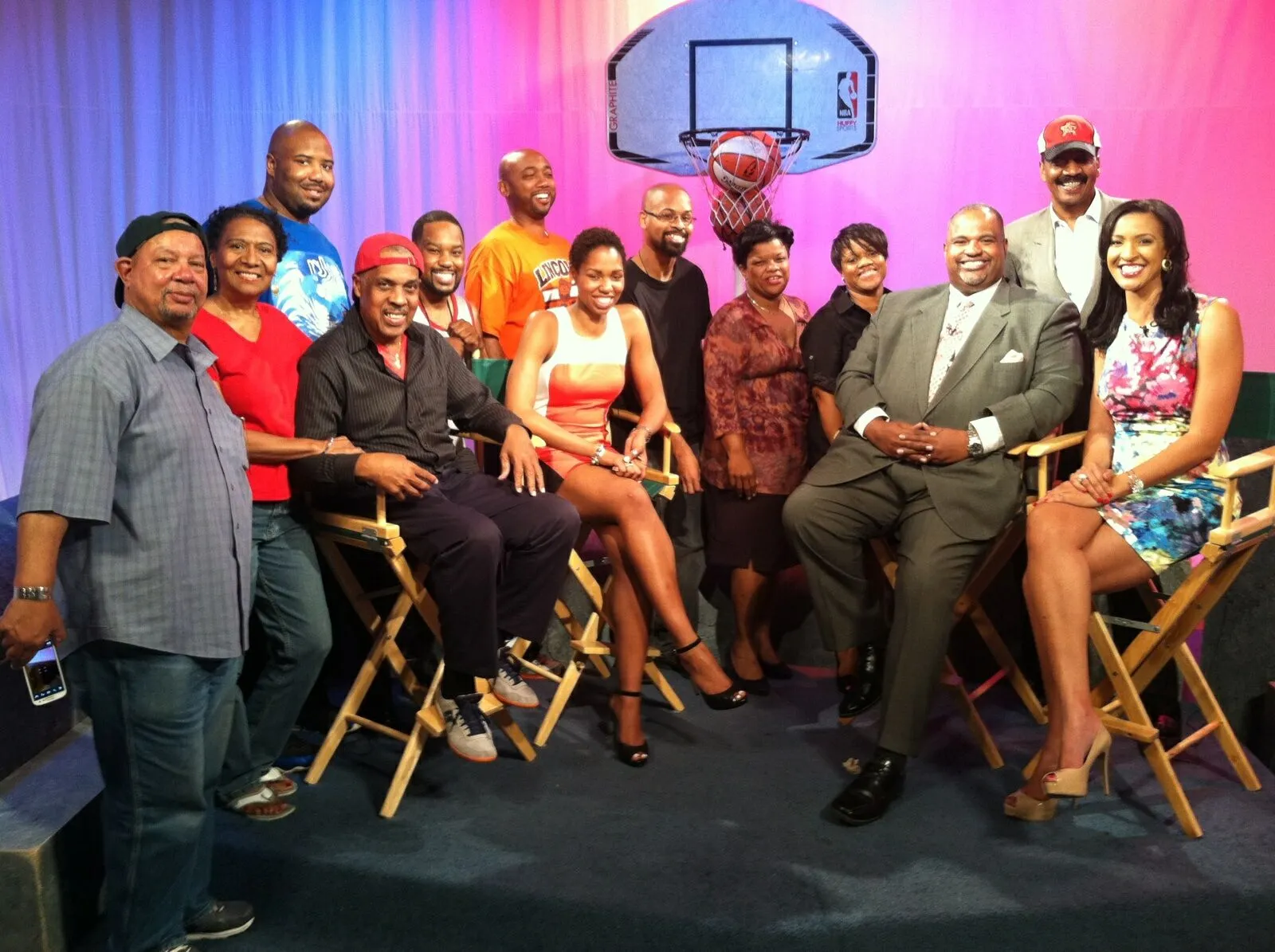
The new spooks sitting by the door–can be found at the Roundball Report, host Andrew Dyer and co-host Christy Winters-Scott (ESPN) and Monica McNut (ESPN)–they forgot!
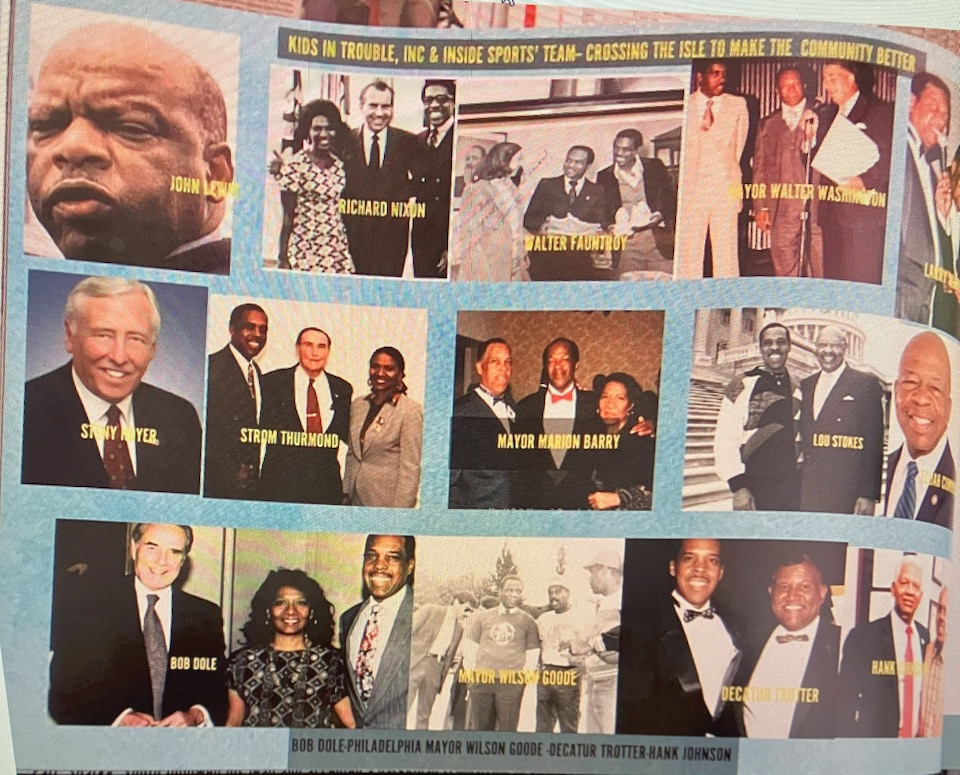
It was once unheard of to discuss sports and politics on sports talk radio and television. Muhammad Ali and Inside Sports changed the landscape.
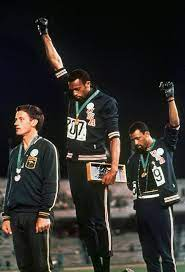
Tommie Smith and John Carlos protest racism in America at the 1968 Olympic Games in Mexico, City. The real American heroes.
“Harold, congratulations, your archives are valuable and should be given the broadest possible exposure. Your discs and videos of your programs belong in the new Smithsonian Institution of the National Museum of African American History and Culture (NMAAHC). A wing of the new museum will be dedicated to the struggle in sports and will be titled “Leveling the Playing Field”. Your work was a major force over the years in leveling the playing field, especially in terms of the struggle to define and project “Our Truth!” Dr. Harry Edwards
A MOMENT IN BLACK HISTORY: PLAYGROUND BASKETBALL D. O. A.
The two ESPN writers covered the hotbeds for playground basketball in America in a July 2014 blog titled, “Playground Basketball is Dead.” The hotbeds covered were in New York, Philadelphia, L. A., Chicago, and Baltimore/Washington, DC.
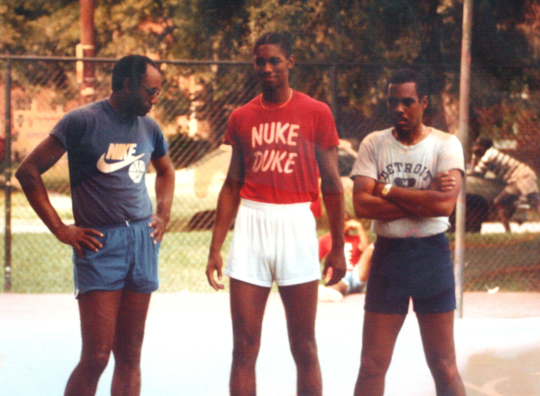
The late Boston Celtic great, Sam Jones and former NBA player Adrian Branch conduct basketball clinic at Watts Playground in NE DC.
Once an American staple, hoops on blacktops across the United States has all but faded away.
AT RUCKER PARK
in New York the birth place of playground basketball, people sat on rooftops and climbed trees to watch Julius Erving play. In Louisville, Kentucky, Artis Gilmore would pull up in his fancy car, still wearing his fancy suits, and just ball. Arthur Agee chased his hoop dreams in Chicago. The Philadelphia outdoor courts once boasted a who’s who of the city’s best ballers, and in Los Angeles, playground legends with names such as Beast, Iron Man and Big Money Griff played on the same concrete as Magic and Kobe. That was then, a then that wasn’t all that long ago. Now? Now the courts are empty, the nets dangling by a thread. The crowds that used to stand four deep are gone, and so are the players. Once players asked “Who’s got next?” Now the question is “Anyone want to play?” And the answer seems to be no, at least not here, not outside.
It once didn’t matter who played, just that there was a game to watch. Holcombe Rucker, the director at what was then known as P.S. 156, started a basketball tournament in 1947. There were no grand plans, just a hope to give kids something positive to do. Bob McCullough was one of the kids he took care of, the two growing so close that McCullough joked that Rucker’s wife, Mary, thought “I was his hidden son.” Rucker died of cancer in 1965, and McCullough, was just finishing up his degree and career at Benedict College in South Carolina.
He took over his mentor’s duties. He added to Rucker’s new semipro/pro division, making things a little fancier by supplying the players with uniforms. Before long, Rucker became the place to play, but fans weren’t just drawn by the likes of Dr. J; they came to see playground legends, too, guys such as Fred Brown and Earl “The Goat” Manigault. At this year’s opening celebration, Brown stood outside the gates of Rucker in apair of linen khaki slacks and a tan shirt. Still fit and trim, Brown had no plans to play that day, but he was happy to be back — back on the court where he made a name for himself. “People didn’t care if you were 20, 30 or 50; if you loved the game, you played, and people respected you for it,” Brown said. “Now it’s more commercial. It’s about individuals. People want to see certain players. We came to watch the games.”
WHAT HAPPEN?
Basketball was made for the playground. Yet the game is disappearing, leaving a hole — in the playgrounds and in our hearts.
IN WASHINGTON, DC
NBA Hall of Fame player the late MOSES MALONE , as legend has it, played one game in a Big M Trotters tournament and was named MVP. Ernie Graham, the Maryland star, cut his teeth in those tournament games. It was at the Big M that legendary Georgetown coach John Thompson discovered Ed Spriggs, the man who spent his senior season toughening up a spindly freshman by the name of Patrick Ewing. The M in Big M stood for Melvin, as in Melvin Roberts, the man who sponsored the tournaments and built the court at 700 Eastern Ave., just over the Maryland border from D.C. To make things easy for himself, Roberts built the court adjacent to his business, Melvin’s Crabhouse. And so on a summer evening, folks could gather to watch local legends all while enjoying the local delicacy for dinner. “There were people all over the place, music, good crabs to eat — it was like a cookout,” said Graham, who used to drive in from Baltimore. “Teams from all over would come.” That a basketball court ended up next to a seafood joint, built by a business owner who was more civic leader than entrepreneur, it said everything you need to know about the once-vibrant playground basketball history in this area.
From Baltimore’s Dome (aka Madison Square), to the King Dome in Seat Pleasant, Maryland, to the Goodman League in D.C., to Melvin’s, it wasn’t a matter of finding a game; it was about deciding which spot had that night’s best run. During the day, those same courts teemed with young kids pretending they were the old heads they had watched play the night before. Now those courts, much like the leagues, are quiet. Back when Kevin Durant was a skinny, 13-year-old kid, his godfather and mentor, Taras Brown, took him to the King Dome, at the corner of Addison and Sheriff in Road in Seat Pleasant (in walking distant of Melvin’s Crab House ). As Brown saw it, “He needed to go where the pole didn’t move and everybody played physical because nobody wanted to fall down.” On a recent, sunny, June afternoon, that same playground was deserted. Melvin’s Crab House and the basketball court are all gone, too. The business closed eight years ago, and the property, along with the basketball court, was put up for sale. Roberts passed away in January 2011.
“That’s gone now, all of it is gone,” said former University of Maryland star Ernie Graham, who honed his game on the playgrounds of D.C. and Baltimore. There is no single cause. The best players, young and old, want to be inside instead of out; they want organized games to showcase their skills, not pickup games to earn street credit. Violence has chased people off playgrounds and out of parks, and NBA and NCAA rules limit when and where guys can play in the offseason.
Graham said. “I have a 22-year-old son [Jonathan, a senior at Maryland], and he’s never to my knowledge played outside. I know these younger guys think we’re hating on them, but they had to experience what we did to appreciate why it was so special. And they never will.” For the most part, the culprit here is no different from anywhere else — AAU tournaments pulling kids away in the summer, college players spending time on campus, neighborhood violence spilling onto the courts — but the real killer of playground hoops in the D.C.-Maryland-Virginia area is apathy.
There are fewer people selfless and dedicated enough to run the games, and consequently the games are literally dying with the passing of aging organizers. In Baltimore, for example, the Cloverdale Baltimore Basketball Association at Reservoir Hill shuttered with the passing of Lorenzo “Mike” Plater, who ran the league until his death at age 79, two years ago. What’s left is an era holding on for its last breath.
Two strong-willed men are keeping two leagues alive in DC — Jeff Johnson at the Watts League in the Northeast section of D.C. and Miles Rawls at the Goodman League on the Southeast side — but will they help rejuvenate the playground scene or simply serve as its pallbearers? “We’re not going to die out,” Johnson said. “Won’t let that happen.”
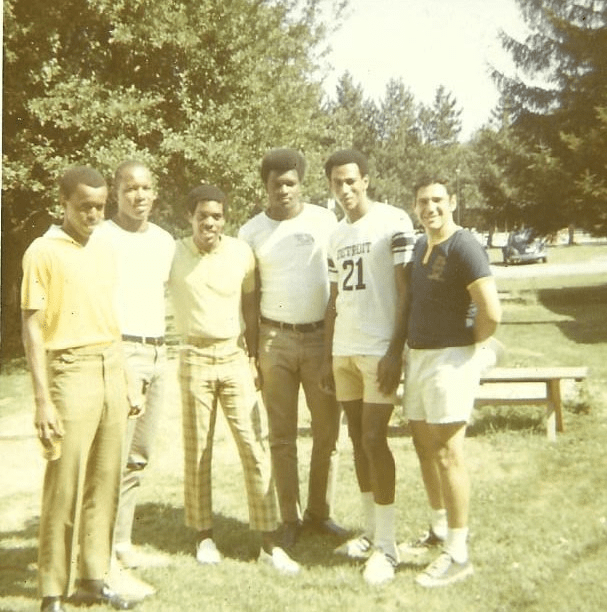
Miles, has seen what the league can do for the area: According to a Washington Post story , there were zero crimes committed within 100 feet of the court in 2011, compared with 165 crimes 1,000 feet away — but he might be the only stopgap between the Goodman’s existence and extinction.”Without Miles, there is no Goodman League,” said Mac Williams, coach of Team Ullico. And even Rawls might not be enough. The city has big plans for the Barry Farm area. Although currently stalled, there are plans for an area revitalization to include retail shops, a Metro stop and new housing — perhaps even where the basketball court currently sits. Even if the court itself isn’t dug up, a neighborhood changeover could significantly alter things and it has.
In 2021 the Goodman League has given way to gentrification; the process whereby the character of a poor urban area is changed by wealthier white people moving in, improving housing, and attracting new businesses , typically displacing current black inhabitants in the process by pricing them out making them expendable as red-lining continues by their local banks.
The black population has been joined by a brown population (hispanics) who compete for the same space (jobs and housing) making it more difficult for blacks to survive. The brown population is willing to work for less and live 10 and 12 to a two bedroom apartment. When Black Americans balk at these new concessions, they are labled lazy and wanting something for nothing and told to go back to Africa. Lost in the process it is easily forgotten Black Americans (slaves) were the ones who help build this nation. The promise of 40 Acres and Mule for their slave labor to our ancestors is yet to be kept. An “Even Playing Field” has become a figment of our imagination.
I remember a meeting in 1978 in the NBA New York City league office. I was a Nike rep with NBA Nike Shoe rep, John Phillips. John and Nike had organized an All-Star Game in 1977 in the Bahamas, the home of 1978 L. A. Laker Mychal Thompson. He was their No. 1 draft choice. In the meeting was Ron Thorne, NBA VP of Player Personnel, Gary Bettman, NBA attorney and Horace Broman, NBA Security. The problem, the NBA was not happy with their players playing in pick up basketball All-Star games on playgrounds and other sites they did not control. John was planning a follow-up charity game in the Bahamas that summer with Mychal Thompson returning home to the Bahamas, that was until he was summonded to the meeting.
There was no NBA Player Association rep in attendance to represent the players. The meeting started out well until John question the validity of the league barring players from participating in all-start games in the off-season. Everyone voiced their opinion and John held his own, saying he thought the process was unfair to the players and the fans. Gary Bettman got frustrated and said, “It has nothing to do with being fair, because we own the players!” I had been very quiet until then, I stood up and said, “What the hell is this a plantation?” All hell broke loose with yelling and screaming back and forth, Thorne banged on the table and said, “Time Out for lunch and we will meet back here.” They never came back and playground basketball has never been the same.
AMERICAN HISTORY: BLACK ANNOUNCER AGAINST A WHITE FIELD!
ON THIS DAY IN BLACK HISTORY HAROLD BELL & INSIDE SPORTS ARE STILL NO. 1
Black Men in America.com the on-line magazine is ranked in the top 10 among the 500 most read on-line black websites in America. The No. 1 blogger and most popular search engine is HAROLD BELL. Which search keywords send traffic to this site? 1. HAROLD BELL 10.05% 2. African American spending habits 5.62% 3. black consumers 3.97% 4. black yacht club 3.90% 5. all in one master tonic 3.38% .1) Blackplanet.com – A community for African Americans, that provides an interactive forum with chat, photos, games.2) Blackamericaweb.com – African American perspective on news, travel, entertainment, business, technology, and sports.3) Dallasblack.com – Featuring Dallas/Ft.Worth African-American community events, businesses, scholarships, job post.4) Africanamerica.org – Intelligent. Black. Community5) Blackmeninamerica.com – Black Men In America.com is one of the most popular online magazines in the country. Cityalert.com – CityAlert.com is one of the leading online destinations for Urban trendsetters.1. Mybrotha.com – Online magazine dedicated to providing information, education and entertainment resources. 2. Blackvoices.com – African-American community offering news and entertainment and cultural resources.3. Blackhaven.yuku.com – Online forums dedicated to ETHNO centric discussions of issues pertaining to the African diaspora.Top Keywords from Search EnginesWhich search keywords send traffic to this site?Keyword Percent of Search Traffic 1. HAROLD BELL 10.05% 2. African American spending habits 5.62% 3. black consumers 3.97% 4. black yacht club 3.90% 5. all in one master tonic 3.38%+4LikeCommentShare
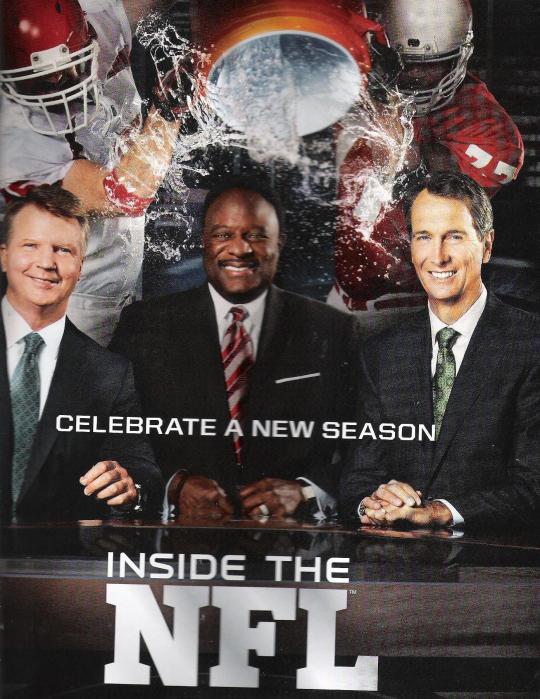

https://www.bigmarker.com/nabj/NABJ-Sam-Lacy-Awards-Program? bmid=99ea2ef240f2 / Sam Lacey Awards
Social Media sites where you can find Harold Bell:
http://www.The Original Inside Sports.blog / https://sundaylongread.com/2018/01/28/inside-inside-sports-the-oral-history/ read the inside story of how the Washington Post kidnapped my sports talk show title and made it their own. Read how greed and white privilege operates in America, especially when it comes to black America–without boundaries they just take and take. The Washington Post now own the rights to Inside Sports. Don’t forget Famous Amos and his cookies!
Inside Inside Sports: The Oral History
http://www.Black Men in America.com / https://blackmeninamerica.com/speak-the-truth-joe-biden-amanda-gorman-eddie-glaude-jr-and-hank-aaron/
You Tube: Harold Bells Legends of Inside Sports / https://www.youtube.com/watch?v=Fkafk63frbg
You Tube: The Daily Detoxx Podcast / https://www.youtube.com/watch?v=0cpKp-tEs30&feature=youtu.be
Zoom Sundays “Speak the Truth” https://blackmeninamerica.com/speak-the-truth-talks-black-history-month-and-negro-league-baseball
OPEN LETTER: PASSING THE TORCH!
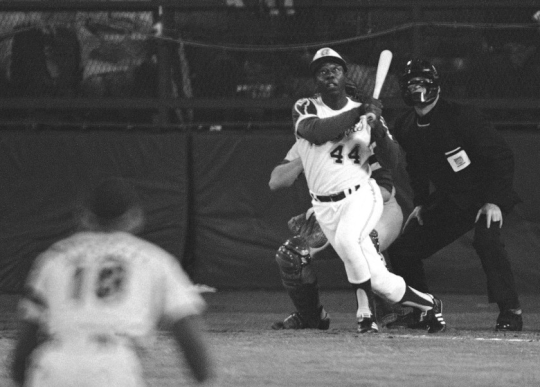
On Saturday January 24, 2021 Henry “Hank the Hammer” Aaron Left us behind in his sleep, you see most people get their wings when they transition, but Hank has been flying for years. He flew above the critics and competition in the MLB, by showing up everyday, working harder than everyone around him and being consistent and great every at bat, game, series and season year after year.
Forty-Four years ago, I dreamed I would one day be as good as Hank Aaron the baseball player, but that never happen for me or anyone else. Remember he is by numbers not opinion, The “Greatest Of All Time” (GOAT). Forty-four months ago, I started coaching in a youth program in partnership with MLB and the Atlanta Braves. I teamed up with coach Julie Jones and with the Boys and Girl’s club. That start up was Atlanta RBI, four years later, the Boys & Girl ‘s club walked away from the older boy’s program to focus only on 13 and under. I put together two leagues 18 and up and 15 and up. I did not think about it twice before taking over. No risk no reward.
I was just trying to make a difference in young inner city boy’s lives who wanted to play the game of baseball at a high level. I recruited teams coached by Antonio & Marquis Grissom, Tyrone Newbern , Eric Wynn, Cliff Albright, Kim Brannan, Ernest Spikes, Eddie Bowden, Shawn Livsey, Errol Rogers, Coach Dumas, Coach Austin, Coach Wray. I did not know at the time, we would collectively create BLACK BASEBALL EXCELLENCE in Atlanta and see 27 kids go on to play professional baseball and over 175 go to college. We Created jobs in front MLB offices, Doctors, Lawyers, Financial Analyst , Engineers and more. Even with that we are still chasing the G. O. A. T.
The Hank and Billye Aaron Foundation is called “Chasing the Dream Foundation” and just like when he played, his dream started it in his heart from a place called love. The program is meant help 755 kids get an education through his foundation, but they have done so much more with consistency, hardwork and passion for people day in and day out. The foundation has developed classics musicians, educators, doctors, actors and just great young people over 1,000 kids. Doing it the right way, not bragging on FB or IG but quietly making a difference with class and dignity.
Well I’m passing the torch, it’s time for Marquis Grissom to take over RBI. I no longer run the program. I hope and pray he takes it to greater heights for kids that look like me and others that don’t. He is a good man and with the Braves help I’m confident he will. In closing, My brother and I talked about Mr Aaron’s impact on me and why it hurt me so deeply when he passed on. I watched a man who lived a beautiful life go home to his final resting place is a blessing, but I didn’t have an answer for my pain until now. As a kid I dreamed of being like a ball player who was the man and as a man I have tried to live a life striving to be like a man who was once a ball player.
The internal conflict is that Hank is that man both times. As a man I no longer want to be like Hank, although Hank was an amazing human being. I want to honor him by taking my program Atlanta Metro Inc Baseball and Softball and hopefully touch every kid with the game I love as positively as I can. For me to help them chase their dreams, but yet make sure they are chasing it from a solid academic foundation. I think that will honor Hank best (to see them live a beautiful Life). RIP my hero Hammering Hank.
the author is native of Atlanta, Georgia. He is an account executive for CBS television 46, and former President of 100 Black Men in DeKalb County, Georgia. Mr. Hollins wears many hat when it comes to young people in his zip code. The lives he has touched reads like a Who’s Who in Atlanta and not all of them are athletes. Last year CBS 46 honored him as a “Community Hero” and several weeks ago he pinched hit for Hammering Hank when Hank called in sick–John threw out the first pitch in the stadium being dedicated to his hero. https://www.facebook.com/100005314755131/videos/1500145726839238/
 theoriginalinsidesports