Category: Uncategorized
WHO WANTS TO BE SUGAR RAY LEONARD? “NOT ME” SAYS SUGAR RAY LEONARD, JR!


Sugar Ray Leonard Jr. and his family
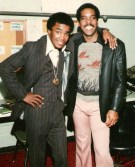
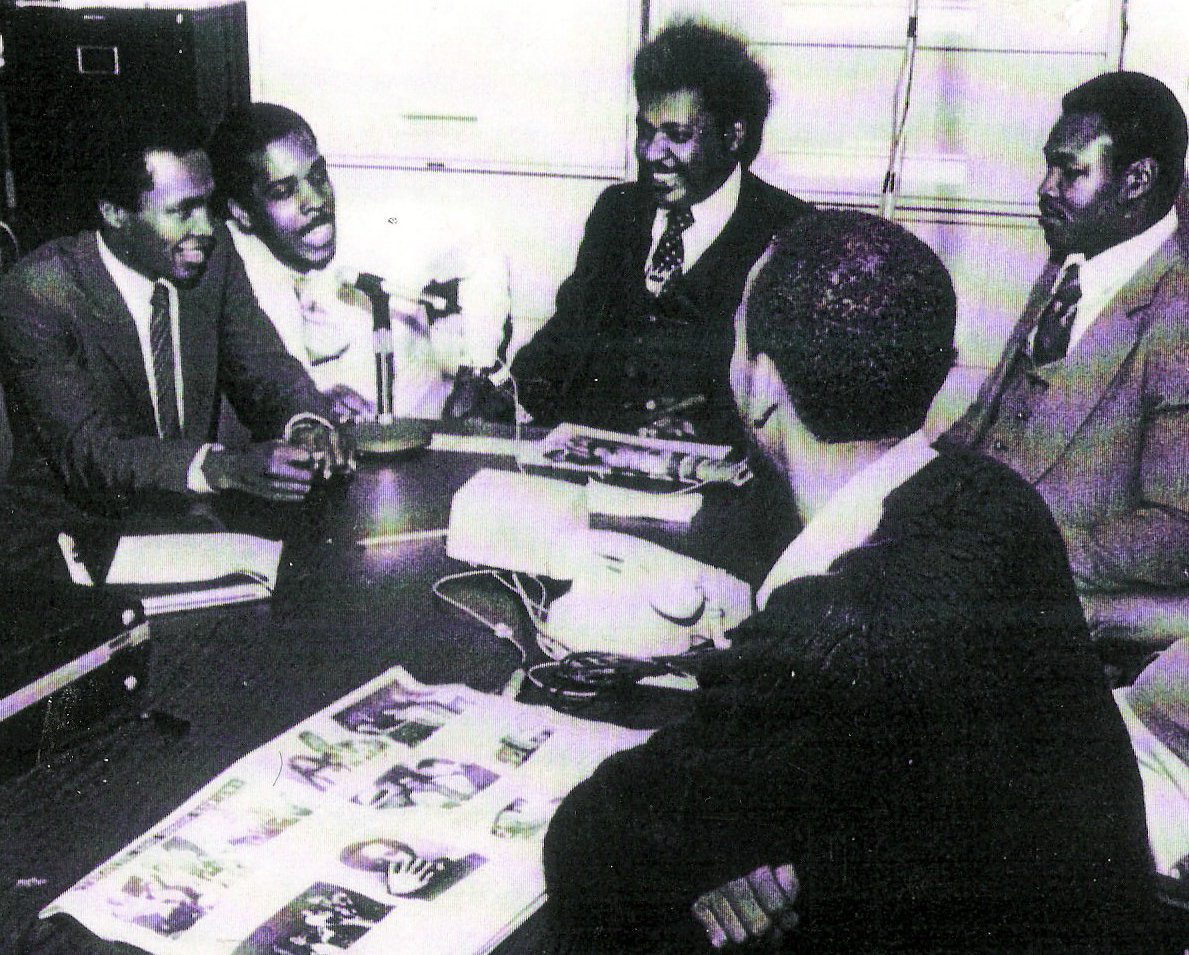
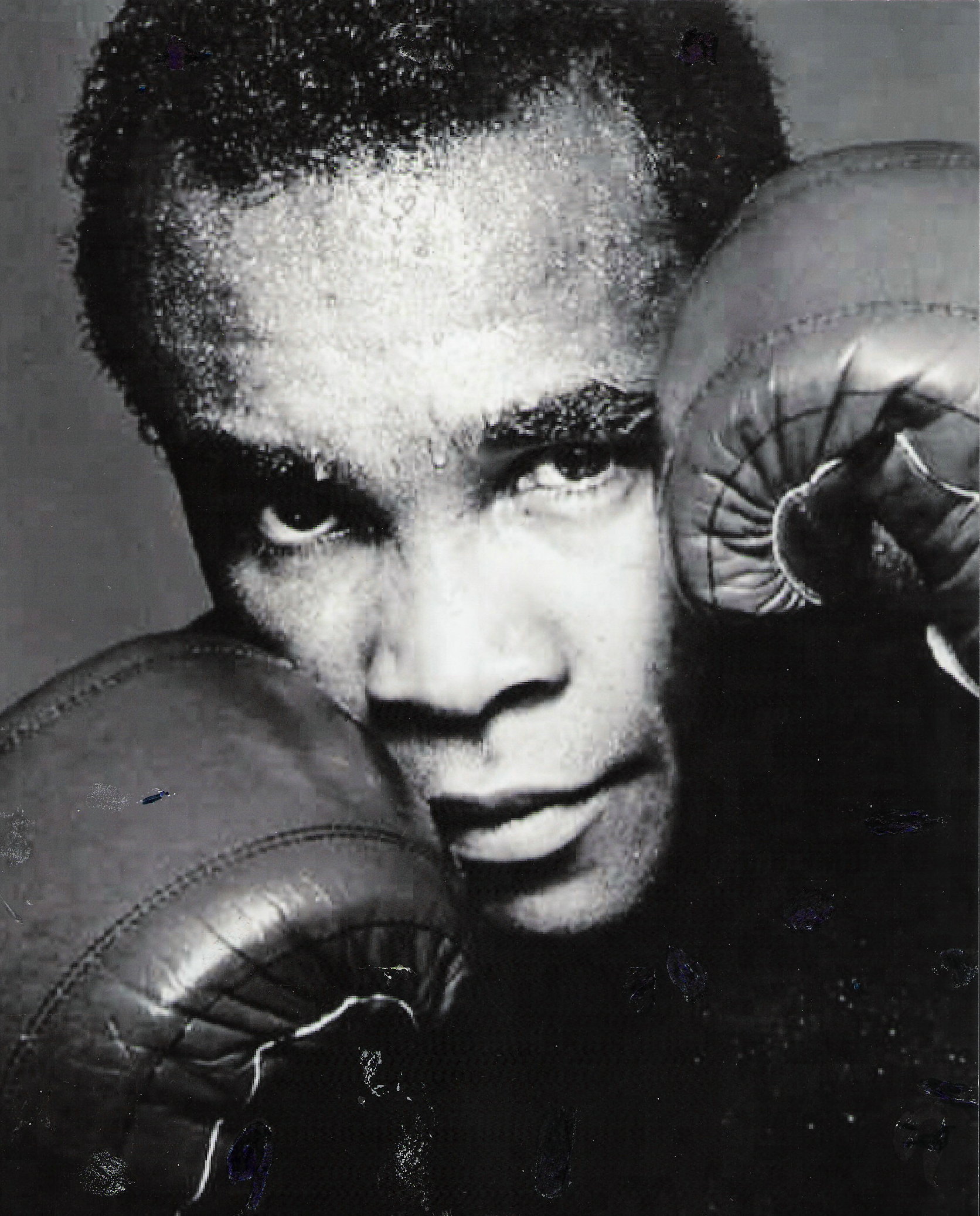
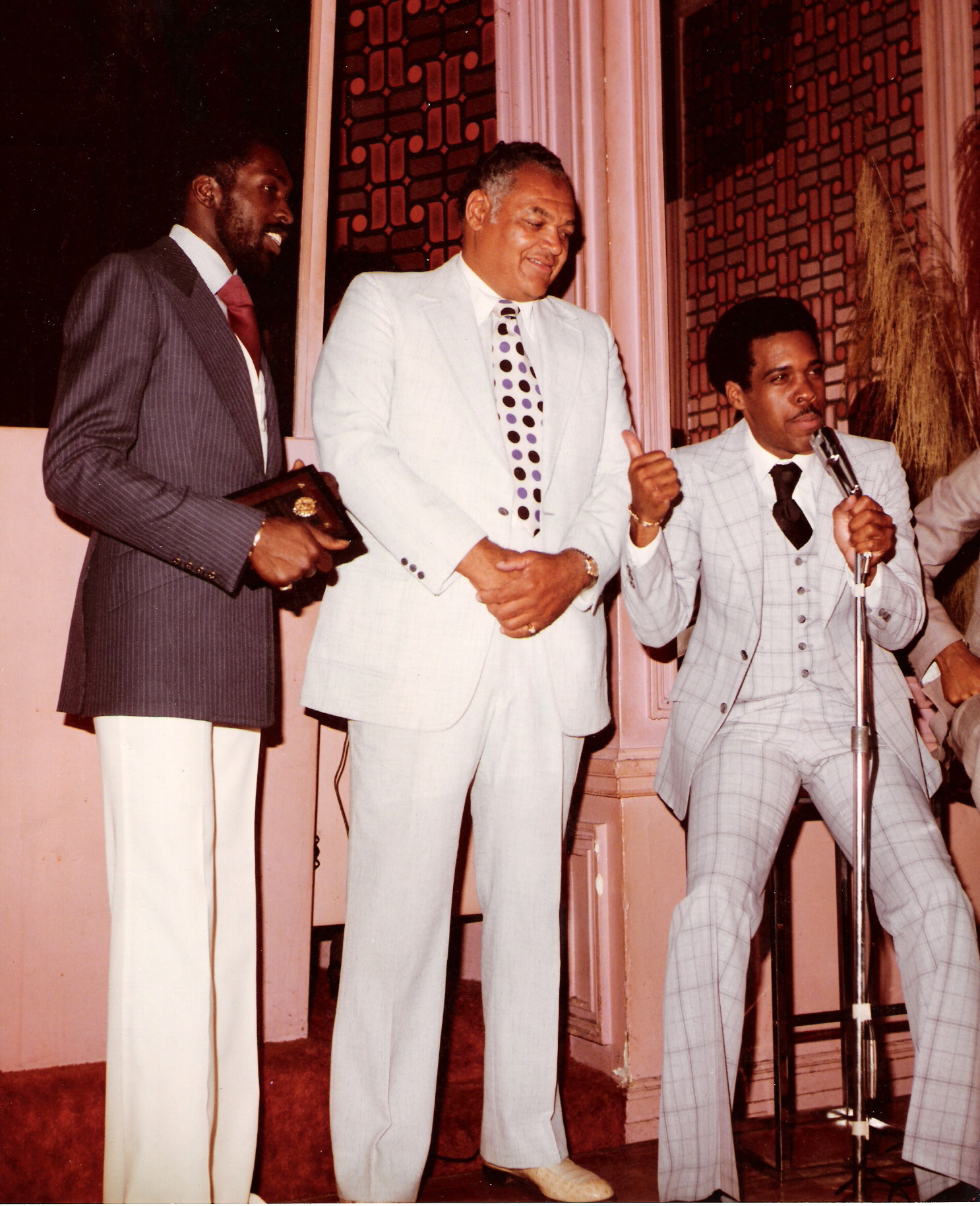
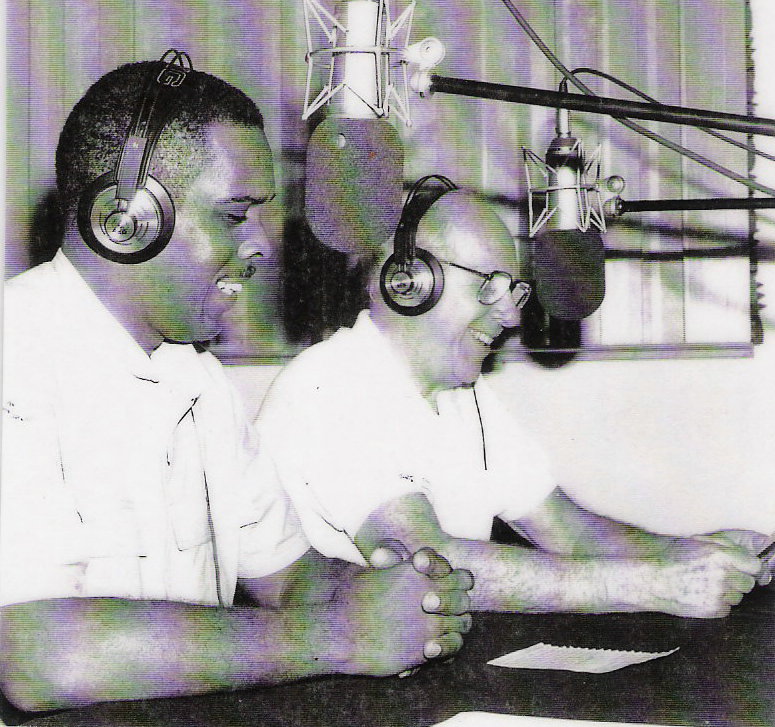
Inside Sports W-O-O-K Radio studio—KIT Celebrity Fashion Show at Foxtrappe—Models: Sonny Hill—Ray—Ricky Jennings and Earl ‘The Pearl’ Monroe
In the 1980′s Sugar Ray Leonard, Jr., also known as “Little Ray” was the cute little kid appearing in soft drink commercials with his father and boxing rival Roberto Duran and his son.
“Little Ray” is all grown up and speaking out as Ray Leonard, Jr.
In 2013 Sugar Ray Leonard, Sr., shows up in his hometown of Washington, DC to promote his new book titled, “Sugar Ray Leonard: The Big Fight in and out of the Ring.” The Sub title should have been “The Big Lie in and out of the ring!”
Sugar Ray Leonard kicked off the tour in New York City and then moved on to the ESPN studios in Bristol, Conn. where all of his charm was on display.
Ray Sr. was first seen earlier in the studio giving dance lessons to one of the ESPN female reporters. During the interview with a different female reporter there was little or no conversation about the book. The interviewer touched briefly on the sexual abuse issue.
The 10 minute interview was spent talking about his performance on “Dancing with the Stars” and if the eventual winner of the contest Pittsburg Steelers’ WR Hines Ward and whether Ward could beat him in a street fight!
When he made it to DC the media cheerleaders were in rare form. The first stop was the nationally syndicated Tom Joyner Morning Radio Show.
When I listen to morning talk radio (rarely) I listen to The Tom Joyner Show. I try not to ever miss the Huggy Bear segments of the show. Huggy usually starts my day with a smile.
I have been honored on the show during Black History Month as a “Little Known Black History Fact” and there was a story written on my community exploits. But there is talk in the black community that Tom and his crew take the black community as a joke and seldom discuss the issues that are important to them, everything is always a joke!
The departure of Tavis Smiley caused many listeners to think of him as a selfish ego tripping personality that took him self too serious. That school of thought has since changed.
I made sure I e-mailed Tom my blog on Sugar Ray Leonard and the lies Ray has been living throughout his boxing career. He continues to tell those same lies in and out of the ring.
This was the opportunity to prove whether Harold Bell was a liar or was Sugar Ray Leonard perpetrating a fraud!
Tom starts the interview by asking “Ray why did you put in the book the part about the sexual molestation by one of your boxing trainers? I could have lived with just knowing of your success as a boxer!”
The response was pure B. S. Ray claimed he didn’t fight the sexual advances off because one of the perpetrators was giving him money and the other held his Olympic future in his hands. His response proved he was involved in homosexual acts before the 1976 Olympics. Tom never pressed the issue of who the perpetrators were!
A good reporter or interviewer would have to know or should have known there were more than two trainers/ boxing coaches involved in Sugar Ray Leonard’s early career. Ray’s cop-out by not naming the perpetrators leaves his other coaches/trainers with question marks as it relates to their sexual preference!
There are those who were in the inner-circle who remember one of Ray’s trainer/coaches picking him up late at night and they would go for long rides not to return until the wee hours of the morning?
The two trainers/coaches Pappy Gault (House of Champions) and Jim Merritt (Hillcrest Boxing Club) are both dead.
Tom Joyner asked Ray to respond to Atlanta Pastor Eddie Long’s homosexual charade, he paused and said “No comment.” I thought he was going to apologize for asking the question.
Tom sheepishly replied, ‘okay’ and moved on to the next non-enlightening question, ‘How is little Ray?’
Ray: “little Ray is 37 years old and has given me 4 grandchildren. He is a sharp and smart young man and doing real well.”
Tom: What about Juanita?
Ray: Tom this book has given me the opportunity to make amends and apologize to her because I was not a good husband or a good father (talking about an understatement).
Tom: What is happening with your boxing promotions?
Ray: It is on the back burner for the time being but I am going to get back into it and I am thinking about bringing you in!
Tom: I am ready lets do it, Ray Leonard’s new book it is in now the stores!
Sad commentary, but that is par for black news in the black community. It is either one or two things, you are either getting it a week late or when you get it LIVE it is filtered. Sounds all too familiar!
Next stop is Fox 5 Morning News and they open up the Ray Leonard segment with him dancing with the female reporter who just happens to be doing the interview.
Ray puts his foot in his mouth several times, once he claims he didn’t have a girlfriend until he was 20 years old but the fact remains that Little Ray was born when he was 17! What was Juanita lunch meat?
It gets worst at W-U-S-A TV 9 where the interviewer is sports anchor Bret Haber who is so infatuated with Ray I thought he was going to lean over and kiss him. He is definitely no Warner Wolf or Glenn Brenner!
The weatherman Topper Shutt was heard on set saying, “I wanted to ask Ray to sit in for me but I was scared he might be too good.” The only thing missing from the set was anchorman Derrick McGenty wearing a short skirt and waving pom-poms.
Ray was last seen at a book store on Connecticut Ave NW it was here the Usual Suspects showed up to pay homage and kiss his ring and his ass. Boxing/trainer Janks Morton was the first in line followed by his two brothers, Kenny and Roger and long time friend Claude Boger.
Missing in action were Team Leonard members, Dave Jacobs, Irving Millard and Julius “Juice” Gathling.
The young child whose picture Sugar Ray Leonard worn on his socks in the 1976 Olympics is now a 37 year old independent young man raising a family of his own.
On Wednesday June 8, 2011 Ray Leonard Jr. read my blog account of his mother Juanita and he allegedly pulling a gun on his father and this was his response:
“Dear Mr. Bell, I have never pulled a gun on my father. I am a great father and husband to my wife and I have not followed the same path. Please do not slander my name by saying something that is far from the truth.
Thanks,
Ray Jr.
My follow-up response / Wednesday June 8, 2011
Dear Ray Jr.,
I am happy to know that you did not pull a gun on your father and you have not traveled in his path of self-destruction.
It was also great to hear that unlike Sugar Ray Leonard Sr., Sugar Ray Leonard Jr., is a great father to his children and a great husband to his wife.
The pulled gun story came from a family member who should have known. I will not ID that person because to exasperate another problem in the family serves no purpose.
A son should not be blamed for the ill-will that was perpetrated by his father! I promise to drop the gun story line upon any further oral or written conversation as it relates to you and your father.
I know first-hand the uneasy feeling of seeing your name in print (Sporting News, Washington Star, Washington Post and LA Times newspapers) and being accused of something that was never said or acted upon by me.
Your father’s bogus book gave me an opportunity to re-visit those lies that were planted by him and Mike Trainer and read around the World.
First, they planned lies with the late Sporting News sports columnist Bryant Burwell and then with L. A. Newspaper sports columnist Earl Gustkey. Bryant was desperately trying to convince your father to let him write his life story and Earl Gustkey was just another hoe in sports media who would have been better suited as an L. A. Laker cheerleader with pom-poms and wearing a short skirt.
It cuts deep when the one telling the lie is the one who turned to you when he could not turn to anyone else.
Janks Morton, Dave Jacobs and Ollie Dunlop didn’t have a clue on how to help him in 1976 and Mike Trainer and Charlie Brotman where nowhere to be found.
The truth of the matter is, Dave Jacobs was the first fired in the group by Trainer and Janks. Dave had to come to me to get his job back. The same holds true with Ollie Dunlop.
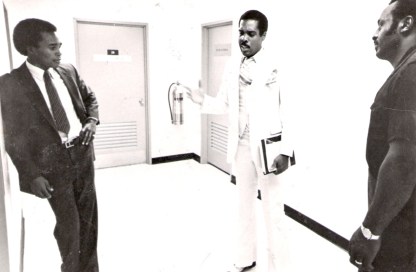
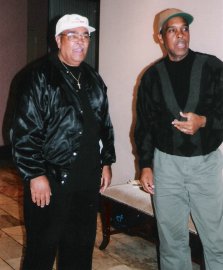
Ray, Janks and I discuss the firing of Dave Jacobs
When Mike Trainer and Janks Morton were treating your father’s family with no respect it was me who told them to back off–Kenny and Roger had no say. Once I discovered that Mike Trainer was seeing Ray’s checks before he was, it was me who pulled your father aside and told him to make changes immediately. I advised him to put your aunt Bunny into the office for the Checks and Balances and he did. She at least had an accounting background. Trainer eventually convinced Ray to remove her and it was not long after that move the office was torched and burned to the ground—all records were destroyed in the fire–coincident?
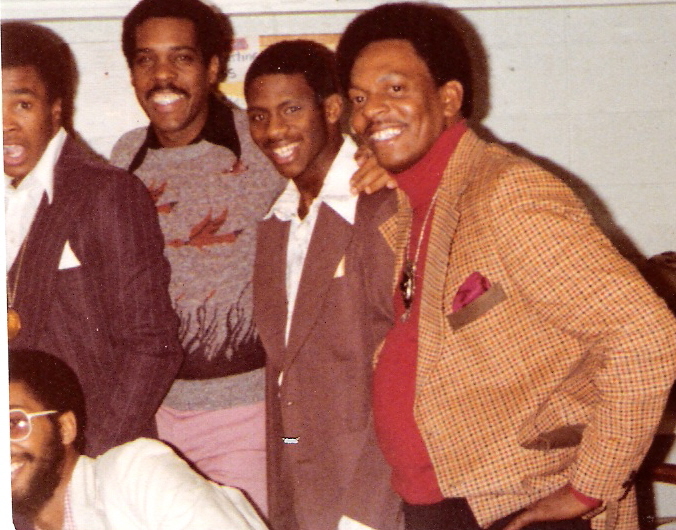
His Best Man and Best Friend the late Joe Brody (second on right) was the only true friend he had on the Team and Ray kicked him under the bus. Joe loved him but his love and friendship was not returned.
Ray Jr., as you have discovered with your father, when you tell one lie it leads to another and another lie. A LIE will change a thousand times but the TRUTH never changes. Your father has told so many lies he has no idea where one lie ends and the truth begins.
The next time you talk with your father face to face ask him “Did Harold Bell ever ask you for a job or for money during your pro career?”
It was your father who called me on my radio talk show “Inside Sports” in December 1979 after he had won the Welterweight Championship of the World by beating Wilfred Benitez. He said, “Harold I am the Welterweight Champion of the World today because you were there when no one else was.” When I met with him at the new home he brought in Glen Arden shortly after the fight. He thanked me for my support and asked me “Harold how can I help you I owe you.” My response, “You owe me nothing, all I want you to do is reach back and help others like I helped you. But when your busy schedule allows I would like for you to co-host my radio show Inside Sports when you are in town.” His response, ‘No problem.’ We shook hands, hugged. He was never a guest on my sports talk show again.
You know it was Janks who brought Trainer to the table to represent your father without any credentials for the job! As I had predicted, when all was said and done, Trainer would walk off into the sunset saying No Mas. Before leaving, he kicked Janks and the rest of the family and friends to the curve (fired). In summing up this charade, I must steal a line from Don King, “Only in Black America.”
When I took your father under my wing as his mentor in 1976 he was a “Kid in trouble.” He didn’t have two-dollars or a pocket to piss in or a window to throw out!
It was HAROLD BELL who kept hope alive and jump-started his professional career but according to his book I never existed.
Today your father is considered to be of the greatest boxers of all-time, according to Mike Trainer he has earned over 100 million dollars but that does not count what Trainer took to the bank. Ray is now a member of the Boxing Hall of Fame.
My question to you and your father—where is the beef?
Ray Jr. I am hoping that when you decide to write the book to clear your name, suggested title “Sugar Ray Leonard, Jr. I am not my father.” It is either that or change your name. Peace of mind is not for sale!
In closing, I thank you for wanting to set the record straight. I wish you nothing but the best in your endeavors and may God continue to bless you and your family.
As Always,
Harold Bell
Ray Jr.’s Response / Wednesday June 8, 2011
Thanks My Brother,
I can not go back and change the transgressions of my father, but I can stop the cycle and not put this burden on my kids. My father is still a deeply troubled man, and the scars from what I went through as a kid, and still deal with as a grown man will stay with me forever. We all have a responsibility to be good people and produce better people. My entire family is a mess, and I moved way out to where I live to get away from it all.
I was going in that same destructive path for some time, with the women, drinking, and since of entitlement, I woke up and decided to stop the cycle anyway possible. I have been married for almost 9 years and have been with my wife for 13 years. I have 4 wonderful children, 2 girls and 2 boys. My oldest will be headed to UCLA or Stanford in a year and I couldn’t be happier.
I am actually in the process of meeting with a writer to write my own book, because I am the only one not under contract to never be able to write anything negative about SRL. Even though I have enough things to say that would shock many people, I will not be airing my family’s dirty laundry in the book. I will speak the truth on the things that have already been said and hopefully give a road map to others that end up following in the path of their destructive parents.
I am far from a perfect man, but I can look my self in the mirror and face my family everyday with no regrets.
I appreciate your contribution to sports journalism and hope you continue to speak on what you feel is right.
I have attached a picture of me and my family, which is the reason I strive to be a better man every day.
God bless.
Ray Leonard Jr
P. S. I had heard years ago that Sugar Ray Leonard Sr. had made each family member sign agreements not to ever write anything negative about him with the threat of cutting off the dollars! I take my hat off to Kenny because he looked the other way when Ray committed an unspeakable act on a family member. I commend Ray Jr. for having the courage and strength to write this response to me. It proves that a good apple can fall far away from a bad tree.
“BIGHOUSE” GONE BUT NOT FORGOTTEN!
In Appreciation
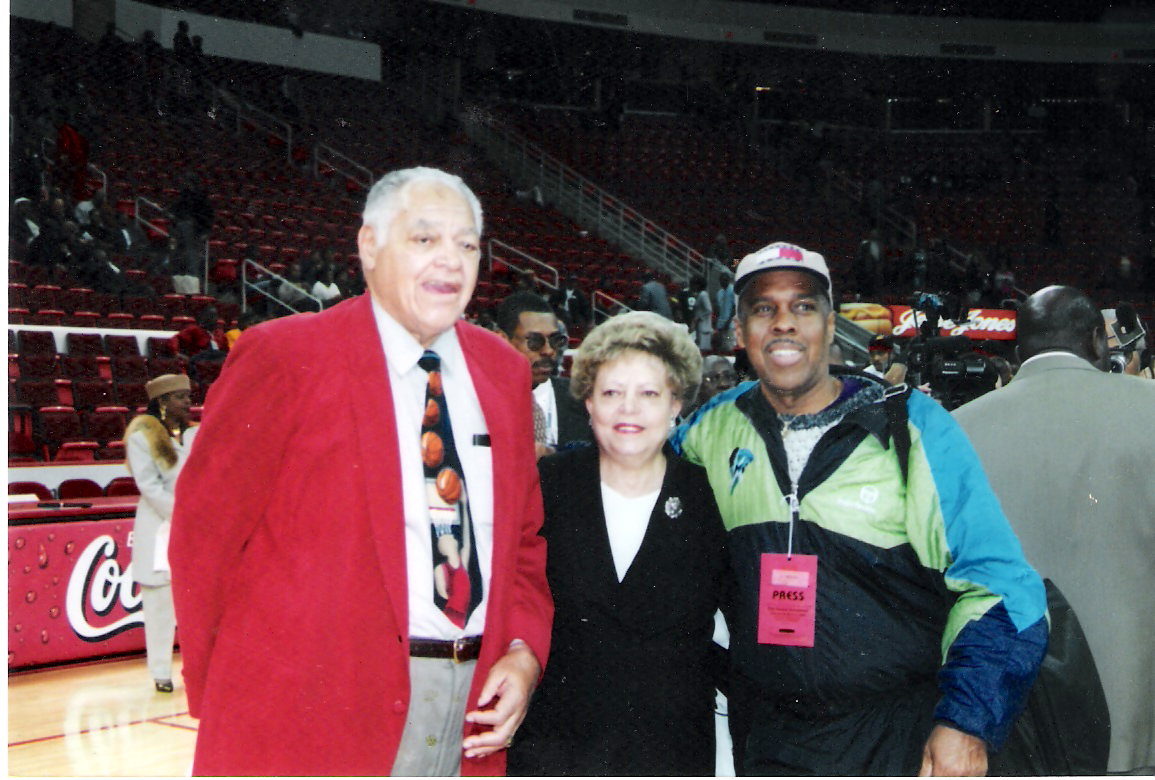
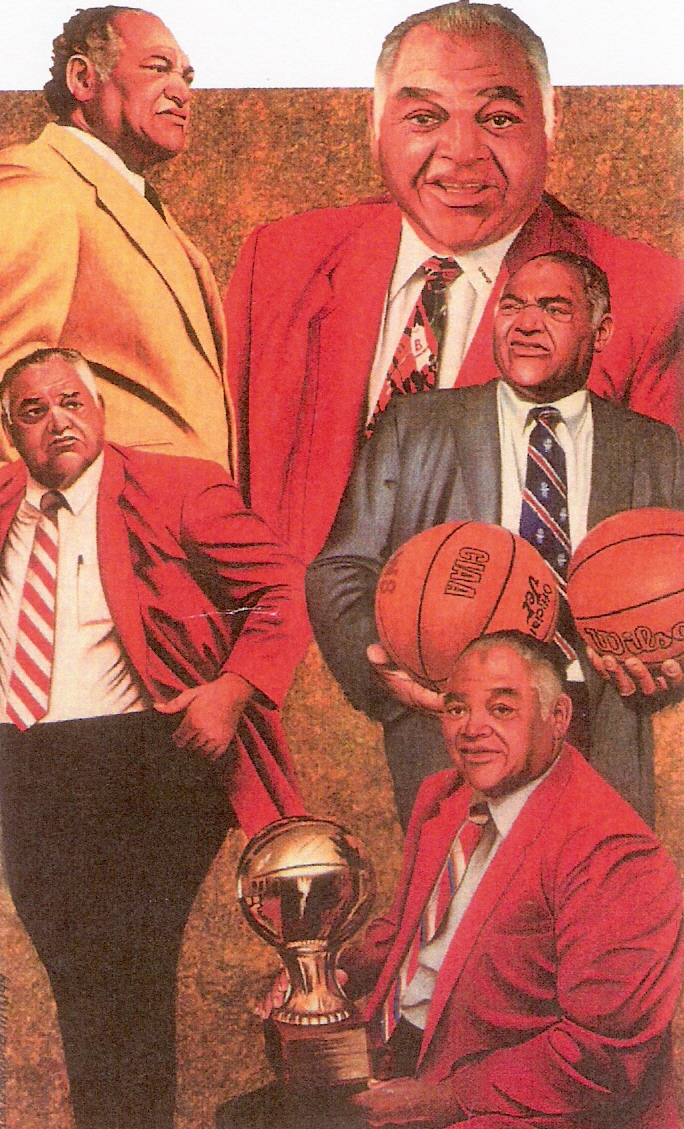

Bighouse induction into Basketball Hall of Fame
CIAA Tournament, Bighouse and Ms. John McLendon
The many faces of Bighouse
Earl ‘The Pearl’ Monroe
Bighouse, Spencer Haywood, Butch Wilson, Gary Williams
Bighouse Gaines 1st Community Service Award recipient
On Monday April 18, 2005 college basketball lost one of its true “Giants.” Winston-Salem State University’s Clarence “Bighouse” Gaines died at the age of eighty-one. “Bighouse” won more games (828) than any other black college coach in the history of college basketball. The 2006 CIAA Tournament being held in Charlotte, N.C. would pay tribute to his memory.
When “Bighouse” retired in 1993 at the age of seventy-one he was the number one winning active coach black or white in the country. Despite the nay sayers “Bighouse” could have easily coached well into his seventies if the talent pool was still available. In 2006 Joe Paterno of Penn State won the “Big Ten Championship” at age 80.
The athletic talent pool at Black Historical Colleges has been depleted and diverted with money under the table by Division I Colleges. The promises of television exposure, million dollar pro contracts and a blonde in every classroom has been offered to the black athlete for well over three decades. Black Historical Colleges have not been able to match the package so they have followed the old adage “If you can’t beat them join them.” They have done so without financial success or a Final Four or Rose Bowl appearance.
The losers are Black History and Black Historical Colleges. For example, the once vibrant CIAA Tournament is almost down to a “Skeleton Crew” as schools jump to Division One. The anticipated move by Winston-Salem made ‘Bighouse’ sad. He was big on black history. The CIAA Tournament has moved from city to city like a gypsy caravan chasing the almighty dollar.
Despite the raids conducted by Division One schools for the black athlete “Bighouse” has left a legacy of a winner on and off the court. He touched and won thousands of student/athletes’ hearts and minds with “Tuff love” during his forty-seven years on the Winston-Salem campus.
He left behind two families, first, his one of a kind wife Clara, a daughter Lisa and a son Clarence Jr. The second family was the athletes and students who called him “Daddy” on campus. There were hundreds more he touched on other Black Historical colleges around the country. He was like a rock star during games and at the CIAA Tournament, many of his players thought they were the stars, but “Bighouse” usually stole the show. It seemed like everyone wanted to talk with or touch him in those two settings.
I met Coach Gaines through an introduction by my high school Coach Dave Brown. ‘Bighouse’ was no stranger to the Nation’s Capitol. He was a graduate of Morgan State University in nearby Baltimore, Maryland. He was nobody’s dummy, his major was chemistry.
He coached in the first ever CIAA Tournament in D. C. held at old Turner’s Arena. My introduction took place during the summer of 1958 in a pool hall across the street from my Spingarn High School campus during one of his recruiting trips. Coach Brown was the legendary D.C. high school coach who led NBA Hall of Fame player Elgin Baylor by the hand until he finally graduated from high school. The rest is NBA history.
Along with my three siblings I was the product of a single parent home. I was on my own after my mother had been institutionalized after suffering a nervous breakdown in 1958. My bed was where ever I could find a vacant car.
My Brown Middle School Principal William B. Stinson had predicted to my mother that I would not live to get out of high school. In 1958 it looked as though I was going to hell in a hurry and I would make Mr. Stinson look like a prophet.
I left Spingarn High School in the middle of my senior year under a dark cloud. I had questioned my basketball coach William Roundtree’s decision to bench me for putting myself before the team. The following day in anger I punched one of my teammates in a pick up game during gym class. I then defiantly made a decision to transfer to rival Eastern High School. The teammate I punched Charlie Mayo (later my roommate at Winston-Salem) said, “You are a dam fool to leave Spingarn.”
It looked as though I was uncoachable and unteachable. I had been kicked off the baseball team in a similar situation by Coach Leo Hill and coach Brown had locked me on the school bus during halftime of a football game for discipline reasons. Things got so bad when people would see me coming they would say, “Here comes trouble.” “Trouble” would become my middle name.
As I was preparing to join the Eastern High school basketball team, Spingarn lodged an official protest with the Superintendent barring me from playing. Now mad at the world I returned to the streets and the poolroom on Benning Rd. in North East D.C. I called home.
Enter, Clarence “Bighouse” Gaines, I will never forget that summer day in 1958 when he walked through the pool room door like he owned it and asked, “which one of you guys is Harold Bell?’ I took a minute before I responded I was not sure if he was a cop or a Bounty Hunter, but I thought to myself “I had never seen a cop or Bounty Hunter that big.” After I identified myself he sat down in a chair and waited until I finished my game.
His first question to me, “Son are you really interested in going to college?” My response was ‘yes sir.’ His next words were ‘I am Clarence Gaines and I am the coach at Winston-Salem Teachers College in Winston-Salem, North Carolina. If you interested in going to college you must first graduate from high school. Check with Coach Brown when you do.’ He got up and left the poolroom without another word. I was left thinking, ‘Where in the hell is Winston-Salem Teachers College?’
The visit from Bighouse would turn out to be a lifesaver. The life he would save would be my own. Bighouse and Winston-Salem for almost five decades would be the “Life Line” in the East Coast corridor (Boston, New York, New Jersey, Phila. and D.C.) for many lost souls like me.
The following school year Coach Brown made it possible for me to attend neighboring Fairmont Heights High School in Prince George’s County, Maryland. It was here that I would be eligible to play another year of athletics. He knew being able to plays sports would be the hook to get me back into school. It took me four years but I finally graduated. My proudest moment came when I looked out into the audience and saw that Coach Brown and my mother were in attendance for my graduation. Winston-Salem here I come.
My arrival on campus in August 1959 was an eye opening experience. I discovered “Southern Hospitality” really existed. The people in Winston-Salem were so friendly it actually scared me it took me a while to adjust to the people and the city. I kept looking for someone to pick my pocket or pull a pistol and rob me every time someone said “hello or have a nice day.” Meeting nice people everyday was a new experience. Growing up in the streets of the inner-city had bankrupted me culturally.
My first run in with “Bighouse” came as a result of my telling him in no uncertain terms I expected to be a starter at the wide receiver position on the football team. He looked at me like I was crazy, “Bighouse” had a unwritten rule that freshman were to be seen and not heard during their first year on campus.
When the season started Elwood “Mickey” Robinson and track star Robert Jackson were the opening game starters. There was little doubt Mickey Robinson my “Homie” (Armstrong HS in DC) was the greatest college wide receiver I had ever seen on the college level bar none. Robert Jackson could not catch a cold if he was standing naked in Chicago during a winter storm, but he could run like the wind and outweighed me by fifty pounds. There was really no need for Jackson to catch anything due to the fact the greatest college running back during that era was Nelson Guthrie. When Nelson was not running the ball, Mickey was catching it.
The 1959 Winston-Salem Rams football team was the greatest and most talented team in the history of the school. The talent and characters on that team were unbelievable. We lost the CIAA title to rival North Carolina A & T on a controversial punt return for a touchdown in the closing minutes in our final season game. It was a great year despite the lost.
I spent most of the year on the bench with the exception of playing time Head Coach William “Puffy” Conrad found for me during the games already decided in the third or fourth quarter. Coach Conrad and “Bighouse” had been teammates at Morgan. He was a great coach and a wonderful human being, but “Bighouse” had the last word as Athletic Director. Coach Conrad was the calm during my stormy relationship with “Bighouse.” He would often say, “Kid be patient your time is coming, just keep catching the ball.”
“Bighouse” was a control freak. He made sure knuckleheads like me knew he was in charge and called the shots in athletics and campus politics. For example, I remember my younger brother Earl hitchhiked from D. C. for homecoming to see me play. We beat St. Pauls College 56-0 and every body played but me. I got the message.
After the football season “Bighouse” turned all his attention to his first love, Winston-Salem basketball. I was looking forward to the season. Since I was from D.C. and played basketball at Spingarn High School “The House” that NBA legend Elgin Baylor built. My credentials were undeniable, or so I thought. I considered myself to be a pretty good basketball player, but “Bighouse” had other plans for me in that arena.
When I showed up for practice he called me into his office and said, “Son you need to hit the books, your grades are not up to my standards.” I knew in my heart he was right, but I was defiant anyway. He finally said, “I have only one basketball and that ball belongs to Cleo Hill, so get the hell out my office.”
I would be forced to take my basketball skills to the college campus’ Intra-mural league program under the banner of “The D.C. Five.” The team consisted of all Washingtonians and we easily won the league championship, but “Bighouse” was not impressed. In the meantime, Cleo Hill and the Rams’ basketball team were taking names and kicking ass. Cleo was one of the best players in the country and his basketball skills were the talk of the state of North Carolina.
Our home games were played on campus and were all sellouts. If Ram students were not careful and did not arrive at the games early their seat would be taken. White folks traveled from around the state to see Cleo Hill. He had an arsenal of shots that included a two-handed set, left hook, right hook, and a jump shot. He was also a deadly foul shooter once he got on the line.
Cleo stood only 6’2 or 6’3 but he could jump out of the gym and he was the team’s top defender. In times of need he could become the ball handle and break any press. The native of Newark, New Jersey was the complete basketball package. Cleo Hill was Michael Jordan in the state of North Carolina long before Michael Jordan.
The burning question for decades has been “Who was the best Cleo Hill or Earl Monroe?” Cleo was the most complete, Earl, the most electrifying. They both were worth the price of admission.
There was the school tradition of the Alumni playing the varsity before the regular season kicked off. Jack DeFares was a New York City playground legend and Winston-Salem basketball legend in the 50’s. He had returned to campus to finished work on his degree. I am still not sure but I think “Bighouse” gave Jack instructions to take me under his wing.
The Alumni was a few bodies short for their game against the varsity my freshman year and Jack convinced “Bighouse” to let me suit up. I started the game and scored twenty-six points in a losing effort. “Bighouse” looked at me frowned and said, “You still ain’t playing.”
Finally, my junior year I was allowed to suit up thanks to my roommate Barney Hood and Jack DeFares. Barney was another in a long line of great jump shooters “Bighouse” had recruited out of Chicago. During card games on road trips he would badger “Bighouse” to give me an opportunity to play. Barney would later laugh about winning my position on the team in a poker game with three (3) kings “Bighouse” had three (3) jacks.
On Sunday mornings Wake Forrest players Billy Packard (National College Basketball television analyst), All-American Leonard Chappell and their white teammates would travel from across town and play pick games in our gym. When graduation and the NBA draft rolled around Cleo was the Number One pick of the NBA’s St. Louis Hawks. Cleo was destined for the NBA Hall of Fame, but racism, envy and jealousy by his white teammates led by Bob Petti, Cliff Hagan and Clyde Lovelette chased him out of the league in two years.
My freshman year rebellion cost me dearly I flunked out of school. I remember “Bighouse” coming to the dormitory room one morning and making it official. He didn’t come there gloating with “I told you so.” He seemed disappointed that I was too hard headed to listen. He said, “You have let Coach Brown and your mother down.” I also remember him saying ‘We don’t have money for summer school for athletes who flunk out.’ The conversation was much like the one in the poolroom when we first met. He got up and quietly left the room without another word.
There were several more weeks left in the school year and so I stayed around to wait for a ride back to DC. There was this empty feeling about going back home to nothing. My mother was still institutionalized and my three brothers were scattered around the city living with relatives and friends. A few days before heading home “Bighouse” paid me another visit. He was knocking on the dorm door like he was pissed off. I didn’t know what to do he had been promising to stick his size 13 shoes in my butt if I didn’t straighten up.
My teammate the late Dr. Arnold McKnight (Chairman DC Boxing Commissioner) reminded me on the ride down to Winston-Salem how he vividly remembered “Bighouse” and I had stood on campus on opposite corners one Sunday after church and exchanged words. He then pointed to his foot and gestured to me to come on over to the other side of the street. Needless to say, I kept my distance.
The knock at my dorm door made me think that maybe he was coming to satisfy the urge before I left for D.C. “Bighouse” then shouted, “I know you are in there and I got a key, so open this dam door.” I held my breath and opened the door. He entered with a demand for me to sit down and that was a relief. I was expecting to be knocked down after all the “Wolf tickets” I had sold him during the school year. He didn’t beat around the bush he got straight to point and said “Coach Brown has send money for you to attend summer school, now we have got to find you a place to live and a job.” He got up and left the room and I sit down on the bed and cried.
It was hard for me to believe that someone really cared about me. The friendly environment of Winston-Salem residents, students, and teachers had won me over. Now the man we called “Big Nasty” only behind his back had reached out to give me a second chance in “The Game Called Life.”
My new residence would be 2015 East End Boulevard the home of Clarence and Clara Gaines. I remember one morning a week later after taking up residence on East End Boulevard “Bighouse” woke me up and told me he had found me a job and a place to live in the city. My week in their home was another lesson in responsibility. I earned my keep by cutting the grass. The landscape of their home was like the side of a mountain, all up hill. The summer heat made it an unforgettable task and a new place to live and a job away from “Bighouse” and East End Boulevard was music to my ears.
My new home was with a wonderful lady whose name escapes me and my new job was at the R. J. Reynolds Tobacco Company. They were the number one employers in the city. My job on the tobacco assembly line during that summer was almost as hard as mowing the grass. “Bighouse” got me through summer school and my first summer away from D.C. The rest is community and media history.
My life’s work with at-risk children in the streets of the inner-city “Bighouse” also deserves an assist. During the summer months I would often try to give the inner-city youth I worked with camping experiences out of town. Dave Bing a Spingarn alumnus and NBA Hall of Fame player provided them with their first camping experience in 1969.
The experience took place in the Ponkonos Mountains in Pennsylvania. Here they would meet Detroit Piston NBA Hall of Famer Bob Lanier and the late John Brisker. There were camps run by NBA pioneer Spencer Haywood in New Jersey, the John Chaney/Sonny Hill camps in Philadelphia it was here they met NBA legends like Earl “The Pearl” Monroe and Bill Bradley. Last but not least was the “Bighouse” Gaines camp on the Winston-Salem campus in North Carolina.
This was the camp that made the biggest impression on the young men. With the exception of Brisker and Haywood all the NBA players they met were all voted among the Fifty (50) Greatest to ever play in the NBA. The man they remembered most never played in the NBA—-“Bighouse.”
The Sent A Kid to Basketball Camp and my annual Christmas Toy Parties for Needy Children have been copied by every community involved organization in the country (pro sports and media included). In 1973 the original Inside Sports became the format for what you see and hear on sports talk radio and on television today.
My National impact in the community and in sports talk radio and television shows I owe to two men, Coach Dave Brown and the man they called “Bighouse.”
My last face to face confrontation or debate with “Bighouse” was in a hotel hospitality suite in Chicago. The occasion was, the Winston-Salem Alumni Association hosting Unity Day on June 25, 2004 at the Palmer House Hilton. The program headliner was the First Annual Clarence “Bighouse” Gaines Scholarship Award for Unsung Heroes.
I was one of fourteen recipients honored, receiving the award for community service. In the hospitality suite before the reception “Bighouse and I were debating the Winston-Salem State University Sports Hall of Fame and the selection process. I questioned how could there be such a hall of fame on campus without Nelson Guthrie and Mickey Robinson two of the greatest football players of his era? My next question was how could Mary Garber a white sports writer for The Winston-Salem Journal been inducted into the Hall of Fame before a black sports writer Luix Overbea? Mr. Overbea covered sports on the Ram campus and kept us in the spotlight when there was no coverage in the local paper.
Our discussion then switched to one of our on going yearly debates, Georgetown’s John Thompson. I considered John a fraud and Fat Rat, “Bighouse” saw him as a Fat Cat! The debate was a standoff because he couldn’t or wouldn’t decide which was worst. He finally threw up his hands and said “Harold for your information Nelson will be inducted this year, at least you are consistent.”
“Bighouse” and I were born on the same day and month May 21st under the sign of Taurus the Bull. We shared several birthdays together here in D.C. during our forty-five year relationship. It has been said, “They are like two Bulls in a China closet.” Others have described our relationship as one of “Love and Hate.” I loved him and he hated me or he loved me and I hated him, but loved was always the common denominator.
He reminded me of three other sports icon friends of mine Muhammad Ali (Boxing), Red Auerbach (NBA) and Jim Brown (NFL). Ali, Auerbach and Brown just by their presence in a room made other men feel small and insignificant. “Bighouse” had that same kind of effect by just being himself.
“Bighouse” and I didn’t get a chance to have one of our face to face discussions at the last homecoming because of his health.
I missed Tournament in Raleigh, North Carolina the next year. It would be in Raleigh, where “Bighouse” would receive his last living tribute. The CIAA honored its All-Time greatest team, three of the ten players honored played for him, Cleo Hill, Earl Monroe and Carlos Terry. He was also honored and named one of two coaches on the All-Time greatest team. He was still stealing the spotlight even as he made his exit.
When I heard of “Bighouse” passing I had mixed emotions about attending the Memorial Services in Winston-Salem. I could not sleep during the night leading up to the services wondering if he died mad at me. But I knew I had to attend the services out of my respect for Mrs. Gaines, Coach Brown, my mother, my wife Hattie T and myself.
Standing in the receiving line before the Memorial Services I was emotionally drained and apprehensive as I approached Ms. Gaines. She looked up at me, smiled and said, “I was hoping you could make it.” I wanted to cry but too many people were watching and I could feel the stare of “Bighouse” checking me out from above.
No matter how mad you got at Coach Gaines, your anger would dissipate whenever the First Lady was in the house. Lionel Richie’s vocal classic “Three Times a Lady” best describes Mrs. Gaines’ contribution to the “Bighouse” basketball legacy. His daughter Lisa and son Clarence Jr. were definitely ‘Daddy’s babies and mommy’s maybe.’ They were living proof that an apple does not fall to far from the tree.
Despite our shortcomings and imperfections I am thankful that I had an opportunity to go one on one with him and take a couple of jump shots—Up Close & Personal.
ESPNS SPORTS’ STEPHEN A. SMITH: TALKING OUT OF BOTH SIDES OF HIS MOUTH!
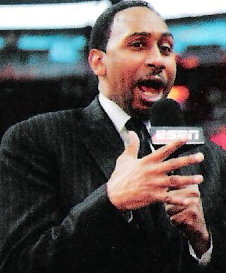
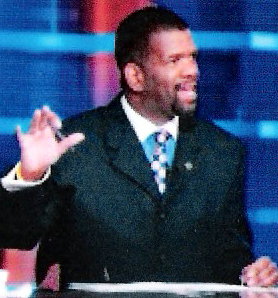
Steven A. Smith and Michael Wilbon use the N Word and they thinks its okay—Rob Parker calls RG III a meatloaf brother and he is fired?
The recent comments that have come out of Charles Barkley, Michael Wilbon, Jason Whitlock, John Thompson, Jr. (since riding off into the sunset) and Stephen A. Smith’s mouths in sports talk radio and television media makes me think they have been living under a rock for the past two decades.
For example; Charles Barkley’s thoughts on the senseless shooting death of Michael Brown in Furgerson and the riots that followed. He said, “The black looters were a bunch of scumbags.” His shadow ESPN’S Michael Wilbon said on National television “I see nothing wrong with using the N Word in frequent conversations with my friends.” Sports writer Jason Whitlock said, “John Thompson, Jr. broke color barriers in college basketball and was responsible for the hiring of more black sports writers at major newspapers.”
The one thing among the many fraudulent things Coach Thompson said or done during his college career was written in the Washington Post Sunday Magazine. He said, “Money overcome racism in America!”
He said, “For those who are lazy: nothing. For those looking for shortcuts: nothing,” He went on to say, “It’s every man for himself out there.”
Smith forgot to tell the students who might be looking for careers in broadcast media to be on the lookout for racism. He said in his interview in Essence Magazine, “I’m in 207 markets across the country and most of it is Middle America, (a term for white America). “They don’t want to hear about racism.” My interpretation: “Since white folks sign my check I am not rocking the boat.” See his commencement speech below.
It is now evident, that some folks took Coach Thompson’s observation for the gospel. In America 1% of the population now controls all the wealth. The Supreme Court ruled recently that the 1% can give unlimited financial support to their favorite political candidate. This means the office of the President, the Senate and Congress will be controlled by the rich and the greedy. It looks like Coach Thompson was on to something but don’t expect people of color to be among the 1%.
In a story written in The Winston-Salem Journal on Sunday May 15, 2011, by Annette Fuller, Stephen A. Smith, an ESPN commentator and sports journalist, told the graduating students at Winston-Salem State University that they could party that night, rest on Sunday and then go out and find a job on Monday morning.
He said, “If you want to be somebody, you’ve got to annihilate the competition.” Smith, graduated from WSSU in 1991.
He went on to say “Anything less is a waste of your time and a waste for the people who believe in you. And once you give the world your all, “you have to do it over and over and over again,” he said. “I’m in no mood to mince words,” he said in the commencement speech from the podium.
He told the graduates to look up in the stands and wave to their parents and family. “They’re not happy for you,” he said. “They’re happy for them. They don’t want you anymore. They’re happy because now you get to pay your own phone bill,” he said to laughter and applause.
In the spring of 2011, “entering the world is as serious as it gets,” Smith said. “We have over 13 million unemployed.” The question is: “What is waiting for you?” he asked the graduates.
“For those who are lazy: nothing. For those looking for shortcuts: nothing,” he said. “It’s every man for himself out there.”
He said he has no use for those who constantly say, “It’s not fair.”
“One of my bosses once told me, ‘Fair is a place where they judge pigs,’ he said. “Nobody cares about fairness. Everybody is out there trying to get theirs,” and you’ve got to compete against them, keeping morals and ethics always in mind, he said.
Nobody wants to hear excuses, he said. Nobody wants to hear, “They’re keeping me down.” “No, you’re keeping yourself down,” he said. “Saying that is an excuse to accept mediocrity. You’re looking for people to blame instead of looking in the mirror.”
Also, nobody wants to hear about your suffering, he said. “With the budget deficit and with all the unemployment,
we’re all suffering,” he said. Consider yourself full-fledged Winston-Salem State Rams, he said. “You are now officially trained, educated, armed and dangerous,” he said. “Go forth now and steamroll over the competition.”
In the November 2010 issue of Essence Magazine in a far reaching panel discussion titled “Race in America” Stephen A. Smith was on a panel that included the Rev. Al Sharpton (National Action Network), Soledad O’Brien (CNN), Ben Jealous (NAACP) Tricia Rose (Brown University), Sheryl Underwood (Comedian) and several other noted community advocates.
The discussion took a turn for the worst for Stephen A. Smith when the moderator, Bob Evans (Deputy Editor of Essence) asked the question to know one in particular “Does the heighten racism surprise you or disappoint you?
Ben Jealous: It was disappointing but not surprising. Racism so infects our national discourse that we still think the majority of crack users in this country are Black. White people are 65% of crack users.
Stephen A. Smith: If I went on my radio show and said that, we’d have a problem.
Tricia Rose: Why?
Stephen A. Smith: I’m in 207 markets across the country and most of it is Middle America, (a term for white America). “They don’t want to hear that.”
Tricia Rose: How do you know?
Stephen A. Smith: Because the White folks who make the decisions, who show you the numbers (he forgot to say, “And sign my check”), will point out that White America does not want to hear it. It is like pulling teeth to get them to engage in a dialogue about race (interpretation; I am going along to get along).
Stephen A. Smith: “You should have your own show on CNN”, he says to Soledad O’Brien!
Sheryl Underwood: Tell me why?
Stephen A. Smith: If you give her that platform, what is the likelihood of her addressing the very issues we are discussing? She is not going to hesitate.
My Interpretation of Stephen A. Smith’s response; “I work for a white radio station that is heard in 207 markets in Klu Klux Klan territory and they don’t want to hear that shit! I am getting paid Top Dollar and I am not about jeopardized my good J-O-B!
“Soledad, you should have your own show on CNN in prime time because you are not afraid to discuss these types of issues. I don’t have the balls to discuss racial issues on my show.”
My question to Stephen A. Smith; How can you deliver the commencement address to grads telling them “If you want to be somebody, you have got to annihilate the competition” when you are running scare? Something is wrong with this picture!
This type of dialogue goes back to us owning our own media outlets and stop fronting for “The Man.”
THE WORLD IS NOT A BETTER PLACE WITHOUT VERNON, ARTURO AND ALEXIS!
In Appreciation
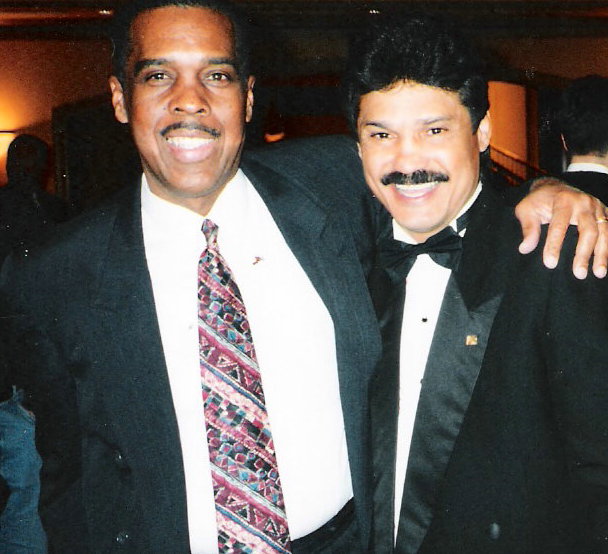
Alexis was a class act
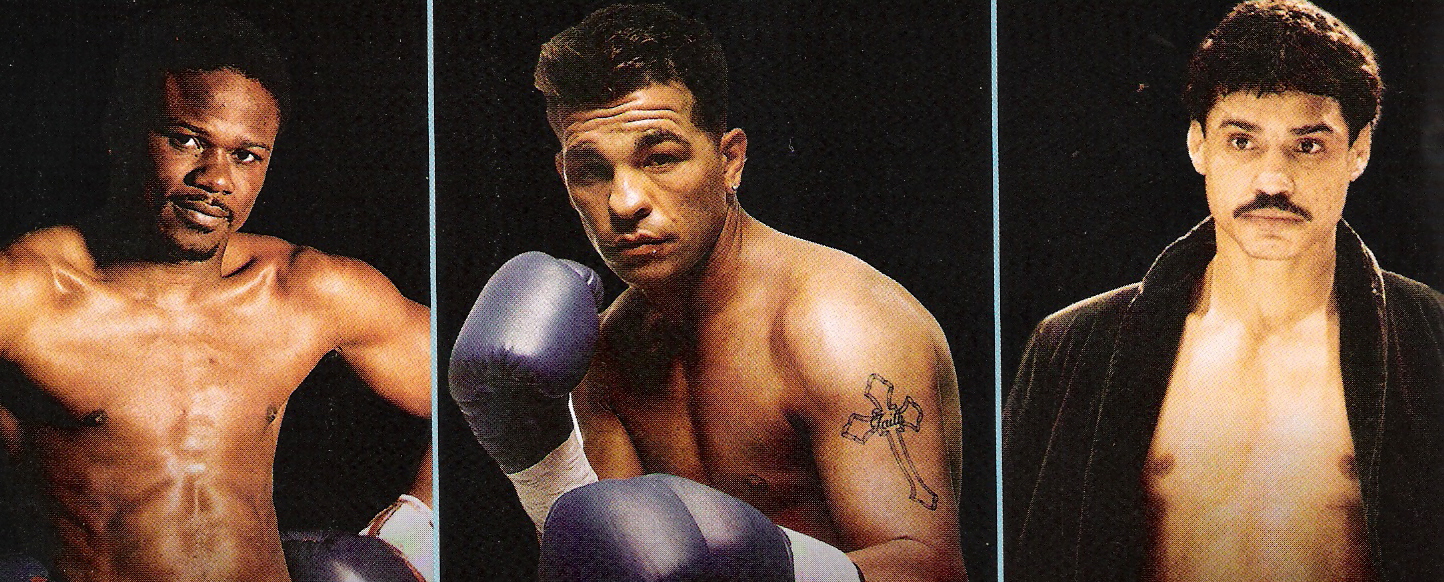
Vernon Forest
Arturo Gatti
Alexis Arguello
In July 2009 the world of boxing lost three great champions in violent and tragic circumstances.
On July 11, 2009 Arturo Gatti was found in a beach resort apartment in Brazil handing by his neck, his death was ruled a suicide. Gatti was truly one of the game’s great warriors he left it all in the ring. You always got your money’s worth with any fight card he was on.
Arturo was called the “Human highlight Film.” He had 9 straight sellouts in Atlantic City’s Convention Center from 2002–2007. Four of his fights were chosen as the “Fight of the Year” by the Boxing Writers Association. He fought on HBO 20 times including a legendary trilogy of fights with Mickey Ward. The trilogy was voted the second greatest of all time, second only to Ali and Frazier.
Arturo Gattie was a boxing icon and hero in his hometown of Jersey City, NJ.
On July 25, 2009 Vernon Forest was shot down in an Atlanta, Georgia gas station while putting air in his tires. It looked like robbery was the motive, he was driving a Jaguar.
During his great career his most memorable fight was when he defeated the unbeaten Shane Mosley in January 2002 for the 147 pound WBC title. Vernon was an underdog going into the fight despite his win over Shane as an amateur. He won a unanimous decision.
He was a gentleman during his great career and never boasted about his victories. Vernon was humble and gracious in victory and defeat.
Vernon will definitely be missed in his hometown of Atlanta. Vernon was an important part of the Atlanta community. He was a giver and people in the city loved him. He founded a program called “Destiny’s Child” which catered to mentally challenged adults. His friends said, “He was a greater human, than he was a boxer.”
On July 1, 2009 Alexis Arguello was found dead in his hometown of Managua. Managua is the Nation’s Capitol of Nicaragua. He was the Mayor of the city. His death I took personal.
Alexis was a champion in three different weight classes during the greatest boxing era of my life time, the 80s. Alexis was not only a boxing champion he was a class act, inside and outside of the ring.
I have walked, broken bread, and have been associated with some of the greatest boxing champions of 2Oth Century. They include, Muhammad Ali, George Forman, Thomas Hearns, Roberto Duran, Sugar Ray Leonard, Aaron Pryor and Alexis Arguello.
The Heavyweight Champion was once the most recognizable sports personality in the world. With so many alphabet soup divisions the names of today’s heavyweight champions are hardly recognizable. It was once unheard of for the Heavyweight Champion not to be an American.
Muhammad Ali though retired is still the most recognizable boxer in the world. He had my back during his electrifying career and when he retired there was a definite void left in the world of boxing.
The void was quickly filled with some of the most electrifying and excited fighters who were not heavyweights, Sugar Ray Leonard, Roberto Duran, Thomas Hears, Marvin Hagler, Aaron Pryor and Alexis Arguello. The little guys had finally taken the spotlight.
Sugar Ray Robinson was the last “Little Guy” to hold the spotlight of the boxing world. No one has ever dominated the middleweight division like “The Original Sugar Ray.”
There was never a dull moment when the little guys of the 80s stepped into the ring. Their fights often left you breathless.
I had up close and personal moments with Leonard, Hearns, Duran, Pryor and Arguello.
Sugar Ray was the darling of the boxing world and the game’s “Cash Cow.” His fights with Hearns, Duran and Hagler were all classics and controversial wins. He sometimes won under suspicious circumstances and this was all done without my friend the notorious Don King as his promoter.
The most controversial title fight during that era was the showdown fight between Aaron “The Hawk” Pryor and Alexis Arguello. These two will be forever linked in boxing history. Their two showdown fights in the 80s are now boxing folklore.
Aaron Pryor and I became friends when he came to Washington, DC to be trained by Dave Jacobs the former boxing trainer of Sugar Ray Leonard. Dave had been fired by Sugar Ray Leonard and someone had suggested that Aaron and Dave become a team. The combination was like “Oil and Water,” not compatible.
It had always been rumored that Dave was overrated. I think this was because like all great champions, Sugar Ray and Pryor called their own shots.
Aaron was from the streets of Cincinnati, Ohio and he is the greatest example of; “You can take a brother out of the ghetto but you can’t take the ghetto out of him—meet ‘The Hawk.’
There was no denying Aaron was an awesome talent and was going places in spite of himself.
He dominated the great Thomas Hearns in the 1975 Golden Gloves. His star was definitely on the rise, but he stumbled when he failed to make the 1976 Olympic Games. He lost to the eventual Olympic Gold Medal winner Howard Davis.
The lost to Davis cost Aaron a major contract but that did not stop his pursue of a World Championship. He tore through the professional ranks with an eye popping 24-0 record. The boxing stars in his weight class like Leonard, Hearns and Ray “Boom Boom” Mancini ducked him. He was Warrior and no one wanted to fight him. His style was relentless you never had to look for him.
Dave Jacobs invited me to the gym to meet Aaron and asked me to help find a place for him to live.
I took him into DC and introduced to my friend Maurice “Mo” Tighman. Mo was the resident manager of the Naylor Gardens’ apartment complex in SE.
I asked Mo to do me a favor and find a place to house Aaron for a couple of months. As luck would have it there was an apartment available. One of our friends a long time tenant was going to be out of the country for several months. He was looking for someone to sub-lease his apartment while he was gone. Enter Aaron Pryor.
The first night in the apartment he was on the streets looking for drugs. He then imported another problem in from his hometown, his common-law wife. This was my fault because my friend at the time Boxing Promoter Don King had forewarned me (Aaron was bad news). I thought about my source of information and decided to take a chance, big mistake!
The fights that took place in that Naylor Garden apartment between Aaron and his common-law wife were the talk of the complex. According to my brother Earl a police Sergeant in the district “The Hawk” was no longer undefeated on some of those nights. My brother had to referee several of the knockdown drag out fights. As a favor to me my brother never arrested the couple. He was once the Heavyweight Boxing Champion of Germany while serving in the Army and evidently felt some type of bond.
Aaron finally had to send his live-in lover back to Cincinnati so he could concentrate on his training.
When our friend arrived back from out of the country he didn’t even recognize his own apartment. The apartment was declared a disaster area.
The next time I saw Aaron was at the weight-in for his fight on the undercard of the Michael Spinks and Saad Muhammad middleweight title fight. The weight in was held at the L’Enfant Plaza Hotel in downtown DC.
He gave me a wink of his eye and pretended he didn’t know me. He never paid for the damages and never said thank you. Once again “You can take a brother out the ghetto but you can’t take the ghetto out of him.”
In the meantime a fiasco developed at the weight-in between flamboyant Promoter Butch Lewis and Saad Muhammad. There was a problem with Saad making the weight limit. Saad threaten to knockout Butch. This confrontation caused fisticuffs between the entourages.
Thanks to the incompetent DC Boxing Commissioner led by Chairman Cora Masters Barry the fight was called off. Ms. Barry was later arrested and convicted of taking brides and stealing money from the Commission.
The tragic death of Alexis caught me completely off guard. He was found in his hometown of Managua with a bullet through his heart. His death was also ruled a suicide.
Alexis like Pryor came out of a life of poverty. There the resemblance ends. Alexis was a class act during his entire career. He was intelligent, articulate and had a heart as big as the ring that he fought in.
Aaron was more like my friend Don King, selfish and ghetto treacherous and his word did not mean a thing.
The fight that made Alex Arguello a household name in the United States was his fight with Ray “Boom Boom” Mancini. This was a great brawl. It was my first up close look at the fighter from Nicaragua. He gave Mancini a boxing lesson. The thing that impressed me the most was, after this brutal fight he embraced Mancini and wished him well. He was not caught up into himself.
Alexis was a tactician in the ring. He had a style where he stood straight up with a powerful jab. He could end a fight at anytime with a powerful right hand or a devastating left hook.
Alex Arguello was 77-5 when he met the undefeated Pryor on August 12, 1982. He was going for his forth World title in 4 different weight classes. It was a fight of epic proportions. They both were considered two of the best pound for fighters in boxing. They would split 3 million dollars a record at that time in the division.
I was rooting for Alexis. “The Hawk” had flown the coop!
The fight lived up to its advanced billing. Aaron set a fast pace with his in your face style and won the early rounds. His style made for a difficult first half for Alexis. But Alexis found his second wind and fought back to put “The Hawk” on the defense.
Aaron had only gone beyond ten rounds once in his pro career and Alexis had traveled beyond ten rounds on many occasions.
The question was who could hold on the longest and it looked like the question would be answered in the 13th round. Alexis caught Aaron with a devastating right hand to the jaw. It looked like he was going down for the count but Aaron somehow managed to stay on his feet.
Aaron staggered back to his corner for the infamous 14th round and the equally infamous “Black Bottle.”
In Aaron’s corner was the controversial trainer Panama Lewis. Panama made a move that has since gone down in boxing history. While they were trying to revive Aaron for the opening for the 14th round, Lewis was seen and heard yelling “Give me the other bottle, the one I made up.” He was rejecting the regular water bottle they had been using throughout the fight.
We still have not figured out what was in the “Black Bottle” but whatever it was made Aaron come off his stool like the ‘Energized Bunny.’
With just a minute gone in the 14th round the great Alexis Argüelles failed to respond to a volley of 24 straight punches and the fight was stopped. Aaron Pryor was now “The Disputed Champion,” of the world.
Alexis, never recovered from that controversial lost. It took a lot out of him as proud man and equally proud boxer. There was return match with Aaron but be was knocked out in the 10th round.
Aaron would go on to self destruct. The last thing I heard was that he had found God. I hope it is the other way around and God found him. If Aaron found God—God is in trouble.
I last saw Alexis at a Don King celebration in Atlantic City over a decade ago. He looked good and we laughed and talked about the good times. He was still humble and a gentleman and that is how I will remember him.
THE BROTHER WITH NO HOPE MET THE GREAT WHITE HOPE: MEET JACK JOHNSON!
In Appreciation

The Great Jack Johnson & Joe Louis
THE GREAT ONE BEFORE THE GREATEST
Ali gives credit to copying his boxing style after the best pound for pound fighter to ever step into a ring, Sugar Ray Robinson.
The heavyweight champion that I think Clay’s life styled best resembled was the first black Heavyweight Champion of the world, Jack Johnson.
Johnson was born in Galveston, Texas, the third child and first son of former slaves. His parents worked at blue-collar jobs to raise six children and taught them how to read and write. He had just six years of formal schooling. Johnson dropped out of school to get a job. His early schooling came in handy when he decided to turn to professional boxing. His early schooling allowed him to count his own money and Don King was just a bad dream.
Johnson will go down in history as one of the greatest defensive fighters of all time. His boxing style was very unique and distinctive. He developed a more patient approach that was customary in that day.
He fought defensively, waiting for is opponent to make a mistake, and then capitalizing on it. Johnson always began a bout slowly checking his opponent out, building up over the rounds into a more aggressive fighter. He often fought to punish his opponents rather than knock them out (Ali vs Patterson), endlessly avoiding their blows and striking with swift counter punches. He always gave the impression his opponents were merely play things. But if he was pushed, he could take you out with one punch.
Johnson’s style was very effective, but he was criticized in the press as being cowardly and devious. By contrast, World Heavyweight Champion “Gentleman” Jim Corbett, who was white, had used many of the same techniques a decade earlier, and was praised by the press as “the cleverest man in boxing.” In the 1900s it was obvious there was a double standard then and still exists in today’s media. In 2010 old habits still die hard.
By 1902, Johnson had won 50 plus fights against both white and black opponents. He won his first title on February 3, 1903, beating “Denver” Ed Martin in 20 rounds for the World Colored Heavyweight Championship. His efforts to win the full title were denied. James J. Jeffries world heavyweight champion refused to face him. Black and white boxers could meet in other competitions, but the world heavyweight championship was off limits to them. However, Johnson did fight former champion Bob Fitzsimmons in July 1907, and knocked him out in two rounds.
Johnson finally won the world heavyweight title on December 26, 1908, when he fought the Canadian world champion Tommy Burns in Sydney, after following Burns around the world for two years and taunting him in the press for a match (Clay vs Liston).
The fight lasted fourteen rounds before being stopped by the police in front of over 20,000 spectators. The title was awarded to Johnson on a referee’s decision as a T.K.O., but he had clearly beaten the champion. Johnson constantly mocked both Burns and his ringside crew, while receiving every kind of racial and other slurs from them and members of the crowd. Every time Burns was about to go down, Johnson would hold him up, beating an already helpless man (Clay vs. Terrell).
Jack Johnson’s victory over Burns brought on racial animosity among whites. It ran so deep that writer Jack London called for a “Great White Hope” to take the title away from Johnson.
Writer Jack London
London was an amateur boxer and avid boxing fan, London was a sort of celebrity reporter covering pro boxing in 1910. He was also white media’s equal of today’s Rush Limbaugh.
He had written that former white champion Jim Jeffries must now emerge from his Alfalfa farm and remove that toothy smile from Jack Johnson’s face. He wrote “Jeff, it’s up to you. The White Man must be rescued.”
London was a racist but unlike Limbaugh he could sometimes be objective. For example; in earlier boxing stories in 1908, he praised Johnson highly, comparing the black boxer’s coolness and intellectual style, with the apelike appearance and fighting style of his white opponent, Tommy Burns: Johnson’s bigness, coolness, quickness, cleverness, and had vast physical superiority. Just because a white man wishes a white man to win, this should not prevent him from giving absolute credit to the best man, even when that best man was black. All hail to Johnson. He was superb and was impregnable as inaccessible as Mont Blanc.”
This was unheard of, the title holder Johnson had to face a series of fighters billed by boxing promoters as “The Great White Hopes” to claim the title. The fights were all exhibition matches.
In 1909, Johnson beat Frank Moran, Tony Ross, Al Kaufman, and the middleweight champion Stanley Ketchel. The match with Ketchel was keenly fought by both men until the 12th and last round, when Ketchel threw a right to Johnson’s head, knocking him down. Slowly regaining his feet, Johnson threw a straight to Ketchel’s jaw, knocking him out, along with some of his teeth. Some ringside observers swear Ketchel’s teeth were embedded in Johnson’s glove.
The only blemish on Johnson’s record was his fight with Philadelphia’s Jack O’Brien. He went into the fight weighing 205 pounds to O’Brien’s 161 pounds. He could only achieve a six-round draw with the great middleweight. The only thing that could have been worst would have been a defeat.
Johnson’s skill as a fighter and the money that it brought made it impossible for him to be ignored by the establishment. In the short term, the boxing world reacted against Johnson’s legacy. It was Johnson that knocked down the doors for Joe Louis and Ali. Ali often spoke of how he was influenced by Jack Johnson. He felt he and Johnson had a lot in common. Ali felt America ostracized him in the same manner that it did Johnson. He cited his opposition to the Vietnam War and affiliation with the Nation of Islam.
Ali and Johnson were both tall dark and handsome. They both had bodies of Greek Gods and neither lifted a barbell in their entire careers. Johnson was a sharp dresser and fashion guru among the athletes of his era. Ali was comfortable in just about anything he put on and could have cared less about the latest threads in the world of fashion.
The two champions had an eye for beautiful women and the women usually had both eyes on them. Johnson choice of white women kept him in hot water with the law and the white power structure. The two different eras made one more vulnerable than the other.
For example; On October 18, 1912, Johnson was arrested on the grounds that his relationship with Lucille Cameron a white woman violated the Mann Act. The act covered, transporting women across state lines for immoral purposes. Lucille was considered a prostitute. She later became his second wife and refused to cooperate and the case fell apart.
Less than a month later, Johnson was arrested again on the same charges. This time it was another white woman and another prostitute named Belle Schreiber. He had been involved with Belle in 1909 and 1910. She testified against him, and he was convicted by a jury in June 1913. The conviction came despite the fact that the incidents used to convict him took place prior to passage of the Mann Act. Johnson was sentenced to a year and a day in prison. This definitely was a case of Justice and Just-Us.
Johnson skipped bail, and left the country, joining Lucille in Montreal on June 25. He fled to France for the next seven years. They lived in exile in Europe, South America and Mexico. Johnson returned to the U. S. July 1920. He surrendered to Federal agents at the Mexican border and was sent to serve his sentence in Leavenworth Penitentiary. He was released on July 9, 1921.
In 1910, former undefeated heavyweight champion James J. Jeffries came out of retirement and said, “I feel obligated to the sporting public at least to make an effort to reclaim the heavyweight championship for the white race. I should step into the ring again and demonstrate that a white man is king of them all.” Jeffries had not fought in six years and had to lose weight to get back to his championship fighting weight.
The fight took place on July 4, 1910 in front of 20,000 people, at a ring built just for the occasion in downtown Reno, Nevada. Johnson proved stronger and more nimble than Jeffries. In the 15th round, after Jeffries had been knocked down twice for the first time in his career, his people called it quits to prevent Johnson from knocking him out.
The “Fight of the Century” earned Johnson $65,000 and silenced the critics, who had belittled Johnson’s previous victory over Tommy Burns as “empty,” claiming that Burns was a false champion since Jeffries had retired undefeated. . Writer Jack London was at ringside when Johnson vanquished Jeffries, the “Great White Hope.” It is rumored he took his type writer and disappeared to never cover a boxing match again.
The outcome of the fight triggered race riots that evening on the on the Fourth of July all across the United States, from Texas and Colorado to New York and Washington, DC. Johnson’s victory over Jeffries had dashed white dreams of finding a “great white hope” to defeat him. Many whites felt humiliated by the defeat of Jeffries
Blacks, on the other hand, were jubilant, and celebrated Johnson’s great victory as a victory for racial advancement. Black poet William Waring Cuney later highlighted the black reaction to the fight in his poem “My Lord, What a Morning”. Around the country, blacks held spontaneous parades and gathered in prayer meetings.
Some “riots” occurred simply because blacks were celebrating in the streets. In certain cities, like Chicago, the police did not disturb the celebrations. But in other cities, the police and angry white citizens tried to subdue the participants. Police interrupted several attempted lynchings. There riots in more than 25 states and 50 cities. About 23 blacks and two whites died in the riots, and hundreds more were injured.
There have been recurring proposals to grant Johnson a posthumous Presidential pardon. A bill requesting President George W. Bush to pardon Johnson in 2008, passed the House, but failed to pass in the Senate. In April 2009, Senator John McCain, along with Representative Peter King, filmmaker Ken Burns and Johnson’s great niece, Linda Haywood, requested a presidential pardon for Johnson from President Barack Obama. On July 29, 2009, Congress passed a resolution calling on President Obama to issue a pardon.
I don’t really understand why President Obama is taking so long to issue the pardon? When it comes to a politician playing it safe—it doesn’t get any safer than this! His time in the White House is coming to an end and in his State of the Union on Tuesday January 18, 2005 he said “I don’t have to campaign anymore, I know, I won the last two elections.” If that is the case I wonder what is the problem in the pardon with Jack Johnson?
NBA LOVE STORY: RED AND DOTIE AUERBACH!
In Appreciation
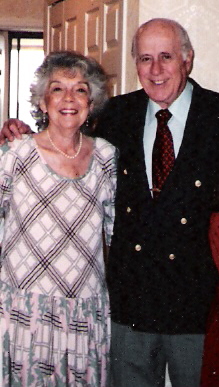
We all know that Red Auerbach was the greatest coach in the history of team sports. Phil Jackson finally surpassed Red in NBA championships but it took him twice as long. He was a great coach but he was nobody’s Red Auerbach. Red won all his championships with one franchise. Phil was an NBA hired gun!
Despite his death in 2006 Red was still coaching. His coaching spirit lived in Danny Ainge, Doc Rivers (LA Clippers), Paul Pierce, Kevin Garnett (Brooklyn Nets), Ray Allen (Miami Heat) and the entire Celtics’ organization. The Boston Celtic’s fantastic 2008 run to NBA Championship had the touch of an Angel (Red Auerbach).
Red was not only a great basketball coach but his won-lost record in Human and Civil Rights in pro sports is unmatched. Thanks to Red and Celtic owner Walter Brown the NBA is now the most integrated franchise in professional team sports.
I met Red and Dotie Auerbach on a Chevy Chase playground in a Maryland suburb of DC in the late 60’s. They were hanging out watching Summer League Basketball.
I found Dotie sitting alone outside the fence watching the action. We struck up a conversation about one of the players. I thought to myself, “This little white lady sure knows a lot about the game of basketball.” We would talk basketball for the next 30 minutes when suddenly her husband shows up with cold drinks. Her husband was the one and only Red Auerbach.
Dotie introduced us and Red growled something sarcastic and she said, “Arnold, stop acting up.” Red had a demeanor of a tiger when he didn’t want someone getting too close, but in reality he was nothing but a pussycat.
For the next 30 plus years Red and Dotie Auerbach would become a fixture and supporters of “Kids In Trouble, Inc and Inside Sports.” During that relationship my wife Hattie and I would visit their home on Mass. Ave. in upper NW DC. We would often have lunch with Dotie. She would show off her antiques and art collection next door to an adjacent apartment that they had also brought. The walls of the next door apartment had been knocked down to accommodate the collection.
Red, would usually be out playing cards or tennis at Woodmont Country Club in Bethesda, Md. Dotie was a classy down to earth lady and we fell in love with her. We were benefactors of their generosity and kindness. Their spirit lives in us today.
I remember the first time Red invited me to have lunch with him. He asked me to meet him on the corner of 9th and F Streets in NW DC. I am thinking we are going to have lunch at some fancy restaurant downtown. I was in for a surprise. He treated me to a kosher hotdog with sauerkraut and a RC cola from a vendor’s stand on a downtown street corner.
We would later walk around the corner to Ophenhimer’s jewelry store where his brother the late Zang was the manager. Zang had been a cartoonist for the defunct Washington Star newspaper before his retirement. He would later draw a cartoon of Hattie playing a guitar for her 40th birthday portraying the legendary and late comedian Jack Benny saying “I am 39 years old and not a day older.” He also drew a picture of me celebrating my 51st birthday and twenty-five years of Community Service.
Much like Red, Zang and his son Johnny who also worked in the store were rare jewels themselves. The jewelry store would become my downtown hangout.
I remember one day walking into the store and there was Red, Zang, Sam Jones and the late great Hymie Perlo joking around. Before I could get through the door, Hymie was asking Red, “What does Harold Bell have on you, every time I turn on the dam radio you are on his show?” Without hesitation Red responded ‘My wife loves him.’
I would later be invited to the VIP luncheons in Chinatown on Tuesdays where Red would play “King for a Day.” He would hold court and listen to friends; media and sports personalities tell him how great he was. I really enjoyed the outings when his friend the late Hymie was in attendance. Hymie was the Community Relations and PR man for his friend Abe Polin’s Washington Bullets/Wizards. He kept us laughing and he made Red keep it real with his down to earth humor. With the exception of a few most of the guys in attendance were a bunch of wannabees and being around Red made them feel like they were important.
The last time I saw Red was in 2006 at one of those Tuesday luncheons in China Town. I made a surprise visit and you could hear a pin drop at the table where he was holding court. Seeing me walking toward the table everyone suddenly stopped laughing and talking. Red had his back to me and could not see me. I stood directly behind him. He had to turn to see who in the hell was interrupting his lunch and when he did he said, “Who in the hell invited you?” My response was ‘Now I need an invitation to eat with you?’
He suddenly started to laugh and got up and hugged me. I whispered ‘You are out of sight but never out of mind and I love you.’ He understood exactly what I was trying to say to him. We had talked by telephone but this was my first time seeing him since his wife Dotie died in 2000 and his brother Zang in 2003. I hugged him again and I walked away.
Red and Dotie’s friendship reminds me of what Muhammad Ali once told me about his definition of a “Friend.” He said, ‘A friend is someone who is always doing something for others and never expecting anything in return.’ Ali, meet—–Red and Dotie Auerbach.
Red reminded me a lot of Ali when he made his entrance into a crowded room all activity came to an abrupt end. He would be the center of attention. When I called the house to talk with Dotie and once he found out it was me he would shout “Hey Dotie its that nuisance Harold Bell or Dotie its your boyfriend Harold Bell.” Red and Dotie treated me and Hattie like we were family.
Red Auerbach was a rare “Superstar.” His telephone number was listed and he answered his own telephone. I don’t ever remember them having an answering service or maybe I just never left a message.
2008 marked 40 years for Christmas Toy Parties sponsored by Kids In Trouble, Inc. Before Dotie took ill and died in 2000 there was always a check for toys coming from the home of the Auerbachs. They were members of the Board of Directors of Kids In Trouble, Inc. Red co-hosted several of my Inside Sports Celebrity Tennis Tournaments. He was a frequent guest speaker for my Kids In Trouble, Inc. forums. He co-hosted “Inside Sports.” In 1990 along with NBA legends Sam Jones, Connie Hawkins, Al Attles and Winston-Salem legendary coach Bighouse Gaines as our guest he co-hosted a show with me titled ‘Celebrity Sports Calls.’
Red loved to attend Double Dutch jump rope tournaments in the inner-city. I would call him and we would go and sit up in a far corner of a gym and enjoy the contest. He would swear the kids participating were some of the greatest athletes in the city.
He was definitely the “God Father” of the NBA. I remember in Houston, Texas somewhere in the 1980s I attended my first NBA All-Star game. I would have a problem acquiring press credentials. I went to pick up my credentials with my hotel roommate CBS TV analyst Sonny Hill. I was told by NBA Media Director Brian McIntye that my credential request had not been received.
I asked Mr. McIntye, “Why would I fly all the way from DC to Houston without applying for press credentials in advance?” He did not budge. I then remembered talking to Red before I left DC and he said ‘Harold I don’t think I am going to make this one.’ It was then I realized I had an ace in the hole, Red Auerbach.
I returned to the pressroom without Sonny and asked Mr. McIntye if he knew Red Auerbach? His response was “Yes do you?” I then asked him if I could use his telephone and he said ‘sure go ahead.’ I dialed Red and Dotie’s number in DC knowing Red was probably out at the club playing tennis or cards. My only hope was that Dotie would be home.
The telephone rang several times and Dotie answers and I said ‘Hi Dotie this is Harold Bell I am at the NBA All-Star game in Houston, would you please speak to Mr. McIntye he needs verification of who I am.’ I then gave the phone to Mr. McIntye and the look on his face said it all. The look said, Dotie had told him exactly who I was. I wished I had a camera at that moment, the look on Brian’s face was ‘Priceless.’ He hung up the telephone and was speechless for about 10 seconds. He finally said, ‘No problem Mr. Bell.’
In 1950 Chuck Cooper of Duquesne University and a second team All-American would be drafted by Red Auerbach making him the first black player drafted and signed by an NBA team.
Earl Lloyd of West Virginia State (CIAA) was the first black to play in a game, beating Chuck Cooper by one day (Lloyd was discharged from the Army one day before Cooper). For years basketball historians were under the impression that Cooper was the first to play in a NBA game. I had Red address the issue in 1974 on my sports talk show “Inside Sports.” Red made it perfectly clear that Lloyd was the first to play in an NBA game. For years the NBA had forgotten that it was Earl Lloyd who broke its color barrier or ignored the fact. They left him on the outside looking into the Hall of Fame.
While growing up I had watched Earl shoot hoops on the playgrounds of DC. He was born and raised in nearby Alexandria, Virginia. I asked Red went to remind the NBA of Earl’s historical accomplishment. With Red’s support I started a media campaign on Inside Sports in the 90s to get Earl inducted into the NBA Hall of Fame. In 2000 Washington, DC would host the NBA All-Star game. I would coordinate a salute and reception for Earl Lloyd in the Nation’s Capitol and in his hometown of Alexandria.
During the NBA All-Star weekend the salute and reception were the only NBA related events Red Auerbach attended. The final vote came 50 years later. In 2002 Earl Lloyd was finally inducted into the Basketball Hall of Fame joining DC’s Elgin Baylor and Dave Bing as a part of this area’s rich basketball heritage. Adrian Dantley was inducted in 2007.
During the Kids In Trouble, Inc. celebration in December 2008 we honored TNT NBA play-off basketball sideline reporter Dave Aldridge (Inside Sportd benefactor) with the Red Auerbach Kids In Trouble, Inc Life Time Achievement Award. Beijing Olympic Volleyball paraplegic Silver Medal winner Karri Miller was honored with the Dotie Auerbach Kids In Trouble, Inc Life Time Achievement Award.
There were three NBA awards handed out that year, Ray Allen of the Celtics was honored with the Player of the Year, Dwight Howard of Orlando was named the Defensive Player of the Year and Coach Mike Brown of the Cleveland Cavaliers was named the Coach of the Year. The common denominator, all three awards were in the name of Red Auerbach. Rookie of the Year was Chicago Bulls’ Derrick Rose and Sixth Man of the Year was Dallas Mavrick’s, Jason Terry. The NBA’s leading scorer, Rebounder, and Assist leader were all black. The footprints in the sand left by Red Auerbach and Walter Brown were still being seen all over the league.
2008 found me trying to complete my book “Inside and Outside of Sports: From the Outhouse to the White House.” I was also editing a CD and DVD titled ‘The Greatest’ interview gems with Red and Muhammad Ali. I missed the entire NBA regular season. In March as the NBA regular season was coming to an end I decided to check out the Washington Wizards. They were having one of their worst seasons in their history.
I placed a call to the press relations office requesting press credentials. The Wizards were one of the worst teams in the league. They were playing the best team in the league, the Cleveland Cavaliers. Gilbert “Have Gun Will Travel” Arenas the Wizards’ best player had missed the entire season as a result of knee surgery. There were rumors he would test his knee against who some consider the best player in the league, LaBron James.
I left several messages for the Director of PR Matt Williams for press credentials without a response. I then called Brian McIntye in the NBA office in New York City. He graciously accepted my call and made sure my request was honored. I have Red Auerbach to thank for the kind and professional gesture on the part of Mr. McIntye. Red was gone but he still was working his magic. The Wizards led by Arenas beat James and his Cavaliers.
When Wizards owner Abe Polin died the new owner Ted Leonis kicked Matt Williams to the curve along with several other do nothing employees.
The Auerbachs’ acts of kindness is just not my story, there are probably hundreds more like mine in the inner-cities of America. Red and Dotie Auerbach are gone but never should be forgotten they cared long before the NBA.
A STAND IN AND STAND UP BROTHER: NFL BAD BOY JOHNNY SAMPLE!
In Appreciation
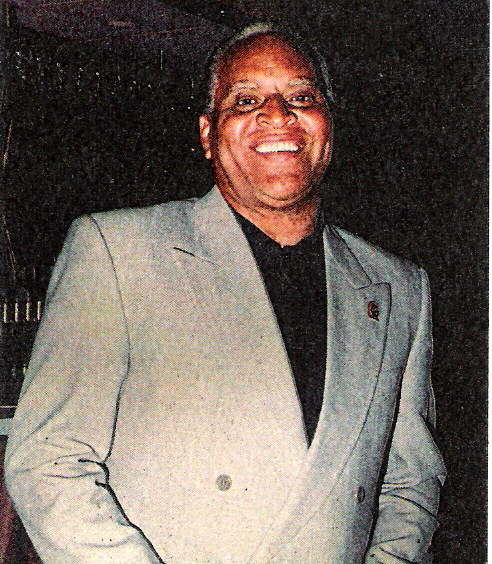
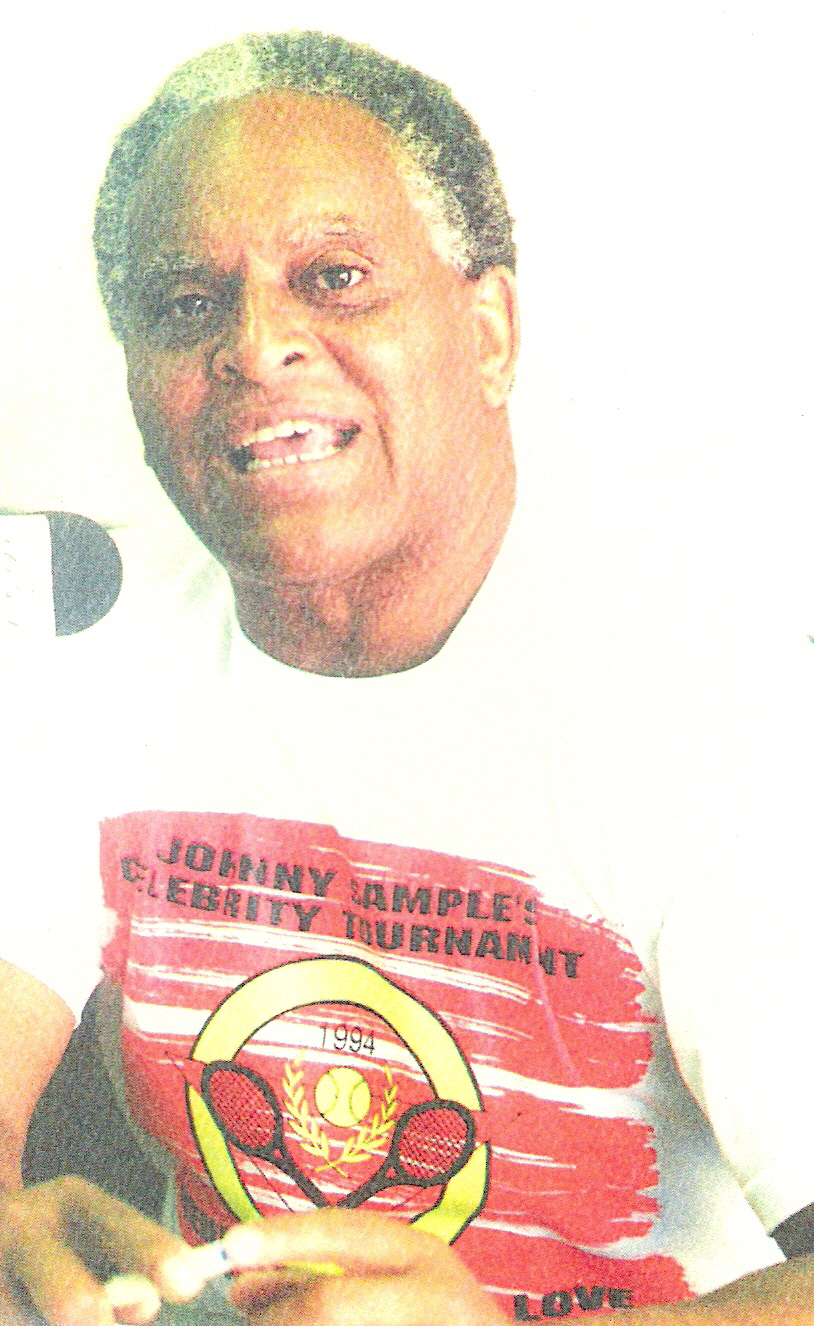
Jim Bad News Barnes (NBA)
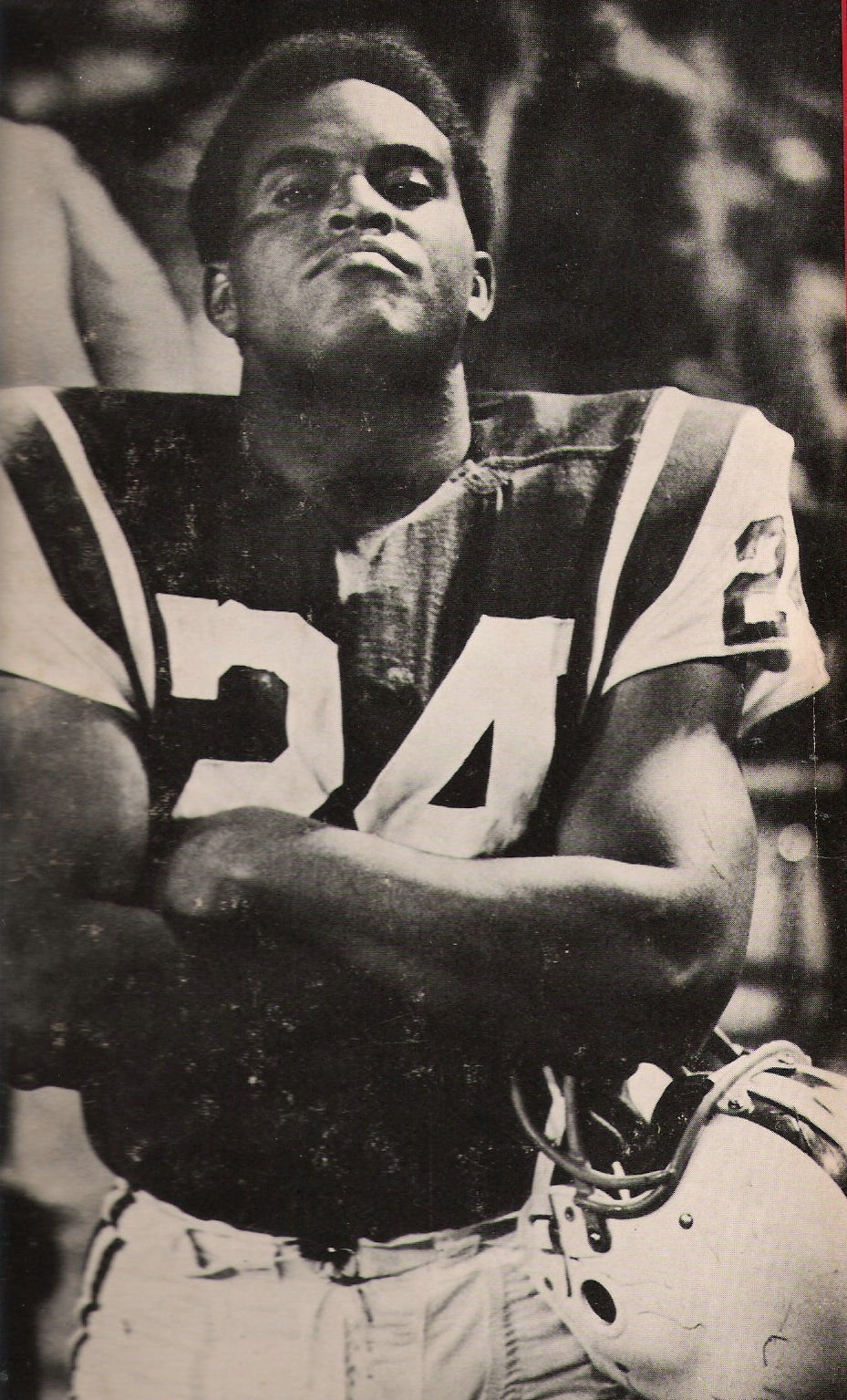
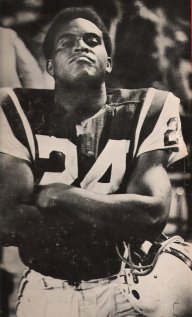
NFL New York Jet Co-Captain
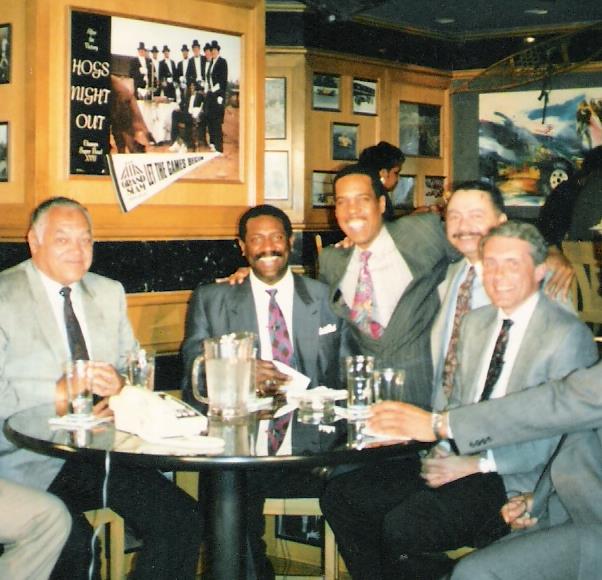
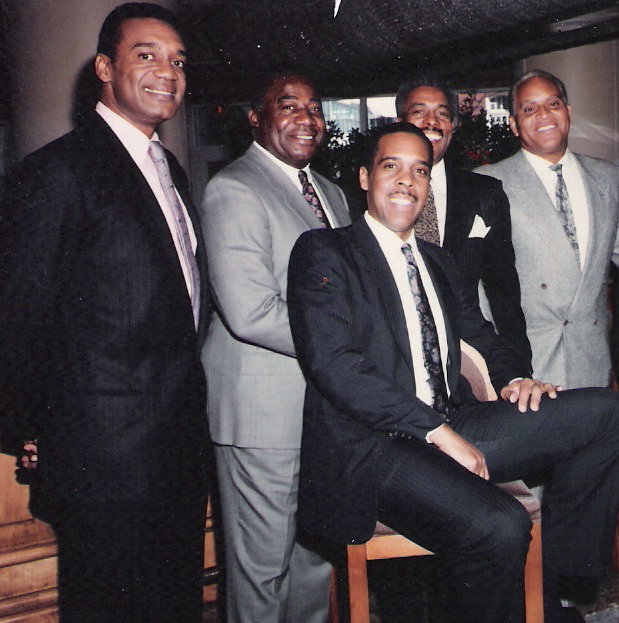
Roy Jefferson, Willie Wood, Sonny Hill & HBell
John B. Sample Jr. was born and raised in Portsmouth, Va. and was known to friends as Happy, Blade, Reds, and Redball died suddenly in his hometown of Philadelphia in April 2006. He was sixty-nine years old. I received a call from Johnny’s close friend basketball legend Sonny Hill with the bad news. In a recent conversation with Coach Gaines’ wife Clara, she said, “Harold I never thought Gaines would die.” It was eerie because I had that same feeling about Johnny Sample even though I knew better. I had just spoken with Johnny before heading south to the memorial service for “Bighouse.” He said he was going to try to make it, but I didn’t look for him. Johnny was notorious for not showing up, but I don’t ever remember him giving me his word and not keeping it. He was always there for all of my celebrity tennis tournaments, media
panel discussions, award programs, radio and television talk shows, etc. Compared to today’s pro athlete, he was a Saint.
I first saw Johnny Sample in Washington, DC in 1954. He was a member of the Maryland State football team and they were in town to play Howard University at the Cardozo High School football stadium.
I was amazed that he didn’t wear thigh and knee pads, he worn his pants skin tight. The shoulder pads were so small it didn’t look like he had any on. His level of play that day was like a Man among boys, Howard
University was no match for Johnny Sample and his teammates. It was here that I came away with the impression that Johnny Sample was indestructible. It would be years later before I would meet Johnny face to face. It was at a Baltimore Bullets’ (Wizards) basketball game at the Baltimore Civic Center. He was a member of the Baltimore Colts football team. He was standing around outside of the bar during halftime laughing and talking with anyone and everyone. I decided to go up and introduce myself and we have been great friends ever since. It was easy to like Johnny Sample, he had an outgoing personality and he made you
feel like he had known you all of his life. There was nothing phony or pretentious about him. If you didn’t want to hear the truth you didn’t want to be around Johnny Sample.
Michael Cooper is one the greatest running backs to ever come out of Philadelphia and he was one of Johnny’s closest friends. He played at North East high school and Michigan State. Michael remembers when he was invited to the Washington Redskin camp in 1964 for a try out by then Coach Bill McPeak. It looked as though Michael was a sure bet to make the team until one day Coach McPeak decided it best he go on the Redskin taxi squad. Johnny disagreed with the coach’s decision and let him know in no uncertain terms. He would run through a brick wall if you were his friend. Michael recalls his many acts of kindness for his friends. He says, “Johnny Sample was not a fly by night friend, if you needed him, he was there.” When his friend and teammate the legendary “Big Daddy” Lipscomb was mysteriously found dead in Baltimore, the
NFL claimed he died of an overdose of drugs. Johnny knew for a fact he didn’t do drugs. He said, “Big Daddy was scared to death of needles.” He sued the NFL for $100, 000 dollars to clear his friend’s name and won the case.
Coming out of Maryland State College he was one the greatest running backs in the nation. In 1955, he was voted unanimously by The Pigskin Club of Washington, DC as its “Player of the Year” for the Central Inter-
collegian Athletic Association (CIAA). He was the first ever player from a Historical Black College selected to play in the College All-Star game in Chicago. His NFL career would be controversial, but his athletic skills
were superior. His mouth often got him into trouble, but his play on the field would often be his ticket out of the NFL doghouse.
During his eleven year NFL tenure he was one of the most feared defensive backs in pro football. Roy Jefferson a former teammate and All-Pro wide receiver says, “If you caught the football in his territory you were going to pay the price.” Hall of Fame All-Pro wide receiver Frank Gifford of the New York Giants was so fearful that he once saw Johnny on a New York street corner and ran to the other side against a red light to get away from him.
The Baltimore Colts, Pittsburgh Steelers, Washington Redskins and the New York Jets were all NFL homes for Johnny Sample. He earned two championship rings and one Super Bowl ring. He was the co-captain with QB Joe Namath of the New York Jets when Namath boldly predicted that the Jets would upset the Baltimore Colts and win the Super Bowl. He is the only player in pro football history to win World Championships in two different leagues (NFL and AFL).
In 1969 Johnny walked away from the game that he loved. He was much more than a great athlete he was a student of the game. Johnny could disrupt the flow of a game by calling out the offensive play as the opposing team came out to line up. The QB would immediately call a timeout and cuss Johnny out as he made his way to the sideline. There were many who thought he would have been a great NFL coach, but he had burn too many NFL bridges.
Immediately after retirement he went to work on his first novel, “Confessions of a Dirty Football Player.” This book outlined the mercenary world of professional football. In an interview on my television sports talk show “Inside Sports” NFL Legend Jim Brown asked the question, Johnny were you a dirty football player or
just a hard clean player?” His response, “I was never dirty, except when I played against you.” All Jim could do was laugh.
Johnny was not one to just sit around after his NFL career. He became an entrepreneur and owned a ticket agency and sporting goods store called, Sample’s End Zone. He later taught himself the game of tennis and quickly excelled. He was the number one player in the country in the United States Tennis (USTA), 45 and over category for several years running. He would later serve as a tennis official for the USTA, Wimbledon, U. S., French and Australian Opens and chair umpire, linesman and referee for the USTA. His inner-city
youth tennis program was one of the largest and best run in the country. Tennis to him was all about, love, love and more love.
In 1995 boxing promoter Don King would bring Mike Tyson to the city of Brotherly Love to fight Buster Mathis.
In February of 2004 he was inducted into the CIAA Hall of Fame in Raleigh, North Carolina. This was almost fifty years after he had graduated from college. The first question he asked when he took the microphone, “CIAA what took you so long?” Johnny and I had often talked about being “Blackballed” by the system is one thing, but to be “Blackballed” by your own people is a tough pill to swallow.
Johnny Sample’s induction into the Hall of Fame could not have come at a better time. In this case better late than never. This was definitely a highlight in his long distinguishing odyssey into the world of politics and sports. During his induction speech he asked me to stand up and be recognized as the pioneer in sports talk radio. He was always reaching and giving something back. Johnny also excelled as a sports talk show host on
W-H-A-T Radio in Philadelphia from 1988 to 2004. Johnny used his sports talk show as a vehicle to improve the growth of his community. As a community advocate, he was instrumental in several projects. The crown jewel was the Million Man March in 1986 when he organized seventy-three buses from Philadelphia and parts of New Jersey to Washington, DC. In my world he was a special man. I was pleased to see my name in the program as an Honorary Pallbearer for the great Johnny Sample. “Redball” it was my honor.
REVISITED: PISTON PETE VS EARL ‘THE PEARL’ MONROE!
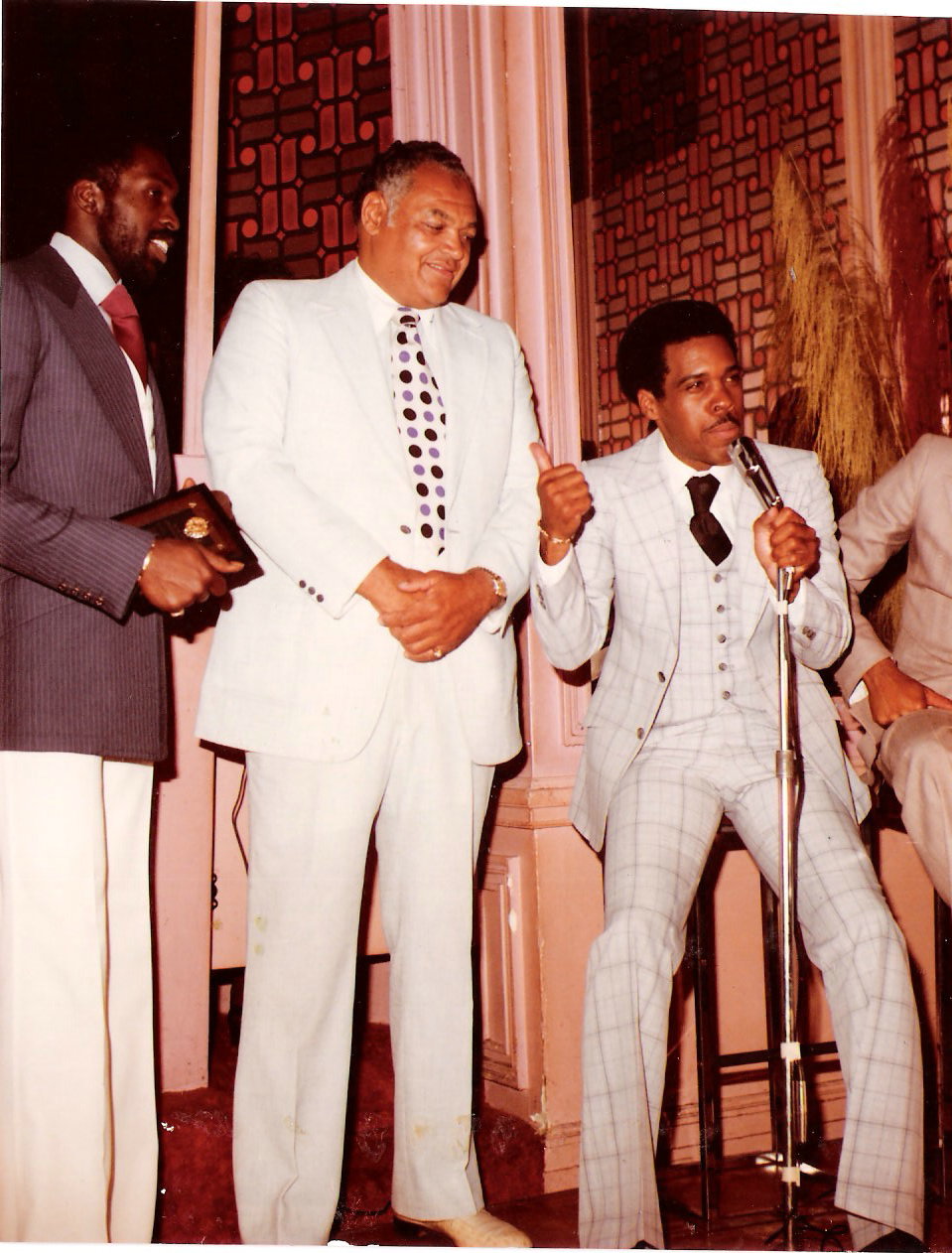
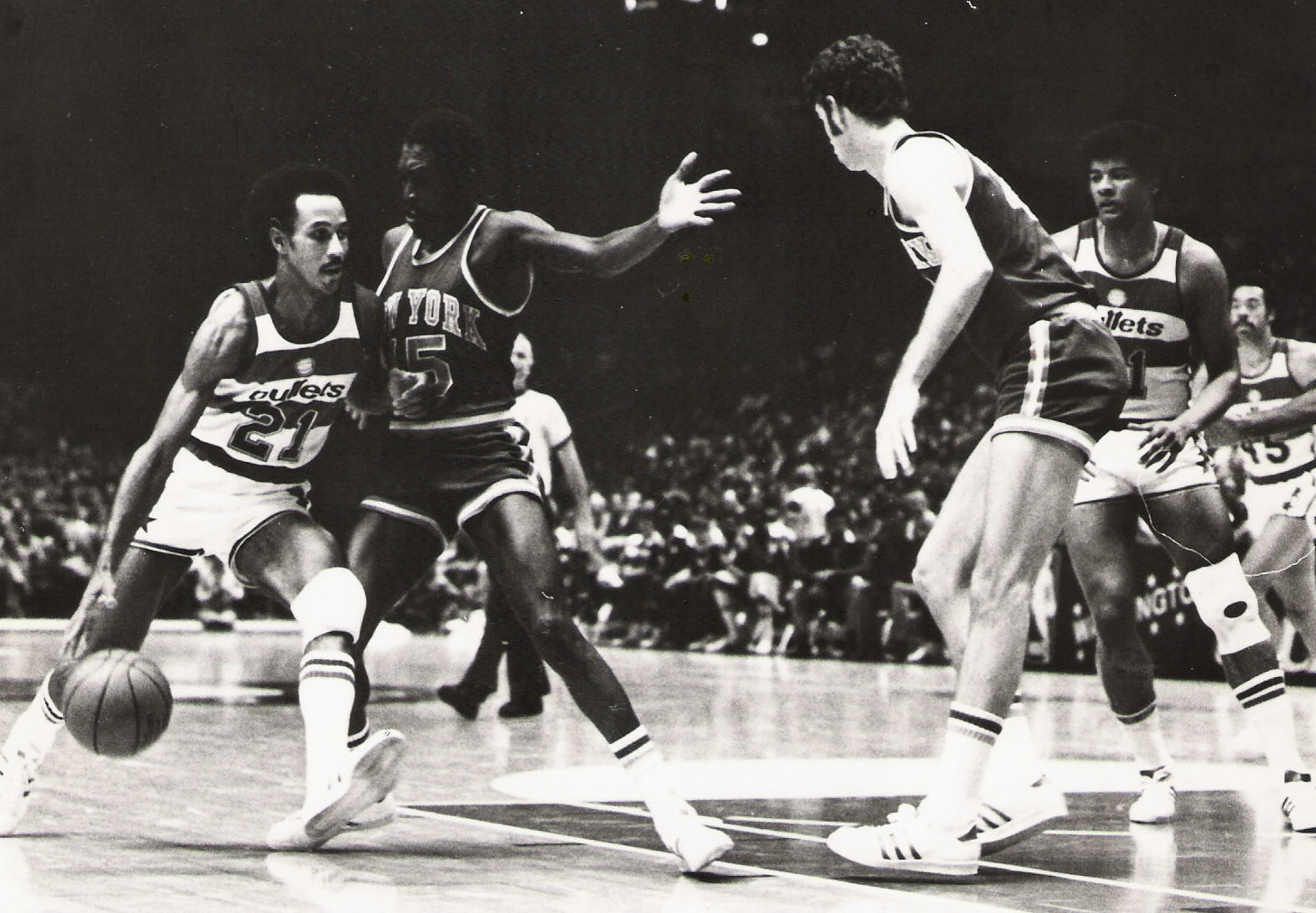
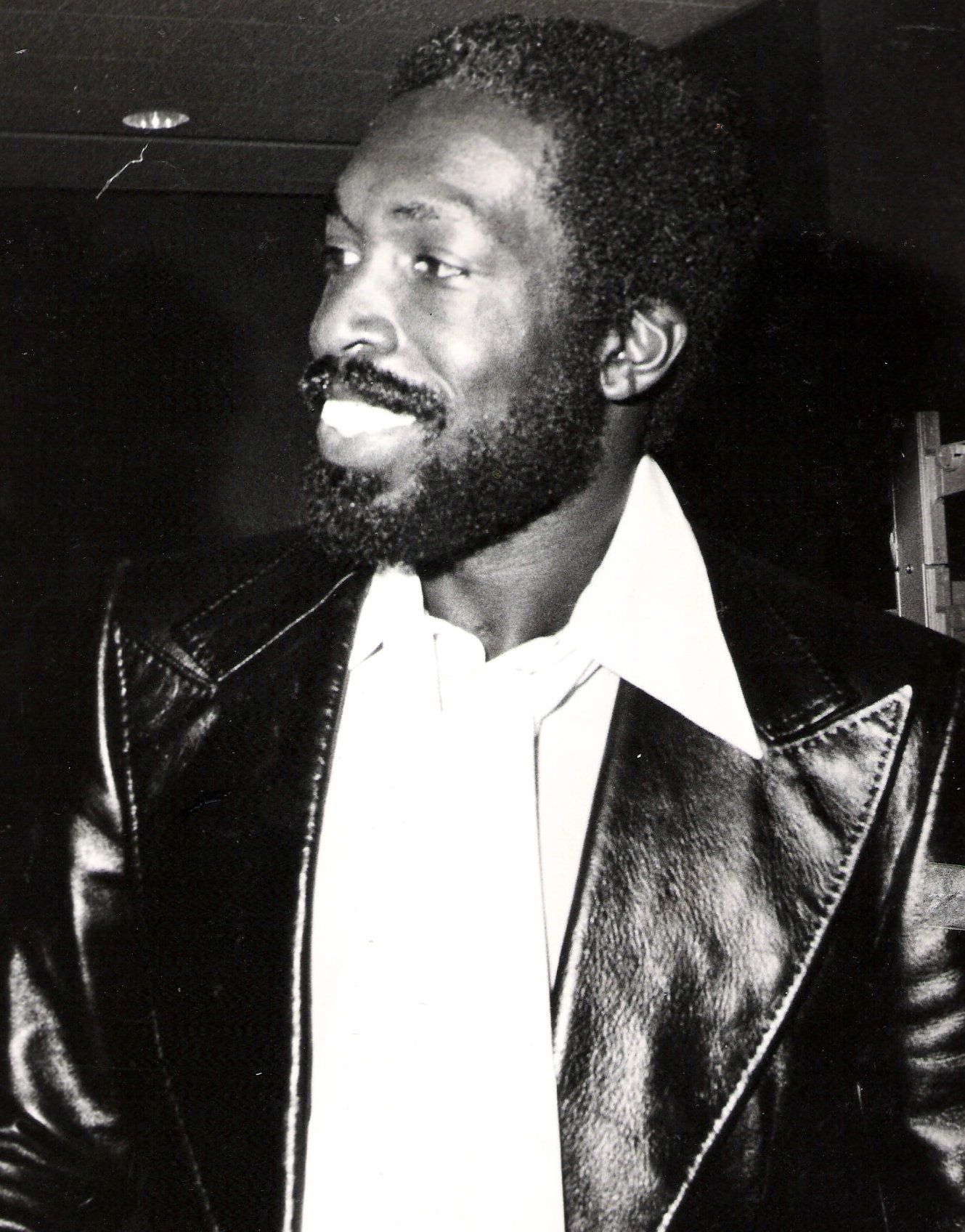
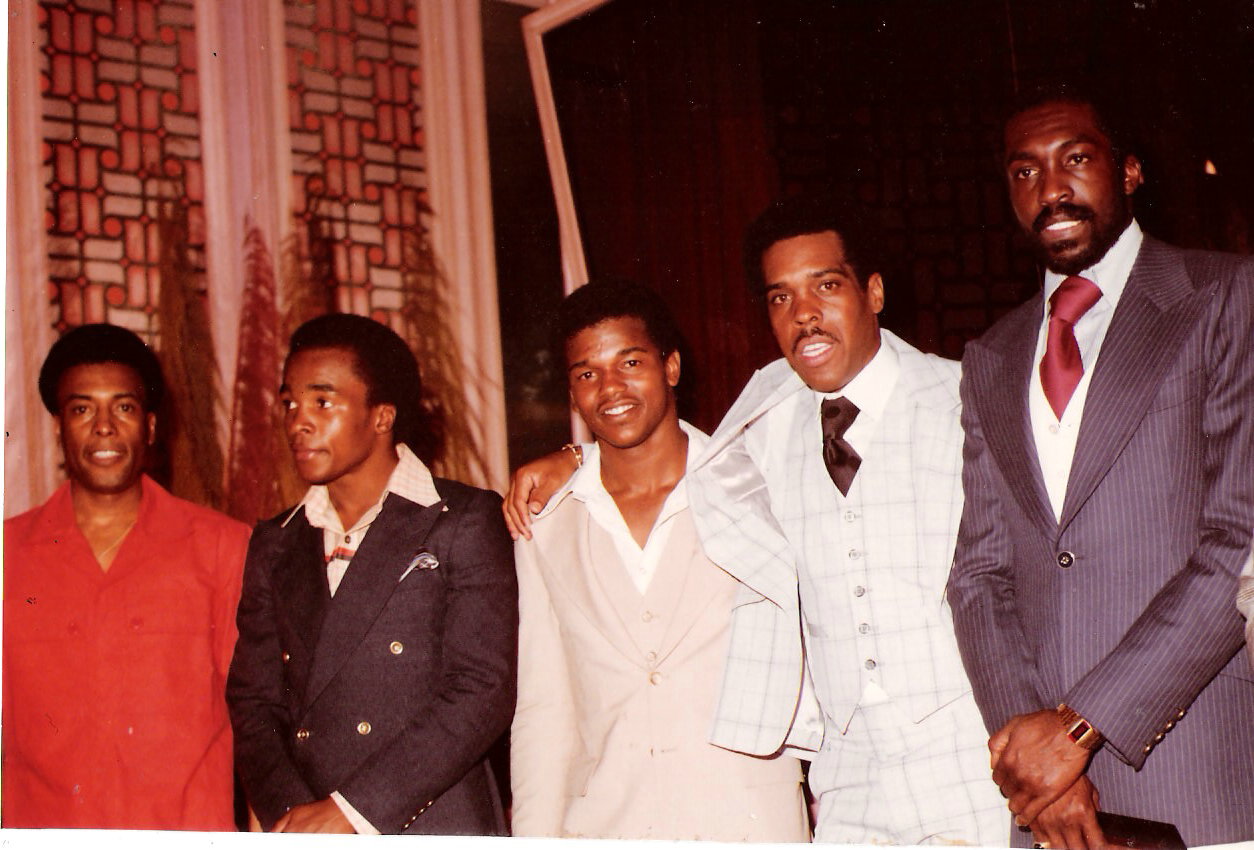
Happy Birthday Bighouse & HB
One on One with Dave Bing
KIT Celebrity Fashion Show
ESPN’s airing of “Black Magic” chronicling the rich history of black basketball in America was a buzzer beating jump shot to win and a controversial foul call at the end the game to lose. It was also the most watched documentary in the history of ESPN television history. The first segment aired in 1.2 million homes beating the old record of 1.1 million.
The four hour two-part television show carried black basketball from the playgrounds, high schools, colleges and on to its final destination—the NBA. This brought full circle the hopes and dreams of most black athletes, a life in the fast lane of professional sports. For some it was their only way out.
The show’s title, “Black Magic” was the footprints in the sand of the man who revolutionized offensive guard play in basketball—Earl Monroe. He is also a part-time magician. I found the show to be enlightening and educational even though I lived most of it as a student/athlete I played football and basketball for the legendary Clarence “Bighouse” Gaines at Winston-Salem State. During my era (59-63) I was the only athlete under 6’5 he permitted to play two sports. Tim Autry and Emit Gil my football teammates could not chew bubble gum and dribble at the same time but they were tall. He called Tim and Emit “My Special Effects.”
My freshman year I scored 27 points in a losing effort in the annual Alumni vs. Varsity basketball game. My friend and mentor the legendary Jack DeFares had returned to Winston-Salem to finish work on his degree. He lobbied for me to play for the shorthanded alumni. It was easy to see why Jack was a New York playground legend and an All-Time great at Winston-Salem. He simply said, “Keep your eyes on me and follow my lead.” His slick ball handling and moves to the basket was responsible for me leading both teams in scoring. Bighouse knew I could do two things well, catch a football and score on a basketball court. But he made it clear that he had only one basketball and it belonged to Cleo Hill. Like it or not I had to wait my turn. I satisfied my hunger for the game by playing at the local YMCA and on the Inter-Mural team on campus called the “DC 5.”
I was in a unique position at Winston-Salem State I was there to compare three of the greatest players to ever play for “Bighouse,” Jack DeFares, Cleo Hill and Earl Monroe up close and personal.
I was there for the return of Jack DeFares, I was there for the departure of Cleo Hill and I was there to witness the arrival of Black Jesus better known as Earl “The Pearl” Monroe among other names.
Black Magic participants Al Attles and Earl Lloyd were two dear friends and inspired me to be all that I could be. I was in Landover, Maryland when Al and the Golden State Warriors upset and beat another close friend K. C. Jones. They beat the Washington Bullets in four straight games to win the NBA Championship. Al and K. C. made pro sports history by becoming the first two Black Americans to face-off in a championship final.
I was there also to encourage the late great legendary Red Auerbach to step in support Earl Lloyd’s induction into the Basketball Hall of Fame. The NBA had overlooked his career. Thanks largely to Red the Basketball Hall of Fame finally inducted him in 2002 as a contributor. He was the first black to play in the NBA.
The CIAA barely beat the NBA. Fifty years after graduating from West Virginia State they finally pulled his number for induction into the CIAA Hall of Fame in 2000. Thanks to an assist from Bighouse Gaines.
Hopefully, Mike Wise of the Washington Post was watching ESPN and received an education on who was the first and last word when it came to “The Improviser” of guard play in the NBA. Mike and his colleagues are the best examples on why we need to celebrate Black History 365 days of the year. If we don’t our youth would believe that “Pistol Pete” Maravich revolutionize guard play in the NBA.
Mike wrote those exact words in his column during the NBA All-Star Weekend. Pete was a great player in his own right. As Black Americans we must be careful of what we read and who we read. I will be looking for his column saying “I made a mistake” but I am not holding my breath.
The enlightening stories for me, started with Perry Wallace, Athletic Director at American University and the first black to play at Vanderbilt University, the perseverance of NBA player Bob “Butter Bean” Love and without a doubt the hidden story that Ben Jobes was one of the greatest college basketball coaches of all time. Coach Jobes’ accomplishments and basketball success stayed under the radar of major media for decades. ESPN’s Black Magic made it perfectly clear he could have easily been a success on any level, but was denied recognition because he was black.
The real story of the NBA lynching of Cleo Hill by the St. Louis Hawks was long overdue. In Black Magic there was mention of Cleo being the greatest player of his era. He could have been the greatest player of any area where he was allowed to play.
Cleo had every shot imaginable. He is the greatest offensive basketball player I have ever seen with the exception of Washington, DC’s Elgin Baylor. He was “Michael Jordan” in North Carolina long before Michael Jordan. Jordan didn’t really blossom into a great offensive ball player until the pros. Cleo was a basketball icon and legend on Tobacco Road long before his pro career. To believe it you had to be there to see him. When Cleo played you would have thought the ACC Tournament was being held on the campus of Winston-Salem State. White folks traveled from all over the state to see him play.
Cleo Hill was worth the travel time and price of admission. There were times when our own students could not get into the games. There was nothing Cleo could not do on a basketball court. His offensive arsenal consisted of left and right hand hook shots, set shots, a jump shot from any and everywhere, a great rebounder when he needed to be, he was fearless driving to the basket and he was an 80% foul shooter. Cleo could dribble the ball up court to break the press. He was no slough on defense either, when “Bighouse” needed someone to stop the other team’s hot shooter, he looked no further than Cleo or teammate Tommy Monterio.
Cleo was drafted No. 1 by the St. Louis Hawks in 1961 and everything was uphill from there. When he arrived in St. Louis the KKK better known as “The Nest” was waiting for him. The “Nest” consisted of players Bob Pettit, Cliff Hagan and Clyde Lovellet. They did everything but string him up by his neck. When Coach Paul Seymour took a stand against “The Nest” the owner Ben Kerner fired him. When Cleo returned to campus to finish up his classes to graduate after his rookie year he was a beaten man. He would come around to our room and sit and talk with my roommate Barney Hood and me for hours about life with the St. Louis Hawks. His story was something out of the 1800’s. Little has changed black men are still having their ideas and goods stolen and are asked to go in the backdoor and side doors to re-claim them. Spooks are still sitting by the door opening it for some and closing it for others.
When we start to talk about the injustices of the sports establishment you have to look no further than Coach John McLendon. White coaches led by the legendary Dean Smith stole his ideas and made them their own. The basketball establishment led by the white media had fans believing for years that Coach Smith invented “The Four Corners.” A strategy devised by Coach Mac to take time off of the clock in the closing moments of a game while sitting on a lead.
How can you vote one of the greatest innovators of the game into the hall of fame as a contributor? Check the records and see if Adolph Rupp and Dean Smith have Contributor before or after their names. In all fairness if Coach Mac is a Contributor than every coach who followed James Naismith into the hall of fame is also a Contributor.
The word “Contributor” needs to be changed, as it relates to Coach Mac and Earl Lloyd. If history is the judge “Brothers and Sisters” in media will see no evil, hear no evil, speak no evil and write no evil.
Johnny McLendon was definitely “An Officer and a Gentleman” he was in a class by himself when it came to having a compassion for helping others. Johnny Mac was a pleasure to be around. He is one of the best examples on how one can be a class-act and black folks will Player Hate on you anyway. Barney Hood and I would often talk about Coach Mac and how he would always be uplifting when talking about his friends and former players. Fairness is a lesson that never seemed to have rubbed off on some of his colleagues.
The man many of us called “Big Daddy” when others called him Bighouse would sometimes forget we were watching him. He could be very selfish and self serving. Bighouse had a big heart but he could also be heartless. He went ballistic when his friend and colleague Coach Tom “Tricky” Harris of Virginia Union hired a white coach, Dave Robbins (in-focus). Coach Gaines and Harris were poker pals and shared a lot of basketball history. When his buddy hired a white coach he felt betrayed. Bighouse slowly burned when CIAA Commissioner Leon Kerry (out of focus) and his cohorts hijacked the conference right before his eyes. Some of the things he said about his colleagues and student/athletes made many us wonder whether he really liked himself. None of us escaped his wrath including me, Cleo and Black Jesus.
In many ways we have taken on the characteristics of the establishment. When it comes to fairness it is becoming a lost art in the black community. We have also become more exclusive instead of inclusive. Black Magic for example; How were the contributions of icons Sam Jones (It is rumored he wanted to get paid), Spencer Haywood, Curly Neal and last but not least Red Auerbach and Walter Brown of the Boston Celtics be overlooked?
Sam Jones is in the NBA Hall of Fame and voted as one of the NBA’s 50 Greatest, he could have easily added more insight. His mentors were two of the greatest coaches of all time, Johnny Mac and Red Auerbach. Without Red’s contributions “Black Magic” would still be out of focus and a dream deferred. Spencer Haywood’s contribution turned the plantation mentality of college basketball and the NBA into a “Pay Day Heaven” for today’s NBA players.
In a landmark decision Spencer successfully challenged in court and won his case to enter the NBA draft before graduation. He became the first ever NBA Hardship case. Every NBA player making over $5,000 owes him a debt of gratitude. He should be in the NBA Hall of Fame and a member of The 50 Greatest Players ever, for his play on the court and his legal battles in court. He was working in the community long before the NBA CARED and he put the POWER in Power Forward. He is being Black Balled by the NBA for standing up to be a man in America and for his alleged drug use. If drug use is one of the measuring rods used for his induction, than the hall should be almost vacant. One of the show’s characters, drug dealer Pee Wee Kirkland is a New York Playground basketball legend and former Norfolk State player. I saw some his best customers in “Black Magic.” Curly Neal is a graduate of Johnson C. Smith University and his name is synonymous with the internationally known Harlem Globetrotters, he was also out of focus in Black Magic!
How could Black Magic forget New York basketball icons Pop Gates, Jack DeFares and Carl Green?
Sound bites we could have done without: Some things are better left unsaid, playground and NBA Broadcast legend Sonny Hill describing former Tennessee State and New York Knicks’ guard Dick Barnett was definitely out of focus. He said “Dick Barnett was a functional illiterate.” Dr. Dick Barnett graduated from Tennessee State and now holds a PHD Degree.
ESPN NBA studio analyst and Winston-Salem State alumnus Stephen A. Smith and basketball scrub was blackballed from the show for stepping on “Superman’s Cape.”
Bighouse Gaines was having trouble winning games at the end of his career (828 wins) Smith writing for the Philadelphia Inquirer made the mistake of calling for his firing. He has been out of bounds and out of focus ever since. What is my excuse for being out of focus? I walk and march to a different drum beat.
ON THE OUTSIDE LOOKING IN: NBA LEGEND SPENCER HAYWOOD
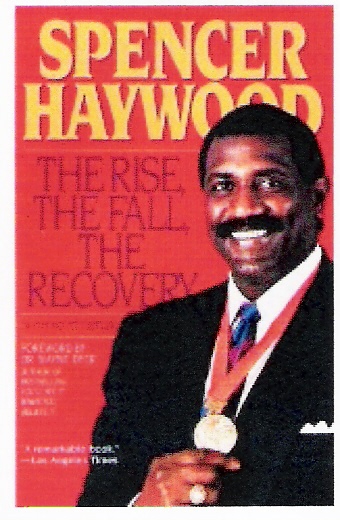
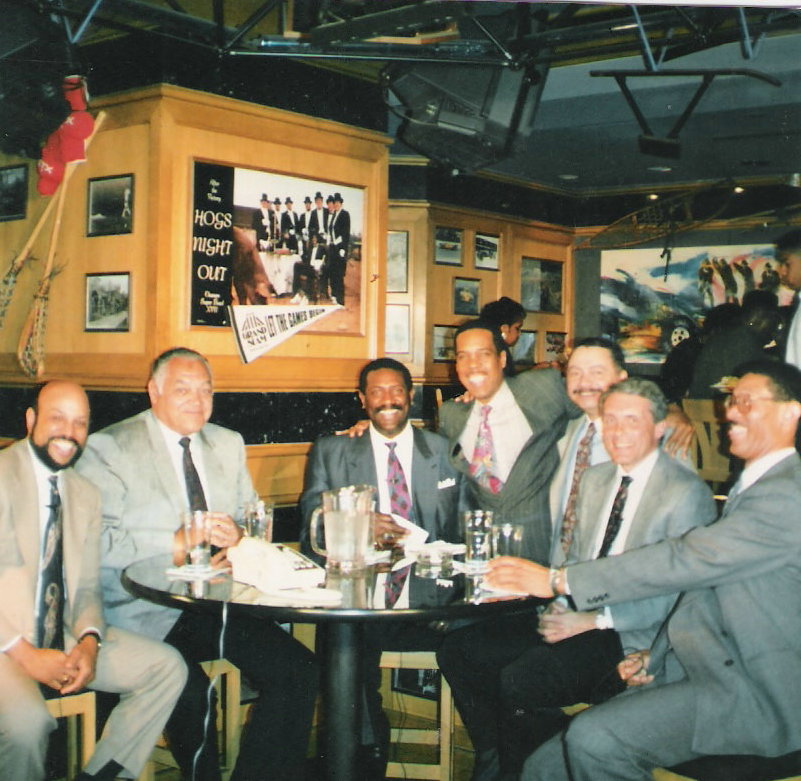
Spencer & friends; Mike Jarvis, Bighouse Gaines, Butch Wilson, Gary Williams and Butch Beard
He grew up in the cotton fields of Mississippi where his mother earned two-dollars a day picking cotton. He would leave those cotton fields for the city of Detroit and leave behind the mental and physical chains of slavery.
Spencer Haywood left those cotton fields for the city of Detroit where he would become a legend on the playgrounds and high school basketball courts. Instead of picking cotton he made a career out of picking rebounds off the backboards and scoring baskets in record numbers.
His high school basketball performances earned him a scholarship to Trinidad College where he averaged 28 points and 22 rebounds a game for one season. He returned home to play at the University of Detroit and averaged an eye popping 32 points and 22 rebounds.
Trinidad and the University of Detroit were just warm up stops on his basketball journey. He would be only 18 years old in 1968 when he led the United States Olympic team to the gold medal in Mexico City. This was the same year sprinters Tommie Smith and John Carlos made their historical statement against racial segregation in America. During the presentations of medals they silently raised their black fist signature gloves in protest. The protest was heard around the world.
George Foreman followed their act of defiance by waving the American flag in the ring after winning a Gold Medal in boxing. Those were three unforgettable moments and one moment Spencer would later say “I would rather forget. Tommie and John were putting their futures in jeopardy and were banished from the Olympic Village for their defiant act. If you were black and you were not going to support them, it was best you kept it to yourself.”
Instead of returning to the University of Detroit Spencer joined the newly organized American Basketball Association (ABA). In Denver he immediately became the face of the new league when he averaged 30 points and 19 rebounds a game. He was named the league’s Most Valuable Player and Rookie of the Year.
Despite his basketball glory and bright lights and big cities, Spencer never forgot the cotton fields in his native Mississippi. He remembered the long hours his mother labored in those fields picking cotton for pennies on a dollar. His choice to leave college was easy, turning pro he would be able to make those cotton fields just a bad memory.
In 1970 with the support and encouragement of his mentor and high school coach Will Robinson, he decided to challenge the NBA’s volunteer slavery rule, “No college no play.”
The challenge would be a very lonely journey and sometimes it was hard to tell whether his new NBA Seattle Supersonic teammates were playing with him or against him. The one man he knew was in his corner was team owner Sam Schulman. Schulman was the NBA’s Mark Cuban (Dallas Mavs) long before Cuban.
He marched to his own drummer; while Spencer was suing the NBA for trying to bar him, Schulman was suing the league for violating anti-trust laws. If those were not enough headaches for Spencer, the University of Detroit and the ABA was suing him for leaving school early and breach of contract respectively.
Those were difficult times for a young man who had not yet celebrated his 21st birthday. There were times when he was served with injunctions just before the tip-off of a game and banished from the arena. He slept in cars and in the team bus waiting for the game to end. The injunctions became a guessing game. It was hard to tell where and when the next injunction would be served.
Spencer played in only 33 games in the 1970-71 NBA season, starting, stopping and starting again with each temporary injunction.
The Supreme Court, the highest court in the land, ruled in his favor and he later became “Public Enemy No. 1” in the NBA.
He had to grow up early and he became a “Man Child” before his time. There will be 24 players playing in the NBA All-Star Game in Dallas, Texas in 2010, 21 of the All-Stars came into the NBA and became instant millionaires thanks to Spencer’s kicking down the door to free agency.
He blazed the path for the likes of Moses Malone, Darryl Dawkins, Kobe Bryant, Kevin Garnett, Dwight Howard, Carmelo Anthony, Chris Bosh, Dywane Wade and Kwame Brown. But there are too many of them who don’t have a clue to who Spencer is as it relates to them and the NBA.
They don’t know, thanks to the NBA and brothers in so-called major media who refuse to take a stand and have fallen for just anything as it relates to Black History. It looks like most of them (media) have been brainwashed by the NBA and have followed their lead in pretending Spencer Haywood is just a figment of their imagination. For proof, do a Google search for “NBA History: African-American Influence and Breaking Down Barriers.” Spencer Haywood’s name is nowhere to be found. The sad part of this puzzle is that no one in the media has asked the question why? Charles Barkley, Michael Wilbon, Stephan A. Smith, etc. all have an opinion on everything else but refuse to address the Spencer Haywood case.
Spencer’s groundbreaking accomplishment was more important than Earl Lloyd becoming the first black to play in an NBA game or Red Auerbach playing five black players for the first time. Free agency impacted every NBA player black and white.
Earl Lloyd was denied his rightful place in NBA History for 50 years until I asked NBA legendary coach the late Red Auerbach to join me in a campaign to get him inducted into the hall of fame. Earl was finally inducted in 2002. NFL Green Bay Packer legendary safety Willie Wood was also ignored for decades. He stood by and watched as his teammates were voted into the hall of fame one by one. He was left on the sidelines and reduced to a cheerleader. In 1985 I started an “Induct Willie Wood” campaign with long time Washington Time sports columnist Dick Heller on my sports talk show ‘Inside Sports.’ Willie was inducted into the hall of fame in 1989.
Boston Celtic coach and benefactor, Doc Rivers was quoted saying, “For the most part, Spencer has just been taken for granted by many of us. But what he did was huge for everyone. We should all be thanking him.”
After the court ruled in Spencer’s favor he continued to play heads and shoulders above the rim. In 1972 and 1973, he was on the All-NBA first team and became a chartered member of the All-Star game. During that era he was one of the five best players in the league.
I met Spencer Haywood shortly after his arrival in the “Big Apple” New York City. I was introduced to Spencer by CBS and NBA color analyst Sonny Hill. Spencer would later become a regular on my sports talk show ‘Inside Sports.’ Sonny Hill played an important role in my success as a sports talk radio personality—he was “All Access.”
The trade to the New York Knicks took Spencer over the top when it came to the fast life and drugs. He took the Big Apple by storm and made all the rich and famous parties driving a Rolls Royce and with his beautiful wife, Iman on his arm. She was one of the world’s top fashion models. Frank Sinatra once said in song, “New York, New York if you can make it here you can make it anywhere.” Spencer Haywood had made it!
When Spencer was at the top of his game as a NBA “Power Forward” he was one of the best. There were several other players who I thought was his equal, Gus Johnson of the Washington Bullets and George McGinnis of the Philadelphia 76ers. They also put the POWER into the forward position. They had the finesse of ballet dancers with a linebacker’s mentally. When they met head to head it was pro basketball at its best. I would take anyone of these guys and match them with any similar Power Forwards in the NBA’s 50 Greatest (Barkley, DeBusschere, Lucas). I would bet Spencer, George and Gus would win.
Spencer’s love affair with the Knicks was over before he could say “Where is the next party?” He suffered a knee injury and that didn’t help his career. Spencer had more time on his hands than NBA games and depression set in and the drugs were breakfast, lunch and dinner. In 1979 the Knicks shot an air ball to the Los Angeles Lakers and traded him, it was the beginning of his end.
Evidently, the Knicks thought, with the Lakers Spencer would feel more at home. The Lakers were known as Drug Central of the NBA. It was said the best high in the NBA was found in the Los Angeles Lakers locker room. He hit rock bottom at the end of the 1979-80 season when the team suspended him in the midst of the NBA Finals because of his drug use. It is rumored that Spencer went to sleep on the court while doing stretching exercise.
The Lakers met the Philadelphia 76ers in game six of the NBA Championship finals, and 6’9 rookie Magic Johnson started at Center in the place of the injured Kareem Abdul Jabbar. The Lakers defeated the 76ers and Magic scored 42 points, handed out 12 assist and pulled down 15 rebounds. Spencer never got to see the game because he was high on drugs. The Lakers released him. His next stop was Italy, France for a year and he then returned to the NBA to play with the Washington Bullets from 1981 to 1983.
When his contract was up in 1983 I could tell that Spencer had a lot on his mind and he still had a mission to fulfill. One of the things we talked about was him getting his ring from the Lakers for the 1980 championship season. He was voted a share of the money but never got his ring. He was also concerned about his daughter Zulekha now that he and his wife Iman were having their problems. He seemed to be more concerned about reclaiming his NBA name.
Spencer had a passion for children and had no patience for politicians who used children only as a sound bite. He was proud of being sober from alcohol and drugs and the constant battle it took to stay that way. I took him for his word because he never did drugs or alcohol in my presence. Spencer knew all the athletes and sporting personalities who had drug problems in DC. The celebrity drug community in every city is a small and close knit group. The names he gave me I already had because of my street network. Some these same personalities are still sitting on NBA benches and hiding behind television microphones.
The great Power Forward I once enjoyed watching was now just a shadow of himself, his greatness seldom found its way on to the basketball court at Capitol Centre. Despite his diminishing skills he was still a great human being and a joy to be around. He always kept it real.
He cared little about material things. I remember when he was leaving town for over a week on a road trip with the team. He wanted to leave his Rolls Royce with me to have it serviced while he was gone. My wife Hattie almost had a fit and refused to allow me to keep his car. I called Spencer and told him the bad news about her being worried about me having an accident. He then asked me to put her on the telephone. I gave Hattie the telephone and two minutes later she was saying “Okay.” I don’t know what he said, but Spencer had away with words. She later told me he said “Hattie I have insurance and Harold has a license, what’s the problem?”
I was disappointed when I read the story by Tim Povtak senior NBA writer for the blog FANHOUSE how the NBA had pimped him and brought him to his knees while he tried to re-claim his name.
The story said that Spencer had tried to lobby the league for several years to name the NBA entry rule after him, like the Supreme Court ruling that still bears his name, but that effort wilted and failed.
I appreciate the writer Povtak being diplomatic and using the word “Lobby” instead of begging, because that is exactly what it sounded like to me.
According to Povtak, the rule has been altered a few times through the collective bargaining agreement with the union, yet the premise has remained the same. Thanks to NBA Union Representative Billy Hunter, if it ain’t about him you can count yourself out. The Billy Hunter that I know is not going to stand up for anyone but himself. He sold Spencer out to the NBA.
Povtak goes on to say “It took the league years to gradually warm up to Haywood after what he had done. He has been sober now for over 3 decades. He has spent the last 2 decades as a league ambassador, traveling the world to promote the NBA. He served as a board member for the NBA Retired Players Association. He still speaks often to young players about the pitfalls that once swallowed him up.” It sounds like the NBA made him do community service to re-claim his name and they are now throwing him a bone during NBA All-Star weekends.
I am going to address the first sentence in the paragraph above, “It took the league years to warm up to Haywood after what he had done!” What had he done? I am reading between the lines that what Spencer had done was drugs and he fought the system that wanted to keep him from earning a living playing professional basketball. The so-called crimes he committed, were they crimes enforced across the board?
If the NBA is punishing Spencer for doing drugs and if drugs are the issue then the NBA Hall of Fame should be half empty.
I would hope the NBA is not punishing him for standing up for his civil rights against their bias rule on free agency. If that is the case according to the ruling handed down by the Supreme Court they were the problem and not Spencer Haywood.
But there is a problem that is Spencer’s and his alone. When I read he said “I have two daughters who play basketball, they don’t know who I am in regard to what I did once. There were times when I was beaten down so badly, I felt almost ashamed of what I did.” That was not the Spencer Haywood the proud black man that inspired me to keep telling the truth, keep my head up and stay strong!
First, Spencer, have you heard of Home Schooling? Who can teach your children about your history better than you? Your children are your legacy and you and only you must make sure they are armed with the real story as it relates to you.
Our history is being stolen, ignored and others have used it for their own financial gain for over 400 years, for example; “Inside Sports” was a title my wife Hattie thought of in 1971 for my new radio sports talk show. John Walsh a writer for the Style section of the Washington Post decided in 1978 to take my title to New York City and discover Inside Sports Magazine. This is the American way, he followed the same pattern of Christopher Columbus when he discovered America with native Indians already occupying the land. How can you discover something that is already taken?
This was my fault I should have trademarked the name as I was advised from the very beginning. I made it easy for him. Guess who owns the trade mark to Inside Sports, how about News Week Magazine own by the Washington Post newspaper! When I changed my show title to The Original Inside Sports, Walsh changed the magazine’s title to The Original Inside Sports Magazine! Walsh left a paper trail that Ray Charles and Stevie Wonder could follow. It is too bad it was not murder he committed in America what he did is called “White Collar Crime,” people like Walsh don’t have original ideas of their own so they take from others.
Spencer, you had a front row seat as the NBA and Billy Hunter proved they could care less about your pioneering efforts and great pro basketball career. There will be black brothers in media who will congratulate you on your pioneering efforts at NBA All-Star weekend. The faces will look familiar so ask them “where have you been for the past 30 years?” See if Billy Hunter can look you in your eyes and say “Spencer I tried.” Keep it real!
Our history will be overlooked and made out to be a joke if we don’t take charge, for example; Mike & Mike celebrated Rev. Dr. Martin Luther King’s birthday several years ago on their morning show. Th show is heard and seen on ESPN nationally. Mike Greenberg in a discussion about Rev. King called him out of his name when he referred to him as “Rev. Dr. Martin Luther Coon King, Jr.” The silence from blacks heard, seen and read at media outlets like PTI, FANHOUSE, AROUND THE HORN, WASHINGTON POST and USA TODAY was deafening. Not a protested word was heard or read!
Boxing promoter Don King says “Racism is the biggest business in the world.”
Spencer, if we don’t keep our own history it won’t be kept. Most will celebrate Black History Month the same way NBC television tried to do in New York City several years ago. The cafeteria’s black chef made up a menu of fried chicken, collar greens, potato salad, chitlings, yams and cornbread and a drink of choice (no desert, watermelon was out of season). The menu title “Black History Month Menu All You Can Eat.”
What happen to food for thought with names on the menu like, Harriet Tubman, Marcus Garvey, Jackie Robinson, Thurgood Marshall, William DuBoise, Paul Roberson and the list goes on and on?
In 1993, Jill Nelson penned a book titled “Volunteer Slavery” as it related to black writers and employees of the Washington Post newspaper. According, to her book when she joined the Washington Post in 1986 she became a Volunteer Slave. Jill and Spencer have something in common, twenty-four years later little or nothing has changed.
In all honesty and fairness we cannot continue to lay all the blame of racism at the doorstep of the NBA and the Washington Post. We (Blacks) must take some responsible for not being able to see the forest for the trees!
Check and see who owns and calls the shots at BET, Essence Magazine, Radio One and TV One. Ebony Magazine recently sold their archives to the Internet giant Google. This means in the future if we want information about our history we are going to have to buy it from Warner Brothers, Comcast and Google.
In 2010, forty-five years after the assassination of the Reverend Dr. Martin Luther King, I have to ask myself why is it we have not developed our own giants in media? Where are our media outlets that can compare with or challenge, CBS, NBC, ABC, Fox News, CNN, USA Today, Washington Post, New York Times, Wall Street Journal, Vanity Fair, etc?
Where are the voices in black media who we can compare with or challenge Larry King, Bill O’Reilly, Sean Hannity, Russ Limbaugh, Howard Stern, Diane Sawyer, Barbra Waters and Katie Couric?
The more things change the more they remain the same. Mississippi and two-dollars a day are not as far away as we think!
THE TWO FACES OF JOHN THOMPSON: WHAT YOU SEE IS NOT WHAT YOU GET!
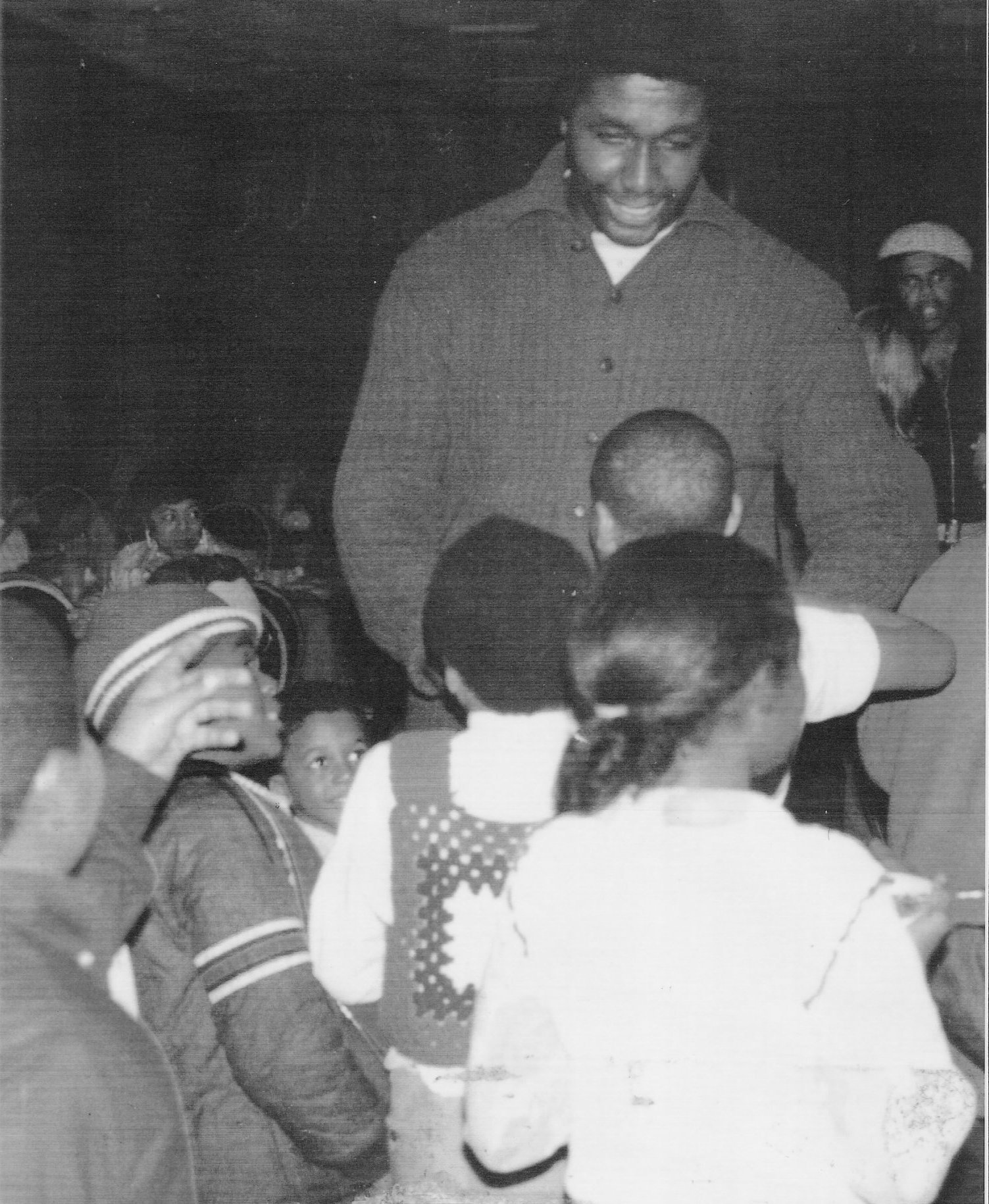
KIT Toy Party
John & Patrick Ewing
Sometimes it is best to be thought a fool than to open one’s mouth and remove all doubt—meet Fox sports writer“It was Thompson’s all-black, Ewing-led teams a decade before the Fab Five that shook the foundation of college basketball, changed the complexion of starting lineups across the country, opened coaching doors that had previously been closed to blacks and paved the way for black sportswriters at major newspapers.”
He got it all wrong when he claimed in a blog in 2011 that “It was John Thompson’s all-black, Ewing-led teams a decade before the Fab Five that shook the foundation of college basketball, changed the complexion of starting lineups across the country, opened coaching doors that had previously been closed to blacks and paved the way for black sportswriters at major newspapers.”
He must have forgotten the March 19, 1966 NCAA men’s basketball title game when all-white and No. 1-ranked Kentucky faced an all-black Texas Western team?
The game took place at the University of Maryland’s Cole Field House. I was there when Texas Western pulled the biggest upset in college basketball history. That team changed the face of college basketball forever—not John Thompson Jr.
John Thompson and Georgetown University did absolutely nothing to pave the way for black sportswriters at major newspapers He, in fact, did much like Don King did in boxing—he stunted the growth of blacks in the media by refusing access to his players. He has since become a “know it all” in so-called major media.
The Washington Post sports editor at the time, George Solomon, and his staff were treated like sports media stepchildren. Former Washington Post sports writers Dave Dupree, Michael Wilbon and David Aldridge all had front-row seats to his sports media charade.
When he could not win a game and had no one in so-called major media to promote Georgetown basketball, he turned to a little black-oriented radio station W-O-O-K and The Original Inside Sports, hosted by yours truly.
When he finally had some winning success, he hired a white man as his play-by-play announcer for Georgetown basketball, at none other than W-O-O-K Radio.
He will never tell you he got his first radio experience on The Original Inside Sports.
Jason, I was also puzzled by your quote saying, “It’s easy to forgive Jalen Rose for his lack of self-awareness. It’s America. In this country, self-awareness and common sense are our most rare commodities.”
Jason, were you asleep under a rock when Kentucky played Texas Western? Where were you and your self-awareness?
This observation by you was really over the top: “His players were the inner-city black kids who left a legacy of jobs and playing opportunities for other impoverished minorities that exposes the lack of substance in the fads popularized by the Fab Five.”
You must be dreaming! You put your foot in your mouth again by saying, “Hoya Paranoia is the story that deserves celebration and should serve as a teaching tool. Fab Five is a safe, harmless story celebrating black kids for choosing style over substance.”
You really think that the John Thompson and Hoya Paranoia deserves a celebration?
If you interviewed 100 former Georgetown players off the record, I bet 90 will say John Thompson was a fraud!
He betrayed both his wife and his lifetime friend, protector and assistant coach Bob Grier (aka “Bat Man”) by stealing the affections of Grier’s girlfriend, Georgetown academic advisor Mary Finley. He also kicked Mike Riley, his former player and assistant coach for over three decades, to the curb and under the bus. The word loyalty to John is spelled O-N-E W-A-Y!
I have known John Thompson since he attended my alma mater, Brown Middle School, in northeast Washington, DC. I was there to watch him develop as a player and a coach, and he was overrated in both.
John’s NBA career was a bigger fraud than his college coaching career. His NBA claim to fame? “I backed up Bill Russell.”
The late Boston Celtic coach, the legendary Red Auerbach, was a dear friend and mentor to me. I know how much backing up Russell he did. It was like sending a sailboat to back up the sinking of the Titanic—one of the same!
Auerbach put John into the expansion draft because he was too soft. Check out how many seven-footers were put in the expansion draft during the Red Auerbach and Bill Russell era.
The “Big Bad John” you see and hear today saw the handwriting on the wall and retired from the NBA.
I already knew what Red had known all the time: You can’t dictate heart.
John Thompson could have played the lead role of The Tin Man on Broadway and in the movie The Wizard of Oz. He had no heart!
As those of us who know the real John Thompson have often said, “If he had his high school teammate Tom Hoover’s heart, he would have been a world-beater.”
Hoover played in the NBA for several years as an “enforcer” and “hatchet man” for the New York Knicks.
Back in the day on the playground, when John tried to play like a point guard, I would banish him from the court and make him sit on the hill. He’d sit there until Sandy Freeman and Bob Grier, his protectors, showed up.
He would dare not raise his voice and use the type of profanity he used as the coach on the Georgetown bench. I have no idea where he picked up that part of his coaching personality (Bobby Knight).
John Thompson’s secret to success: He was big and black, and he used profanity and “the race card” to successfully intimidate his players and white folks!
He gained wide recognition in the sports world when he hugged Hoya player Freddy Brown after he mistakenly threw a pass intended for one of his teammates to North Carolina’s James Worthy. It was the closing seconds of the 1982 NCAA tournament final, and the outcome of the game—an eventual 63-62 loss—was still hanging in the balance.
After the game, Thompson was seen hugging Brown in a picture that went around the sports world. Today, Freddy Brown’s feelings about his old coach are X-rated.
In a Washington Post magazine article, John said, “My mother better not get in my way when a dollar is on the line.” In that same story, he claimed money could overcome racism in America.
Sometimes it is best to be thought a fool than to open your mouth and remove all doubt.
Early in his second season at Georgetown, when his job was on the line, in the wee hours of the morning someone hung a banner in the Georgetown Gym that read “John Thompson the nigger coach must go!”
Back then I was his first line of defense in the media.
When he called my home at 3 a.m. explaining what had happened, I was pissed off.
I must admit, he played me like a beaten drum. I later discovered he’d hung the banner himself.
All that mattered to him was the end result: It helped him keep his job.
The University President Father Henley was scared of the institution being seen in the national spotlight as racist. He assured media at a hastily called press conference that John Thompson’s job was safe. Mission accomplished, and the rest is tainted college basketball history.
This is the same college coach who took money under the table from his Georgetown-designated player sports agent, David Falk. The player transactions and kickbacks made him a millionaire before he left the university.
Falk also short changed NBA Hall of Fame player Adrian Dantley out of several million dollars, according to Dantley.
I don’t even want to think about how much money I’ve heard he misused from the bank accounts of Michael Jordan, Patrick Ewing, Alonzo Mourning and Dikembe Mutombo.
Former Maryland University and NBA All-Star John Lucas was also one of his suckers. John is one of my favorite people, but he got caught up in the hype.
In a conversation with Dantley on his last visit to DC as an assistant coach with the Denver Nuggets, he said, “David was not alone when it comes to laying the blame for misusing my money. Donald Dell, the CEO and founder of the company ProServe, must share some of the responsibility.”
Dantley learned of the fraud when I called his mother Virginia and informed her of the missing monies from his account. She was at first in denial, but Dantley’s new wife, who was an attorney, had an audit of Falk’s books.
In the meantime, John Thompson’s financial empire continued to grow. There were the slot machines, real-estate deals and the home he shared with his white mistress Mary Finley in Las Vegas. Please excuse “the race card”! This proves that not everything that happens in Vegas stays in Vegas.
The Washington Post published Pt. 1 of a two-part series investigation of these undercover discrepancies, but Pt. 2 never appeared. The investigative journalist was Richard Justice. (Note: Justice has since clarified that Pt. 1 never went to print either.)
According to my newsroom sources at the Washington Post, all said the exact same thing: Sports Editor George Solomon killed the series without explanation.
The Washington Post investigation was inspired by my commentary in the Afro-American Newspaper, titled “The Two Faces of John Thompson.”
John Thompson also lied about how he stared down and backed drug kingpin and killer Rayful Edmond into a corner.
The lie or rumor is, according to Sports Illustrated, that Thompson threatened Edmond to stay away from his players.
If you believe John Thompson did that, you also believe Jason Whitlock’s story of how Big John changed the face of college basketball.
I spoke with the late DC police chief, Maurice Turner, and a DEA supervisor friend of mine who was also involved in the case—both said nothing could have been further from the truth.
Chief Turner said, “When John was meeting with Rayful, he called me every hour on the hour to make sure I would have a police presence to protect him. He was scared to death.”
The lies continue; I have not forgotten the Nike deal that he carved out at my expense.
I was the first ever Nike sports and marketing representative hired here in the DC metro area. As a rep, my role was to outfit the different athletes, media, entertainers and politicians with the Nike brand. In other words, I gave away Nike apparel.
Once I became established as the Nike rep, I contacted my college coach, the legendary Clarence “Bighouse” Gaines of Winston-Salem State. I wanted him to outfit his team with the Nike brand. But he had an ongoing deal with the great and legendary coach John McLendon. Coach McLendon was a rep for Converse.
I then took the same proposal to the campus of Georgetown for my good friend John Thompson to look over. Remember, this is the same brother I gave five minutes to promote Georgetown basketball every Monday on Inside Sports.
He looked over the proposal and said he would get back to me. I left the campus and started the walk back to the Nike store, which was just a few minutes from the campus. When I arrived at the store, I had received a telephone call from Nike NBA promotions and marketing rep John Phillips. He was responsible for hiring me.
I returned his call to the home office in Portland, Oregon, only to discover my friend John Thompson had called to cut his own deal!
John Thompson is truly a backstabber in every sense of the word. His loyalty is only to himself!
The changes that he put me through are nothing compared to the changes he put his family though. You will never see or hear “The Real Warrior,” his ex-wife Gwen, who is responsible for holding the family together. I was in attendance at their wedding.
Gwen is the real “Undercover Boss” of the family and she is totally responsible for the three children turning out to be decent human beings.
When she filed for divorce, “Big John” became a stalker hiding behind trees outside of her residence trying to intimidate her. It got so bad, one of her close friends had her lawyer call me to advise her on how to proceed against his bullying tactics.
The last thing he wanted to do was go to court, where all his skeletons would come out his closet.
My advice to her lawyer: stay the course and keep the threat of a courthouse appearance as a vehicle for an out-of-court settlement. He settled out of court.
I gave Big Bad John and his Georgetown basketball team their first ever “community presence” as Santa’s Helpers at my annual Christmas toy parties for needy children. Ronnie would often accompany him to the parties.
Ronnie Thompson, his youngest son and a Comcast sportscaster, is named after his father’s former “best friend,” Ronnie Watts. Ronnie is a native Washintonian, and played basketball at Wilson High School and Wake Forest University in Winston-Salem, NC.
He played several years in the NBA with the Boston Celtics. Ronnie and Bill Russell were great friends and were often seen on television in AT&T telephone commercials together.
Ronnie is a great human being; he disappeared without a trace. It is rumored that John also put him in a financial trick bag.
John’s favorite “bagman” was James Wiggins. Wiggins was a local high school booster. He served as John’s right-hand man for the Urban Coalition Basketball Summer League. They are no longer friends: Wiggin’s hands are just as dirty as John’s. Rumor has it that these two parted ways because one of the bags of cash came up missing.
David Falk is still operating out of Georgetown for John Thompson III, so that means little has changed—like father, like son. The more things change, the more they remain the same.
John’s old friend Sandy Freeman, at a recent high school alumni summer picnic, told me he had a recent conversation with John and he said, “Harold Bell holds a grudge too long.”
That takes the cake; this is the kettle calling the pot black again. Former DeMatha High School coach and basketball Hall of Famer Morgan Wooten is one of the class acts in all of sports, but John Thompson has been “player hating” on him for decades!
Big Bad John, I have forgiven but I have not forgotten!
Forgiveness Is…
- A journey, rather than an event
- A form of remembering
- An act of empowerment
- The result of a conscious decision more than an emotion
- A denouncing of the wrongful act
- Making right what can be fixed and letting go what cannot
- An acknowledgement of the intrinsic worth of the offender
- A gift, rather than a burden
Forgiveness Is Not…
- Excusing what happened
- Forgetting
- Tolerating continue wrongdoing
- Denying our anger
- Letting people off the hook
- Saying “It does not matter”
- Feeling an emotional “love” for the offender
- Something that can be willed
 theoriginalinsidesports